


























Quick Field Data
- UNESCO Inscription: 1986 (Criteria i, iii, iv, vi; unsurpassed concentration of Roman imperial monuments north of the Alps combined with the 4th-century Roman core of Trier Cathedral and the Gothic Church of Our Lady).
- Scale & Footprint: Serial monument group along the Moselle River in Trier, Rhineland-Palatinate, Germany, anchored by the Porta Nigra, the Aula Palatina (Basilica), the 112.5-by-41-metre High Cathedral of St Peter (at Liebfrauenstraße 12), and the adjacent Liebfrauenkirche.
- Access & Ticketing: Trier Cathedral, its Gothic cloisters, and the Church of Our Lady are open to visitors while the Cathedral Treasury and individual Roman monuments charge admission; check the official site before visiting.
- Arrival Logistics: Situated on the Moselle River in western Rhineland-Palatinate, Germany, accessible by regional rail and highway routes south-west from Dortmund.
Augusta Treverorum, the Western Capital, and Emperor Constantine
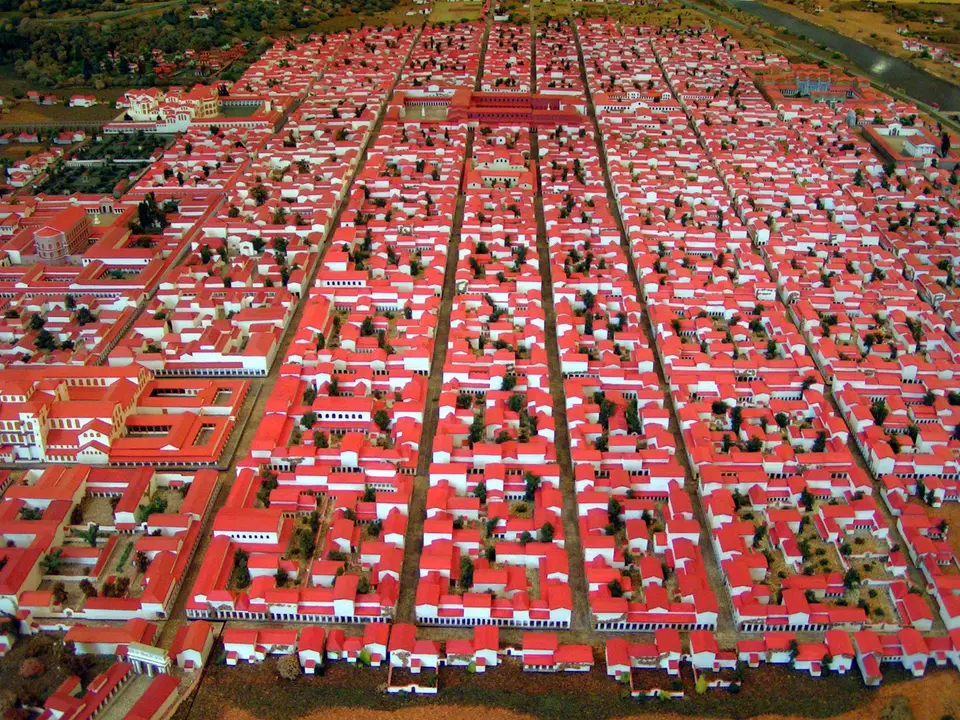
Standing along the banks of the Moselle River in the western German state of Rhineland-Palatinate, Trier (known in Roman times as Augusta Treverorum within the province of Gallia Belgica, matched by Cologne or Colonia Claudia Ara Agrippinensium in Germania Inferior as the two largest Roman cities in present-day Germany) was established as a Roman colony in the 1st century AD and blossomed into a major commercial trading centre at the start of the 2nd century. Following the late 3rd-century administrative reforms of Emperor Diocletian, Trier rose to serve among the capitals of the Tetrarchy, functioning as the seat of the prefects governing Gaul alongside Germania, Britannia, and Hispania and as the imperial residence of the Western vice-emperor (Caesar). Nowhere north of the Alps have so many monumental Roman buildings survived, earning Trier its title as the Second Rome or the Rome of the North. Imperial brick anchored the city.
Among the surviving classical monuments, two structures exemplify Trier's late antique power. The Porta Nigra, uniquely combining heavy military fortification with the architectural features of an imperial palace facade, survives as the best-preserved Roman city gate in the world and was later transformed during the Middle Ages into an unusual double church. Nearby rises the monumental brick structure of the Aula Palatina (the Basilica of Constantine the Great, erected around 311 AD as an Aula Regia or imperial throne hall rather than a church), whose austere exterior and vast, column-free hall enclose the largest known interior surviving from classical antiquity and embody the seat of imperial authority (sedes imperii).
Following Emperor Constantine the Great's conversion to Christianity, the emperor commissioned a vast ecclesiastical complex (coordinated under Bishop Maximin between 329 and 346 over a palace attributed to Constantine's mother, Saint Helena, with earliest building phases dating to circa 270 and core Roman brickwork from around 340) that covered a footprint four times as large as the present cathedral, uniting four basilicas, a baptistery, and outbuildings as the largest ecclesiastical complex in the Western Empire outside Rome (whereas the core of St. Gereon's Basilica in Cologne, built between 350 and 365, originated as a mausoleum). Left in ruins by the Franks so that only the outer walls remained, rebuilt, and destroyed again by the Vikings in 882, the cathedral was reconstructed under Archbishop Egbert (died 993) and Poppo von Babenberg (1010 or 1016 to 1041 or 1047), completed across its Romanesque westwork by Archbishop Eberhard (1047 to 66) and in its eastern apse by 1196, and rebuilt across its current Gothic vaults, Renaissance sculptures, and Baroque chapels from 1235 to 1270 and beyond.
The Roman Core, the Salian Westwork, and the Gothic Cloisters of St Peter
Today the Cathedral of St. Peter in Trier (Hohe Domkirche St. Peter zu Trier, or Trierer Dom, located at Liebfrauenstraße 12 at coordinates 49 degrees 45 minutes 22 seconds north, 6 degrees 38 minutes 35 seconds east within the Diocese of Trier and the ecclesiastical province of Cologne under Bishop The Rt Revd Dr Stephan Ackermann) ranks as Germany's oldest cathedral and Trier's largest religious building, measuring 112.5 by 41 metres across its three Romanesque naves topped with Gothic vaulting. Large sections of 4th-century Roman brickwork from around 340 AD remain directly visible on the exterior north facade (belonging to an originally square Roman building whose ancient masonry also stands on the opposite side), while inside the three easternmost bays of the nave preserve the rectangular footprint of the 4th-century core building, whose four original Roman columns were reused in the 11th century and converted into massive cruciform crossing piers.
Facing the western square rises the cathedral's famous 11th-century Salian Romanesque westwork, started by Poppo von Babenberg and finished by Eberhard: a symmetrical five-section facade flanked by four towers on either side of a western apse that was repeatedly copied across the Rhine-Meuse valley (as art historian Elizabeth den Hartog documented in her 1992 Meuse Valley study on Romanesque architecture and sculpture, pages 56 to 58, Maaslandse Monografieën number 8). Above the clock on the tallest tower runs the Latin inscription NESCITIS QVA HORA DOMINVS VENIET (translating as a reminder that the hour of the Lord's arrival is unknown), while the South Tower houses 10 ringing bells cast in Bremen-Hemelingen by the Otto bell foundry in 1949. In German tradition, the bells are numbered from largest to smallest: the largest tenor or bourdon is Bell 1 (Christus and Helena), which weighs 8 tons, while 5 of the 10 bells sound the clock chime in sequence for each quarter-hour (Bell 8 strikes the quarter-hour, Bell 6 the half-hour, Bell 7 the quarter to the hour, and Bell 4 the full hour, followed after the melody by the second bourdon, Bell 2, chiming the hours).
Inside the cathedral, a continuous series of archbishops' and archbishop-electors' tombs spans the 10th to the late 18th centuries (including Henry I, died 964; Udo, died 1078; Baldwin, died 1354; Bohemond II, died 1367; Richard von Greiffenklau zu Vollrads, died 1531; Lothar von Metternich, died 1623; Johann Hugo von Orsbeck, died 1711; and Franz Georg von Schönborn, died 1756) together with a Romanesque tympanum depicting Christ flanked by Saint Peter and the Virgin Mary, the German Baroque west choir, the Baroque chapels dedicated to Our Lady and to the Holy Sacrament (preserving the Golden Gate from the former rood screen), and the 1974 main organ. Behind the east choir rises the early 18th-century Baroque Chapel of the Holy Tunic, visible through an interior wall opening and housing the Seamless Robe of Jesus (retrieved from the earlier main altar in 1512 and last shown publicly in 2012), while the east crypt holds the skull of St Helena and the Cathedral Treasury displays her drinking cup alongside two masterpieces of 10th-century Ottonian goldsmithery: the portable Egbert Shrine (built for the sandal sole of St Andrew) and the reliquary of the Holy Nail. Directly south, Gothic cloisters built between 1245 and 1270 (featuring a canons' burial chapel, a 1682 exterior bell, the former cathedral school in the Romanesque Room, and the bread-distribution hall in the Gothic Room) link the cathedral directly to the early Gothic Church of Our Lady (Liebfrauenkirche).
Walking the Moselle Axis from the Porta Nigra to the Cathedral and Aula Palatina
Because Trier's Roman and medieval landmarks cluster within the pedestrianised historic core east of the Moselle River, visitors can connect the northern gate, the cathedral precinct, and the imperial throne hall on foot.
- Starting at the Porta Nigra: Begin at the northern edge of the historic centre to inspect the Roman sandstone masonry and palace-like gallery arcades of the Porta Nigra, observing how the late classical city gate was adapted during the Middle Ages into a two-level Christian church before being restored to its Roman form.
- Exploring Trier Cathedral, the Cloisters, and the Liebfrauenkirche: Walk south to Liebfrauenstraße 12 to study the five-section Salian Romanesque westwork of Trier Cathedral and the exposed 340 AD Roman brickwork on its north wall; step inside the 112.5-by-41-metre nave to view the archbishops' tombs alongside the eastern Baroque opening to the Chapel of the Holy Tunic, visit the Treasury to see the Ottonian Egbert Shrine and Holy Nail reliquary, and walk through the 1245 to 1270 Gothic cloisters into the adjacent Church of Our Lady.
- Concluding at Constantine's Aula Palatina: Continue south from the cathedral precinct to the monumental Roman brick Basilica (Aula Palatina, circa 311 AD) to experience the vast, column-free classical interior of the Western Caesar's throne hall.
Preservation of the Rome of the North
For Germany, the UNESCO World Heritage List in 1986 (ID 367, reviewed in May 2022 and January 2026) under Criteria i, iii, iv, and vi, the Trier monuments and the adjacent Cathedral of St Peter and Liebfrauenkirche preserve an unbroken architectural timeline stretching from the 1st-century Roman colony of Augusta Treverorum and the 4th-century Roman basilicas through Salian Romanesque, High Gothic, Renaissance, and German Baroque additions. Travellers journeying from Dortmund can explore Trier alongside other Roman and medieval landmarks in our UNESCO World Heritage Atlas.
