Quick Field Data
- UNESCO Inscription: Inscribed in 2005 (Ref. 1200) as a Cultural site under Criteria (ii), (iii), and (iv).
- Scale & Footprint: Encompasses 898.46 hectares split between coastal Syracuse (Ortigia Island and mainland Neapolis) and the inland Pantalica gorge between Ferla and Sortino.
- Access & Ticketing: Streets, Piazza del Duomo, seafront walkways, and trails across Riserva Naturale Orientata Pantalica remain open free on foot. Neapolis Archaeological Park, Castello Maniace, and the Archaeological Museum sell entry tickets checked via Sicilian heritage portals.
- Arrival Logistics: Direct commercial air connections arrive at Catania-Fontanarossa Airport (CTA, 42 kilometres north), linked south by rail and highway to Syracuse and westward toward Palermo (196 kilometres).
Corinthian Ortygia, Archimedes' Defence, and Three Millennia of Syracuse
Few coastal cities in Sicily unite three millennia of Mediterranean civilisations within walkable distances. Today holding 115,515 residents as of 2026 as Sicily's fourth-largest city, Syracuse stands where Neolithic Stentinello communities left pottery dating to 6000 BC. In 733 BC, Corinthian colonists led by Archias landed on the coastal islet of Ortygia (Ortigia in Italian, from ortyx meaning quail), displacing the earlier Sicels. Over the following centuries, that natural harbour stronghold expanded onto the mainland into five distinct quarters known collectively as Pentapolis, while sixth-century BC coin names suggest roots in Siculian Syrako marshland or saltwater springs.
Rulers including Gelon, Hiero I, Dionysius I, Agathocles, Hiero II, and the Corinthian general Timoleon turned the polis into Carthage's chief rival across western Sicily. Through the Greco-Punic Wars and clashes with Akragas or Sicel king Ducetius, Syracusan power stretched into the Adriatic under the Dionysii and across to North Africa under Agathocles. Syracuse even shattered Athens's massive Peloponnesian War expedition before sending general Hermocrates to aid Sparta in Asia Minor. Its royal court drew figures such as Aeschylus, Pindar, Xenophon, and Plato, who stayed in the Pentapolis and advised Dion, political rival of Dionysius II. Native mathematician and inventor Archimedes led defensive engineering during Rome's siege in 212 BC. After consul Marcus Claudius Marcellus captured the city and a Roman soldier killed Archimedes, Rome looted Syracuse's treasures yet made the city capital of Roman Sicily. Cicero praised its beauty in In Verrem, and Emperor Augustus later dispatched Roman colonists to bolster its population.
Roman maritime trade carried early Christian communities into Syracuse, where extensive catacombs developed underground. Tradition links protobishop Marcian with Saint Peter, the Book of Acts records Saint Paul staying three days in AD 61, and Saint Lucy suffered martyrdom on 13 December 304 under Diocletian. Between 663 and 668, Emperor Constans II moved the Byzantine imperial capital from Constantinople to Syracuse until his assassination at the Daphne Baths. Following a first siege in 827 and Aghlabid conquest on 21 May 878, later destruction erased visible Islamic buildings, yet commercial vitality revived quickly. In 1040, Byzantine general George Maniakes briefly retook the city with Harald Hardrada and Norman knights before Robert Guiscard established lasting Norman rule in 1085 against Arab emir Benavert in the Great Harbour.
Subsequent medieval and modern shifts continually reshaped the port without erasing its classical street grid. Jordan of Hauteville became first count under Norman rule before Pisa and Genoese pirate count Alamanno da Costa contested the town around 1204. Emperor Frederick II pulled Syracuse out of feudal disputes in 1234, naming it urbs fidelissima and raising Castello Maniace. Later, Queen Eleanor of Anjou inaugurated the autonomous Aragonese Queen's Chamber in 1302, lasting until Germaine of Foix. Charles V then fortified Ortigia against Ottoman fleets, the 1693 earthquake sparked Baroque rebuilding, and Allied troops signed the 1943 Armistice of Cassibile at Santa Teresa Longarini.
Pantalica's Limestone Canyon and Four Thousand Rock-Cut Chamber Tombs
Inland roughly 23 kilometres northwest of the city (around 40 kilometres by valley road between Ferla and Sortino), the second UNESCO component crowns a steep limestone promontory flanked by the Anapo and Calcinara rivers. Founded during unsettled Late Bronze Age shifts around the thirteenth century BC as coastal settlements emptied, Pantalica thrived for roughly 600 years between 1250 and 650 BC. Some archaeologists link the hilltop capital with Hybla under Sicel king Hyblon, mentioned by Thucydides near the 728 BC foundation of Megara Hyblaea, before Syracuse planted its inland Akrai outpost. Traditional accounts cited over 5,000 tombs, though recent surveys count just under 4,000 rectangular burial chambers across a spur measuring 1,200 metres by 500 metres.
Italian archaeologist Paolo Orsi conducted primary excavations across the cliff faces between 1895 and 1910, finding family vaults reused repeatedly for one to seven burials despite ancient grave robbing. Skeletal evidence points to a roughly 30-year average lifespan inside a settlement possibly exceeding 1,000 residents. Five grouped cemeteries ring the gorge inside Riserva Naturale Orientata Pantalica. Filiporto guards the southwestern neck with almost 1,000 tombs beside a fourth-century BC defensive ditch, while North West climbs along the Ferla tarmac road. Cavetta overlooks prehistoric and medieval rock-cut houses, North holds roughly 1,000 tombs above the Calcinara river, and South extends over one kilometre along the Anapo valley near a dismantled 1956 railway station.
At the top of the plateau stands the megalithic Anaktoron, a multi-roomed building of large stone blocks excavated by Paolo Orsi. Though sometimes interpreted as a Bronze Age princely palace inspired by Aegean architecture, roof tiles and pottery prove its Byzantine occupation. Three small medieval rock-cut chapels also dot the canyon: Grotta del Crocifisso near the North cemetery, Grotta di San Nicolicchio on the south slope, and Grotta di San Micidario at Filiporto. Preserving faint fresco fragments near the natural Grotta dei Pipistrelli bat cave, these isolated sites stayed untouched by modern construction once medieval residents shifted toward Sortino after the twelfth century.
Neapolis Monuments, Baroque Rebuilding, and Ortygia's Island Fabric
Returning to the coast, exploring ortigia syracuse sicily shows how Greek, medieval, and Baroque eras share identical foundations. Known locally as Città Vecchia, syracuse ortigia island separates from mainland streets across a narrow sea channel spanned by two bridges. Nine traditional quarters shape its dense urban grid, running from Graziella, Bottari, Mastrarua, Spirduta, and Maestranza to Duomo, Turba, the Giudecca Jewish Quarter, and Castello Maniace. Greek legends link the islet to Asteria transforming into a quail, Orion's abduction by Eos, and Leto sheltering Artemis, while the seafront Fountain of Arethusa still bubbles with freshwater beside papyrus reeds.
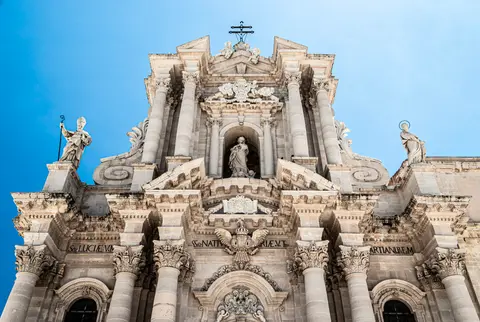
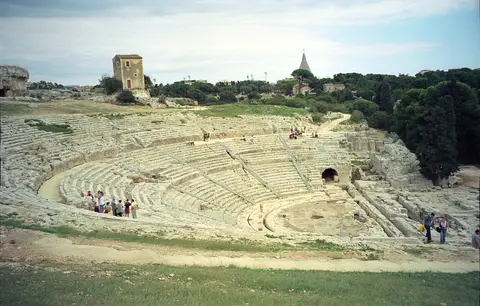
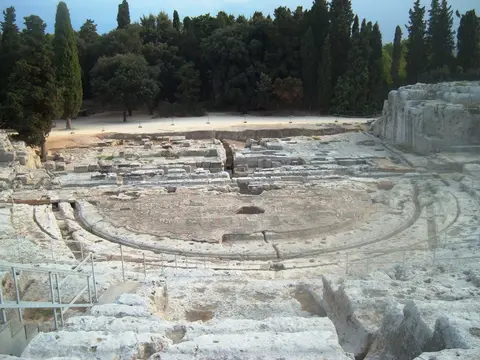
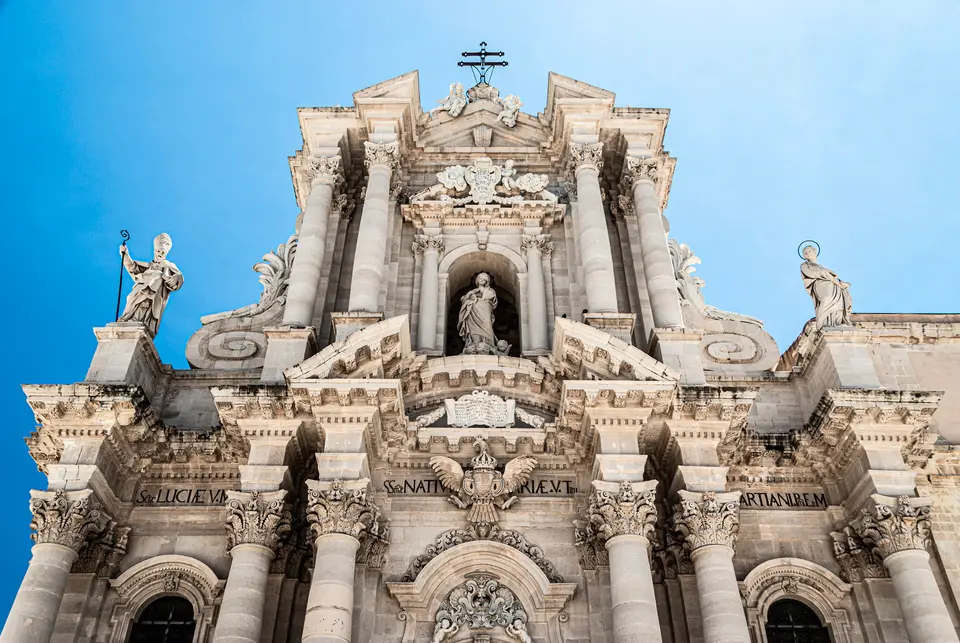
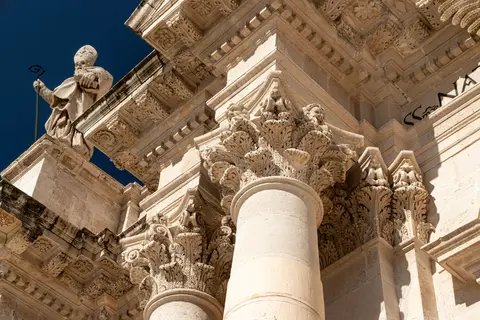
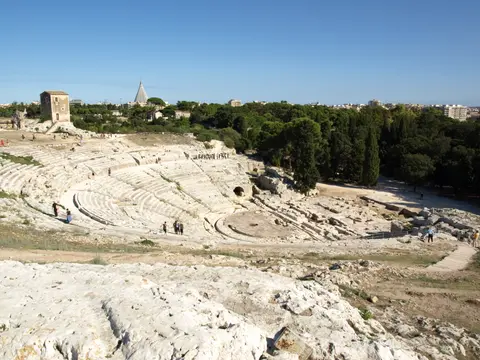
Travellers planning things to do in ortigia syracuse walk easily between Piazza Archimede, outdoor daily food markets, and Piazza del Duomo. Here Syracuse Cathedral embeds fifth-century BC Doric columns from the Temple of Athena, originally raised to mark Gelon's victory over Carthage, directly inside a Christian church rebuilt with a pale Baroque stone front after 1693. Minutes north stands the sixth-century BC Temple of Apollo, Sicily's oldest peripteral Doric temple. Along the Fonte Aretusa seafront walkway, cafes face the Great Harbour while Castello Maniace guards the southern point with Frederick II's thirteenth-century masonry. Across the bridges on the mainland, the Neapolis Archaeological Park safeguards the monumental Greek Theatre, Roman Amphitheatre, deep Latomie stone quarries housing the echoing Ear of Dionysius cavern, the Altar of Hiero II, and the traditional Tomb of Archimedes.
Sustained public heritage safeguards preserve both the urban fabric of coastal Syracuse and Pantalica's rural limestone gorge. Protected under Italy's Cultural Heritage Code (Legislative Decree 42/2004), state-owned archaeological zones largely expropriated since 1975 answer directly to the Superintendence of Environmental and Cultural Assets of Syracuse. Municipal authorities across Syracuse, Sortino, Ferla, and Cassaro coordinate visitor routes, signage, and conservation monitoring under a shared management plan. Specialist restorers verify earlier Hellenistic street alignments and masonry methods before intervening on damaged historic buildings. Whereas Pantalica's remote valley faces minimal urban pressure, conservation teams around coastal Syracuse continually limit air pollution, traffic vibration, and unapproved structural changes within the dense island grid.
Access Zones Across Ortygia Island, Neapolis, and Pantalica
Separating island sightseeing from mainland Neapolis and the inland gorge clarifies ticket requirements and transport needs. While Ortigia's squares stay pedestrian and free, archaeological enclosures and rocky trails require separate timing.
| Complex Zone | Key Highlights | Access & Ticket Rule |
|---|---|---|
| Ortigia Island Historic Centre. | Cathedral of Syracuse built on Athena's temple, Temple of Apollo, Piazza del Duomo, Fountain of Arethusa, Giudecca lanes, and daily markets. | Island streets, squares, and seafront walks remain free on foot. Cathedral nave entry follows diocesan visitor ticketing. |
| Castello Maniace (Southern Tip of Ortigia). | Thirteenth-century Hohenstaufen seaside citadel guarding the harbour mouth at the southernmost point of Ortygia Island. | Controlled entrance requiring paid admission checked via official regional heritage offices. Verify current schedules before walking south. |
| Neapolis Archaeological Park (Mainland Syracuse). | Greek Theatre, Roman Amphitheatre, Latomie stone quarries, Ear of Dionysius cavern, and Monumental Altar of Hiero II. | Gated heritage park requiring paid entry tickets. Combined passes frequently link Neapolis with the Archaeological Museum. |
| Rocky Necropolis of Pantalica (Inland Gorge). | Nearly 4,000 Bronze Age cliff tombs across five sectors, Anaktoron plateau, Byzantine cave chapels, and Anapo railway trail. | Reserve paths open free on foot via Ferla parking or the Sortino mule track. Carry water and sun gear across exposed limestone. |
Three Architectural and Prehistoric Details in Syracuse and Pantalica
- Fifth-Century BC Doric Columns Embedded Inside Syracuse Cathedral: Walk inside the Cathedral on Piazza del Duomo and along its left outer wall to inspect giant fluted limestone columns. Erected after 480 BC for Athena's Doric temple, those original stone drums literally hold up the medieval nave walls and Baroque facade.
- Carved Entrance Porches on Pantalica's Cliff Tombs: Peer across the steep Filiporto and North cliff ledges above the Anapo and Calcinara streams. Many Bronze Age tombs retain cut rectangular porches and recessed door frames originally sealed with fitted stone slabs before ancient grave robbers broke them open.
- Fourth-Century BC Defensive Trench at Filiporto: Trace the broad artificial ditch cut cleanly across the narrow western neck of Pantalica where the tarmac road arrives from Ferla. Engineered in Greek military style during the fourth century BC, this cut severed the plateau to guard Syracuse's hinterland allies.
Staying in Syracuse or Ortygia and Timing Sicilian Coastal Visits
Visitors researching ortigia syracuse italy frequently ask how to get to ortigia from syracuse once they step off regional trains or buses on the mainland. Two short bridges link mainland boulevards straight onto syracuse ortigia island, letting travellers cross quickly on foot or shuttle bus toward the ortigia syracuse market and Piazza del Duomo. Selecting between mainland hotels and lodging in Ortigia depends on travel style: mainland streets offer easier parking and immediate proximity to Neapolis, whereas Ortigia puts historic temples, seafront walks, and evening squares right outside the door. Allow an extra half-day for Pantalica's canyon paths via Ferla or Sortino, visiting its information station inside the restored valley rail stop. Inland at Pantalica, shaded river gorges contrast with scorching summer cliff faces, making spring and autumn optimal for climbing canyon tracks.
With Catania-Fontanarossa Airport (CTA) sitting 42 kilometres north along eastern Sicily's highway and coastal railway, Syracuse anchors broader regional trips smoothly. Morning visits work well around Neapolis and the stone quarries before afternoon walks through Ortigia's shaded lanes and evening promenades by the Great Harbour. Cross-island travellers can link coastal Greek antiquity northwestward to Palermo (196 kilometres) or inspect additional Mediterranean heritage monuments across our UNESCO World Heritage Atlas.