


























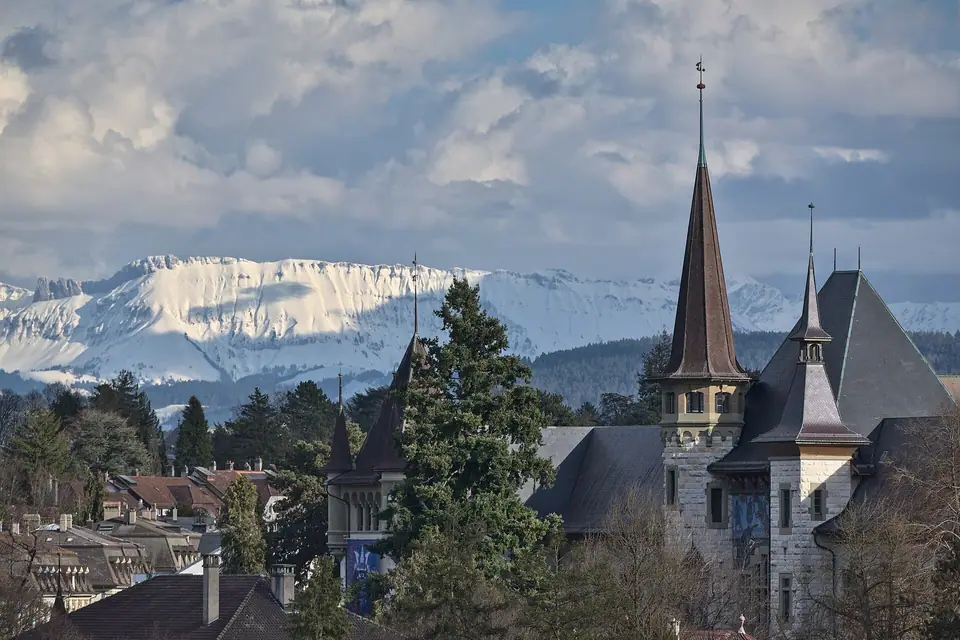
Einstein House (Einsteinhaus), Einstein Museum & Bern Historical Museum
Tracing Albert Einstein's years in Bern (1902 to 1909) from his second-floor flat at Kramgasse 49 to the 1,000-square-metre Einstein Museum on Helvetiaplatz.
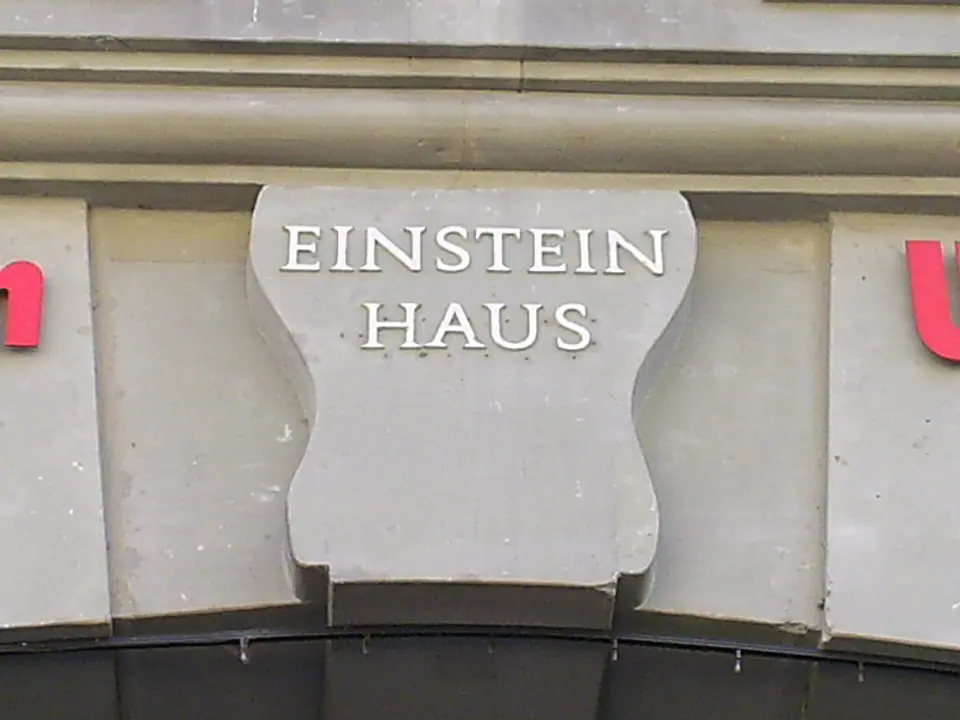
Albert Einstein lived in Bern from 1902 to 1909 while working six days a week as a technical expert at the Federal Office for Intellectual Property. During those seven years in the city, he married fellow physicist Mileva Marić, welcomed his son Hans Albert in May 1904, and published the ground-breaking papers of his 1905 Annus Mirabilis (Miracle Year). Today visitors can explore two complementary sites: the intimate flat where Einstein lived along Kramgasse and the expansive biographical exhibition across the Kirchenfeldbrücke at the Bern Historical Museum. Combine the southern museum bank with the Kunstmuseum and Zentrum Paul Klee, and see our 3-day Bern itinerary for timing.
Walking between Kramgasse and Helvetiaplatz allows you to retrace the physicist's daily routine through the sandstone arcades and across the iron bridge over the Aare gorge, seeing how the quiet routines of the patent office gave him the mental freedom to reshape modern physics. Along the way, benches and cafés beneath the Old Town vaults preserve the turn-of-the-century atmosphere of his afternoon discussions with friends.
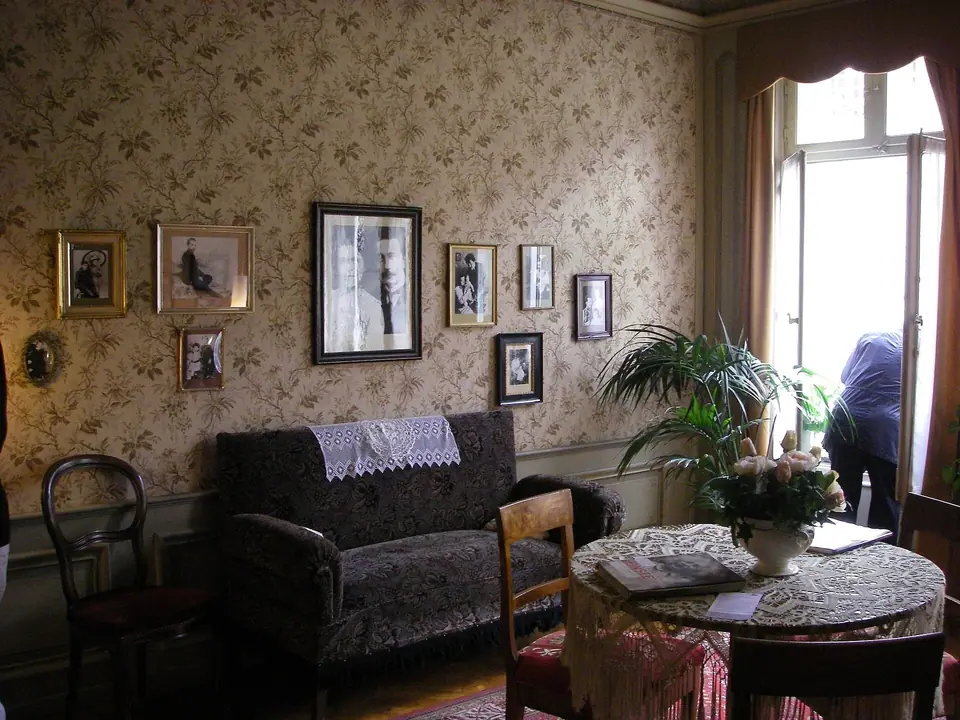
Einsteinhaus at Kramgasse 49: The 1905 Annus Mirabilis Flat
Located 200 metres east of the Zytglogge under the arcades of Kramgasse 49, the Einsteinhaus preserves the second-floor apartment where Albert Einstein, Mileva Marić, and young Hans Albert lived from October 1903 to May 1905. Reached via a steep spiral staircase, the apartment displays period furniture, family photographs, and facsimiles of the four papers Einstein completed here in 1905 for the Annalen der Physik: his explanation of the photoelectric effect (which earned him the 1921 Nobel Prize in Physics), his analysis of Brownian motion, the special theory of relativity, and the mass-energy equivalence formula E = mc². On the third floor, a compact exhibition and 20-minute video trace his student years at ETH Zurich, his Bern philosophy circle (the Olympia Academy with Maurice Solovine and Conrad Habicht), and his post as Privatdozent at the University of Bern before moving to Zurich in 1909. Check the official site for seasonal opening dates.
Standing beside the tall windows looking straight down onto the cobblestones and painted fountains of Kramgasse brings home how modest the family's domestic quarters were during that revolutionary spring of theoretical breakthroughs. Because the Zytglogge clock tower sits just up the street, the daily chime and moving mechanical figures that Einstein passed on his walks to the patent office still anchor the view from the building entrance.
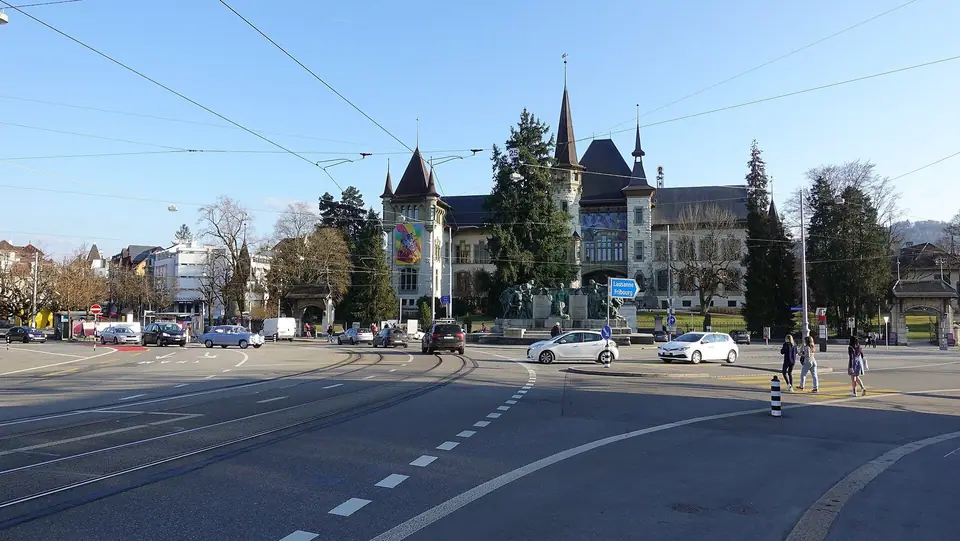
The Bern Historical Museum on Helvetiaplatz
A five-minute walk south across the 229-metre iron arches of the Kirchenfeldbrücke brings you to Helvetiaplatz and the castle-like Bernisches Historisches Museum. Designed by Neuchâtel architect André Lambert in fifteenth- and sixteenth-century Swiss château styles and opened in 1894, the building is greeted over its main portal by Ernest Biéler's glass mosaic of Helvetia and approached past the 1897 equestrian statue of Rudolph von Erlach. Inside, around 500,000 objects span prehistoric lakeside dwellings, Roman bronzes from Engehalbinsel, the thirteenth-century Wooden Sculpture Group from Muri, and the fifteenth-century Burgundian Tapestries captured from Duke Charles the Bold at Grandson and Murten in 1476.
Those woven Burgundian court tapestries, together with the original 1543 sandstone statue of Lady Justice from the Gerechtigkeitsbrunnen, make the historical galleries essential for anyone interested in the medieval rise of the Bernese city-state and the Old Swiss Confederacy. The museum's turrets, stepped gables, and reflecting pool on Helvetiaplatz also form the architectural centrepiece of the southern Kirchenfeld Museum Quarter.
The 1,000-Square-Metre Permanent Einstein Museum
What began as a centenary exhibition for the World Year of Physics in 2005 proved so popular that the Bern Historical Museum turned the 1,000-square-metre display into the permanent Einstein Museum. Entering up a mirrored stairwell illuminated like a starry cosmos, visitors walk through 550 original objects and replicas, 70 documentary films, and animations of curved spacetime and relativity alongside Einstein's Aarau report cards, Swiss passport, Nobel diploma, and letters after emigrating to Princeton in 1933. In 2009, architects Mlzd added the rear Kubus extension for temporary exhibitions.
Rather than treating physics in isolation, the exhibition weaves scientific concepts together with the turbulent history of the twentieth century, from the family's roots in southern Germany and northern Italy to the rise of fascism in Berlin, wartime correspondence, and cold-war nuclear disarmament debates.
Planning Both Sites in a Single Day
Because the Kramgasse apartment is intimate and focuses on domestic atmosphere while the Helvetiaplatz museum provides deep scientific and historical context across twentieth-century geopolitics, visiting the flat in the morning and crossing the bridge to Helvetiaplatz after lunch creates a natural narrative arc. Trams 6, 7, and 8 connect Zytglogge directly with Helvetiaplatz in just a couple of minutes under the free Bern Ticket; check our transit guide for details.
What makes exploring Einstein's legacy in the Swiss federal city so engaging is the contrast between the two museum settings. Inside the narrow townhouse on Kramgasse, creaking floorboards, patterned wallpaper, and family portraits evoke the modest daily life of a young civil servant discussing theoretical physics with friends over evening tea and cigar smoke. Across the river on Helvetiaplatz, high-ceilinged exhibition halls use theatrical lighting, large-scale mechanical models, and archival film footage to trace how those quiet ideas transformed cosmology, atomic physics, and global politics.
While visiting the Bern Historical Museum, set aside extra time to explore the permanent archaeological and medieval galleries in the castle-style main building. Alongside the courtly splendour of the Burgundian Tapestries and the original painted sandstone sculptures rescued from the Old Town fountains, the rooms display intricate guild silverware, stained-glass panels, and scale models that show how the medieval peninsula looked before its nineteenth-century bridges were built.
On sunny afternoons, the broad plaza of Helvetiaplatz and the adjacent lawns of the Kirchenfeld quarter also offer quiet benches where you can rest between museum wings before riding the tram back across the high iron bridge to the arcades.
Inside the museum shop and reading lounge, visitors can browse English and German biographies of the physicist alongside illustrated architectural histories of the Kirchenfeld bridge and surrounding villa quarter, making Helvetiaplatz a rewarding stop in any weather. Combining both venues gives you a complete picture of how turn-of-the-century Bern fostered scientific innovation.
Traveller tips
Real advice from people who have been to Einstein House (Einsteinhaus), Einstein Museum & Bern Historical Museum. Every tip is read by our team before it goes live.
No tips yet. Been here? Yours could be the first.
Thank you! Your tip will appear here after a quick review.
More in Bern
Continue exploring Bern with related neighbourhood, food, and planning guides
Bern Minster, Münsterplattform & Nydeggkirche: Gothic Spires Above the Aare
Bern, Switzerland
Bundeshaus (Federal Palace), Bundesplatz, Käfigturm & Kornhaus
Bern, Switzerland
Zentrum Paul Klee, Kunstmuseum Bern & Kultur Casino
Bern, Switzerland
Bear Park (BärenPark), Nydeggbrücke & Rosengarten Viewpoint
Bern, Switzerland
