


























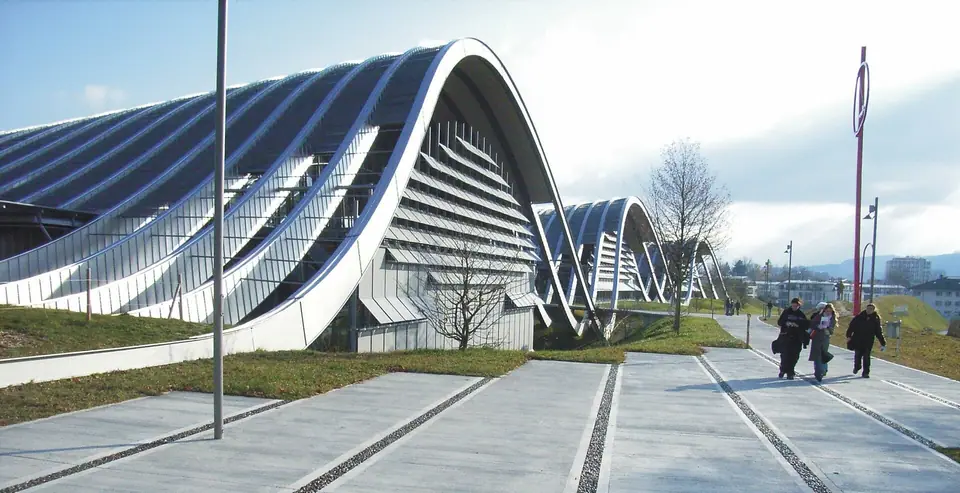
Zentrum Paul Klee, Kunstmuseum Bern & Kultur Casino
How to visit Renzo Piano's triple-wave Zentrum Paul Klee in eastern Bern, Switzerland's oldest permanent art museum on Hodlerstrasse, and the 1909 Kultur Casino.
Born in Münchenbuchsee just north of Bern in 1879, painter and Bauhaus master Paul Klee grew up in Bern's Obstberg quarter, graduated from the Literary Gymnasium in 1898, and returned from Germany in December 1933 to spend his final years in the city before his death in 1940 and burial at Schosshalden Cemetery. That lifelong link makes Bern an essential stop for modern art, anchored by Renzo Piano's wave-roofed Zentrum Paul Klee on the eastern edge of town, the Kunstmuseum Bern near the station, and the Kultur Casino concert hall above the Aare. Pair these venues with the Bern Historical Museum, a walk through the Old Town arcades, and our guide to things to do in Bern.
Exploring these cultural landmarks also takes you across three distinct layers of the city: the neoclassical avenues along the northern rim of the Old Town, the patrician river cliff beside the Kirchenfeldbrücke, and the open agricultural meadows of Schöngrün looking toward the Bernese Alps.
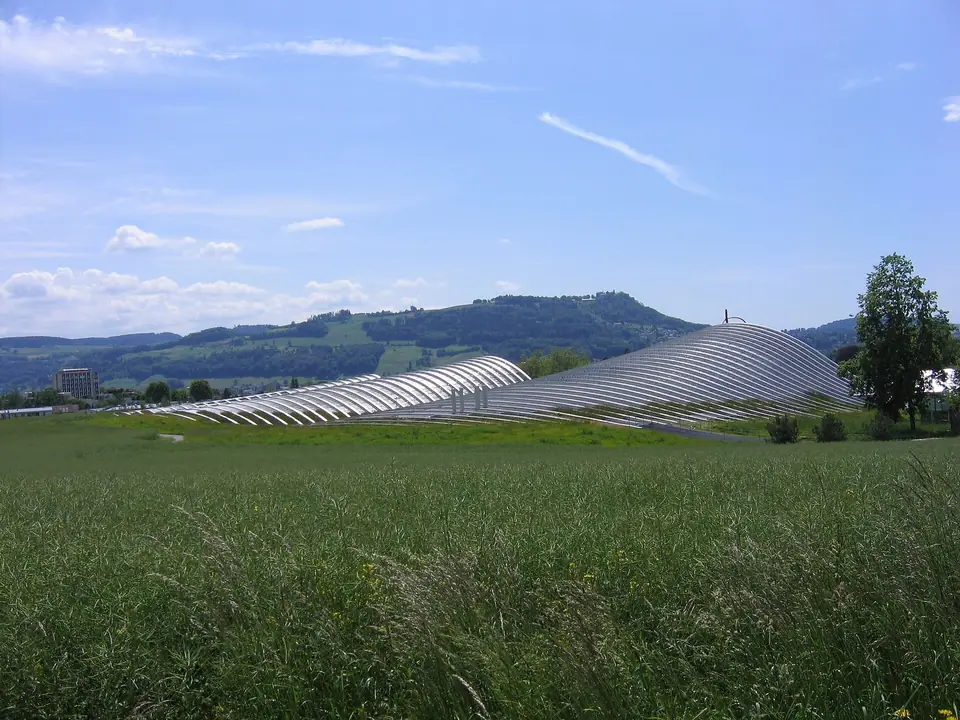
Zentrum Paul Klee: Renzo Piano's Three Steel Hills
After Paul Klee's daughter-in-law Livia Klee-Meyer donated nearly 690 works to the city and canton in 1997 and the Klee family together with collector Maurice E. Müller funded a dedicated centre, Italian architect Renzo Piano designed a sculptural "landscape monument" in the green fields of Schöngrün that opened on 20 June 2005. Inspired by the rolling moraine hills before the Bernese Alps, three steel-and-glass arches fabricated from 4.2 kilometres of hand-welded steel beams and rising up to 19 metres house the Creaviva children's studio in the northern hill, exhibition galleries in the middle hill, and a 300-seat subterranean auditorium plus research archives in the southern hill.
Rather than towering over the countryside as a conventional block, Piano embedded much of the structure into the earth so the green turf slopes rise gently alongside the curved steel ribs, uniting architecture, sculpture, music, and landscape along a bright interior promenade called the Museumsstrasse. Because Klee was also an accomplished violinist who grew up in a musical household, the centre regularly pairs visual exhibitions with chamber music recitals in its underground concert hall.
Rotating 4,000 Klee Works and the Schosshalden Walk
Because the collection holds roughly 4,000 paintings, watercolours, and drawings (about 40 percent of Klee's lifetime output of nearly 10,000 works), the light-controlled galleries rotate displays of 120 to 150 light-sensitive works every few months. Walk the exterior paths named after Klee artworks (such as Ad Parnassum and Hauptweg und Nebenwege) to Schosshalden Cemetery five minutes west, where a bronze plaque quotes Klee's 1920 epitaph. Bus 12 runs directly from Bahnhofplatz and Zytglogge to the museum entrance.
That short footpath through the woods and meadows around Schöngrün lets you see the exact rural horizon and subtle light shifts that surrounded the artist during his productive final years in Bern.
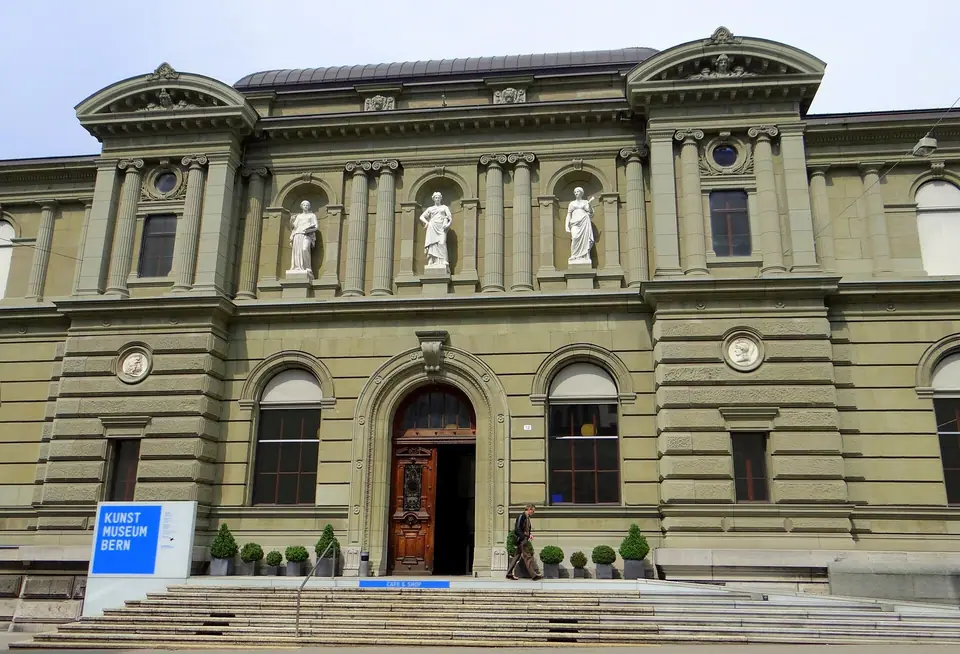
Kunstmuseum Bern on Hodlerstrasse
Founded in 1879 in the neoclassical Stettler building on Hodlerstrasse, whose facade carries Raphael Christen's statues of Painting, Architecture, and Sculpture, and expanded in 1936 with Karl Indermühle's Salvisberg wing, the Kunstmuseum Bern is Switzerland's oldest art museum with a permanent collection. Its galleries hold more than 4,000 paintings and sculptures and 45,000 works on paper, spanning Fra Angelico, Duccio, Niklaus Manuel, Cézanne, Matisse, Picasso, Ferdinand Hodler, Cuno Amiet, the Rupf Foundation, and Meret Oppenheim. Check the official site for schedules.
For visitors interested in Swiss visual culture, the museum's holdings of Bernese Renaissance master Niklaus Manuel and nineteenth-century symbolist and landscape painter Ferdinand Hodler provide an illuminating bridge between medieval alpine traditions and European modernism, while the surrealist objects and works by Meret Oppenheim highlight the city's twentieth-century avant-garde ties.
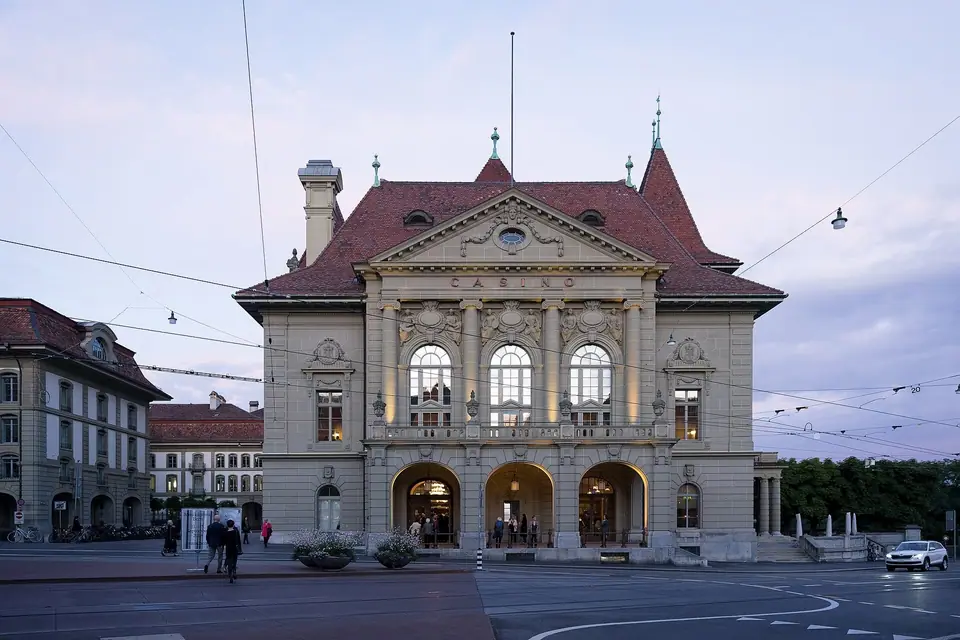
Kultur Casino Bern Above the Kirchenfeldbrücke
Standing at the northern head of the Kirchenfeldbrücke between the Bundeshaus and the Bern Minster, the Kultur Casino was built from 1906 to 1909 by Paul Lindt and Max Hofmann in neo-Baroque style inspired by Bernese patrician estates. Restored between 2017 and 2019, its 1,300-seat Grosser Saal serves as the home concert hall of the Bern Symphony Orchestra alongside brasserie restaurants and terrace views.
Connecting the Art Galleries by Bus 12
Because articulated trolleybus line 12 links Hodlerstrasse, Bahnhofplatz, Zytglogge, and Nydegg directly with the Zentrum Paul Klee, you can visit the Kunstmuseum in the morning, pause for lunch under the arcades, and ride straight out to Schöngrün for the afternoon using the free Bern Ticket; see our 3-day Bern itinerary for full daily routing.
At the Zentrum Paul Klee, families and solo travellers alike can extend their visit by dropping into the interactive studio spaces of the northern steel hill or browsing the bright museum café and bookshop along the interior concourse. Because Klee experimented constantly with unconventional materials, scratching fine lines into tinted plaster, layering watercolour glazes over gauze and burlap, and combining playful geometric symbols with poetic titles, viewing his original works up close reveals textures that printed reproductions never capture.
Back in the city centre at the Kunstmuseum on Hodlerstrasse, the sequence of nineteenth- and twentieth-century galleries places Klee's work alongside the broader currents of European art. Seeing Ferdinand Hodler's monumental alpine landscapes and rhythmic figure compositions in the same afternoon as Italian primitives, French impressionists, and Swiss surrealists highlights how collectors and foundations in the federal capital built an extraordinary visual archive over the past century and a half.
In the evening, walking from the Old Town arcades to the Kultur Casino beside the Kirchenfeldbrücke lets you experience the city's musical tradition inside a richly restored neo-Baroque concert hall where chandeliers, stucco reliefs, and warm timber acoustics frame orchestral performances above the river gorge.
If weather permits after your visit to the Klee galleries in Schöngrün, follow the level gravel trails looping around the eastern fields and sculpture gardens, where open views back toward the sandstone church spires contrast with the quiet farmland border of the municipality.
Together, the eastern landscape hills of Renzo Piano's museum, the classical galleries on Hodlerstrasse, and the riverside concert terraces overlooking the Aare show how music and visual art remain woven into the daily life of the Swiss federal city. Visitors can easily cover all three locations with a single day pass or the complimentary overnight transit ticket.
Traveller tips
Real advice from people who have been to Zentrum Paul Klee, Kunstmuseum Bern & Kultur Casino. Every tip is read by our team before it goes live.
No tips yet. Been here? Yours could be the first.
Thank you! Your tip will appear here after a quick review.
More in Bern
Continue exploring Bern with related neighbourhood, food, and planning guides
Best Time to Visit Bern: Seasons, MeteoSwiss Climate & Zibelemärit
Bern, Switzerland
3-Day Bern Itinerary: UNESCO Old Town, Museums, Gurten & Emmental
Bern, Switzerland
Bern: Essential Planning for the Swiss Federal City
Bern, Switzerland
Things to Do in Bern: Best Landmarks, Museums and River Walks
Bern, Switzerland
