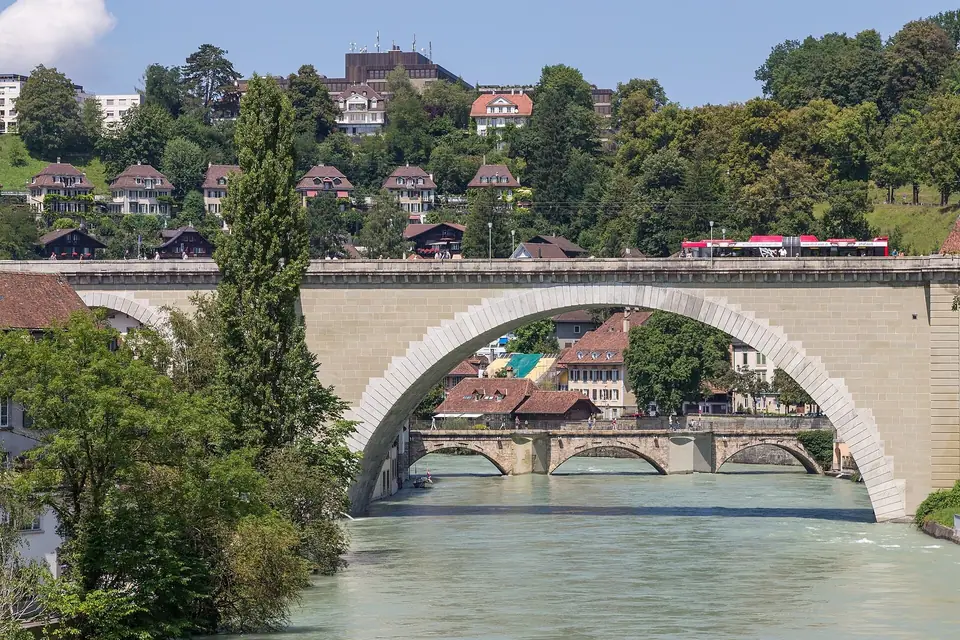
Things to Do in Bern: Best Landmarks, Museums and River Walks
The essential landmarks and outdoor experiences in Bern, connecting the UNESCO Old Town ridge with the Aare river gorge, museums, and Gurten hill.
Almost every major landmark in Bern is linked either to the medieval sandstone ridge of the UNESCO Old Town or to the green gorge of the Aare river immediately below it. Because the distance from the main railway station to the eastern river crossing at the Nydeggbrücke is only 1.4 kilometres on a gentle downhill grade, you can pair sixteenth-century fountains, gothic stonework, and parliamentary terraces in the morning with major art collections or an alpine viewpoint in the afternoon. Use our Bern travel guide for neighbourhood orientation and check our seasonal guide to match outdoor activities to the weather.
What gives a day of sightseeing in the Swiss federal city such a relaxed pace is the absence of long transit transfers between attractions. Sights flow into one another along continuous covered walkways, across iron valley bridges, and down cliffside lifts, allowing travellers to mix architectural history with outdoor river life in a single unhurried walk.
1. Stroll the Sandstone Arcades, Fountains, and Zytglogge
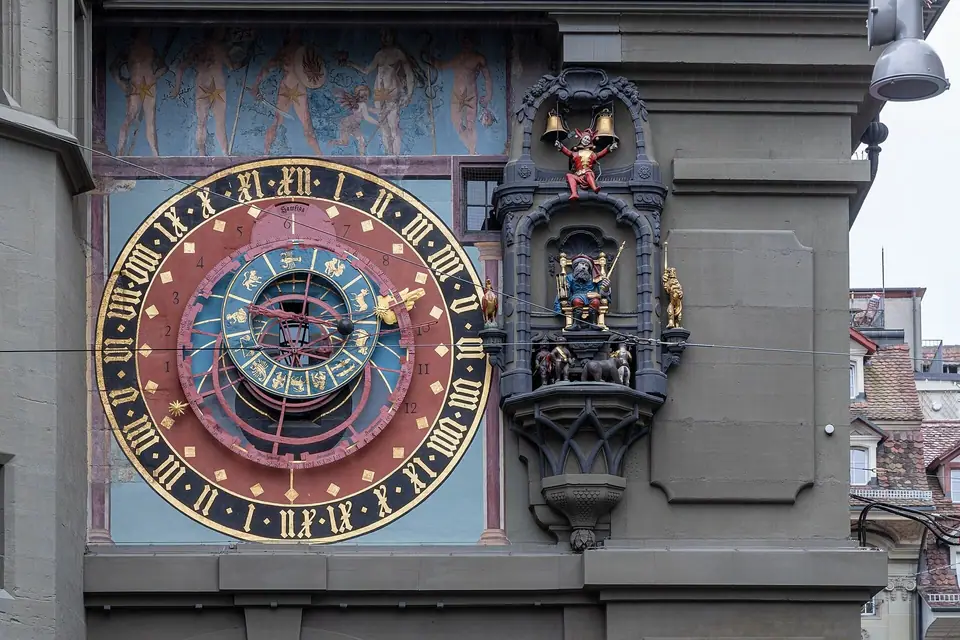
Begin along the central spine formed by Spitalgasse, Marktgasse, Kramgasse, and Gerechtigkeitsgasse, where six kilometres of continuous covered arcades shelter bakeries, bookshops, and steep cellar doors leading down to vaulted underground bars and small theatres. At the junction of Marktgasse and Kramgasse stands the Zytglogge, built between 1218 and 1220 as Bern's western gate tower and fitted from 1527 to 1530 with Kaspar Brunner's wrought-iron astronomical clockwork. Along the same streets, eleven painted Renaissance fountains sculpted in the 1540s by Hans Gieng depict allegorical and folkloric figures from Lady Justice to the child-devouring Kindlifresser.
Take time to look upward at the projecting timber roof eaves, gilded zodiac dials, and carved stone consoles supporting the upper bay windows, then peer down at the slanting wooden cellar flaps between the arcade piers. Walking slowly along both sides of the street reveals how patrician townhouses, guild halls, and public water troughs functioned together after the medieval reconstruction. Stepping into the parallel side lanes of Rathausgasse and Münstergasse adds quiet bookshops, independent galleries, and weekly food stalls away from the main tram line.
2. Climb the Bern Minster and Tour the Federal Palace
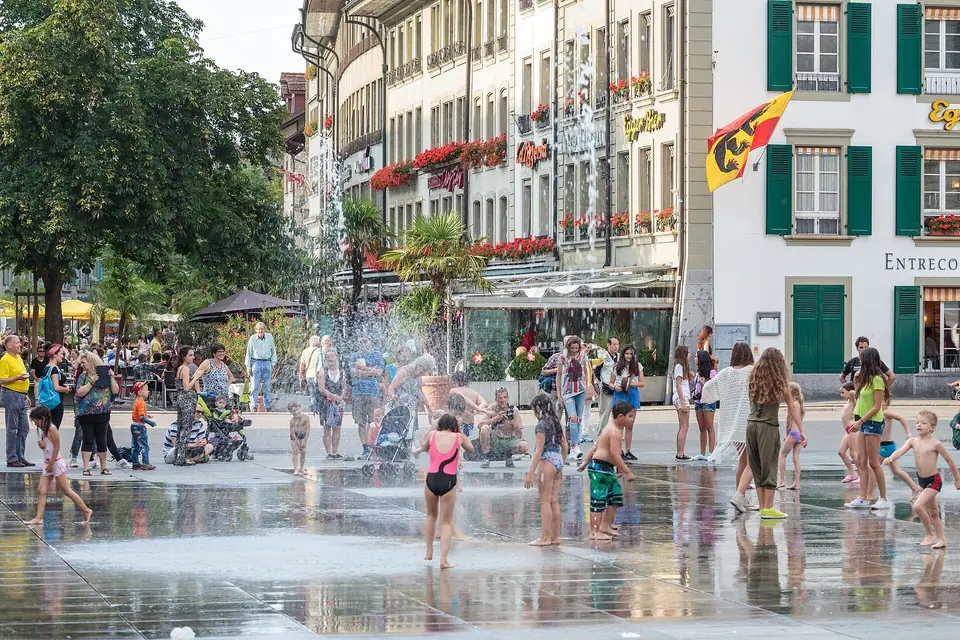
One block south of Kramgasse, the Bern Minster rises above the chestnut trees of the Münsterplattform. Begun in 1421 under master builder Matthäus Ensinger, the collegiate church is famous for Erhart Küng's 294-figure Last Judgement portal and its 100.6-metre Neo-Gothic spire completed in 1893, where 312 spiral steps lead to panoramic galleries 64 metres above the square. Five minutes west along the river cliff, the domed Bundeshaus (Federal Palace) overlooks the 26 cantonal water jets of Bundesplatz and welcomes visitors on guided tours when the Federal Assembly is not in session.
Between these two monumental landmarks, the southern edge of the peninsula forms a continuous promenade of shady benches and stone balustrades looking straight down into the turquoise curve of the Aare and out toward the distant snow peaks of the Bernese Oberland. On clear afternoons, locals gather along the terrace walls to watch river swimmers and wooden flat-bottomed boats drift past the historic roofs of the lower quarter, before descending to the waterfront via the electric Mattelift or the short Marzilibahn funicular.
3. Explore the Einstein and Paul Klee Collections
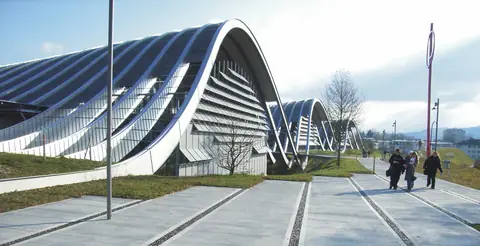
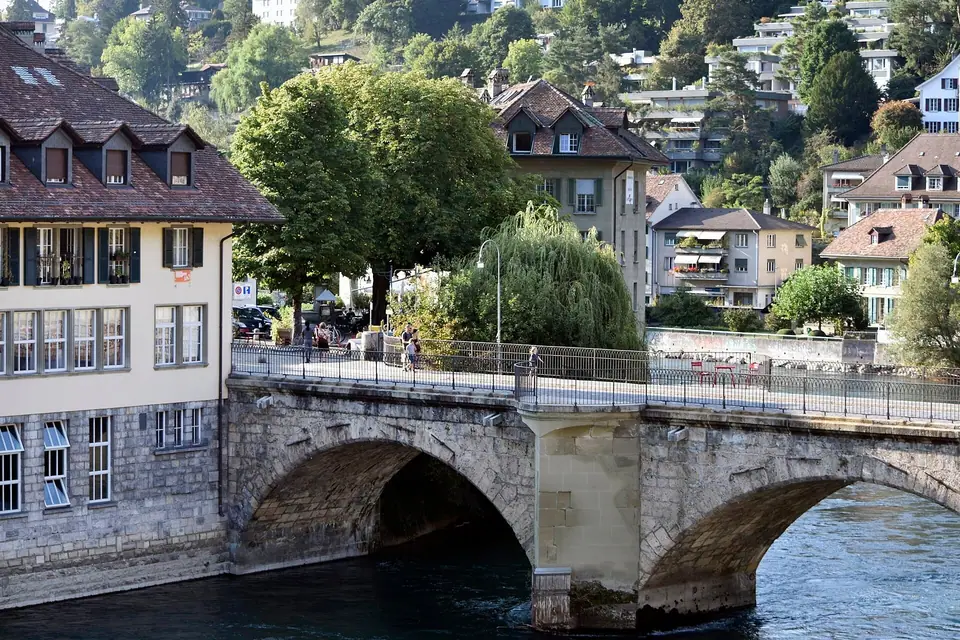
Step inside Albert Einstein's second-floor flat at Kramgasse 49, where he wrote his 1905 Annus Mirabilis papers, and cross the 1883 Kirchenfeldbrücke to the 1,000-square-metre Einstein Museum inside the Bern Historical Museum. From there, ride bus 12 east to Renzo Piano's wave-roofed Zentrum Paul Klee or return to Hodlerstrasse for the Kunstmuseum Bern.
Together, these institutions trace how the quiet Swiss federal seat became a formative home for twentieth-century physics and modern painting, pairing intimate domestic rooms in the Old Town with expansive purpose-built galleries across the river. Even on rainy days, you can move easily from Kramgasse under the sheltered arcades to the tram stops serving Helvetiaplatz and Schöngrün, rounding out a cultural afternoon with an evening symphony concert at the restored 1909 Kultur Casino beside the bridge.
4. Cross to the BärenPark, Float the Aare, and Ride the Gurtenbahn
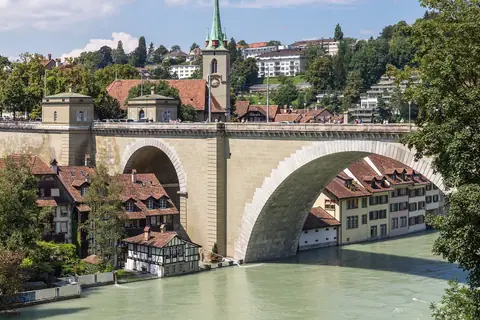
- BärenPark and Rosengarten: Walk over the stone span of the Nydeggbrücke to watch brown bears forage along the Aare bank in the 6,000-square-metre BärenPark before climbing to the 223 rose varieties of the Rosengarten.
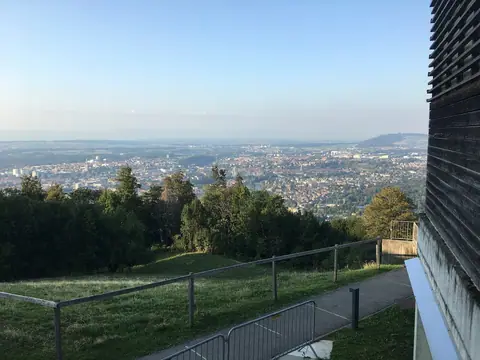
- Marzilibad and Gurten Hill: Join locals on warm summer afternoons at the free Marzilibad riverside lido or take tram 9 and the Gurten funicular up to 858 metres for views across the Bernese Alps.
- Emmental and Burgdorf Excursions: Board a regional train east into the rolling hills to visit the red-brick Zähringer fortress of Burgdorf Castle and the traditional cheese vats of the Emmentaler Show Dairy.
5. Taste Regional Classics in Vaulted Cellars and Guild Halls
Round out your sightseeing by sampling traditional Bernese dishes inside historic stone interiors. Whether you order pan-fried Rösti and Emmentaler AOP cheese in a former seventeenth-century guild house, descend into the painted cellar vaults of the Baroque Kornhaus, or pick up hazelnut pastries and almond Mandelbärli under the Lauben arcades, local food culture connects directly to the rural valleys surrounding the city. Check our 3-day Bern itinerary to organize all of these sights into balanced daily routes, and review where to stay in Bern to choose the right neighbourhood base.
To make the most of the city's layout, start your morning walk at the upper end of the peninsula near the railway station and let the gentle eastward slope carry you downhill past the clock towers and painted fountains toward the river bend. Along the way, step out from under the stone arcades onto the open middle of the cobbled street whenever the trams pass so you can admire the upper timber eaves, carved guild emblems, and brightly painted fountain columns in full daylight.
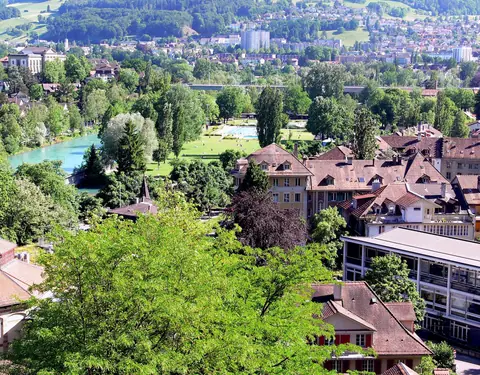
In the afternoon, use the high valley bridges and short cliffside lifts to vary your perspective on the UNESCO skyline. Looking back at the peninsula from the southern museum lawns on Helvetiaplatz, from the grassy banks of the Marzili bath, or from the elevated rose terraces above the eastern river loop reveals how the sandstone townhouses and the tall Minster spire crown the wooded cliffs above the turquoise water.
Evenings in the federal capital bring a quieter charm: once the market stalls pack up and the daytime crowds thin out, floodlights illuminate the clock towers, the Parliament dome, and the bridge arches, while cellar theatres and traditional guild dining rooms open their heavy wooden doors beneath the arcades.
Traveller tips
Real advice from people who have been to Things to Do in Bern: Best Landmarks, Museums and River Walks. Every tip is read by our team before it goes live.
No tips yet. Been here? Yours could be the first.
Thank you! Your tip will appear here after a quick review.
More in Bern
Continue exploring Bern with related neighbourhood, food, and planning guides