


























Recoleta Cemetery, Bellas Artes, and El Ateneo Grand Splendid
Explore the 1822 La Recoleta Cemetery, the 1732 Basilica of Our Lady of the Pillar, the National Museum of Fine Arts, and El Ateneo Grand Splendid.
Named after the Franciscan Recollect friars (Padres Recoletos) who established a convent on the northern outskirts of Buenos Aires in the early 18th century, Recoleta evolved after the 1870s into the capital's premier residential and cultural quarter. Framed by wide avenues lined with ancient rubber trees (gomeros), French mansard palaces, and public art plazas, the neighbourhood brings together several of the most visited landmarks in Buenos Aires within a single 15-minute walk.
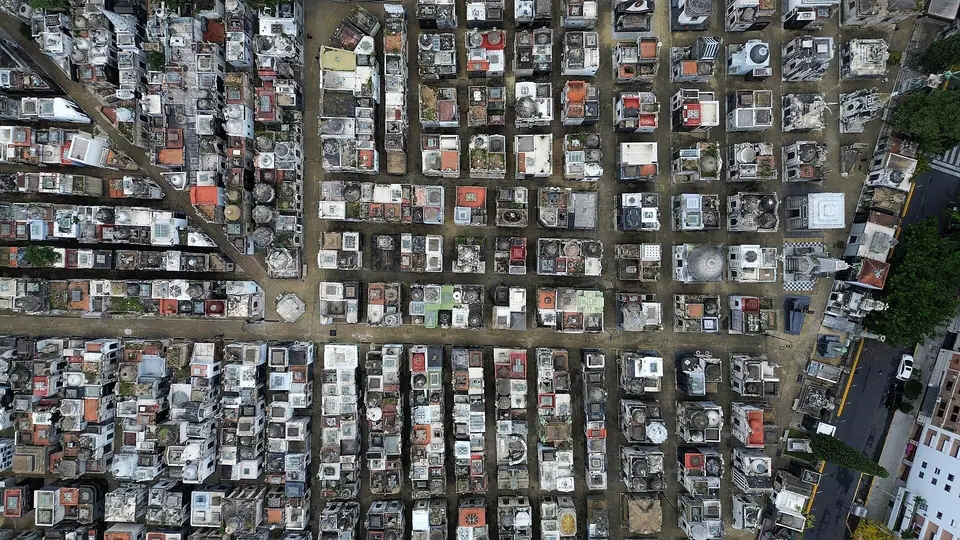
La Recoleta Cemetery (1822) and Basílica Nuestra Señora del Pilar
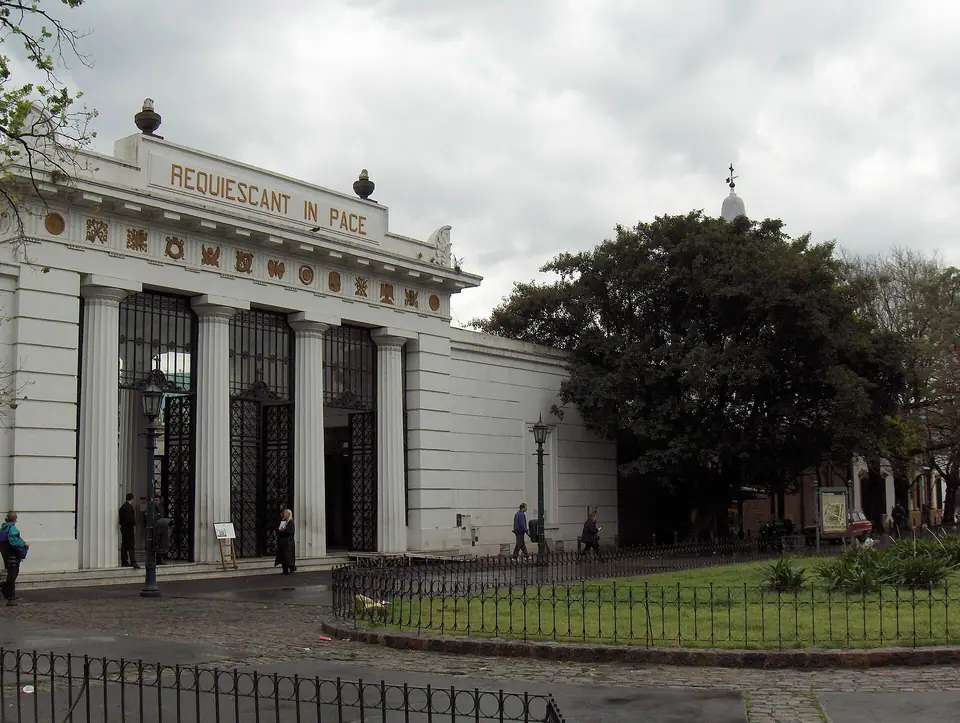
When the Recollect monastic order was dissolved in 1822, Governor Martín Rodríguez and minister Bernardino Rivadavia converted the convent's vegetable garden into the city's first public cemetery, inaugurated on 17 November 1822 as the Cementerio del Norte and redesigned in 1881 by architect Juan Antonio Buschiazzo with a neoclassical Doric entrance peristyle. Laid out like a miniature grid city of stone walkways, La Recoleta Cemetery contains more than 4,600 above-ground family vaults, over 90 of which are designated National Historic Monuments, built in Art Nouveau, neo-Gothic, Greek Revival, and Egyptian styles. Among the presidents, Nobel laureates, and writers buried here, the black granite Duarte family crypt holding the remains of First Lady Eva Perón (Evita) (1919 to 1952) draws visitors year-round. Directly adjoining the cemetery wall stands the whitewashed colonial Basílica Nuestra Señora del Pilar, consecrated in 1732 with original baroque altars adorned with Upper Peruvian silver.
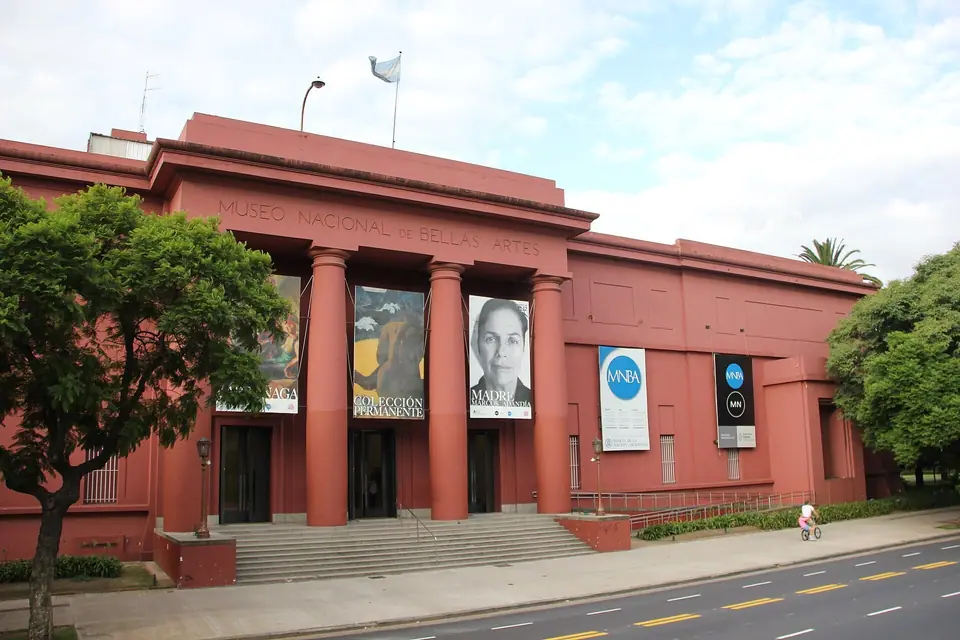
Museo Nacional de Bellas Artes (MNBA) and Floralis Genérica
Across the rubber-tree shade of Plaza Intendente Alvear and Avenida del Libertador stands the Museo Nacional de Bellas Artes (MNBA). Opened on 25 December 1895 under painter Eduardo Schiaffino and moved in 1933 to 1943 into an 1870 municipal water pumping house remodelled by architect Alejandro Bustillo, the museum holds Argentina's richest public collection of fine art. Its ground-floor galleries pair 19th-century European canvases by Rodin, Manet, Degas, Van Gogh, Monet, and Goya with pioneering Argentine painters including Prilidiano Pueyrredón, Cándido López, Xul Solar, and Antonio Berni. Just behind the museum in Plaza de las Naciones Unidas rises Floralis Genérica, a 20-metre-tall, 18-tonne stainless-steel and aluminium flower sculpture gifted to the city in 2002 by Argentine architect Eduardo Catalano.
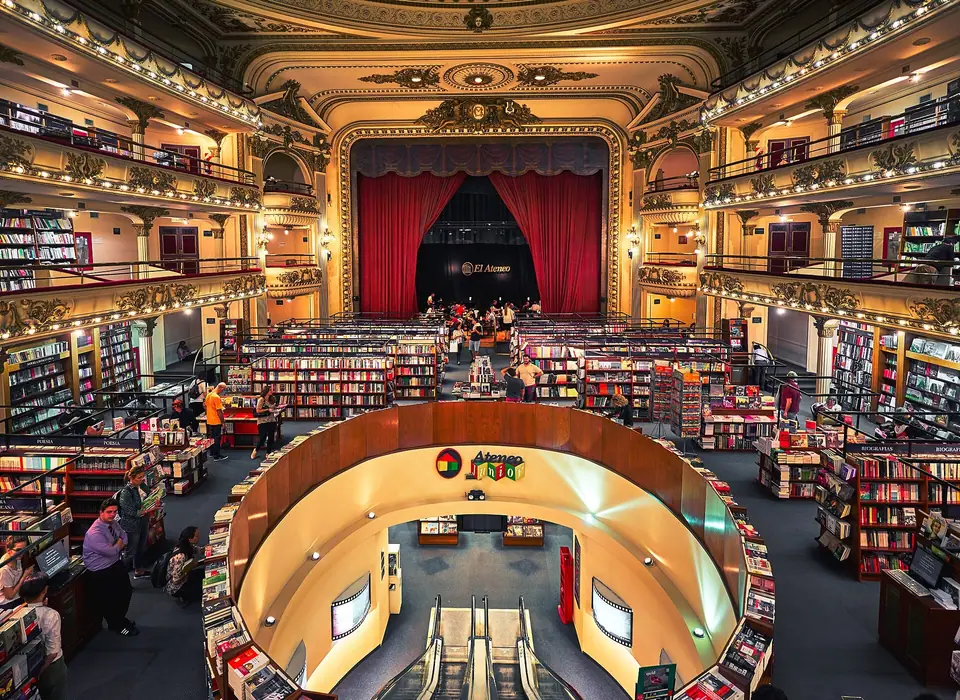
El Ateneo Grand Splendid (1919)
Ten minutes south along Avenida Callao and Avenida Santa Fe (at Santa Fe 1860 in Barrio Norte/Recoleta) sits El Ateneo Grand Splendid. Designed by architects Peró and Torres Armengol for impresario Max Glücksmann and inaugurated in May 1919 as the 1,050-seat Teatro Gran Splendid, where tango legend Carlos Gardel performed and recorded on the Odeon label, the building was converted in 2000 by architect Fernando Manzone into a flagship bookshop. The stalls where theatre seats once stood now hold rows of bookshelves beneath Italian painter Nazareno Orlandi's ceiling fresco celebrating peace after the First World War, while the crimson-curtained stage houses a quiet reading café. From Callao station on Subte Line D, you are two stops from Teatro Colón in one direction and Palermo in the other.
Traveller tips
Real advice from people who have been to Recoleta Cemetery, Bellas Artes, and El Ateneo Grand Splendid. Every tip is read by our team before it goes live.
No tips yet. Been here? Yours could be the first.
Thank you! Your tip will appear here after a quick review.
More in Buenos Aires
Continue exploring Buenos Aires with related neighbourhood, food, and planning guides
Best Time to Visit Buenos Aires: Seasons, Jacarandas, and Weather
Buenos Aires, Argentina
Where to Stay in Buenos Aires: Palermo, Recoleta, and San Telmo
Buenos Aires, Argentina
3 Days in Buenos Aires: Neighbourhoods, Tango, and Riverfront
Buenos Aires, Argentina
What to Eat in Buenos Aires: Asado, Empanadas, Choripán, and Helado
Buenos Aires, Argentina
