


























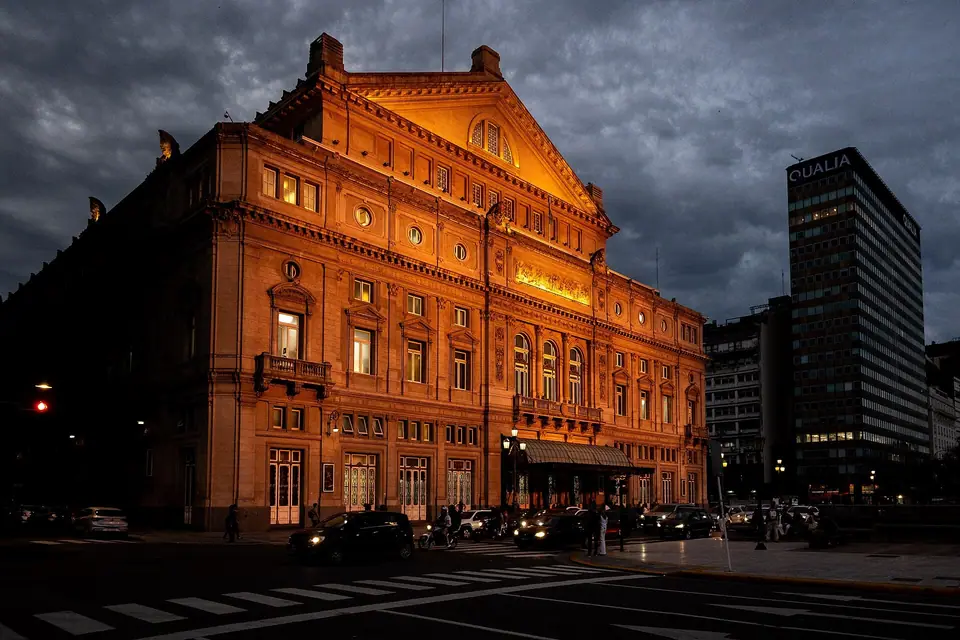
Teatro Colón, Obelisco, and Avenida Corrientes
Tour the 1908 Teatro Colón opera house, stand beneath the 1936 Obelisco on 110-metre-wide Avenida 9 de Julio, and walk Avenida Corrientes.
Where the 110-metre-wide expanse of Avenida 9 de Julio intersects the neon marquees of Avenida Corrientes, central Buenos Aires displays its grandest theatrical scale. Within a five-block radius around Plaza Lavalle and Plaza de la República stand one of the world's premier opera houses, the city's modernist 1936 monument, and a corridor of theatres, late-night bookshops, and vintage pizzerias that stays awake past midnight.
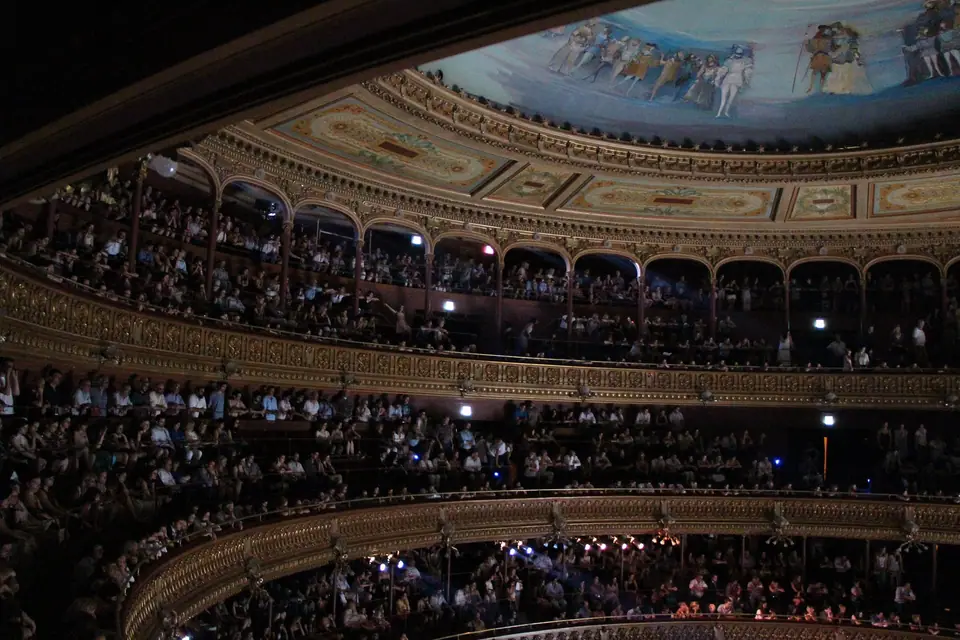
Teatro Colón (1908): Architecture and Guided Tours
Replacing an 1857 theatre that once stood on Plaza de Mayo, the current Teatro Colón took 20 years to build under three successive architects, Francesco Tamburini, Vittorio Meano, and Jules Dormal, before opening on 25 May 1908 with a performance of Giuseppe Verdi's Aida. Following a comprehensive restoration from 2006 to 2010 for Argentina's Bicentenary, the building ranks alongside Milan's La Scala and Vienna's Staatsoper in international acoustics surveys. Daily guided tours lead visitors up the Carrara marble main staircase beneath French stained glass, through the Versailles-inspired Salón Dorado (Golden Hall) and the Gallery of Busts, and into the seven-tiered horseshoe auditorium, which seats nearly 2,500 spectators with standing room for 500 more beneath ceiling frescoes painted in 1966 by Argentine artist Raúl Soldi. Check the official site to reserve tour times or evening concert tickets.
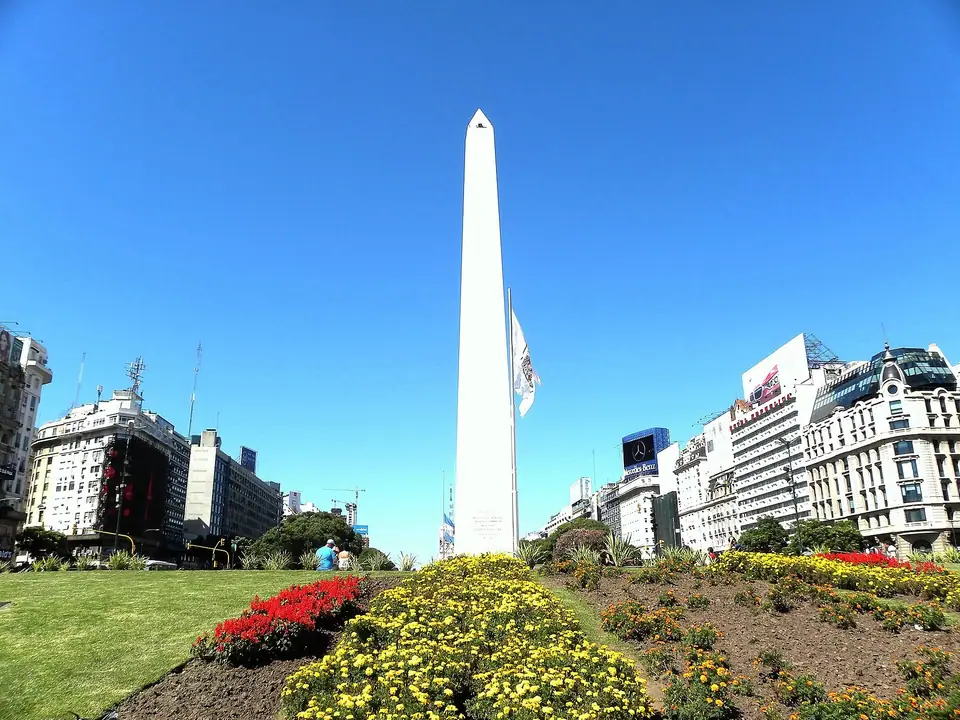
The Obelisco (1936) and Avenida 9 de Julio
Two blocks southeast of Teatro Colón at the centre of Plaza de la República rises the Obelisco de Buenos Aires. Designed by modernist architect Alberto Prebisch to commemorate the 400th anniversary of Pedro de Mendoza's first foundation of the city in 1536, the 67.5-metre reinforced-concrete monument was erected by 157 workers in just 31 days between 20 March and 23 May 1936. It anchors Avenida 9 de Julio, named for Argentina's Independence Day (9 July 1816), which spans 110 metres across up to seven traffic lanes in each direction, two landscaped side avenues (Cerrito and Carlos Pellegrini), and the central 3-kilometre Metrobus rapid-transit corridor inaugurated in July 2013, making it the widest avenue in the world.
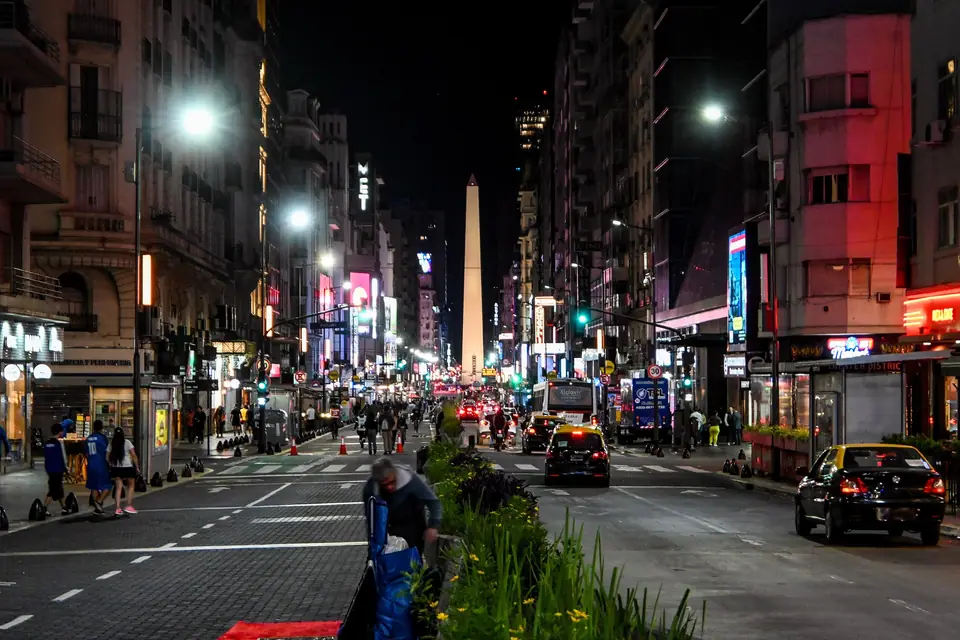
Avenida Corrientes: Theatres, Bookshops, and Fugazzeta
Running west from the Puerto Madero docks through the Obelisco towards Chacarita, the central stretch of Avenida Corrientes between Callao and Esmeralda is the Broadway and literary row of Buenos Aires:
- Theatres and Cinemas: Alongside the 3,200-seat Art Deco Teatro Gran Rex (also designed by Alberto Prebisch in 1937), dozens of commercial and independent playhouses line the avenue.
- Late-Night Bookshops: Dozens of narrow librerías de saldo (remainder and second-hand bookshops) keep their tables illuminated until past midnight so theatregoers can browse after curtain call, complementing the grand El Ateneo Grand Splendid a short walk north.
- Classic Pizzerias: Historic counters such as Güerrín, Las Cuartetas, and Banchero serve thick slices of mozzarella-and-onion fugazzeta and fainá straight from the oven.
Traveller tips
Real advice from people who have been to Teatro Colón, Obelisco, and Avenida Corrientes. Every tip is read by our team before it goes live.
No tips yet. Been here? Yours could be the first.
Thank you! Your tip will appear here after a quick review.
More in Buenos Aires
Continue exploring Buenos Aires with related neighbourhood, food, and planning guides

What to Eat in Buenos Aires: Asado, Empanadas, Choripán, and Helado
Buenos Aires, Argentina
Plaza de Mayo, Casa Rosada, and Avenida de Mayo
Buenos Aires, Argentina
San Telmo, Plaza Dorrego, and the Historic Market Hall
Buenos Aires, Argentina
La Boca, Caminito, and the Old Riachuelo Port
Buenos Aires, Argentina
