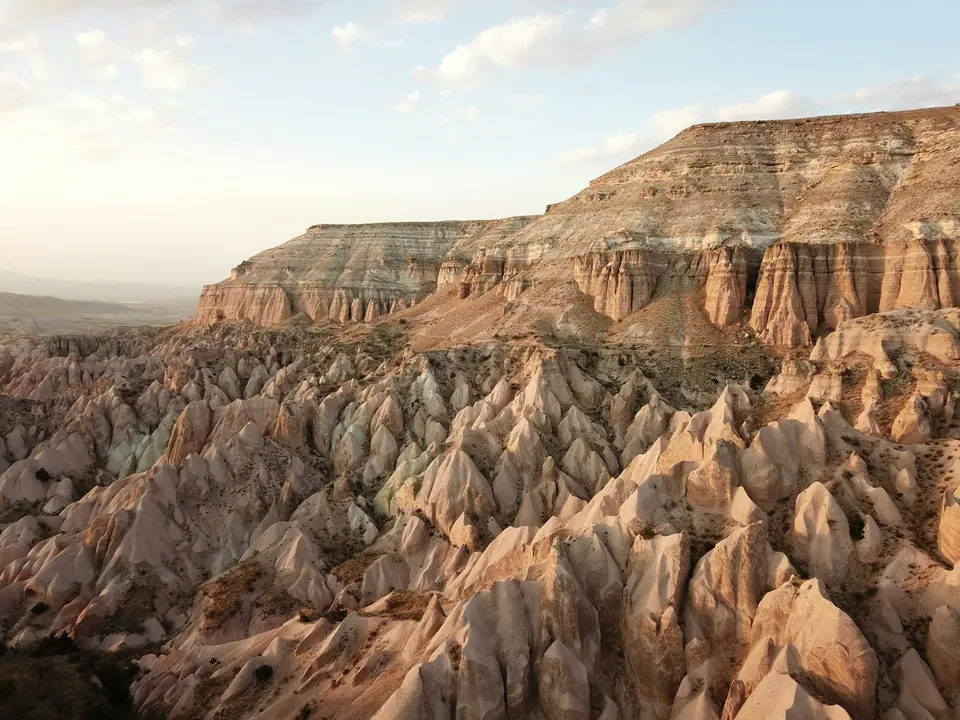
Photo by Kaan Kosemen on Unsplash
Best Things to Do in Cappadocia
A practical guide to the finest historic valleys, subterranean complexes, and cultural highlights across Cappadocia.
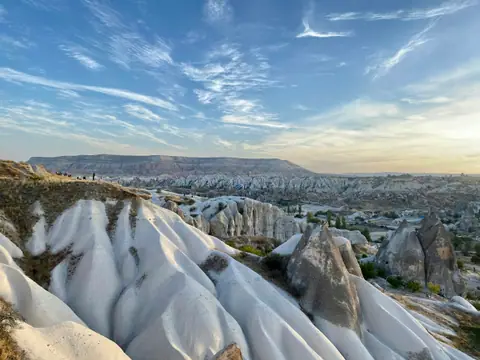
Planning a trip to Central Anatolia involves choosing between ancient monastic complexes, dramatic geological trails, and historic settlements. In Turkish, the regional name Kapadokya translates to land of beautiful horses. The landscape combines soft volcanic tuff with human engineering that spans over a thousand years. When planning a short stay or following our Cappadocia 2-Day Itinerary, visiting these landmarks offers direct insight into the heritage of the region.
Take a Morning Hot Air Balloon Flight
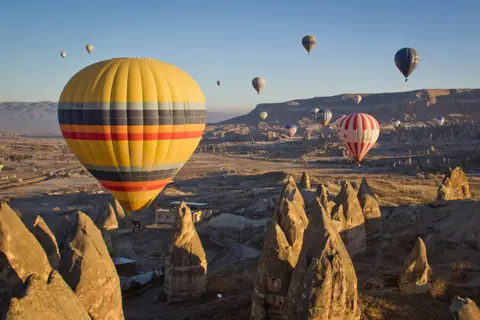
Soaring over the ridges at dawn remains one of the primary reasons travellers head to the region. Hot air balloon flights in Cappadocia last between one and one and a half hours. During the flight, passengers view the contours of the valleys and take photographs from high elevations. Wind conditions dictate whether baskets lift off, so scheduling your flight on your opening morning is sensible. If weather delays take place, you retain backup mornings later in your holiday. You can review detailed preparation tips in our Cappadocia Hot Air Balloon Guide before booking.
Explore Göreme and Zelve Open Air Museums
The monastic heritage of Central Anatolia is preserved within dedicated cultural reserves carved into volcanic rock. Göreme Open Air Museum and Zelve Open Air Museum preserve structures dating between the 4th and 11th centuries CE. These sites display historical cave dwellings, meeting spaces, churches, and monasteries. In Göreme, visitors discover painted sanctuaries that show the development of medieval Byzantine art. Zelve features three connected valleys where cave communities lived across multiple centuries. Both museums show how religious communities adapted the pliable stone for domestic shelter and spiritual retreats. For practical advice on visiting, read our Göreme Open Air Museum Guide.
Descend into Derinkuyu Underground Village
Below the surface of the plateau lies an intricate network of defensive tunnels and domestic chambers. Derinkuyu Underground Village is built across eight subterranean levels. The settlement was created thanks to the geological formation of Kapadokya. Local populations utilised the site to escape from enemies across long periods of conflict. The halls and chapels of Derinkuyu reflect early Christianity from the 4th to the 8th centuries. The engineering demonstrates sophisticated planning for emergency occupation.
Survival underground required extensive defensive and municipal planning. Derinkuyu was equipped with massive stone doors, a complex ventilation system, and deep wells to endure prolonged sieges. The heavy circular stone doors could roll across passages to seal off internal sections against intruders. Vertical shafts supplied fresh air through every tier down to the lowest corridors. Wells guaranteed access to fresh water without requiring residents to emerge above ground. Travellers who want to compare subterranean sites can consult our Cappadocia Underground Cities guide.
Hike the Loop Between Gül and Meskendir Valley
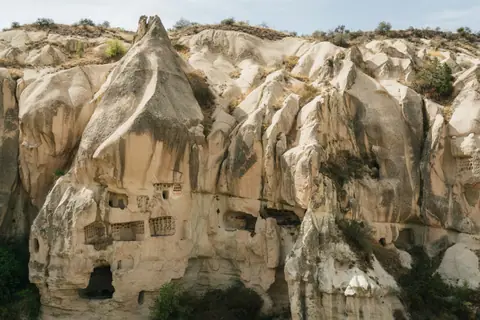
Walking along the valley floors allows travellers to experience the varied rock colours without vehicle noise. A trail loop runs between Gül and Meskendir Valley. This path connects dramatic ridges and carved cliff facades along an accessible route. Hikers pass ancient pigeon lofts and orchards tended by local villagers. Walking early in the day provides cooler temperatures and quiet trail conditions. Sturdy footwear is helpful on the loose volcanic dust found throughout the valley paths.
Walk the Length of Ihlara Valley
Located towards the south-west of the region, Ihlara Valley offers a dramatic river canyon experience. The Melendiz River flows through the Ihlara Valley, providing lush vegetation beneath sheer vertical cliff walls. Ihlara Valley extends for 14 kilometres and reaches depths of up to 120 metres. Visitors walk along shaded paths beside the water while exploring historic religious structures. The natural park remains accessible throughout the week, as Ihlara Valley is open every day. Always check the official site for current visitor regulations before your journey.
Discover the Historic Churches of Ihlara
Rock-cut shrines line the canyon walls above the Melendiz River. Ağaçaltı Church and Yılanlı Church are the two most popular rock-cut churches in the Ihlara Valley. These religious monuments preserve historical wall art from medieval Christian traditions. For instance, the frescoes inside Ağaçaltı Church date back to the 9th to 11th centuries. High up the canyon walls, visitors can view representations of biblical scenes painted directly onto smoothed rock surfaces.
Further along the canyon, additional settlements demonstrate deep community history. Kırkdamaltı Church is situated in Belisırma Village within Ihlara Valley. An inscription confirms that Kırkdamaltı Church was decorated by Lady Tamar between 1283 and 1295. This historical phase occurred during the joint reigns of Sultan Mesut II and Emperor Andronikos II. The structure illustrates how local culture endured across shifts in regional political authority. In addition to ecclesiastical heritage, archaeological work in the canyon has yielded unusual finds. A total of 17 cat mummies dating from the 10th to the 13th centuries have been discovered in Ihlara Valley. Twelve cat mummies from Ihlara Valley are displayed in the Aksaray Museum, and five are kept in the Niğde Museum.
Visit Selime Cathedral
At the northern terminus of the river canyon stands an immense architectural wonder cut into the hillside. Selime Cathedral is a vast carved rock complex situated at the far end of Ihlara Valley. Builders shaped the native rock into a monumental religious compound featuring vast halls, kitchens, and ceremonial chambers. Columns and arches carved directly out of the cliff show the skill of medieval stonemasons. Climbing the worn rock stairs provides commanding views over the surrounding plains and the canyon entrance.
See the Red Church Near Güzelyurt
A short drive from the main valley route brings visitors to historic stone architecture near Güzelyurt. The Red Church outside Güzelyurt is a monument dating to the 6th century. Unlike the rock-hewn chapels found in nearby canyons, this landmark stands as a freestanding masonry building constructed from local red volcanic stone. It serves as an important surviving example of early church architecture in Central Anatolia. A trip to the church pairs well with a quiet walk through the stone streets and traditional courtyards of Güzelyurt village.
Watch Traditional Pottery Making in Avanos
Craftsmanship in the northern sector of the region dates back across multiple millennia. The Avanos district in Cappadocia is renowned for pottery making. Artisans shape red clay extracted from the nearby river banks using foot-powered kick wheels. Many workshops welcome visitors into carved rock premises to observe the turning and glazing processes. Watching an experienced potter throw a vase by hand demonstrates an artistic technique passed down through generations of local families.
Where it is
- 1Central Cappadocia
- Kayseri Erkilet International Airport (ASR) · about 60 km from the central Cappadocia in a straight line
- Directions in Google Maps
Stations and taxi ranks: OpenStreetMap. Airports: OurAirports. Distances are in a straight line.
Traveller tips
Real advice from people who have been to Cappadocia. Every tip is read by our team before it goes live.
No tips yet. Been here? Yours could be the first.
Thank you! Your tip will appear here after a quick review.
More in Cappadocia
Continue exploring Cappadocia with related neighbourhood, food, and planning guides