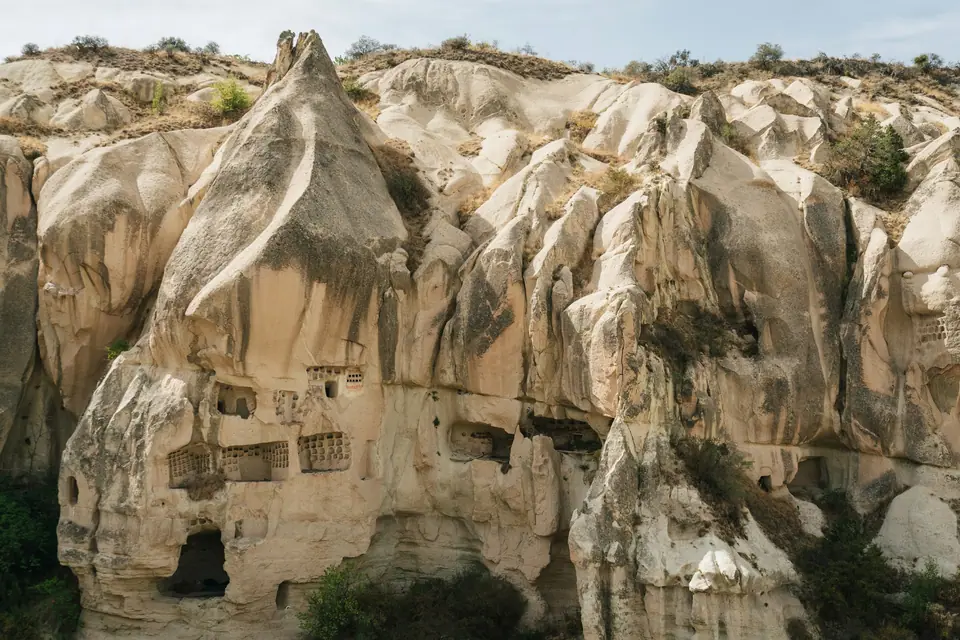
Photo by Nick Night on Unsplash
Cappadocia Underground Cities: Derinkuyu or Kaymaklı?
A practical guide comparing Derinkuyu and Kaymaklı to help you choose which subterranean refuge to explore.
Across the region of Kapadokya, which translates to land of beautiful horses in Turkish, deep subterranean networks hide beneath the volcanic plains. People carved these complexes directly into soft volcanic tuff over many centuries. Today, travellers commonly choose between the two major settlements of Derinkuyu and Kaymaklı. Both sites served as extraordinary refuges during times of conflict.
Understanding how these complexes functioned makes exploring them far more rewarding. To plan your wider travel schedule, read our Cappadocia Travel Guide: What to Know Before You Go for helpful context.
The Purpose of Underground Refuges
The primary purpose of an underground settlement like Derinkuyu was to serve as a secure, temporary refuge against military threats. Local populations did not reside underground on a permanent basis. Instead, farming communities retreated beneath the surface when hostile armies advanced across the open plains.
Halls and chapels inside Derinkuyu reflect the austere beauty and secrecy of early Christianity between the 4th and 8th centuries. When raids threatened regional towns, thousands of people moved below ground. They brought provisions, domestic tools, and livestock into carefully protected volcanic chambers.
Communities could endure extended sieges because the subterranean complexes were completely self-contained. Sealed corridors and ingenious survival infrastructure kept the occupants safe until enemy forces moved on.
Derinkuyu: Scale and Engineering
Derinkuyu represents one of the most intricate subterranean engineering projects in the ancient world. The settlement was constructed across eight storeys, cut deep into the ground thanks to the geological formation of Kapadokya. Visitors can descend eight floors when touring this underground city.
The subterranean layout contains specific functional partitions. Derinkuyu includes spaces dedicated as a kitchen, a living room, and a place of worship. Walking down through the cool rock chambers reveals how entire communities organised communal life under intense pressure.
Survival depended on protection and fresh air. Derinkuyu featured massive stone doors designed to seal off internal passages from hostile intruders. GoTürkiye says the city served as a secure, temporary refuge against military threats. Its halls and chapels, the portal adds, reflect the austere beauty of early Christian life between the 4th and 8th centuries. To sustain life deep within the earth, builders constructed a complex ventilation system that brought air from the surface down to the lowest storeys. The site also incorporates deep wells that ensured self-sufficiency during long sieges, giving residents clean drinking water without venturing outside.
Kaymaklı: Maze of Daily Life
Kaymaklı provides a distinctly different physical experience compared to the vertical descent of Derinkuyu. This underground city features lower, maze-like levels that feel intensely lived in. The design spreads out through interconnected networks of communal rooms and low-ceiling corridors.
Walking its narrow corridors helps you picture how everyday routines continued underground even in times of fear. The rooms display evidence of shared cooking spaces, storage pockets carved into rock faces, and close domestic quarters. Kaymaklı tends to feel tighter and more winding than Derinkuyu. You will often need to crouch to move between adjacent chambers.
Comparing Derinkuyu and Kaymaklı
Selecting the right site depends on what kind of space you prefer to explore. Derinkuyu is defined by vertical depth. Descending eight storeys through grand shafts and past deep wells gives an unforgettable sense of engineering ambition. The chambers feel tall in places, though the descent takes you far underground.
Kaymaklı emphasises horizontal sprawl. Its maze-like levels feel closer to an inhabited village, offering immediate insight into close communal survival. However, its low corridors can feel more restrictive for visitors who dislike enclosed spaces. If you are prone to claustrophobia, Derinkuyu generally offers wider central shafts, though both sites involve narrow passages.
For most visitors, exploring one underground city is sufficient for a single holiday. Touring both back-to-back can feel repetitive, as both share similar volcanic architecture and defensive features.
What to Know Before Entering
Underground temperatures remain cool and steady throughout the year, insulated by metres of volcanic stone above. Bring an extra layer of clothing even during warm summer afternoons. Sensible walking shoes with reliable grip are essential, because rock steps inside the tunnels can be worn smooth by centuries of foot traffic.
Anyone with severe back issues or extreme claustrophobia should proceed with caution. Tunnels connecting the main chambers can be low, requiring travellers to stoop or bend. Check the official site for entry regulations and tickets before travelling to either location.
Combining the Underground Cities with a Route
Visiting an underground city fits naturally into a broader exploration of historical sites across southern Kapadokya. Many visitors pair a morning underground with a trip to Ihlara Valley. You can see how this combination works by consulting our Cappadocia 2-Day Itinerary.
Along the Ihlara Valley trail, you can visit Ağaçaltı Church and Yılanlı Church, which stand out as the two most popular rock-cut churches in the canyon. At the far end of the valley stands Selime Cathedral, where the volcanic rock has been shaped into a vast, dramatic complex.
Another rewarding stop on this southern route is the historic town of Güzelyurt. Just outside the settlement stands the Red Church, a striking 6th-century monument. Within Güzelyurt itself, you can visit the Church Mosque to observe how faith and community have shared the same walls across centuries. The town also features Bell Church and High Church, set among quiet courtyards and stone streets.
Other Historical Highlights in Kapadokya
Underground cities represent one facet of the rock-cut heritage across this region. To understand life above ground, visit Göreme Open Air Museum and Zelve Open Air Museum. Both open-air complexes contain structures dating from between the 4th and 11th centuries CE, illustrating how monastic communities carved homes and chapels directly into cliff faces.
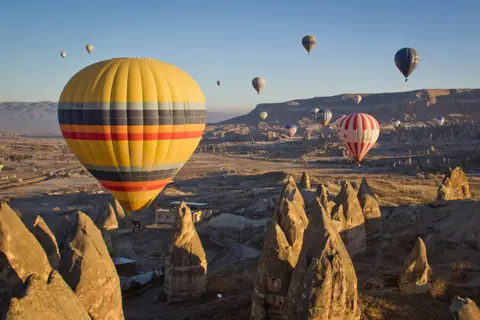
Above the valleys, hot air balloon flights offer panoramic views over the volcanic formations. On foot, outdoor enthusiasts can follow a fantastic hiking trail loop that connects Gül Valley and Meskendir Valley.
If you wish to explore traditional crafts after your subterranean tour, head to Avanos. This regional town is famous for its pottery, sustained by centuries of artisanal tradition using local river clay.
Where it is
- 1Cappadocia Underground Cities
- Kayseri Erkilet International Airport (ASR) · about 79 km from here in a straight line
- Directions in Google Maps
Stations and taxi ranks: OpenStreetMap. Airports: OurAirports. Distances are in a straight line.
Traveller tips
Real advice from people who have been to Cappadocia. Every tip is read by our team before it goes live.
No tips yet. Been here? Yours could be the first.
Thank you! Your tip will appear here after a quick review.
More in Cappadocia
Continue exploring Cappadocia with related neighbourhood, food, and planning guides