


























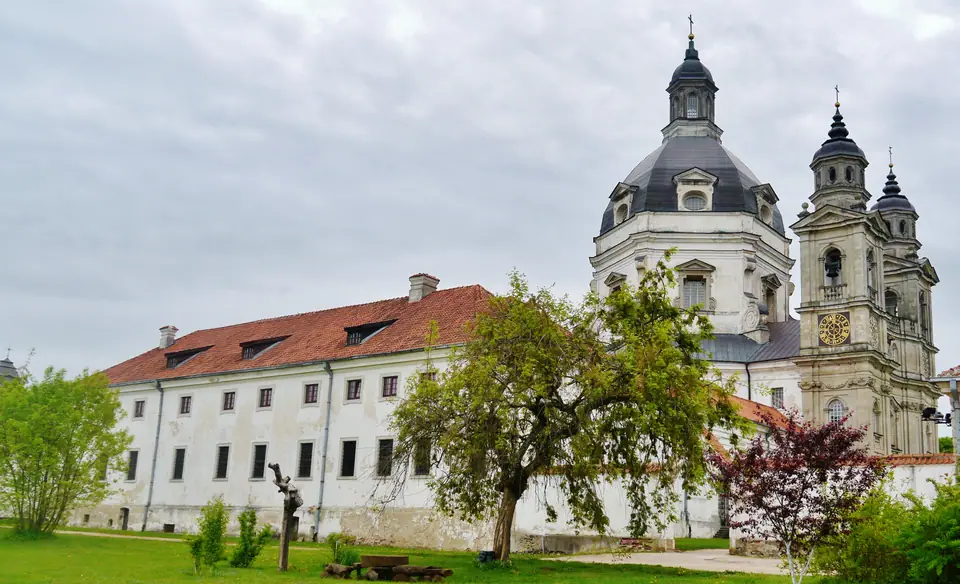
Photo: Zairon · CC BY-SA 4.0
Pažaislis Monastery: Baroque Abbey on Kaunas Reservoir
Nine kilometres east of central Kaunas, Pažaislis Monastery rises from lakeside pines as Lithuania's landmark Italian Baroque complex beside active sisters.
East of Kaunas's brick Old Town and interwar avenues waits a calmer world of pine forest, water, and Italian domes. Standing on a shaded green peninsula along Kaunas Reservoir (Kauno marios, KOW-no MAH-ryoss), Pažaislis Monastery (pah-ZHAY-sleess) forms a remarkable high Baroque complex in north-eastern Europe. Reaching this serene sanctuary by public trolleybus takes roughly half an hour. That brief trip turns an afternoon excursion into welcome relief from busy urban pavements.
Unlike crumbling abbey ruins scattered across Europe, Pažaislis remains a living home for Catholic nuns in addition to well-tended museum galleries. Visitors pass straight through whitewashed gatehouses onto crisp manicured lawns framed by twin belfries and pink marble portals. Even between concerts, cool lake breezes drift quietly across meadows where seventeenth-century hermits once gardened in silence. Red roofs vanish quickly into towering pines along the narrow spit separating the abbey from sandy water. Beyond the main avenue, forest trails edge gently around small wooden piers overlooking broad calm bays.
Italian Baroque marble funded by a Grand Chancellor
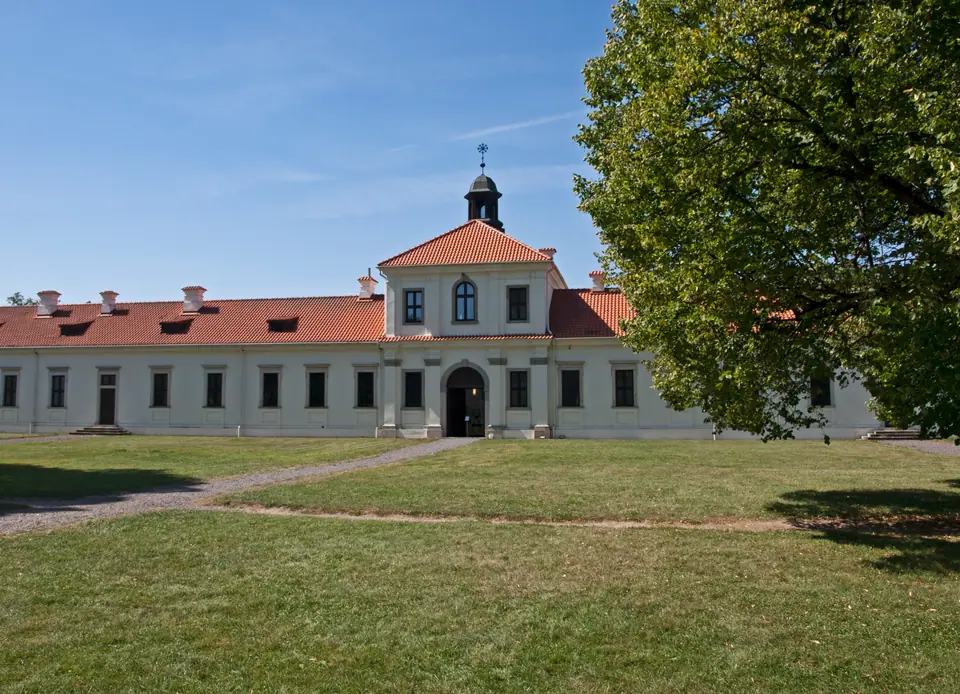
Pažaislis owes its warm southern European craftsmanship to Lithuanian Grand Chancellor Krzysztof Zygmunt Pac and his Italian-born wife Klara Izabela de Mailly Lascaris. Seeking a remote woodland hermitage far from noble estates, Pac founded the abbey in 1664 for contemplative Camaldolese monks. Major building began with cornerstone ceremonies in 1667. No expense was spared recruiting Italian architects, Lombardy stucco masters, and Florentine painters straight to the Nemunas valley.
Architect Giovanni Battista Frediani designed a bold hexagonal Abbey Church crowned by an octagonal cupola and flanked by axial cloister wings. Teams hauled dramatic black and pink marble slabs all the way from quarries near Kraków and Salzburg. Sculptors carved glowing altars, twisted columns, and sweeping doorways right inside the quiet timber woodland. Above the sanctuary, Florentine painter Michelangelo Palloni decorated vaults and walls with luminous fresco cycles, work brought to formal consecration in 1712.
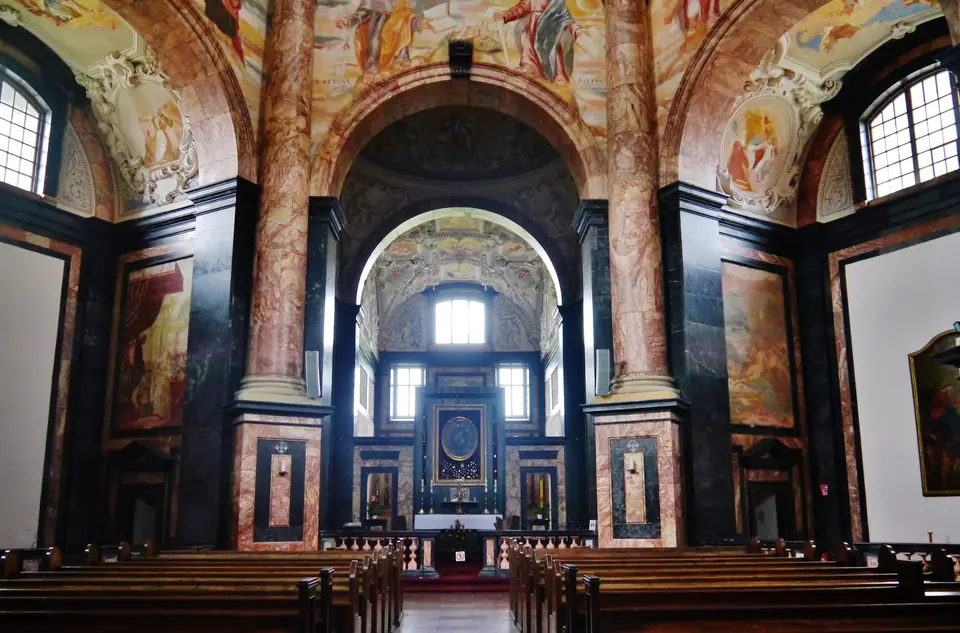
Pac himself chose humble burial directly beneath the stone threshold of the church portal so arriving worshippers stepped across his stone marker. Looking upward inside the hexagonal nave reveals crisp white stucco garlands framing biblical scenes without garish gold leaf. Sculptors shaped soaring angels, botanical wreaths, and quiet baroque movement out of smooth plaster glowing soft cream in natural window light. Walk quietly through the timber gallery corridors and vaulted chapter house, where restored seventeenth-century ceiling frescoes hold rich natural pigment. Respect boundary notices dividing public museum wings from private enclosed convent rooms where residents pray and live daily. Evening light slanting across the tall south nave windows reveals every chisel stroke across the marble altars.
Camaldolese seclusion, Soviet years, and returning sisters
Stormy Baltic politics tested Pažaislis repeatedly across two centuries after its Baroque completion. Following the failed 1831 uprising against Russian imperial rule, Tsarist officials suppressed the Catholic order in 1832. Authorities converted the monastery into a Russian Orthodox abbey and painted over portions of its Italian frescoes. After Lithuania restored independence, Pope Pius XI entrusted Pažaislis to the Sisters of St Casimir in 1920, who arrived to repair looted buildings and reopen schools.
Soviet occupation brought harsher disruption after 1948 when officials expelled the sisters and shuttered active religious life. Over subsequent decades, sacred halls served successively as a central state archive, a tourist camp, and even a psychiatric hospital. Meanwhile, nearby hydroelectric engineering dammed the Nemunas valley in 1959, flooding wooded pastures below Pažaislis into broad Kaunas Reservoir. Following Lithuanian independence, the state returned the entire ensemble to the Sisters of St Casimir in 1992, letting resident nuns restore quiet spiritual life and cultural hospitality.
Inside the outer guest wing, visitors occasionally find a quiet hospitality courtyard and peaceful gardens cared for by the congregation. Notice how the dam transformed Pažaislis from a hilltop woodland retreat into an intimate lakeside sanctuary surrounded by yacht moorings and walking paths. Resting quietly on courtyard benches after gallery hours reveals soft chimes from the tower clock and birdsong across surrounding pine woods. Staying on through late afternoon lets sunset light glow warm rose across the stucco twin towers and water.
Etiquette, festival concerts, and reaching Kaunas Reservoir
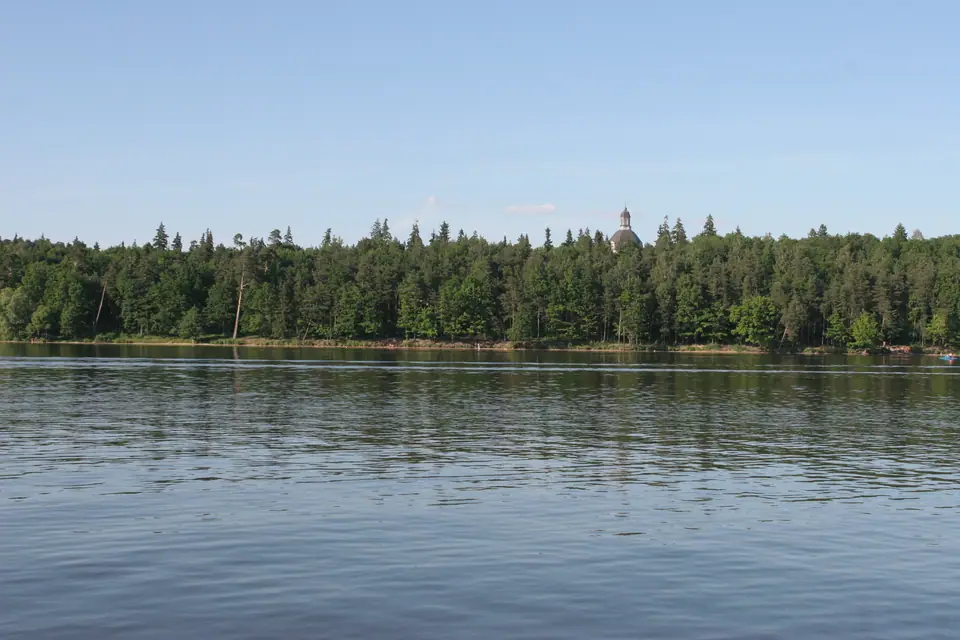
Respecting that living convent rhythm shapes every practical step of a pleasant outing from central Kaunas. Because Pažaislis joins active sanctuary space, heritage museum rooms, summer concerts, and forested reservoir paths, simple planning prevents unexpected closed gates or entry refusals at the courtyard arch. Arrive with quiet patience, allow extra walking time through pine woodland from the trolleybus stop, and combine the grounds with lakeside trails for an unhurried half-day circuit.
- Direct trolleybuses from downtown: Board municipal Trolleybuses 5, 9, or 12 along central and station streets to the Kauno marios terminus. Follow shaded woodland tracks 600 metres past pine trees straight to the abbey gate.
- Active convent dress code: Wear modest clothing covering both shoulders and knees inside the Abbey Church and enclosed cloister galleries, especially during hot July afternoons.
- Gatehouse bans and closed days: Leave bicycles, electric scooters, dogs, and alcohol outside the courtyard walls. Check visitor hours on the official Pažaislis site beforehand, since Monday and holiday closures apply.
- Pažaislis Music Festival concerts: Running every June through August since 1996, this celebrated summer series presents roughly 30 classical, choral, and contemporary concerts outdoors and indoors. Book early through summer festival plans.
- Lakeside trails and Kauno marios beaches: Walk five minutes south outside the abbey wall after touring inside to discover sandy reservoir coves, pine walking paths, and open boat moorings. Combine the ride smoothly with contactless city fares detailed in our transport briefing.
Where it is
- 1Pažaislis Monastery
- Vilnius International Airport (VNO) · about 85 km from here in a straight line
- Directions in Google Maps
Stations and taxi ranks: OpenStreetMap. Airports: OurAirports. Distances are in a straight line.
Traveller tips
Real advice from people who have been to Kaunas. Every tip is read by our team before it goes live.
No tips yet. Been here? Yours could be the first.
Thank you! Your tip will appear here after a quick review.
More in Kaunas
Continue exploring Kaunas with related neighbourhood, food, and planning guides
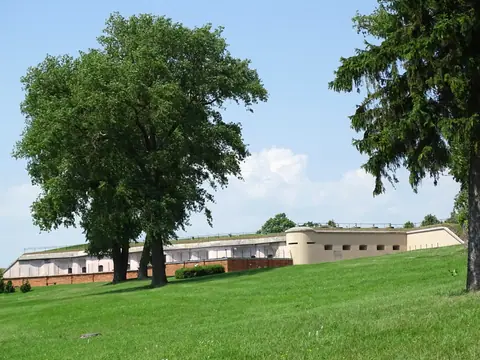
Ninth Fort Kaunas: History, Memorial and Practical Visit
Kaunas, Lithuania
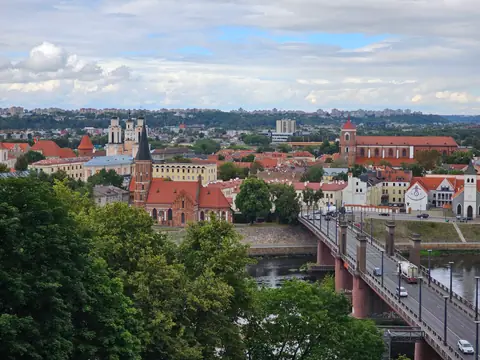
Kaunas at the River Fork: Brick Fortresses to Modernist Boulevards
Kaunas, Lithuania
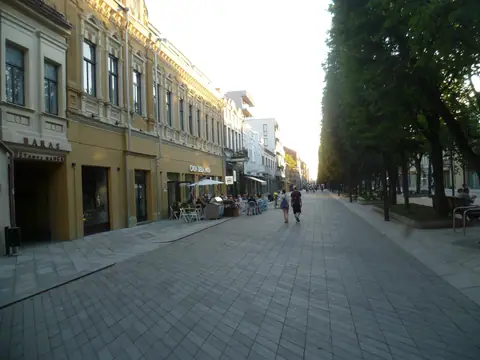
Castle Towers to Modernist Plazas: Walking Kaunas in Six Stops
Kaunas, Lithuania
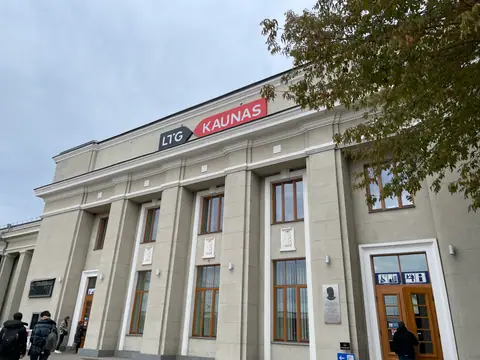
Kaunas Arrivals: Airport Bus 29G, LTG Rail and Contactless Transit
Kaunas, Lithuania
