


























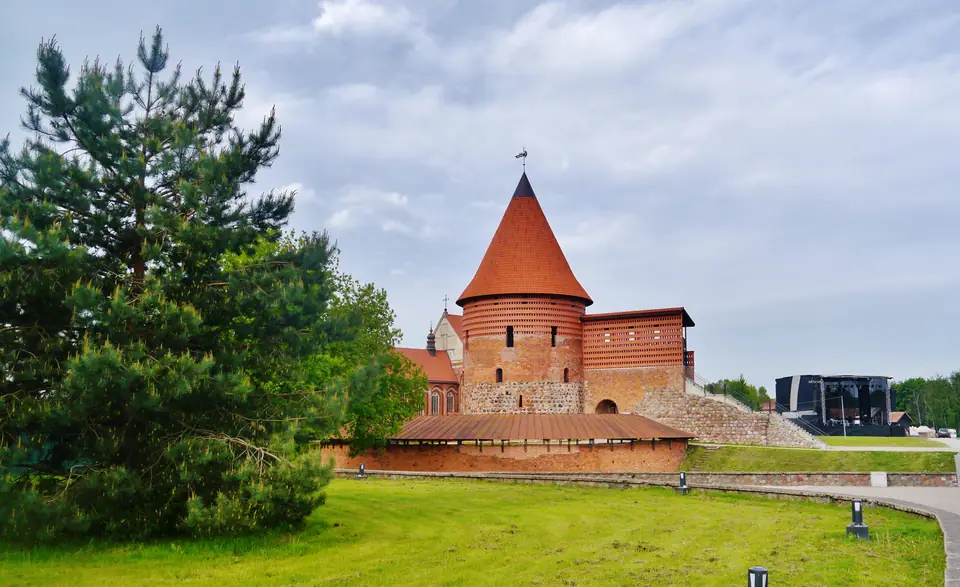
Photo: Zairon · CC BY-SA 4.0
Kaunas Castle and Old Town: Confluence and White Swan
Kaunas Old Town pairs fourteenth-century castle ruins at the river confluence with the renovated White Swan Town Hall and Brick Gothic merchant streets.
Kaunas began on a flat, flood-prone gravel point where the Neris joins the wider Nemunas. Walking west from Laisvės alėja into Senamiestis (seh-nah-MYESS-tees) reveals an intimate river town shaped by medieval warfare and Hanseatic trade. Compact cobbled streets trace six centuries of brick architecture across a single relaxed morning walk.
Unlike Vilnius with its Baroque hills or the coastal blocks of Gdańsk, Kaunas Old Town feels calm outside summer terrace hours. Willow lawns frame the western tip at Santaka Park, where locals walk dogs along sandy riverbanks below red fortress walls. Most key landmarks cluster within short walking reach between the castle moat and Town Hall Square.
Teutonic brick walls at the Nemunas and Neris confluence
Standing above the meeting of two major Lithuanian rivers, Kaunas Castle preserves monumental fourteenth-century brick defences. Builders raised its initial rectangular enclosure in the late fourteenth century from clay bricks and river boulders to check Teutonic Knight raids. Strategic geography turned this peninsula into an unavoidable Baltic border flashpoint.
In 1362, Teutonic Grand Master Winrich von Kniprode besieged the stronghold for weeks before storming its breached ramparts. Lithuanian armies recovered the strategic crossing soon after and built stronger concentric walls with round artillery bastions in the early fifteenth century. Later river floods washed away much of the northern curtain wall, leaving today's reconstructed south-eastern cylindrical tower, ditch, and defensive masonry.
Stepping inside the restored round tower leads into cool brick rooms operated by Kaunas City Museum. Exhibits display medieval siege gear, pottery shards recovered from the riverbed, and interactive displays tracing border diplomacy. Climbing the narrow spiral staircase rewards visitors with open views over Santaka Park lawns and the green Aleksotas ridge across the Nemunas.
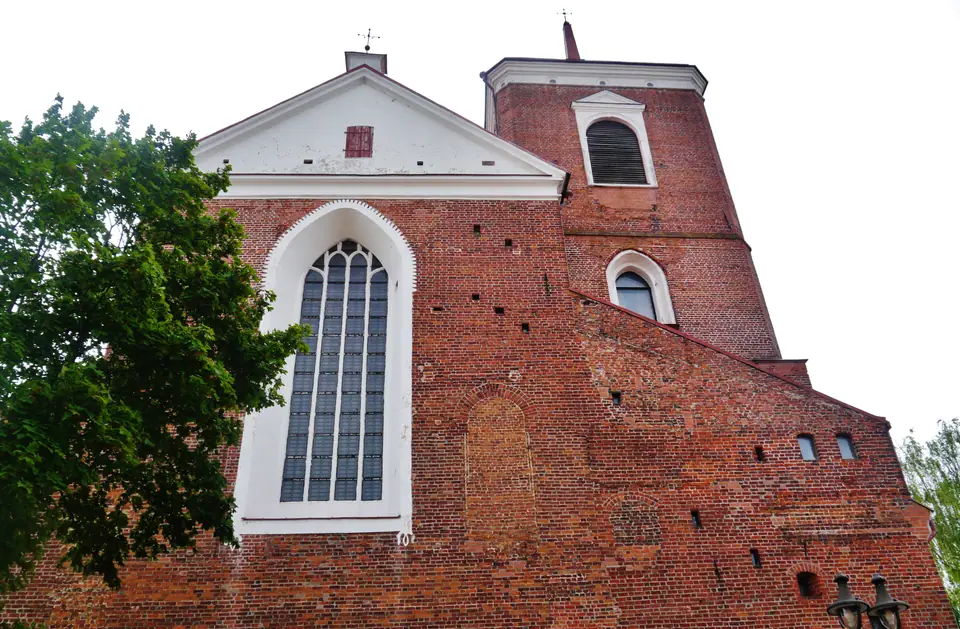
Directly south of the castle moat rises the tall red-brick silhouette of St George the Martyr Church and its neighbouring Bernardine friary. Erected around 1487, the tall hall church survived centuries of military requisitions, including Soviet-era use as a medical storehouse. Step inside its quiet medieval nave and glance through the walled monastery courtyard behind the chancel. Then continue south to contrast that soaring red Gothic masonry against the white stucco civic square two blocks away.
Town Hall Square and the White Swan restoration
Two minutes south of the fortress lies Rotušės aikštė, Kaunas's spacious main Old Town square ringed by former sixteenth-century merchant homes. Rising from the cobblestones stands the 53-metre tower of Kaunas Town Hall, long nicknamed the White Swan. Masons began its Gothic cellar walls back in 1542 when Kaunas functioned as a busy river customs station. Around the perimeter, historic pharmacy rooms, cellar pubs, and old merchant dwellings preserve irregular tiled rooflines dating from Renaissance and Baroque rebuilds.
Between 1771 and 1780, architect Jonas Matekeris unified earlier wings into a Baroque-Classical town hall crowned by a multi-tiered belfry. For decades, couples climbed its steps for civic weddings while visitors photographed the crisp white stucco facade. Following a thorough multi-year renovation, the White Swan reopened as a modernised museum hub run by Kaunas City Museum. Interactive displays now trace civic self-rule from medieval Magdeburg charters straight through to contemporary urban life.
Updated visitor routes explain historic municipal weights, merchant guild rules, and urban shifts without clutter. New exhibition galleries even grant rare views under steep timber attic rafters high above red Old Town tiles. Verify ticket hours on the Kaunas City Museum site beforehand, especially around summer weekend weddings noted in our seasonal calendar.
Along the southern edge of the square rises the twin-towered Baroque facade of St Francis Xavier Church and Jesuit Monastery, started in 1666 after recovery from Muscovite occupation. On the eastern side stands Kaunas Cathedral Basilica of Saints Peter and Paul, a monumental Gothic brick church crowned inside with bright eighteenth-century Baroque altars and vaulted arcades. Sit briefly near the eastern pews before walking out toward the Nemunas quay.
Gothic merchant houses, churches, and the Nemunas bank
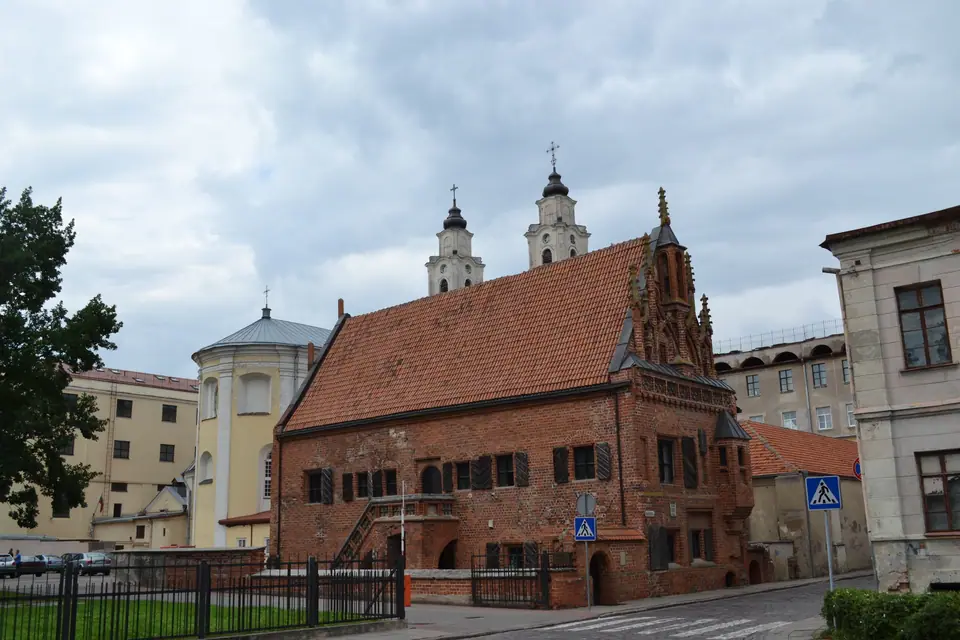
Two blocks southwest toward the Nemunas sits Perkūnas House (pehr-KOO-nahs) at Aleksoto Street 6, a remarkably preserved secular Brick Gothic landmark. Built in the late fifteenth century by Hanseatic merchants for salt and fur storage, its stepped street gable ripples with interlocking terracotta mouldings and delicate blind arcades. Romantic nineteenth-century writers wrongly linked it to a pagan thunder-god shrine after discovering a bronze figurine in the masonry.
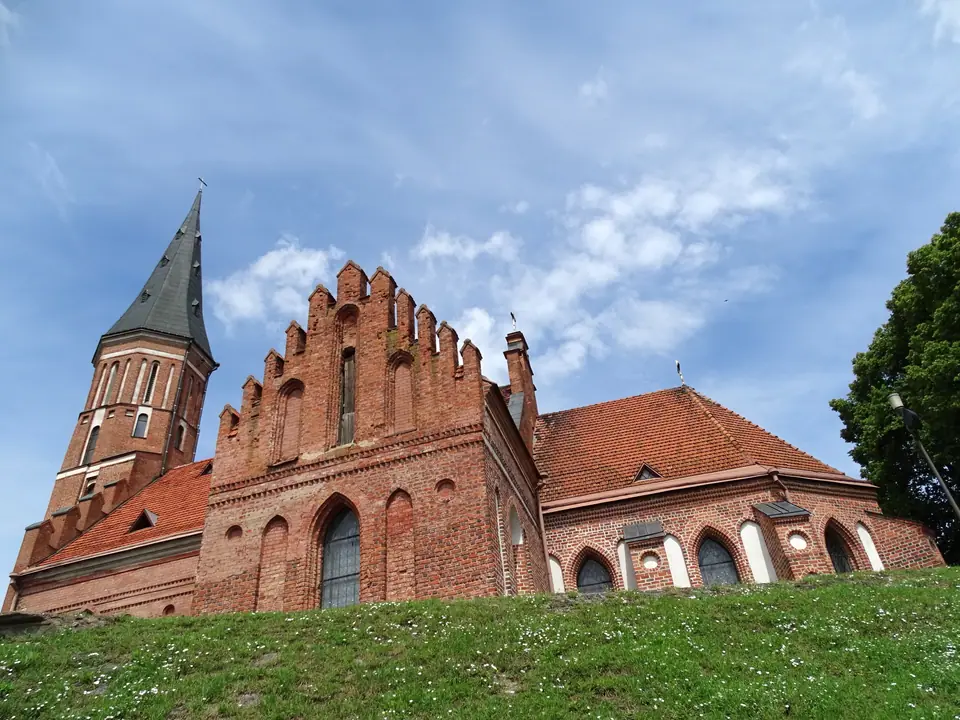
Walk another hundred metres along the quiet riverbank to reach Vytautas the Great Church, dedicated to the Assumption of the Blessed Virgin Mary. Erected around 1400 beside the historic river ferry quay, this Brick Gothic hall church follows a rare cross-shaped floor plan. Look near its entrance brickwork for flood-level markers recording how high spring ice jams once lifted the Nemunas.
Turning east out of Town Hall Square leads up Vilniaus gatvė, the cobbled spine linking Senamiestis with interwar Naujamiestis. Halfway along sits the Historical Presidential Palace of the Republic of Lithuania at Vilniaus Street 33. Built originally in 1846 as a noble home, this restrained mansion served as Lithuania's official presidential seat throughout Kaunas's provisional capital era from 1919 to 1940.
Its shaded front courtyard displays bronze statues of interwar presidents Antanas Smetona, Aleksandras Stulginskis, and Kazys Grinius. Farther east, Vilniaus Street crosses the former moat line straight onto wide Laisvės alėja. Along the river edge outside the old walls, paved walking trails circle grassy Santaka lawns beside weeping willows and wooden benches. Whether travellers sleep along cobbled lanes or book central apartments nearby, Old Town takes half a day to read slowly on foot.
Where it is
- 1Kaunas Castle and Old Town
- Vilnius International Airport (VNO) · about 95 km from here in a straight line
- Directions in Google Maps
Stations and taxi ranks: OpenStreetMap. Airports: OurAirports. Distances are in a straight line.
Traveller tips
Real advice from people who have been to Kaunas. Every tip is read by our team before it goes live.
No tips yet. Been here? Yours could be the first.
Thank you! Your tip will appear here after a quick review.
More in Kaunas
Continue exploring Kaunas with related neighbourhood, food, and planning guides
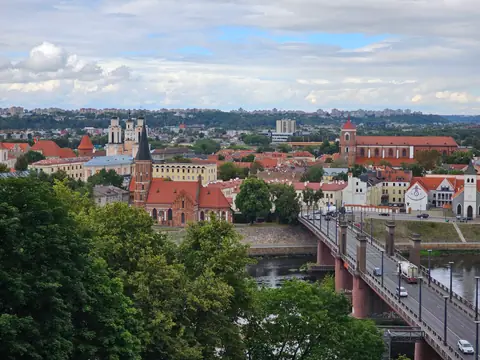
Kaunas at the River Fork: Brick Fortresses to Modernist Boulevards
Kaunas, Lithuania
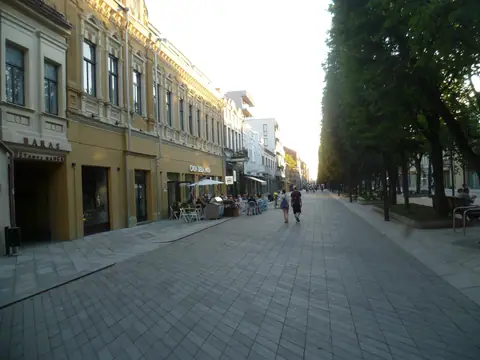
Castle Towers to Modernist Plazas: Walking Kaunas in Six Stops
Kaunas, Lithuania
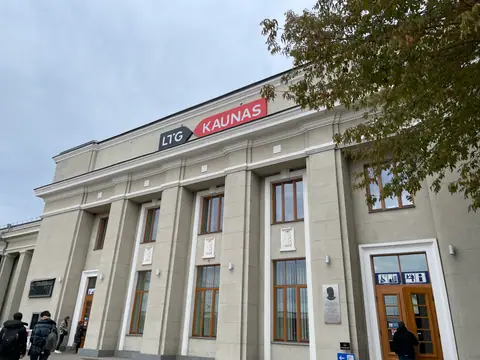
Kaunas Arrivals: Airport Bus 29G, LTG Rail and Contactless Transit
Kaunas, Lithuania
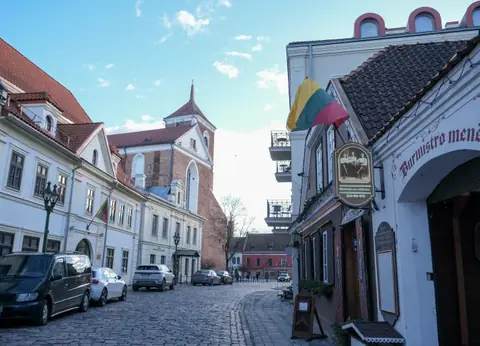
Senamiestis Cobbles to Naujamiestis Avenues: Where to Stay in Kaunas
Kaunas, Lithuania
