Photo: Bdx · CC0
What to Eat in Kaunas: Potatoes, Sour Cream and Bakeries
Kaunas plates Baltic comfort cooking: grated-potato cepelinai, cold pink šaltibarščiai, historic Spurginė doughnuts, Karaim kibinai, and dark rye bread.
Lithuanian dining in Kaunas balances two culinary worlds across the same cobbled and modernist streets. Traditional tavern kitchens serve dense winter peasant plates rooted in grated potato, cured pork, dark fermented rye, and fresh dill. Beside those hearty meals, university cafés and craft bars pour espresso and regional lagers along Laisvės alėja and Senamiestis.
Portion sizes in Kaunas catch unprepared visitors off guard far more often than menu prices. One classic hot potato plate normally fills a traveller for an entire afternoon river walk. Ordering a soup, main course, and dessert at one midday sitting leaves most diners unable to finish half their meal.
Cepelinai and the winter logic of Lithuanian potato dishes
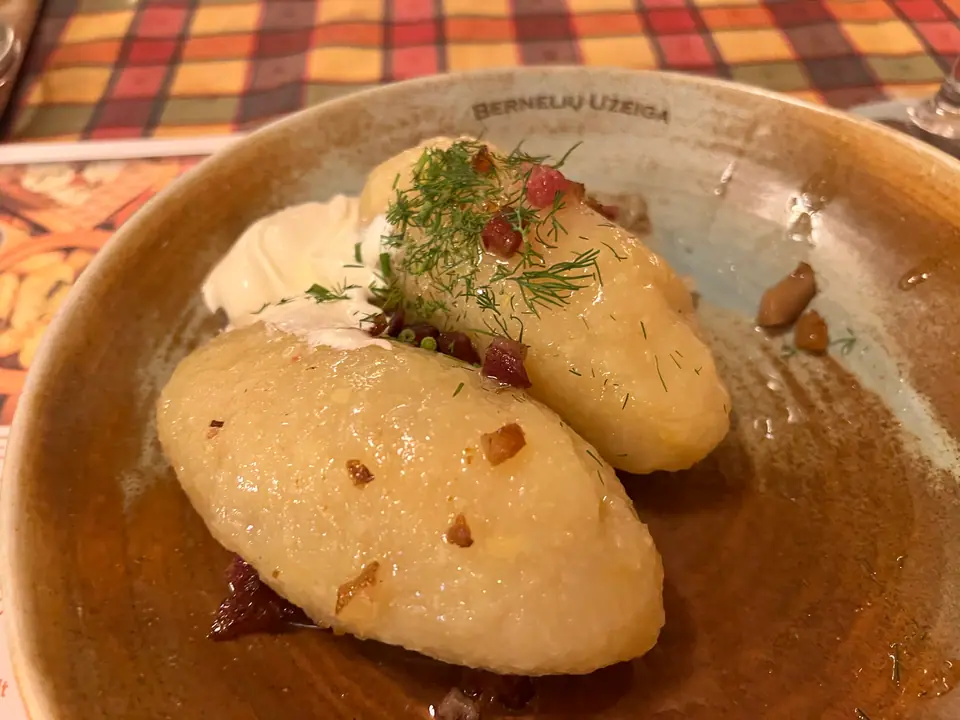
Cepelinai (tseh-peh-LEE-nay) remain Lithuania's national comfort staple across every neighbourhood in Kaunas. Measuring between 10 and 30 centimetres long, these heavy football-shaped dumplings earn their name from Zeppelin airships. Cooks originally called them didžkukuliai before early aviation supplied a memorable everyday nickname.
Kitchens mix squeezed raw grated potatoes with boiled mashed potato around seasoned minced pork, curd cheese, or mushrooms. Each oval simmers in salted water until its glossy grey skin turns tender. Plates arrive smothered in crisp fried bacon and onion spirgai with a rich spoonful of sour cream.
Waiters bring two hefty dumplings as a standard portion, though lighter appetites can request a half serving. Baked kugelis offers a crisp alternative combining grated potato, milk, eggs, and sautéed onion. Lingonberry sauce or cultured sour cream balances the rich savoury edges.
Cold šaltibarščiai and seasonal summer bowls
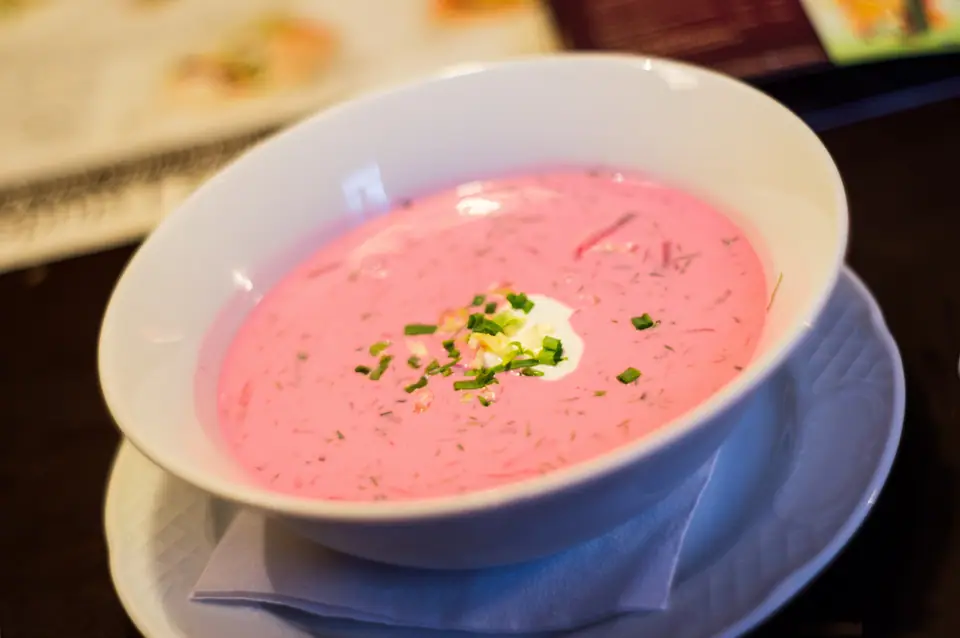
Summer shifts Kaunas appetites toward šaltibarščiai (shal-tee-BARSH-chay), a vivid bright-pink cold soup served between May and September. Cooks stir grated pickled or boiled beetroot into tangy kefir until the dairy glows bright magenta. Diced cucumber, fresh dill, spring onions, and halved hard-boiled egg complete each chilled ceramic bowl.
Traditional kitchens never serve cold beetroot soup without warm contrasting starch. A steaming side saucer of boiled or pan-fried potatoes dusted in dill sits right next to the bowl. Alternating cold creamy kefir with piping-hot salty potato handles humid afternoons outlined in our seasonal weather notes.
Spurginė doughnuts and Kaunas café habits along Laisvės alėja
Any food walk along Laisvės alėja should pause inside Spurginė at number 84. Operating since the late 1960s and 1970s, this tiny Soviet-era doughnut counter retains vintage wood panelling, mosaic walls, and tall standing tables. Glass cabinets display freshly fried sugar-dusted rings next to warm curd-filled varškės spurgos and savoury meat doughnuts.
Locals queue daily before afternoon trays sell down, so carry paper banknotes or coins because Spurginė takes strictly cash. Strong black coffee or sweet cocoa pairs easily with two warm curd rings before exploring nearby interwar buildings. Independent roasters across Naujamiestis and Senamiestis extend Kaunas's interwar coffeehouse tradition into bright espresso bars.
Karaim kibinai pastries and cured skilandis beyond potato plates
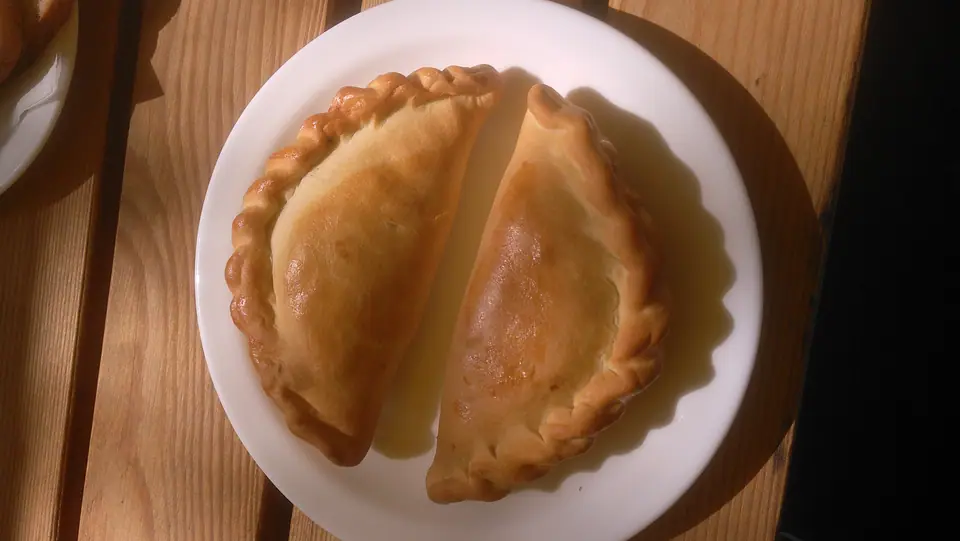
Stepping beyond potato classics quickly reveals kibinai (KEE-bee-nay), golden crescent-shaped hand pies crimped with a braided pastry seam. Brought to Lithuania by the Turkic-speaking Karaim community of Trakai in the late fourteenth century, warm kibinai fill Old Town bakery counters. Crisp pastry encases juicy chopped mutton, pork, chicken, or curd with spinach.
Savoury beer snacks open with kepta duona, deep-fried sticks of dark rye bread rubbed generously with raw garlic and served with melted cheese sauce. Equally classic is skilandis (skee-LAHN-dees), an aged pork sausage holding European Traditional Speciality Guaranteed status. Butchers pack coarse pork and bacon inside natural casings, curing each loaf for at least four weeks over cold alder smoke.
Šakotis tree cake, craft beer, and honey mead
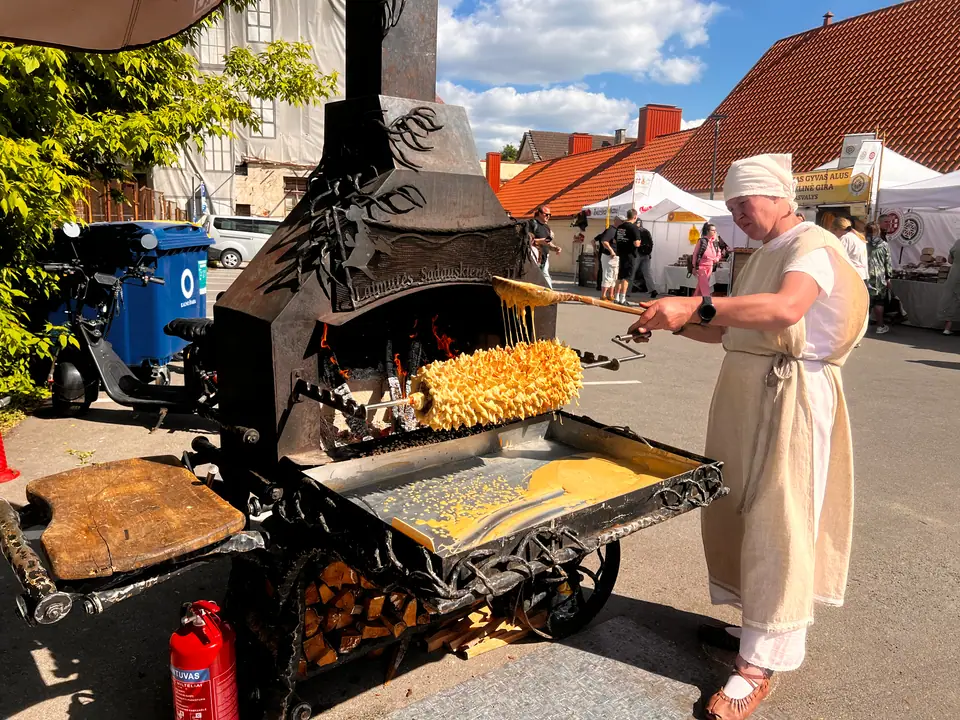
Celebration tables showcase šakotis (shah-KO-tees), the hollow spiked tree cake baked onto a turning spit beside open birch embers. Bakers drip batter rich with egg yolks, butter, sour cream, and flour as the spit spins outward into crisp golden spikes. Shards of dry šakotis keep for weeks next to black tea.
Kaunas brewing heritage anchors evening tables around the historic Volfas Engelman brewery near the station, operating since 1853. Taprooms pour unfiltered Baltic ales beside light, non-alcoholic gira fermented from toasted rye crusts. Older tasting traditions survive in Lithuanian midus, spiced honey mead traced back through 1555 printed Baltic accounts.
Market halls and honest lunch counters across town
Weekday travellers eat like residents at market halls and local canteen counters. The market near the railway hub sells smoked river fish, barrel-pickled cucumbers, dried forest mushrooms, and jars of linden honey. Up on Žaliakalnis plateau, Zanavykų turgus draws neighbourhood cooks seeking farm curd cheese and dark rye loaves.
Traditional valgykla self-service counters across Centras serve hot cabbage rolls, pork schnitzel, and buckwheat porridge at midday. Pointing politely at glass counter trays removes language barriers cleanly. Around Senamiestis and Naujamiestis, evening kitchens switch over to Baltic pike-perch and wild mushroom plates.
Alcohol rules, Sunday limits, and ordering around Kaunas
Dining routines in Lithuania follow clear national laws important to remember before evening shopping. Carry cash for vintage bakeries and note weekend retail hours before stocking an apartment fridge.
- Legal age and photo ID: Lithuania sets the minimum age to buy or consume alcohol at 20, so young adults should carry a passport or national identity card.
- Earlier Sunday retail cut-offs: Supermarkets and bottle shops halt off-licence alcohol sales in the mid-afternoon every Sunday, well ahead of European weekday norms.
- Licensed bars stay open later: Restaurants, craft pubs, and hotel lounges keep pouring beer, mead, and wine indoors past supermarket retail cut-offs.
- Plant-based choices across Centras: Vegan potato pancakes, oat-milk beetroot bowls, and dairy-free cakes cluster along Laisvės alėja and Vilnius Street.
- Tap water and tipping etiquette: Kaunas municipal water is safe straight from the tap, and leaving a modest polite tip suffices at seated cafés.
Where it is
- 1Kaunas
- Vilnius International Airport (VNO) · about 93 km from Kaunas in a straight line
- Directions in Google Maps
Stations and taxi ranks: OpenStreetMap. Airports: OurAirports. Distances are in a straight line.
Traveller tips
Real advice from people who have been to Kaunas. Every tip is read by our team before it goes live.
No tips yet. Been here? Yours could be the first.
Thank you! Your tip will appear here after a quick review.
More in Kaunas
Continue exploring Kaunas with related neighbourhood, food, and planning guides