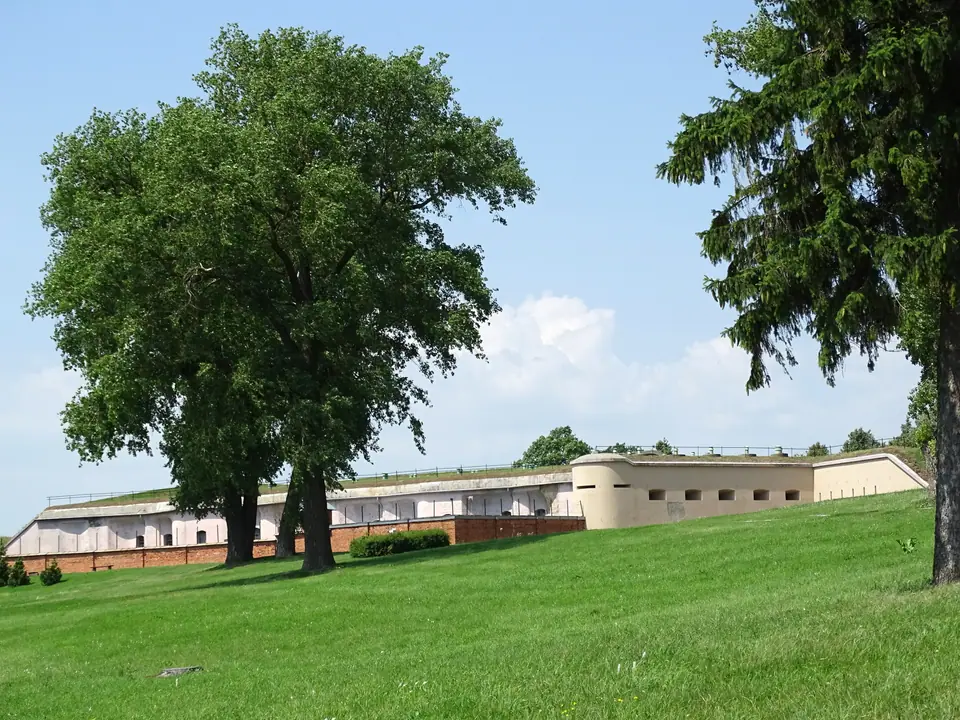
Photo: Adam Jones from Kelowna, BC, Canada · CC BY-SA 2.0
Ninth Fort Kaunas: History, Memorial and Practical Visit
Standing above north-western Kaunas, the Ninth Fort preserves a Tsarist artillery bastion, Soviet prison cells, a Holocaust mass-murder site, and its stark 1984 memorial.
Seven kilometres northwest of central Kaunas, grass earthworks rise abruptly beside highway traffic toward dark brick and concrete walls. This is Devintasis fortas (deh-veen-TAH-sees FOR-tahs), the Ninth Fort. Preserved today as both a quiet memorial park and historical museum, this hilltop demands slow reflection. Unlike river churches or stylish modernist lanes, walking here confronts a haunting crossroads of twentieth-century Europe.
Three political regimes altered these underground vaults between 1902 and 1945. Stepping from dim interrogation corridors out onto bright grassy execution meadows makes state terror painfully concrete. Allow at least two unhurried hours so neither indoor museum rooms nor the windswept hillside beyond the perimeter wall feel rushed.
Imperial Russian artillery rings around early Kaunas
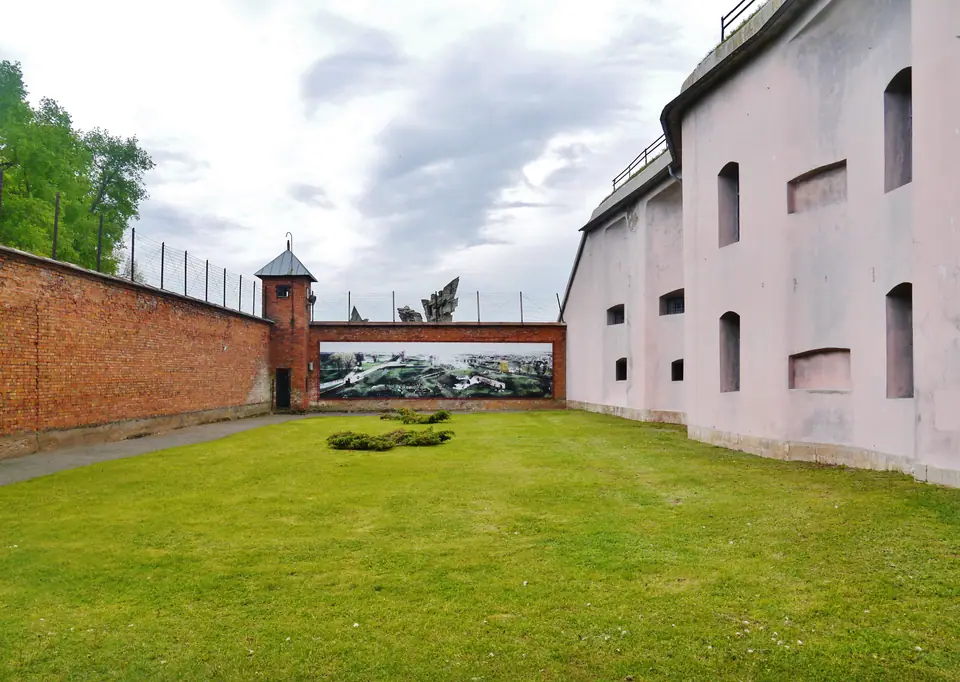
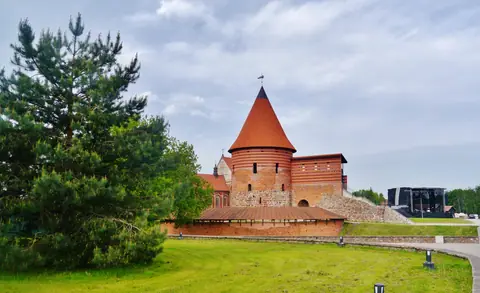
Decades before barbed wire enclosed these slopes, Tsarist generals declared Kaunas a western frontier fortress guarding St Petersburg. Starting in 1882, military engineers threw a concentric ring of brick bastions, powder bunkers, and earth embankments around the town. Finished between 1902 and 1913 just ahead of World War I, the Ninth Fort used thick reinforced concrete roofs to resist heavy siege guns.
Deep subterranean passages, thick blast doors, subterranean drainage wells, and camouflaged gun emplacements still testify to Imperial Russian military design. Yet strategic artillery technology evolved faster than concrete pouring, and German armies pierced the southern sector of Kaunas Fortress during fierce fighting in August 1915. Standing nearly undamaged after Imperial troops retreated eastward, the Ninth Fort stood empty beside expanding city suburbs when Lithuania gained independence.
Soviet political detention before the German invasion
Between 1924 and 1940, interwar authorities adapted the concrete casemates into a hard-labour annex of Kaunas City Prison. Following the initial Soviet occupation in June 1940, the NKVD seized the cellblocks as a brutal interrogation and transit hub. Baltic intellectuals, civic leaders, military officers, and suspected opponents waited inside damp cramped rooms before deportation cattle trains left for Siberia.
Original heavy wooden doors, rusted iron bunks, and tiny barred cellar openings survive inside the casemate wing exactly where interwar guards patrolled. Museum displays along this concrete corridor pair archival interrogation paperwork with personal suitcases and letters scribbled by deportees prior to June 1941. Walking straight from that Soviet wing toward the exterior wall reveals how swiftly one totalitarian apparatus handed the site to another.
Nazi mass killings and the December 1943 prisoner escape
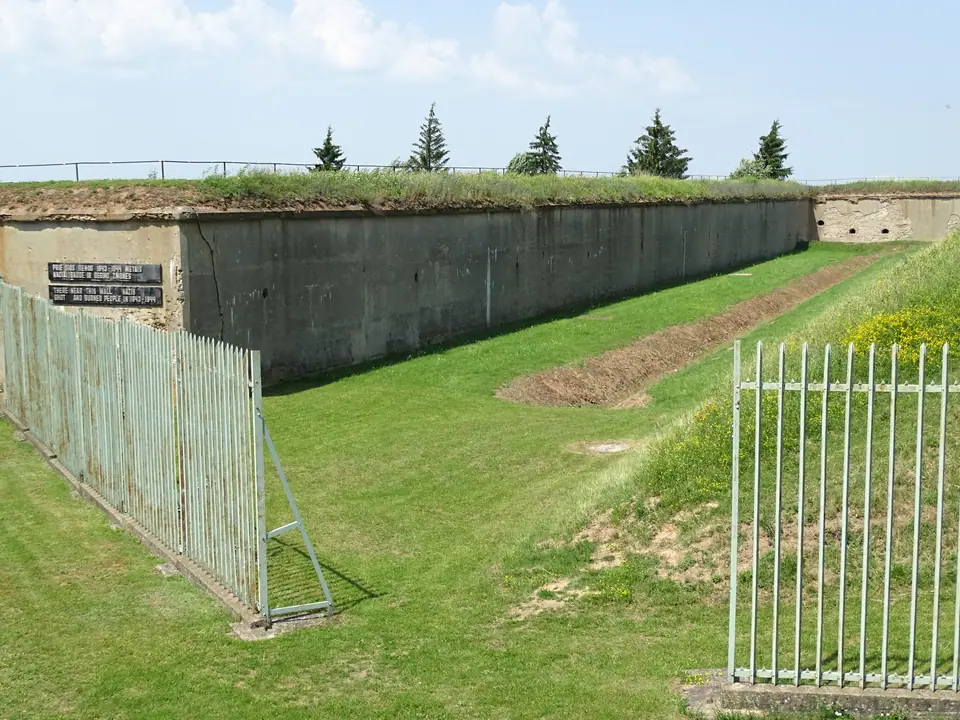
After German forces occupied Kaunas in late June 1941, Nazi SS units and local collaborators turned the Ninth Fort into a systematic murder site. Between 45,000 and 50,000 people were executed behind the western wall. Victims included roughly 30,000 Kaunas Jews plus Jewish families deported by train from Germany, Austria, France, and Czechoslovakia. On 29 October 1941, during the Great Action, 9,200 men, women, and children were marched uphill from the Kaunas Ghetto and shot in one day.
As Soviet fronts moved west in late 1943, SS commanders ordered 64 forced-labour prisoners to exhume and burn buried mass graves. Knowing execution awaited them once the task finished, those captives cut through an iron cellar door and crawled down a tunnel. All 64 slipped into darkness during a Christmas blizzard on 25 December 1943. Survivors carried vital eyewitness records of Nazi extermination crimes straight into Allied hands.
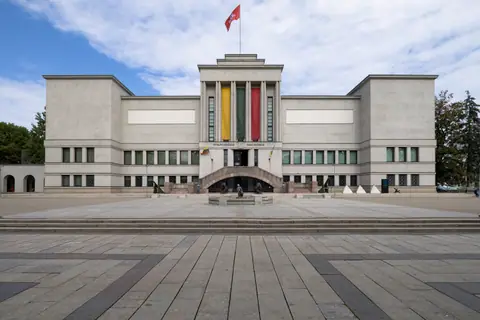
Walking past the execution field climbs toward sculptor Alfonsas Ambraziūnas's jagged 32-metre concrete memorial dedicated in 1984. Three fractured stone pillars rise out of a wide granite terrace where visitors place quiet memorial stones beside bilingual plaques. Few lenses convey the wind-swept silence across that hillside meadow above the highway.
Walking the museum casemates, memorial, and Bus 23 route
City transit makes the trip straightforward from town. Municipal Bus 23 links central Kaunas and the station area directly to the Kauno IX forto muziejus stop outside the car park in under 30 minutes. Tap a contactless bank card or scan a QR pass inside the Žiogas app on entry, explained in our transport briefing. Remember that the museum closes on Mondays, public holidays, and scheduled monthly staff-training Wednesdays. Check exact open days on the official museum site before boarding.
Pack a warm fleece or light jacket even during sunny summer weeks, because unheated concrete prison cells hold damp chill throughout the year. Cool brick arches smell faintly of damp mortar even on bright July afternoons. Walkways outside cross grassy embankments and exposed stone terraces with very little shade or wind shelter. Comfortable closed-toe walking shoes handle slick cellar stairs and loose hillside gravel effortlessly. Take drinking water in warm weather because open memorial meadows lack cafés beyond the reception building.
Sugihara House and diplomatic rescue in Žaliakalnis
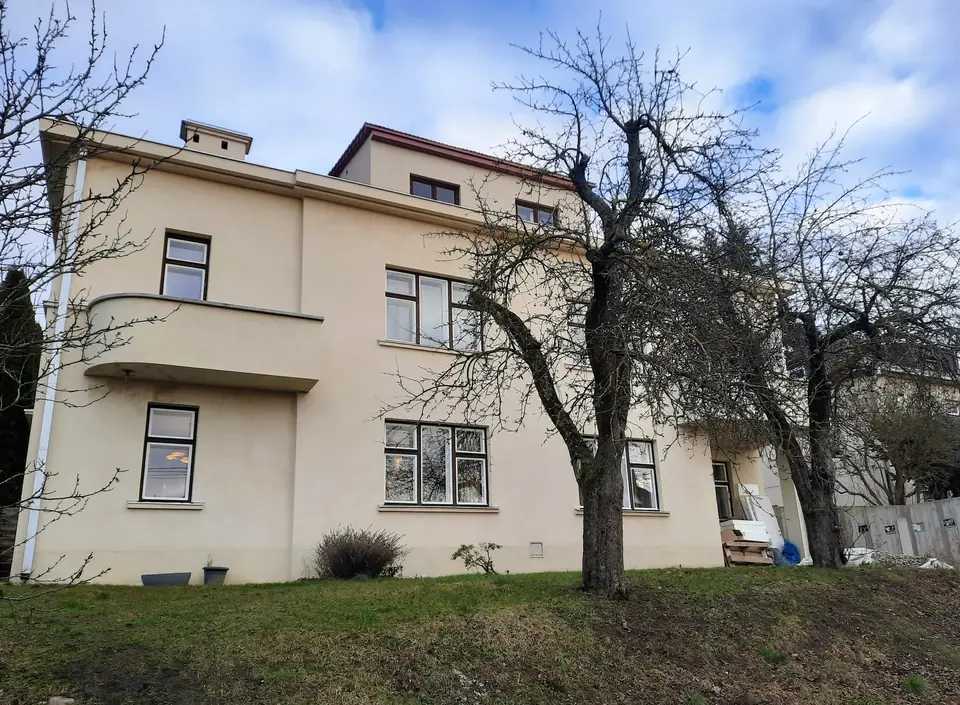
Many visitors pair a sombre Ninth Fort morning with a quiet afternoon at Sugihara House back on the leafy ridge of Žaliakalnis. Standing at Vaižganto Street 30, this unassuming two-storey villa served as the Japanese Consulate in 1939 and 1940. Vice-Consul Chiune Sugihara worked closely with Dutch honorary consul Jan Zwartendijk through July and August 1940. Defying Tokyo orders while Soviet tanks surrounded Lithuania, Sugihara hand-wrote thousands of transit visas enabling Jewish refugees from Poland to cross Siberia toward safety.
Exhibitions inside the restored consulate study show original passport stamps, ledger pages, consular furniture, and a short introductory film inside his wooden upstairs office. Steep timber staircases and shaded villa garden paths preserve the quiet domestic setting where those critical documents passed across his desk. Pairing morning reflection at the Ninth Fort memorial with an afternoon walk under Žaliakalnis lime trees gives balanced human perspective to Kaunas's darkest years. Both spaces reward patience and quiet reflection well beyond standard sightseeing routes.
Where it is
- 1Ninth Fort Kaunas
- Vilnius International Airport (VNO) · about 97 km from here in a straight line
- Directions in Google Maps
Stations and taxi ranks: OpenStreetMap. Airports: OurAirports. Distances are in a straight line.
Traveller tips
Real advice from people who have been to Kaunas. Every tip is read by our team before it goes live.
No tips yet. Been here? Yours could be the first.
Thank you! Your tip will appear here after a quick review.
More in Kaunas
Continue exploring Kaunas with related neighbourhood, food, and planning guides