











Fushimi Inari Guide: The Torii Gate Hike
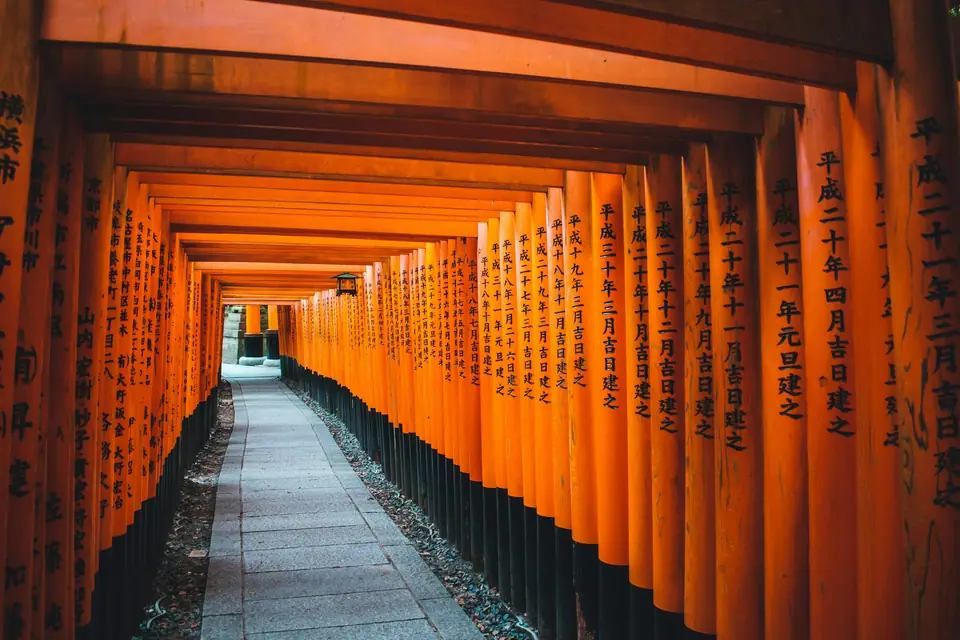
Fushimi Inari Taisha is the head shrine of Inari, the Shinto god of rice, business and prosperity. Its famous feature is the path up the mountain behind it, lined with thousands of orange torii gates, each one donated by a company or individual whose name is painted on the back. The shrine is free and never closes, which makes it the easiest major sight in Kyoto to have to yourself, as long as you come very early or after dark.
Take the JR Nara line two stops from Kyoto Station to Inari Station, which sits right at the shrine gate. The Keihan line's Fushimi-Inari station is a few minutes' walk away if you're coming from Gion.
The route up
- The main gate and halls. Walk through the large vermilion Romon gate to the main hall. Look out for the stone foxes everywhere. They're Inari's messengers, and many hold a key to the rice granary in their mouths.
- Senbon Torii. Behind the main hall, the path splits into two parallel tunnels of closely spaced gates. This is the part in all the photos, and the most crowded. Keep going.
- Okusha Hohaisho. At the end of the tunnels is the inner shrine. Find the omokaru stones: make a wish and lift one. If it feels lighter than you expected, the wish is said to come true.
- Up to Yotsutsuji. From here the path climbs steadily, with steps, small sub-shrines and piles of miniature torii left as offerings. After about 30 to 45 minutes from the bottom you reach the Yotsutsuji crossroads, with a wide view over southern Kyoto.
- The summit loop. Most people turn back at Yotsutsuji, and the crowd thins out sharply above it. The loop to the summit, Ichinomine, and back to the crossroads takes around another hour. There's no view at the top itself, just more shrines. Do it for the quiet stretches of gates in the forest, not for a panorama.
- The way down. Return to Yotsutsuji and take the other branch downhill for a change of scenery.
The whole round trip to the summit is about four kilometres with a fair amount of climbing, and takes two to three hours at an easy pace. There are small tea houses and vending machines along the way.
When to go
Before 8am the lower gates are almost empty and the light comes through sideways. By mid-morning the Senbon Torii is packed. Evenings work too: the path is lit, and it's quiet and a little eerie. Bring a torch for the upper sections and don't go alone to the summit after dark.
What to eat
The street leading to the shrine sells kitsune udon (noodles topped with fried tofu, the fox's favourite food) and inari sushi, rice packed in sweet fried tofu pouches. Both are named after the shrine.
This is the one Kyoto sight we'd put at the start of any trip. Our 3-day itinerary does exactly that, and the what to wear guide explains why the shoes matter here.