












How to Get to Kyoto
Kyoto has no airport of its own. Almost everyone arrives by train, and almost every train arrives at Kyoto Station, a huge steel and glass building at the southern end of the centre.
From Kansai Airport (KIX)
The JR Haruka limited express runs from the airport to Kyoto Station in roughly 75 minutes, about every half hour, and it's covered by the Japan Rail Pass. It's the default choice. Foreign passport holders can buy a discounted one-way Haruka ticket, or a version bundled with an ICOCA card, so ask for it at the JR office in the airport station rather than paying the normal fare. Airport limousine buses also run to Kyoto Station in around an hour and 40 minutes, traffic permitting. Coming from Itami, Osaka's domestic airport, the bus is the simple option.
From Tokyo
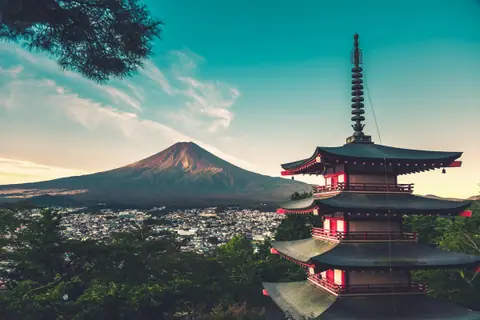
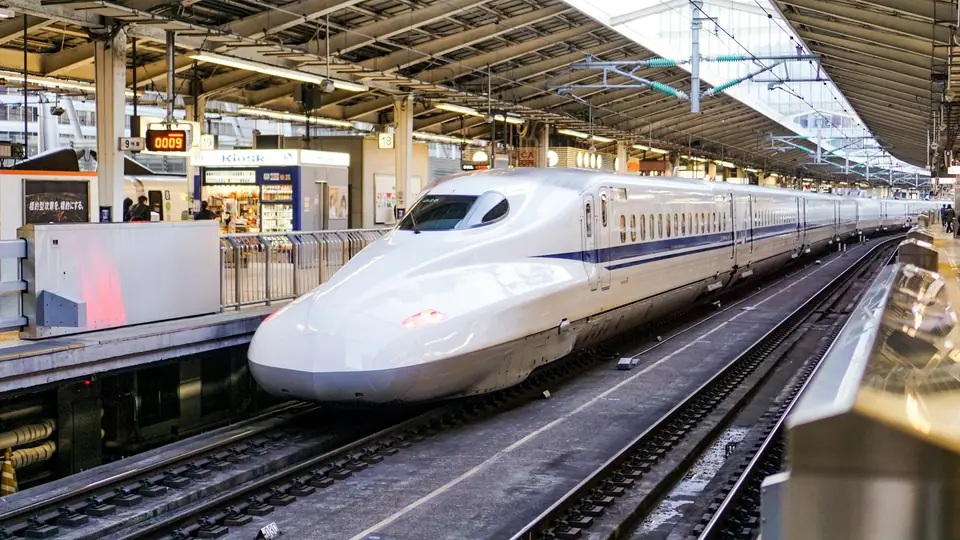
The Tokaido Shinkansen is the only sensible option. The fastest Nozomi trains take about two hours and fifteen minutes. The Hikari takes a little longer and is fully covered by the Japan Rail Pass, while pass holders can ride the Nozomi only with a special add-on ticket bought at a JR office. Sit on the right-hand side (seat E) heading west for a view of Mount Fuji on a clear day.
Bags over 160 cm in total dimensions need a reserved oversized luggage seat on the Shinkansen. Book it with your ticket, or send your case ahead by courier.
IC cards
ICOCA, the local card, and Suica from Tokyo both work on JR, the subway, the private railways and the city buses. Physical ICOCA cards are sold at JR ticket machines, including at Kansai Airport, and plain Suica cards are back on sale after the chip shortage of 2023 and 2024. On an iPhone you can add Suica or ICOCA to Apple Wallet before you fly. Most Android phones bought outside Japan can't, so get a plastic card. Top up with cash at station machines.
Getting around the city
Kyoto has two subway lines: the Karasuma line running north to south through Kyoto Station, and the Tozai line running east to west. Combine them with JR (for Fushimi Inari and Arashiyama), the Keihan line (for Gion) and Hankyu (from downtown towards Arashiyama) and you rarely need a bus.
When you do, board at the back or middle and pay at the front as you get off. Central routes charge a flat fare. The bus-only day pass stopped being valid in March 2024, so the combined Subway and Bus 1-Day Pass is now the one to buy. On weekends and holidays, sightseeing express buses (EX100 and EX101) leave from stop D1 outside Kyoto Station for Kiyomizu-dera, and EX100 continues to Gion, Okazaki and Ginkaku-ji. The city also plans to charge non-residents a higher bus fare than locals, aiming for 2027. Check the city transport website for the current situation.
Entry rules
Many nationalities can visit Japan visa-free for short stays. JESTA, Japan's planned online pre-travel authorisation, isn't running yet and is expected around 2028. Check the current rules for your own passport, and when JESTA does launch, use only the official government website.