


























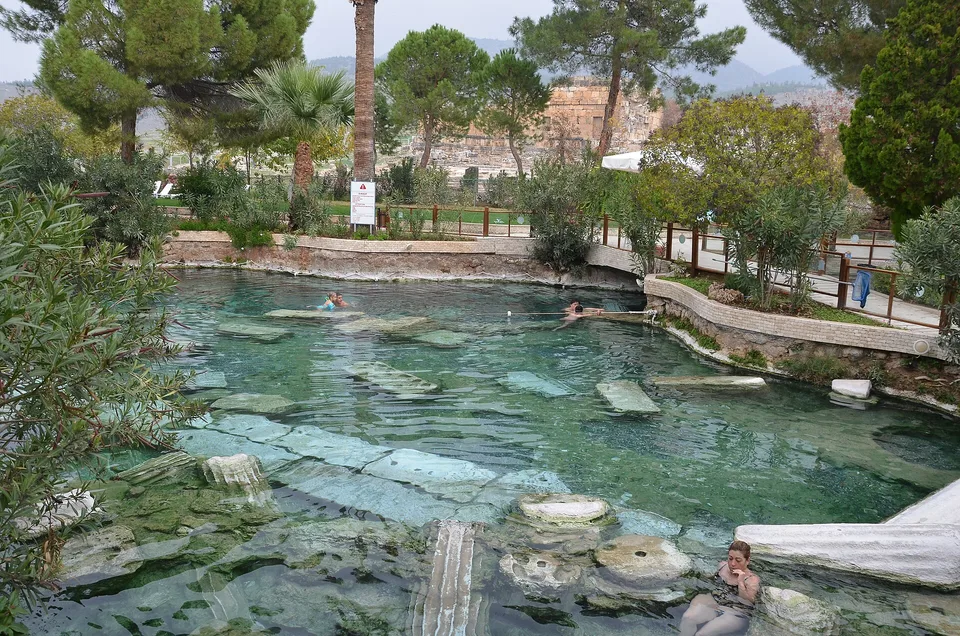
Photo: shankar s. from Dubai, united arab emirates · CC BY 2.0
Cleopatra's Pool Guide: Thermal Water and Submerged Roman Columns
Bathe among submerged Roman marble columns in naturally heated mineral waters right in the heart of ancient Hierapolis.
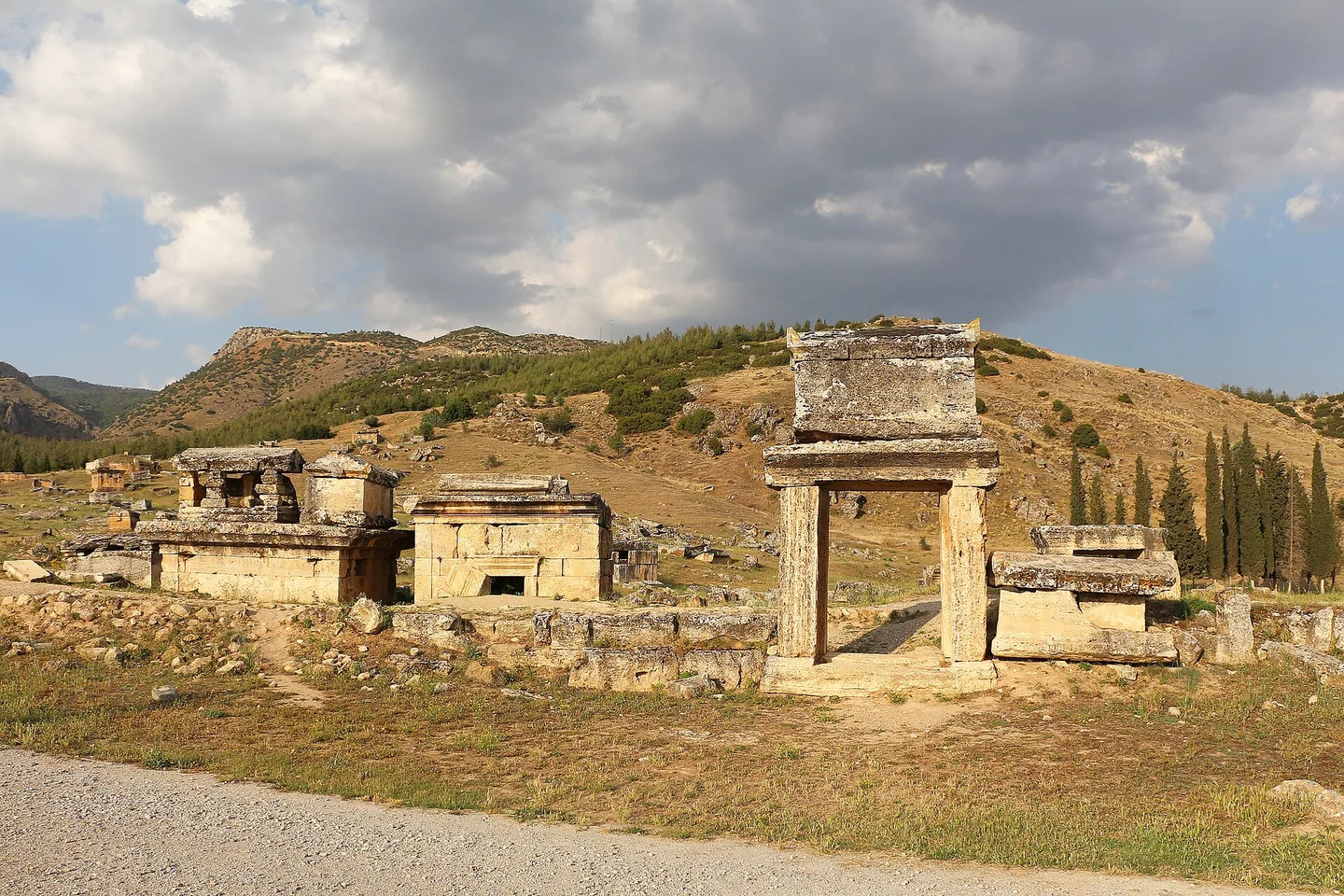
Antique Pool sits at the centre of the ancient spa city, surrounded by flowering oleanders and shady pine trees. Local folklore long claimed that the Egyptian queen bathed in these warm waters, but historical records offer no proof for the tale. The pool instead owes its striking layout to a severe earthquake during the seventh century. The tremor toppled the surrounding Roman temple of Apollo, sending fluted marble columns, carved architraves, and ornate capitals crashing directly into the thermal basin. Today, bathers glide across submerged stone drums that have rested in clear mineral water for well over a millennium.
Walking onto the site from the ruined streets of Hierapolis reveals a remarkably preserved pocket of antiquity. Rather than viewing ancient masonry behind protective ropes, visitors float directly alongside fluted shafts and Corinthian foliage carved from white marble. The water remains crystal clear because it constantly bubbles straight out of underground vents, creating tiny effervescent fizzing sensations against bare skin. Drifting above these ancient fragments feels like entering a sunken outdoor museum where history and natural thermal activity merge.
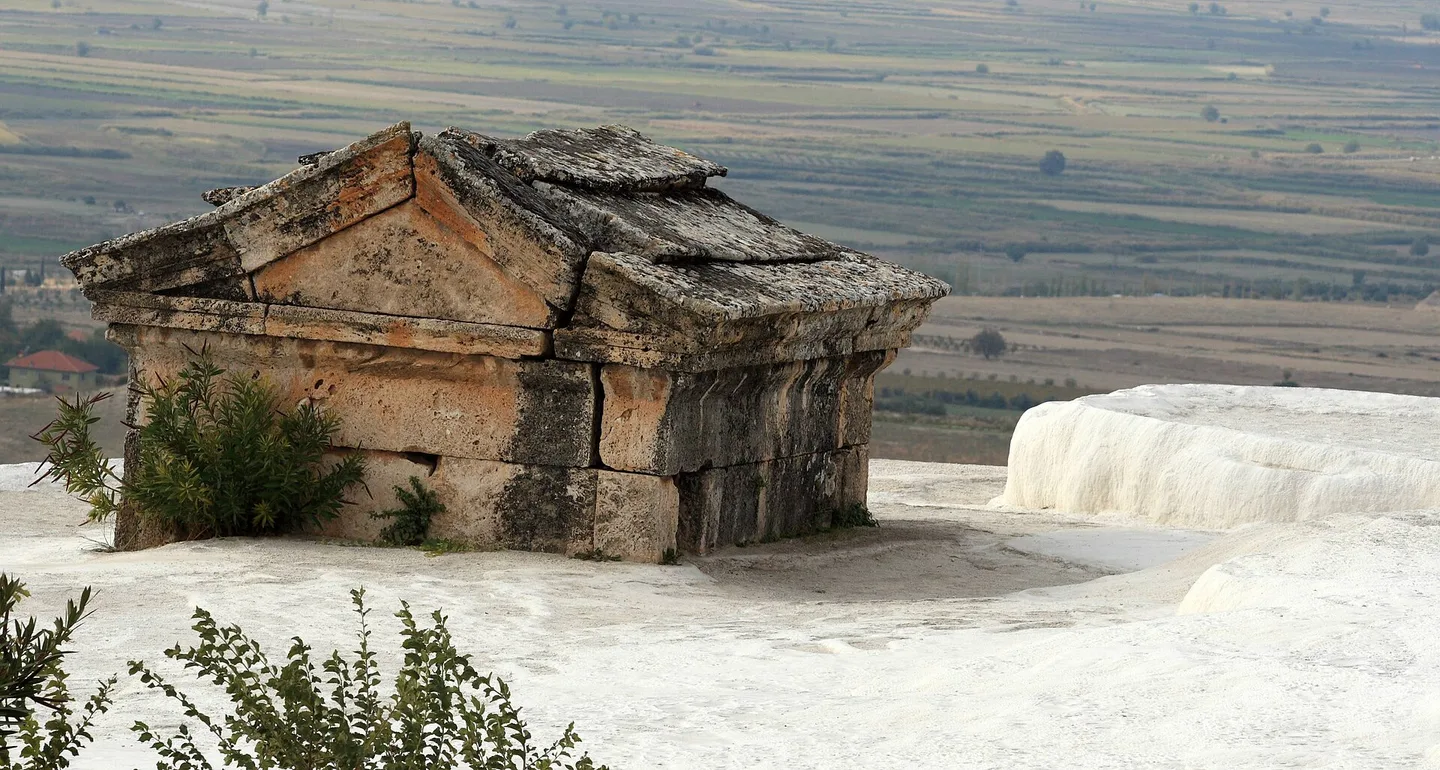
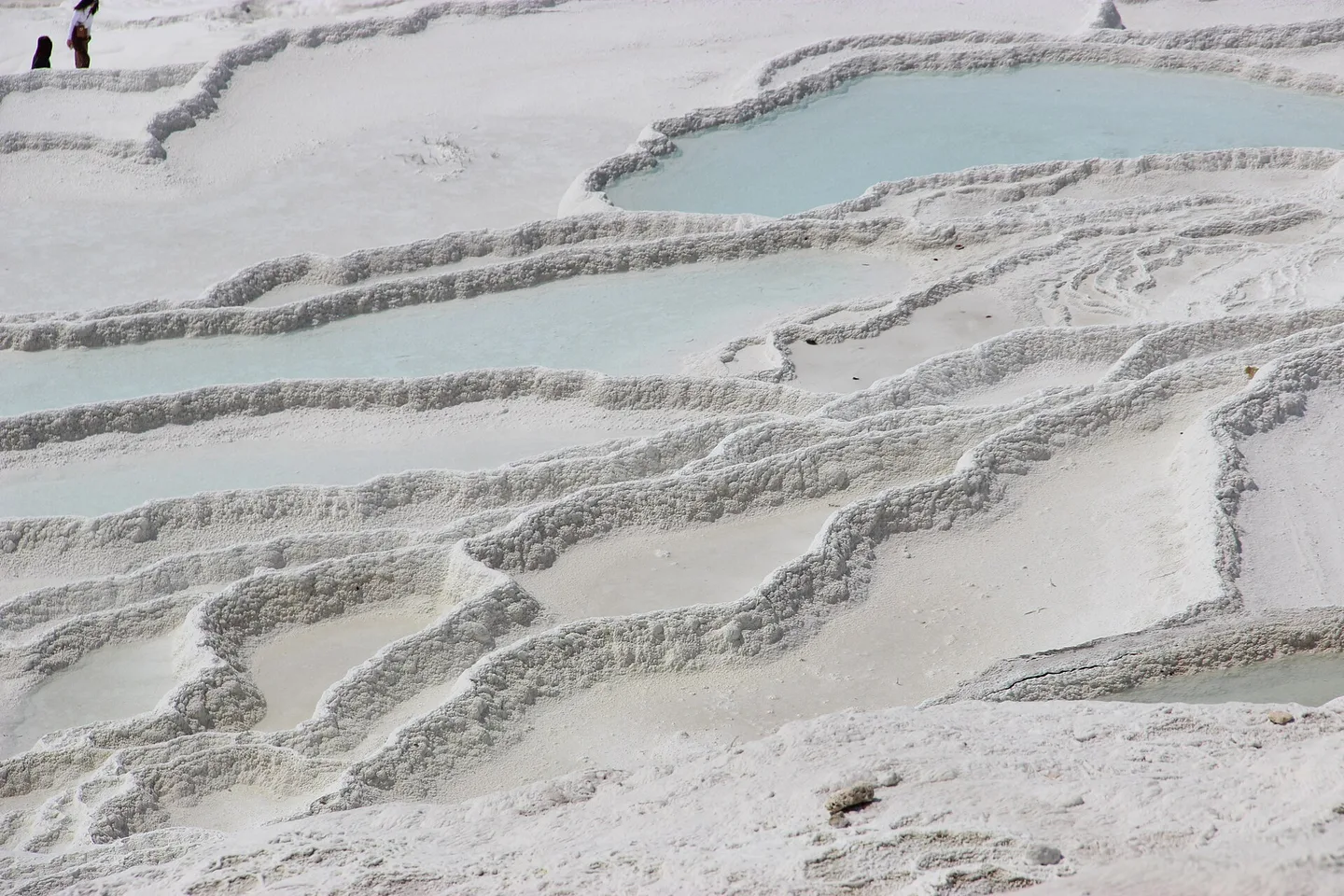
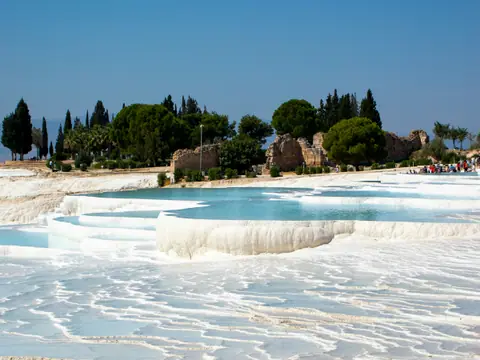
The primary source of the entire travertine cliff system feeds this very basin before cascading downhill. Thermal water rises at a steady, soothing 36°C throughout all four seasons, making a swim comfortable even during chilly winter afternoons. High concentrations of calcium bicarbonate, sulphate, and carbon dioxide give the water its renowned restorative reputation, drawing bathers since Hellenistic times. As the water overflows the stone retaining wall, it channels outward to coat the famous white limestone terraces of Pamukkale.
Because the spring continuously circulates fresh thermal water from deep tectonic fissures, the pool avoids the chemical treatments typical of public lidos. Tiny effervescent gas bubbles attach to your limbs as you wade through the deeper sections, creating a light champagne effect. Swimmers often gather near the southern inlet vent where the spring water emerges warmest from the earth. The constant flow keeps the pool pristine, carrying dissolved minerals downstream to create new calcium travertine deposits every single day.
Exploring the pool complex does not strictly require you to get wet or pay a bathing supplement. Anyone holding the standard archaeological site ticket can freely wander the paved garden perimeter, relax under umbrella pines, and buy refreshments at the surrounding café. However, entering the water itself requires a separate ticket purchased at the wooden pool turnstile, which you can coordinate alongside your broader Pamukkale entrance fee planning. Changing rooms, modern lockers, and freshwater rinse showers stand right beside the water steps for paying bathers.
| Facility | Access Type | Practical Advice |
|---|---|---|
| Perimeter Boardwalk | Included in Site Ticket | Ideal for photographers and non-swimmers resting in the shade. |
| Thermal Swimming Basin | Separate Bathing Ticket | Turnstile entry required; purchase directly at the pool hut. |
| Lockers and Changing Rooms | Key Card Deposit | Secure your clothing, shoes, and daypack before entering the water. |
| Garden Café and Shaded Decks | Open Access | Offers seating, cold bottled drinks, and casual snacks. |
Lockers work on a small refundable card deposit, while open-air shelves offer simple towel storage if you prefer keeping your belongings closer. Footwear must come off before you descend the wooden entrance stairs, and swimmers must rinse under the outdoor showers before stepping into the basin. To swim comfortably without unexpected clothing issues, check our overview on what to wear around the ancient ruins and thermal waters.
Navigating the pool floor requires constant care because the submerged Roman columns are extraordinarily slick. Centuries of mineral deposits and delicate aquatic moss coat the stone drums, making them treacherous to stand upon without losing your balance. Water depth ranges from roughly waist-high across the eastern platform to around several metres deep over the main submerged colonnade. Children and nervous swimmers should remain in the shallower peripheral shallows where flat flagstones offer secure footing.
Tour groups frequently arrive in large waves during the middle of the day, transforming the calm thermal sanctuary into a lively, crowded bathing pool. Arriving right when Hierapolis gates open in the early morning grants you peaceful water, soft morning light across the marble ruins, and an undisturbed swim. A late afternoon visit also offers cooler air temperatures that contrast beautifully with the warm 36°C water, giving a tranquil end to a long day of historical exploration.
Where it is
- 1Cleopatra's Pool
- Dalaman International Airport (DLM) · about 138 km from here in a straight line
- Directions in Google Maps
Stations and taxi ranks: OpenStreetMap. Airports: OurAirports. Distances are in a straight line.
Traveller tips
Real advice from people who have been to Pamukkale. Every tip is read by our team before it goes live.
No tips yet. Been here? Yours could be the first.
Thank you! Your tip will appear here after a quick review.
More in Pamukkale
Continue exploring Pamukkale with related neighbourhood, food, and planning guides
Pamukkale Orientation: Travertine Cliffs, Hierapolis and Denizli Valley
Pamukkale, Turkey
What to See in Pamukkale: Travertines, Hierapolis and Ancient Ruins
Pamukkale, Turkey
Travelling to Pamukkale: Denizli Rail, Flights and Coach Routes
Pamukkale, Turkey
Pamukkale and Hierapolis Entry Tickets: Official Rules and Gate Tips
Pamukkale, Turkey
