


























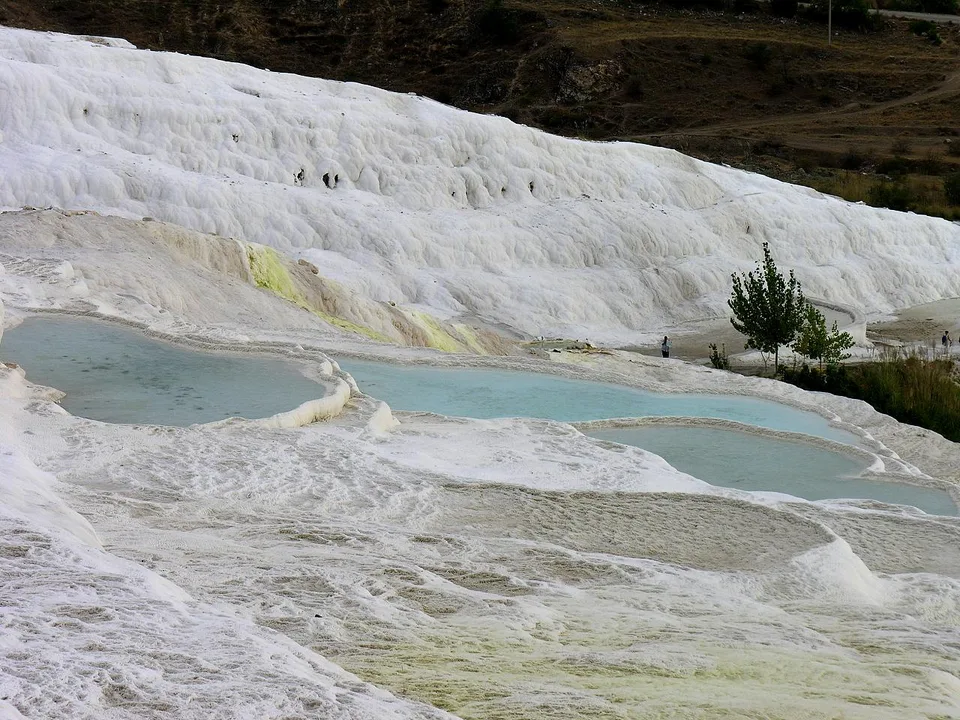
Photo: Dennis G. Jarvis · CC BY-SA 2.0
Hierapolis Ancient City Guide: Roman Theatre, Martyrium and Necropolis
Hierapolis crowns the white travertine plateau with remarkably preserved Roman colonnades, sacred geothermal fissures, monumental tombs, and a restored antique theatre.
Crowning the white travertine ridge, ancient Hierapolis unfurls across a high geothermal plateau in south-western Turkey. Pergamene kings laid out the original Hellenistic settlement before imperial Roman builders reconstructed the city following massive regional earthquakes. Walking inland from the limestone cliffs brings you straight onto broad flagstones that once carried merchants, bathers, and religious pilgrims from across the Mediterranean basin. The urban plan follows an organised grid framed by fortified gates, public latrines, and deep drainage channels. Checking the combined entry conditions on the ticket purchase options helps you plan time across both the archaeological zone and the thermal cliffs.
Colonnaded Streets and the Frontinus Gate
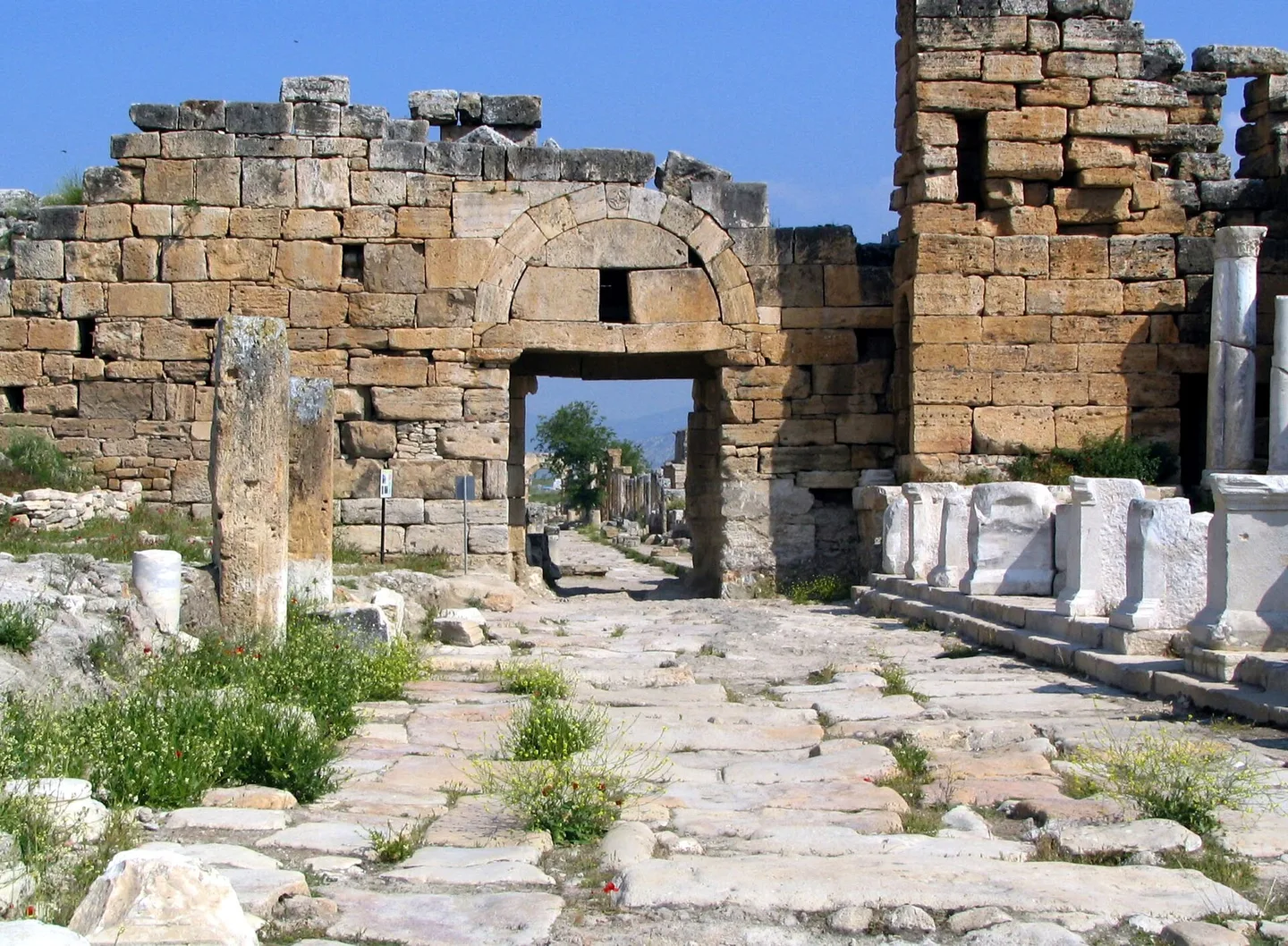
The main artery of the city runs north to south, paved with heavy blocks that still show shallow grooves worn by ancient carriage wheels. Flanked by fallen marble columns, this processional avenue linked the civic centres to residential quarters and distant burial grounds. Walking along this open stone way gives a vivid sense of ancient municipal planning, where fresh mountain water and thermal runoff flowed through subterranean conduits.
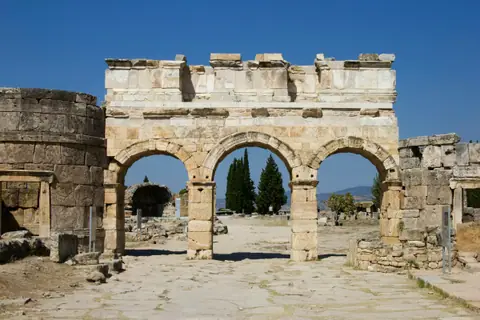
At the northern end stands the monumental triple-arched gate, built under the Roman proconsul Frontinus. Crafted from sturdy limestone masonry, this portal formed the formal ceremonial entrance to the city. Defensive towers flanked the arches, filtering travellers and merchants arriving from inland Anatolia. Passing beneath the lintels leads you past public latrines and remnants of public fountains where dust-covered arrivals cleansed themselves before stepping into the central quarter.
The Grand Roman Theatre and Apollo Sanctuary
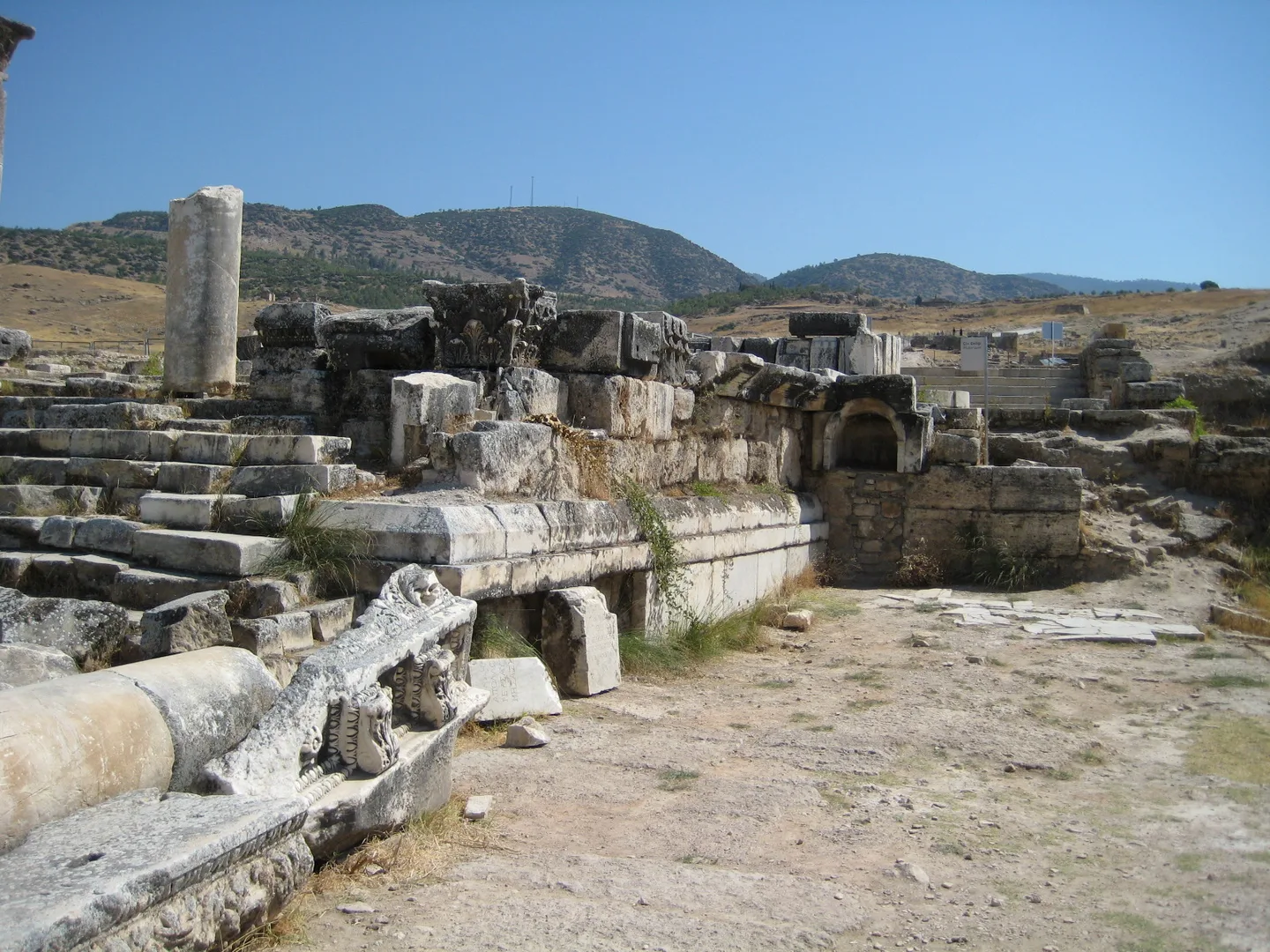
Climbing the gentle slope eastward brings you to the grand Roman theatre, which dominates the central hillside. Built to hold thousands of spectators, the tiered stone seating curves neatly against the natural hillside contours. Italian restoration teams have meticulously reassembled the elaborate two-storey stage building, raising intricate architectural friezes that depict classical mythology and imperial celebrations. Standing on the upper cavea offers panoramic views sweeping across the ruins toward the snow-white cliffs of the valley below.
Below the theatre terraces lie the weathered foundations of the Sanctuary of Apollo, dedicated to the divine patron of the city. Earth tremors frequently altered this sacred precinct, causing Roman architects to rebuild the temple platform several times. Nearby, visitors can branch off toward the antique thermal baths, which we detail along with other regional day trips and thermal activities to help balance ancient ruins with mineral bathing.
The Plutonium Fissure and Martyrium of Saint Philip
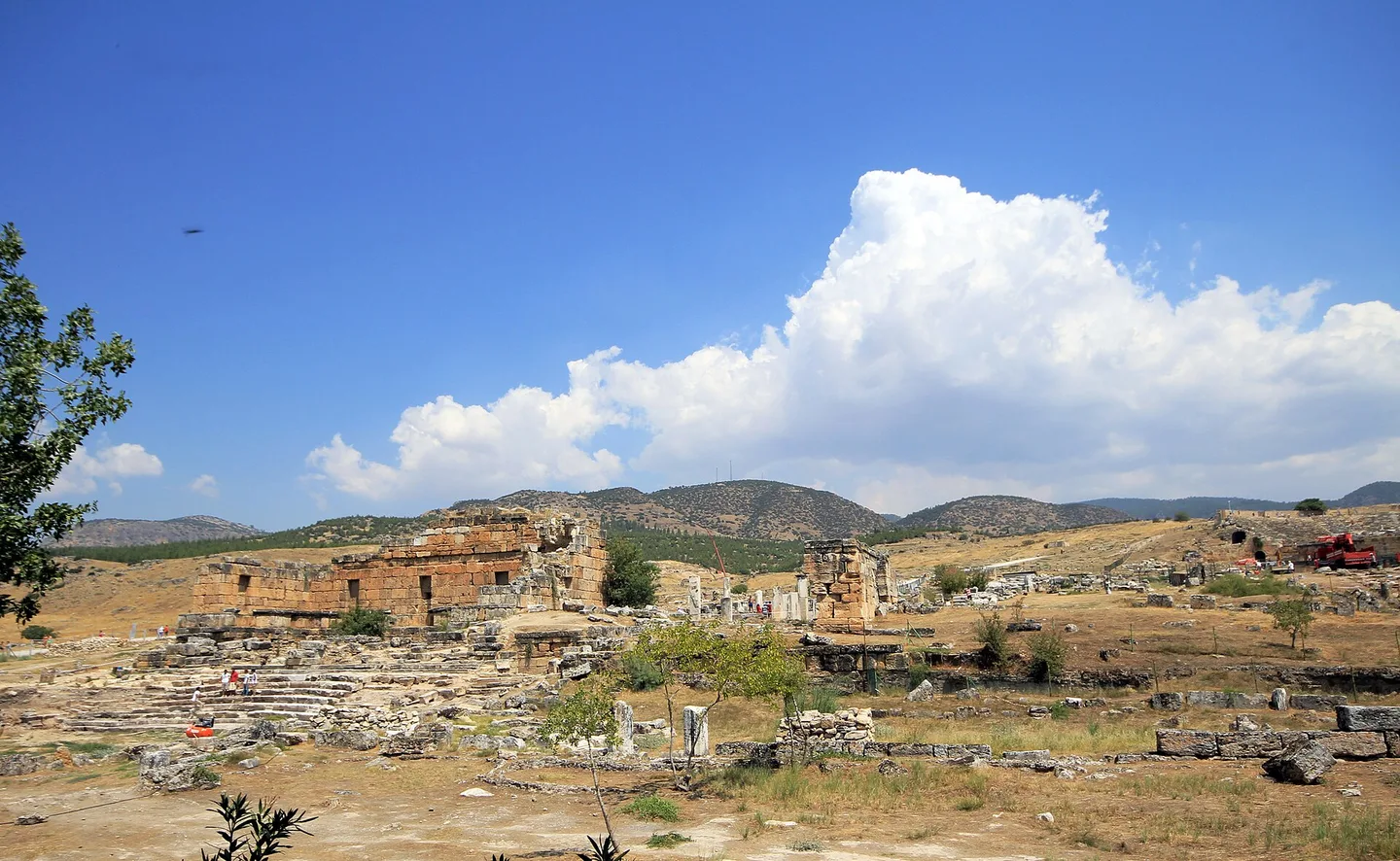
Directly beside the Apollo precinct sits the Plutonium, celebrated throughout antiquity as an entrance to the underworld. Geothermal fractures deep beneath the crust continuously vent heavy carbon dioxide gas into this sunken stone basin. Ancient priests demonstrated divine favour by leading small animals into the toxic atmosphere, where the creatures quickly collapsed while the priests held their breath above the gas layer. Modern excavators have secured the subterranean opening behind metal grates, allowing travellers to observe the bubbling spring and stone enclosure safely from wooden walkways.
Higher up the eastern ridge stands the octagonal Martyrium of Saint Philip, erected on the site where tradition records the apostle was martyred. The walk up the hillside follows a sequence of ceremonial steps and ruined prayer stations. The central building features an octagonal chamber surrounded by small chapels and pilgrim rooms, built from local limestone blocks. Morning breezes keep this elevated crest pleasant, making it an evocative vantage point for surveying the entire urban plain.
Archaeology Museum and the Northern Necropolis
Returning down toward the travertine shelf leads you to the ancient Roman bathhouse, which now houses the Hierapolis Archaeology Museum. Massive barrel-vaulted stone halls that once held heated bathing rooms now display finds uncovered during regional excavations. Carved marble friezes from the theatre stage, decorative sarcophagi, and delicate bronze artefacts fill the cool stone galleries, providing essential historical context for the sprawling ruins outside.
Extending beyond the northern gate lies one of the largest ancient burial grounds in Anatolia, stretching for considerable distance across the windswept plateau. Here, hundreds of stone sarcophagi, tumuli, and family house-tombs line the old roadway. To navigate the principal quarters comfortably, consider the layout of these key sectors:
- Frontinus Gate and Northern Colonnade: The grand triple-arched Roman entryway, public latrines, and the paved commercial thoroughfare.
- Central Sanctuary and Plutonium: The foundations of Apollo's temple alongside the guarded geothermal gas vent and thermal springs.
- Hillside Theatre and Martyrium: Restored imperial stage architecture, mythic friezes, and the early Christian pilgrimage complex.
- Northern Necropolis: Hundreds of limestone sarcophagi, family crypts, and decorative funerary monuments lining the road.
The variety of funerary architecture reflects the diverse population drawn to Hierapolis for health cures and retirement. Inscriptions carved into limestone slabs record personal professions, family dedications, and strict civic fines against grave robbers. Thermal minerals from underground waters have calcified several outlying tombs, merging ancient stonework with natural travertine terraces.
Where it is
- 1Hierapolis Ancient City
- Dalaman International Airport (DLM) · about 138 km from here in a straight line
- Directions in Google Maps
Stations and taxi ranks: OpenStreetMap. Airports: OurAirports. Distances are in a straight line.
Traveller tips
Real advice from people who have been to Pamukkale. Every tip is read by our team before it goes live.
No tips yet. Been here? Yours could be the first.
Thank you! Your tip will appear here after a quick review.
More in Pamukkale
Continue exploring Pamukkale with related neighbourhood, food, and planning guides
What to See in Pamukkale: Travertines, Hierapolis and Ancient Ruins
Pamukkale, Turkey
Travelling to Pamukkale: Denizli Rail, Flights and Coach Routes
Pamukkale, Turkey
Pamukkale and Hierapolis Entry Tickets: Official Rules and Gate Tips
Pamukkale, Turkey
Pamukkale Seasonal Climate Guide: Spring Warmth, Glare and Winter Pools
Pamukkale, Turkey
