


























What to See in Pamukkale: Travertines, Hierapolis and Ancient Ruins
Pamukkale blends snow-white mineral terraces with ancient Greco-Roman civic monuments across the sunny Lycus River valley of western Anatolia.
Travertine Terraces and Barefoot Walking Paths
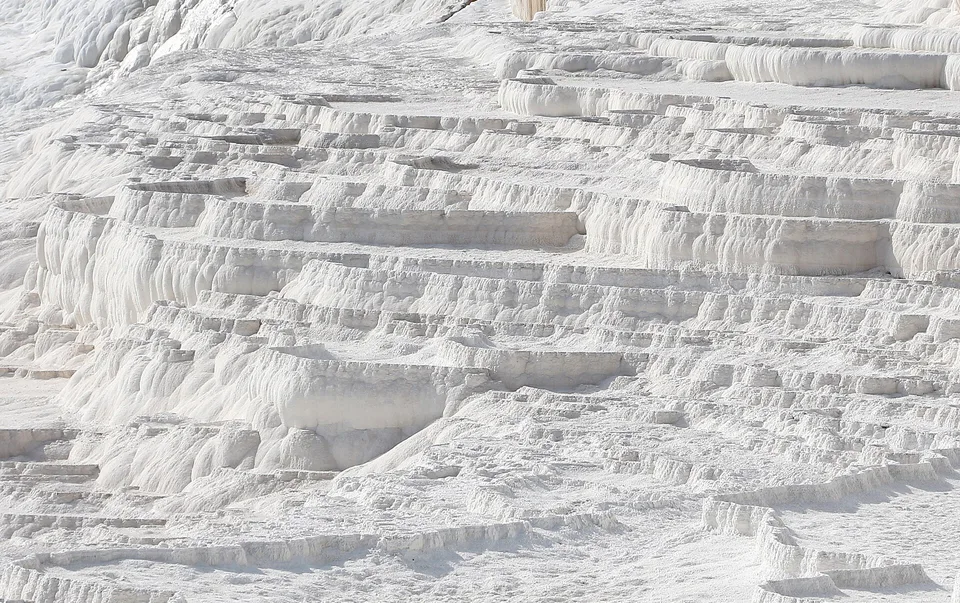
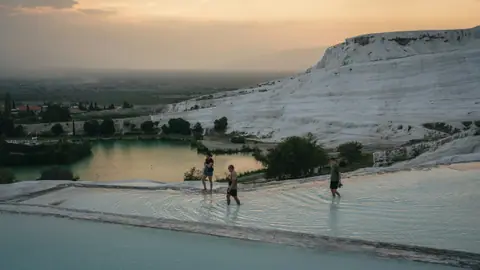
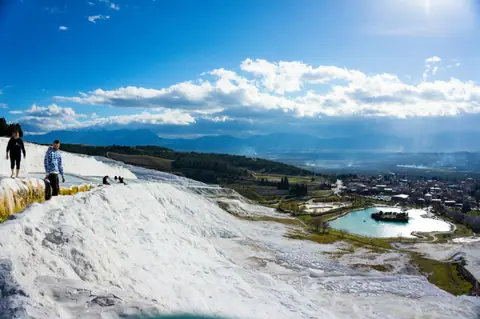
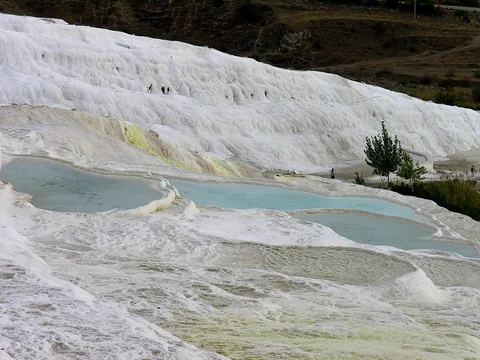
The luminous white terraces of Pamukkale rise directly above the modern village plain. Mineral waters overflowing natural limestone shelves created these geological steps over thousands of years. Visitors must remove all footwear at the designated entry boundaries. This rule protects the soft calcite mineral crust from pedestrian erosion. We recommend carrying a sturdy tote bag or lightweight rucksack. Storing your shoes, socks, and small towel keeps your hands free while traversing wet stone paths. The thermal water flowing along the central channel stays pleasantly warm. The corrugated limestone underfoot alternates between smooth rock and sharp calcium ridges. When arranging regional arrivals, our detailed overview of Pamukkale clarifies village gate logistics and travel connections.
Certain upper pools remain permanently closed to swimming. This restriction protects the natural terrace architecture and prevents structural degradation. Water flow is diverted across different sections of the cliff face using modern sluice gates. Controlled channeling keeps the white sediment bright and clean. Walking down the main path towards the lower park gives broad panoramic views across the Lycus Valley. Early morning arrivals allow you to experience the vast white terraces before regional tour coaches pull in. The site stays peaceful during these initial hours. Late afternoon also brings softer golden sunlight. The calcium formations catch warm amber reflections before dusk settles across the valley.
Hierapolis Ancient City and Roman Antiquities
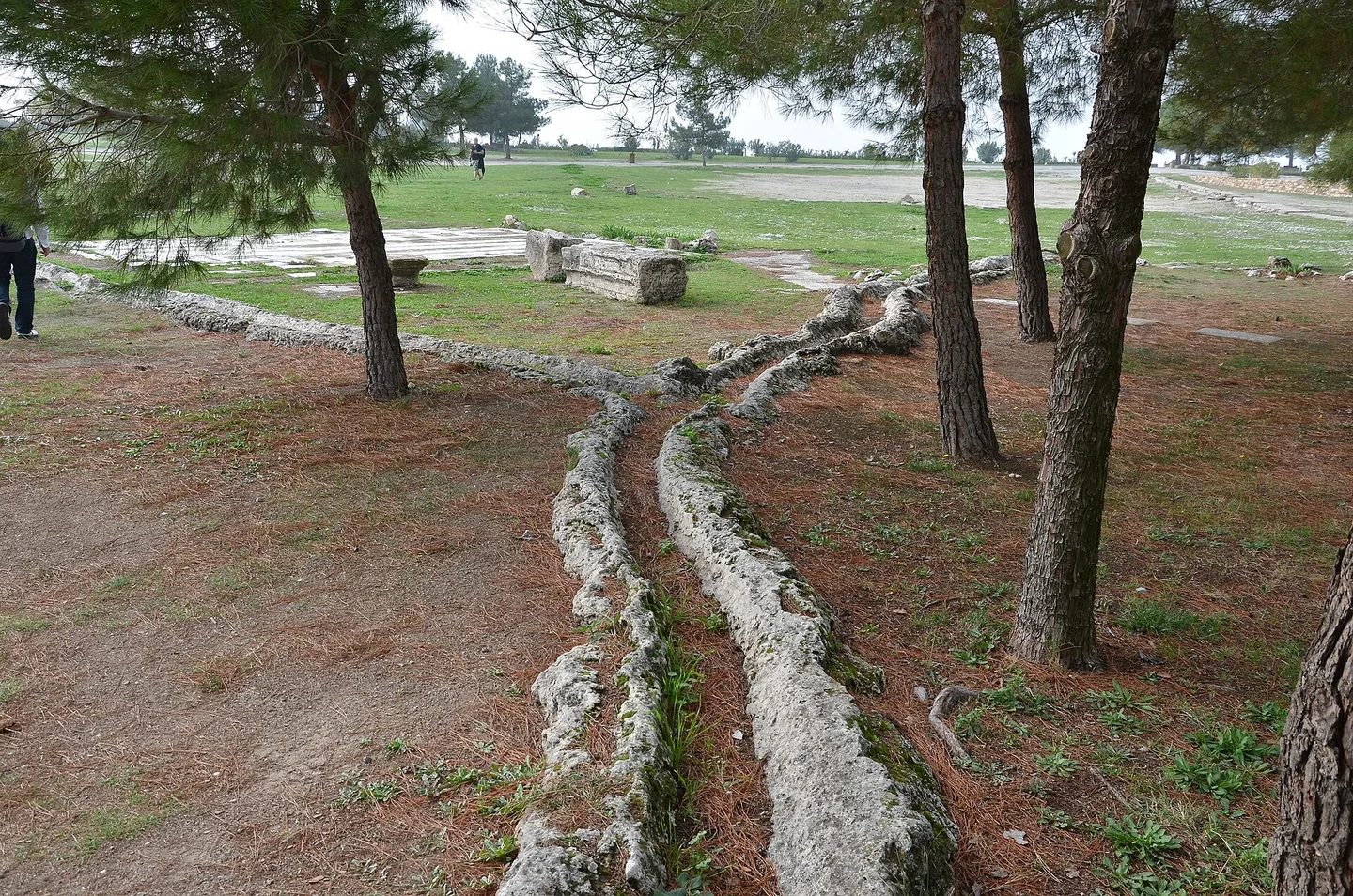
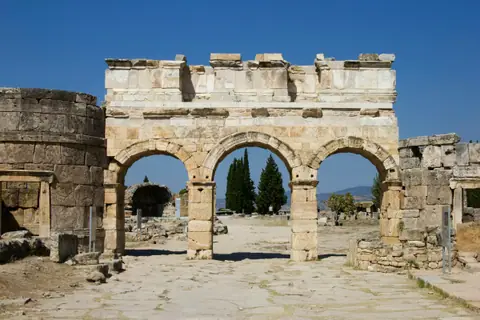
Directly above the mineral plateau sits the sprawling Greco-Roman spa city of Hierapolis. Hellenistic kings founded the settlement as a healing thermal retreat. The monumental Roman theatre remains one of the finest preserved antique auditoriums in Asia Minor. It retains grand mythological friezes along its reconstructed stage wall. Exploring the extensive ruins of Hierapolis requires solid walking shoes once you step off the slippery travertine surfaces. Uphill from the theatre stands the octagonal Martyrium of Saint Philip. Early builders erected the shrine on an elevated terrace overlooking the ancient street grid. Deep necropolis grounds stretch towards the north gate. The hillside contains stone sarcophagi and vaulted family tumuli.
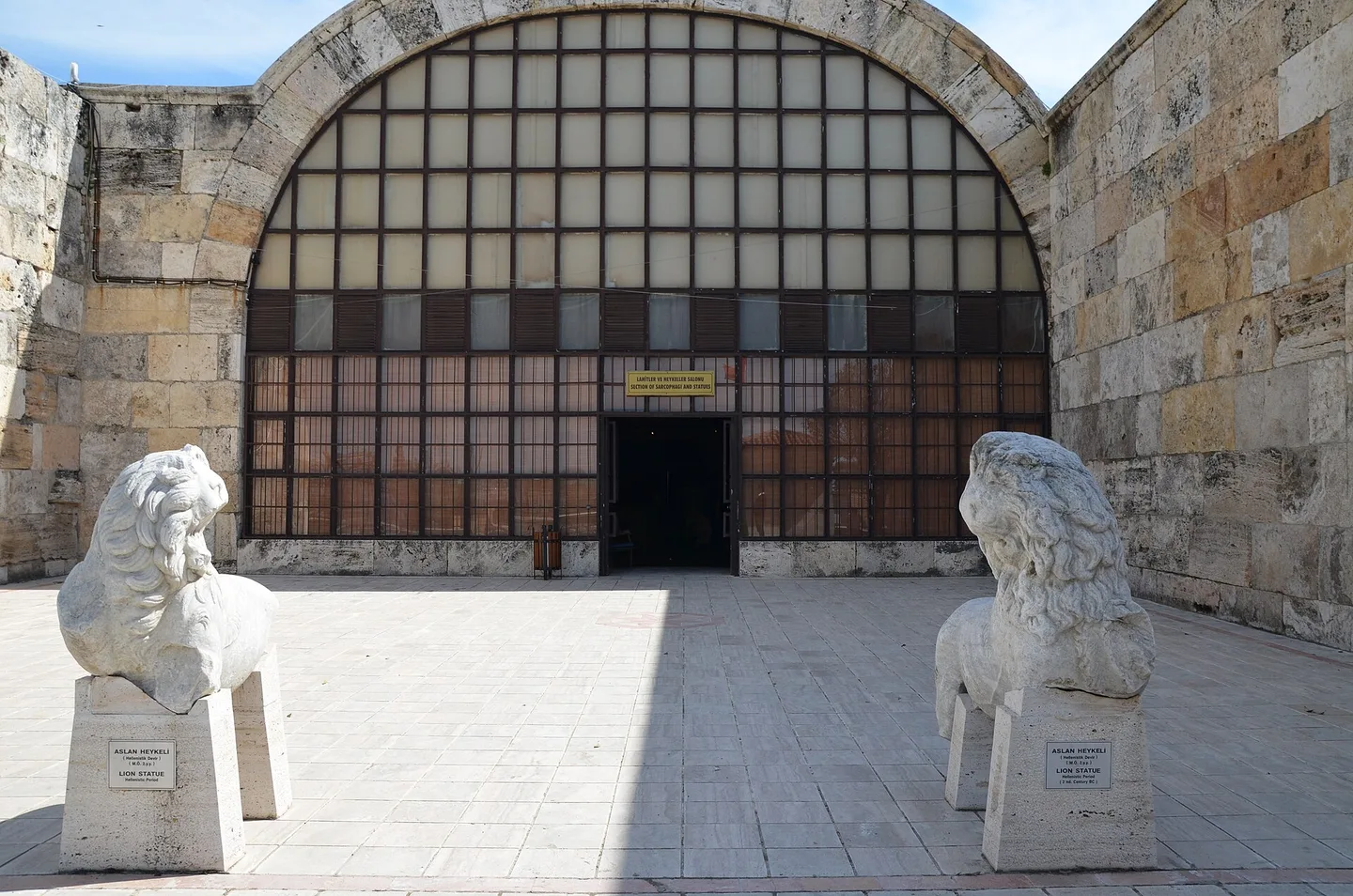
Housed inside restored Roman thermal baths, the site museum holds intricate marble statues, carved friezes, and sarcophagi unearthed across the valley. The exhibits illuminate everyday domestic life, civic worship, and funerary rituals across classical Phrygia.
- Monumental Theatre: High-capacity Roman auditorium featuring carved marble mythological friezes and expansive valley vistas.
- Saint Philip Martyrium: Octagonal memorial complex dedicated to the apostle, situated on the upper eastern slope.
- Hierapolis Museum: Housed in vaulted Roman baths, exhibiting intricate grave reliefs, classical statuary, and ancient coins.
- Northern Necropolis: Vast historic cemetery lined with limestone sarcophagi, stone tumuli, and family sepulchres.
Antique Pool Swimming and Thermal Springs
At the historical heart of the summit plateau lies the Antique Pool, commonly known as Cleopatra Pool. Submerged Roman fluted columns and carved architectural fragments from a historic earthquake litter the crystal clear thermal basin. The mineral water maintains a natural bath temperature fed by subterranean springs. Effervescent bubbles rise continuously against your skin as you swim. Swimming above antique stonework offers an extraordinary sensory connection to the original healing retreat of Roman aristocracy. Before visiting the locker pavilions, review swimmer amenities at Cleopatra's Pool to prepare for your dip.
Plentiful oleander bushes, date palms, and pine trees shade the surrounding terrace cafe. The perimeter offers a pleasant spot to rest between sight visits. You can observe the clear pool free of charge from the cafe perimeter without purchasing an aquatic swim ticket. The mineral waters contain dissolved calcium bicarbonate. Bathers historically celebrated these springs for relieving skin complaints and muscular fatigue. Combining morning ruins exploration with an afternoon thermal soak balances your day under the bright Aegean sun. For admission schedules and seasonal opening rules, consult the VisitorFactsBox below.
Valley Excursions: Laodicea and Karahayit
Beyond the core park boundary, the Denizli basin contains exceptional archaeological and natural sites reachable within short drives. The ancient metropolis of Laodicea sits just south of Pamukkale. It features monumental colonnaded streets, early Christian basilicas, and twin classical theatres. Known historically as one of the Seven Churches of Revelation, Laodicea preserves extensive floor mosaics protected under modern architectural shelters. Just north of the white terraces, the village of Karahayit features red thermal springs rich in iron and copper oxides. Mineral mud from these warm waters forms rust-red terraces that contrast sharply with the snowy travertine cliffs.
| Regional Excursion | Historical Significance | Primary Feature |
|---|---|---|
| Laodicea Ruins | Early Christian centre and major commercial crossroads | Preserved basilica mosaics and stone colonnades |
| Karahayit Springs | Thermal healing outpost north of Hierapolis | Iron-rich red mineral waters and mud pools |
| Kaklik Cave | Subterranean limestone cavern system | Underground travertine waterfalls and springs |
To fit these scattered valley highlights into a tidy single journey, follow our curated one-day itinerary. For aerial panoramic views over the entire white cliff edge, many travellers also book an early morning hot air balloon flight at dawn.
Where it is
- 1Pamukkale
- Dalaman International Airport (DLM) · about 137 km from Pamukkale in a straight line
- Directions in Google Maps
Stations and taxi ranks: OpenStreetMap. Airports: OurAirports. Distances are in a straight line.
Traveller tips
Real advice from people who have been to Pamukkale. Every tip is read by our team before it goes live.
No tips yet. Been here? Yours could be the first.
Thank you! Your tip will appear here after a quick review.
More in Pamukkale
Continue exploring Pamukkale with related neighbourhood, food, and planning guides
Pamukkale and Hierapolis Entry Tickets: Official Rules and Gate Tips
Pamukkale, Turkey
Pamukkale Seasonal Climate Guide: Spring Warmth, Glare and Winter Pools
Pamukkale, Turkey
What to Wear to Pamukkale: Barefoot Travertines and Ruin Walking
Pamukkale, Turkey
Hierapolis Ancient City Guide: Roman Theatre, Martyrium and Necropolis
Pamukkale, Turkey
