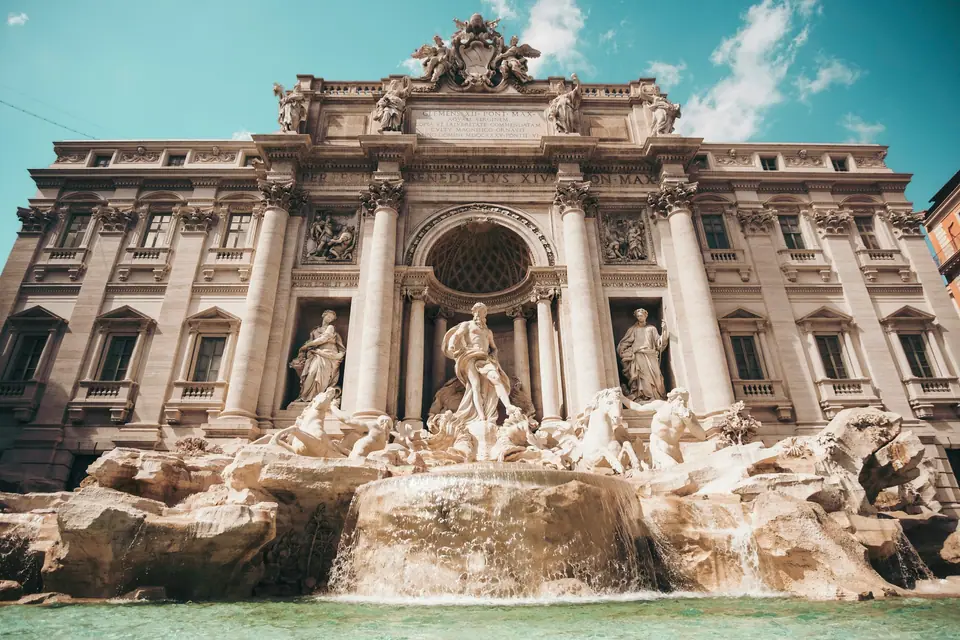
Photo by Cristina Gottardi on Unsplash
Best Things to Do in Rome: Top Sights & Hidden Layers
Thirteen essential Roman sights, from imperial amphitheatres and Baroque galleries to underground basilicas and ancient cobbled roads.
Rome's extraordinary density means that world-famous imperial monuments sit two blocks from quiet medieval cloisters. Fountain water echoes off travertine walls in nearly every square. The smartest approach is to pair one ticketed landmark in the morning with two or three open-air piazzas, churches, or hilltop gardens in the afternoon. Below are thirteen essential experiences that capture the city's three-thousand-year history.
Imperial monuments and papal masterpieces
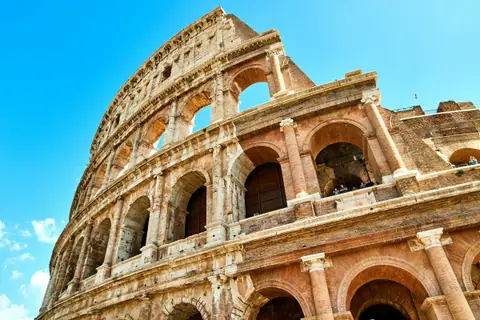
- The Colosseum, Roman Forum and Palatine Hill. Inaugurated by Emperor Titus in 80 AD, the Flavian Amphitheatre held up to 50,000 spectators across four travertine arcades. One combined ticket covers the amphitheatre, the temples of the Roman Forum (Foro Romano), and the imperial palaces atop the Palatine Hill. Read our Colosseum guide to compare standard tiers with the underground hypogeum.
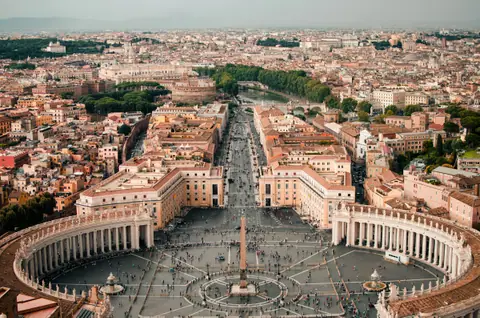
- The Vatican Museums, Sistine Chapel and St Peter's Basilica. Across the Tiber inside the world's smallest sovereign state (44 hectares), the papal galleries culminate in Michelangelo's ceiling frescoes (1508 to 1512). His altar wall Last Judgment (1536 to 1541) dominates the Sistine Chapel. Afterwards, enter St Peter's Basilica to see Michelangelo's 1499 Pietà and Bernini's 29-metre bronze Baldacchino. Our Vatican guide details the route and dress rules.
- The Pantheon (Piazza della Rotonda, pee-AHT-sah DEL-lah roh-TON-dah). Rebuilt by Emperor Hadrian around 118 to 125 AD behind Marcus Agrippa's portico of sixteen monolithic Egyptian granite columns, the Pantheon remains the world's largest unreinforced solid concrete dome at 43.3 metres in diameter. That span equals the exact interior height from the polychrome marble floor to the open nine-metre central oculus. Rain falls straight through the oculus and drains through twenty-two tiny holes in the gently convex floor. The tombs of Raphael and King Vittorio Emanuele II line the side niches.
- Galleria Borghese (gahl-leh-REE-ah bor-GEH-zeh). Housed inside Cardinal Scipione Borghese's seventeenth-century suburban villa in Villa Borghese park, this collection showcases Gian Lorenzo Bernini's early marble sculptures. Highlights include Apollo and Daphne (1622 to 1625) and The Rape of Proserpina, where Carrara marble appears to yield like human flesh. Works by Caravaggio, Titian, and Antonio Canova fill the adjacent salons. Entry is strictly limited to two-hour pre-booked slots.
- Capitoline Museums (Musei Capitolini) and Piazza del Campidoglio. Designed by Michelangelo in 1536 atop the sacred Capitoline Hill, the trapezoidal piazza frames three Renaissance palaces connected by an underground lapidary gallery (Galleria Lapidaria). Inside stand the original gilded bronze equestrian statue of Marcus Aurelius, the fifth-century BC bronze Capitoline Wolf (Lupa Capitolina), and a loggia overlooking the Roman Forum.
Baroque piazzas, underground churches, and hilltop views
- Trevi Fountain (Fontana di Trevi, fon-TAH-nah dee TREH-vee). Completed in 1762 by Nicola Salvi against the facade of Palazzo Poli, the 26-metre-high Baroque fountain marks the terminal point of the ancient Aqua Virgo aqueduct (19 BC). Visit at dawn or late at night to avoid daytime basin-access queues. Toss a coin with your right hand over your left shoulder.
- Piazza Navona and San Luigi dei Francesi. The elongated oval footprint of Piazza Navona preserves the exact arena track of Emperor Domitian's first-century AD athletics stadium (Circus Agonalis). At its centre rises Bernini's 1651 Fountain of the Four Rivers (Fontana dei Quattro Fiumi) supporting a Roman obelisk, facing Borromini's concave facade of Sant'Agnese in Agone. One block east inside the church of San Luigi dei Francesi hang three free-to-view paintings of St Matthew painted by Caravaggio between 1599 and 1602.
- Basilica di San Clemente (Via Labicana). Located ten minutes east of the Colosseum, San Clemente illustrates Rome's vertical history across three excavated levels. You enter a twelfth-century basilica glittering with golden apse mosaics, then descend into a fourth-century Christian basilica frescoed with early medieval scenes. A third staircase leads down into a first-century AD Roman nobleman's house and a third-century subterranean Mithraeum (temple of Mithras) beside a rushing underground spring.
- The Aventine Keyhole and Giardino degli Aranci. Walk up the quiet residential Aventine Hill (Rione XII Ripa) to the bitter-orange garden of Parco Savello for a sweeping riverside terrace view. Thirty metres further on Piazza dei Cavalieri di Malta, peer through the brass keyhole of the Priory of the Knights of Malta gate (designed by Giovanni Battista Piranesi in 1765). Through the keyhole, the dome of St Peter's Basilica sits framed neatly at the end of a clipped laurel avenue across three sovereign territories: Italy, the Sovereign Military Order of Malta, and Vatican City.
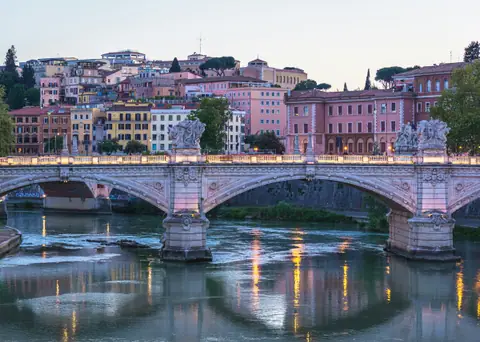
- Trastevere and the Janiculum Hill (Gianicolo, jah-NEE-koh-loh). Cross the ancient stone bridge of Ponte Fabricio (62 BC) via Tiber Island into Trastevere. Step inside the twelfth-century basilica of Santa Maria in Trastevere to see Pietro Cavallini's golden mosaics. Afterwards, climb up the Janiculum promenade past the 1612 Acqua Paola fountain to hear the midday cannon fired over the city rooftops.
- Testaccio and Monte dei Cocci. South of the Aventine rises Monte Testaccio, an artificial hill 35 metres high composed of roughly 53 million broken terracotta olive-oil amphorae. Dockworkers discarded those jars at the ancient river port of Emporium between the first and third centuries AD. Around its base sit the Non-Catholic Cemetery (where John Keats and Percy Bysshe Shelley are buried), the 36-metre marble Pyramid of Cestius (12 BC), and the covered Mercato di Testaccio.
- The Appian Way (Via Appia Antica, VEE-ah AHP-pyah ahn-TEE-kah) and the Catacombs. Begun in 312 BC by censor Appius Claudius Caecus, the "Queen of Roads" stretches southeast from Porta San Sebastiano through a protected regional park. Umbrella pines, cylindrical noble tombs such as Cecilia Metella, and original volcanic basalt flagstones (basoli) line the route. Combine a Sunday bike ride (when main stretches close to private cars) with a guided visit inside the Christian Catacombs of San Callisto or San Sebastiano.
- Ostia Antica Archaeological Park. Thirty minutes southwest by regional train from Porta San Paolo (Piramide), Rome's ancient harbour city preserves multi-storey brick apartment blocks (insulae) and marble tavern counters (thermopolia). You can walk across a two-thousand-seat theatre and black-and-white bath mosaics with a fraction of the crowds found at Pompeii.
Paid versus free sightseeing trade-offs
- Capitoline Museums Terrace / Via di Monte Tarpeo Belvedere: Both overlook the Roman Forum from the Capitoline Hill. Visitors short on time can enjoy the elevated panorama from the outdoor Via di Monte Tarpeo terrace without buying a museum ticket. The indoor Capitoline lapidary gallery adds close-up access to original imperial bronzes.
- Caravaggio in Galleria Borghese / Caravaggio in Historic Churches: The Borghese Gallery houses six canvases under one roof by paid advance reservation. By contrast, you can view Caravaggio's monumental altarpieces in their original chapels at San Luigi dei Francesi, Santa Maria del Popolo, and Sant'Agostino at no ticket cost beyond coins for the light box.
To group these sights logically without backtracking across the Tiber, pair our neighbourhood accommodation guide with the daily routes in our 3-day Rome itinerary.
Where it is
- 1Rome
- Ciampino–G. B. Pastine International Airport (CIA) · about 14 km from Rome in a straight line
- Directions in Google Maps
Stations and taxi ranks: OpenStreetMap. Airports: OurAirports. Distances are in a straight line.
Traveller tips
Real advice from people who have been to Rome. Every tip is read by our team before it goes live.
No tips yet. Been here? Yours could be the first.
Thank you! Your tip will appear here after a quick review.
More in Rome
Continue exploring Rome with related neighbourhood, food, and planning guides