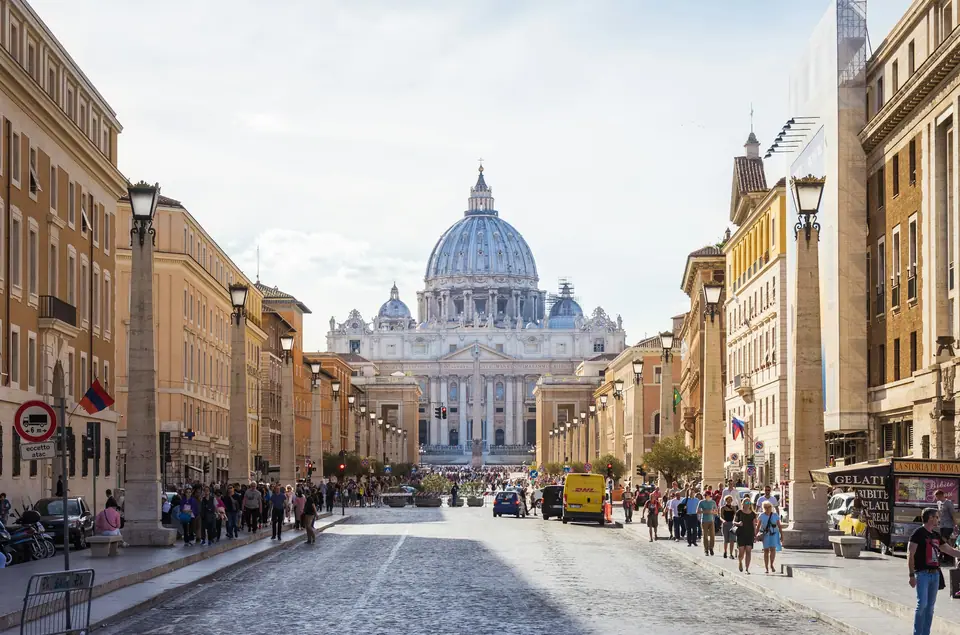
Photo by Claudio Hirschberger on Unsplash
Rome: Rioni Layout, Bookings & Local Rules
How the 22 historic rioni fit inside the Aurelian Walls, what to reserve ahead, and the daily habits that keep a Rome trip calm.
On first arrival, Rome can feel intense. Scooters weave between Renaissance palaces, crowds gather around travertine fountains, and ancient brickwork appears beside neighbourhood pharmacies. Once you understand what lies inside the nineteen-kilometre circuit of the Aurelian Walls (built between 271 and 275 AD), the city becomes easy to read. Most headline sights sit within a three-kilometre circle spanning both banks of the River Tiber. Book one major monument each morning and leave afternoons open for neighbourhood walks. That simple pace prevents both queue fatigue and midday heat exhaustion. Check our 3-day Rome itinerary to see how those daily loops connect.
How the 22 historic rioni and postcodes fit together
Unlike Paris with its numbered spiral, central Rome is divided into 22 historic quarters called rioni (ree-OH-nee, singular rione). White marble street plaques mark each district boundary with Roman numerals running from R.I (Monti) to R.XXII (Prati). Five-digit Italian postcodes (Codice di Avviamento Postale, CAP) orient you across five main visitor zones:
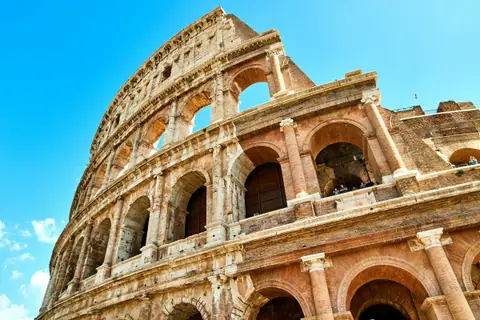
- Ancient Core & Monti (R.I Monti, R.X Campitelli; CAP 00184 and 00186): Anchors the southeastern corner of the centre. It holds the Colosseum, Roman Forum, and Palatine Hill, the Capitoline Hill, and the hillside lanes of Monti.
- Centro Storico River Bend (R.II Trevi to R.IX Pigna; CAP 00186 and 00187): Fills the flat alluvial plain inside the bend of the Tiber. Here sit the Pantheon, Piazza Navona, Campo de' Fiori, the Trevi Fountain, and the Spanish Steps. Walking from the Colosseum to the Pantheon takes about 25 minutes along Via dei Fori Imperiali.
- Trident & Villa Borghese North (R.IV Campo Marzio, R.XVI Ludovisi; CAP 00187): Fans southward from Piazza del Popolo along three straight sixteenth-century avenues: Via del Corso, Via del Babuino, and Via di Ripetta. Above it rise the Pincian Hill and the 80-hectare Villa Borghese park.
- Vatican & Prati Across the Tiber (R.XIV Borgo, R.XXII Prati; CAP 00120, 00192, and 00193): Sits on the west bank of the Tiber. It holds the sovereign state of Vatican City, Castel Sant'Angelo, and the wide nineteenth-century avenues of Prati.
- Trastevere, Aventine & Testaccio South (R.XII Ripa, R.XIII Trastevere, R.XX Testaccio; CAP 00153): Stretches south along both riverbanks. It pairs medieval ivy-draped alleys in Trastevere with the working-class food markets and ancient amphora hill of Testaccio.
Mandatory advance bookings and ticket windows
Turning up without a booking no longer works for Rome's headline monuments. Four sites require advance online reservations on their official portals. Check each official website directly for current release windows and entry conditions:
- Colosseum, Roman Forum & Palatine Hill / Parco archeologico del Colosseo: Sells strictly nominal (named) timed-entry tickets. Every visitor's full legal name is printed on the voucher and checked against a passport or ID card at the turnstiles.
- Vatican Museums & Sistine Chapel / Musei Vaticani: Timed-entry slots sell out weeks ahead during spring and autumn. The museums close on Sundays except the last Sunday of each month, when morning entry is free and queues wrap around the walls.
- Galleria Borghese / Villa Borghese Museum: Admits a strictly capped number of visitors for fixed two-hour viewing windows and closes on Mondays.
- Pantheon (Basilica di Santa Maria ad Martyres) / Trevi Fountain Rim Access: The Pantheon requires a timed entry ticket introduced by the Ministry of Culture. Admission is free on the first Sunday of the month. At the Trevi Fountain, stepping down to the lower travertine basin rim during daytime hours carries a regulated municipal entry fee introduced in 2026. Viewing from the upper piazza remains free at all times.
Roma Pass versus individual tickets and ATAC transit
Visitors often wonder whether the municipal Roma Pass (sold in 48-hour and 72-hour versions) beats booking individual tickets. Understanding how they differ prevents wasted spending:
- Roma Pass (48-Hour or 72-Hour Card) / Individual Official Monument Tickets: The Roma Pass includes one or two free museum entries plus unlimited rides on ATAC city metro lines, buses, and trams. It suits travellers visiting several civic museums such as the Capitoline Museums and Castel Sant'Angelo. However, Colosseum holders with a Roma Pass still must reserve a dedicated timed entry slot in advance. The pass never covers the Vatican Museums or Fiumicino airport trains.
- State Museum Free First Sunday (Domenica al Museo) / Regular Paid Days: On the first Sunday of every month, state archaeological sites and galleries waive admission fees. Because general queues at the Colosseum grow very long on free Sundays, paid weekday mornings offer a calmer visit.
Drinking water (nasoni), money, coperto, and tipping
Across the city stand roughly 2,500 cylindrical cast-iron drinking fountains known as nasoni (nah-ZOH-nee, literally "big noses") for their curved metal spouts. Fed continuously by the Marcia and Peschiera aqueducts, the water runs cold, clean, and safe to drink all day. Place a finger over the bottom tip of the spout and a neat arc of water shoots upward through a small hole on top for easy bottle refilling.
Contactless Visa and Mastercard payments are accepted by law across shops, taxis, ATAC turnstiles, and trattorias. Carrying a small amount of euro cash still helps at neighbourhood market stalls and espresso bars. When dining in sit-down restaurants, check the menu for two standard charges explained in our Rome food guide. Those items are pane e coperto (PAH-neh eh koh-PEHR-toh, a legal per-person cover charge for bread and table linen) and servizio. Tipping is never mandatory in Italy; leaving a few coins on the table for attentive service is plenty.
Afternoon church closures, safety, and street awareness
Most neighbourhood basilicas open early in the morning, close for several hours over lunch, and reopen until early evening. Plan Caravaggio viewings at Santa Maria del Popolo, San Luigi dei Francesi, and Sant'Agostino for mid-morning. Violent crime is rare in central Rome, but pickpockets work actively on Metro Line A between Termini and Ottaviano, on Metro Line B at Colosseo, and aboard the busy Route 64 bus toward the Vatican. Carry bags zipped in front of your body, ignore unsolicited bracelet sellers or costumed "gladiators" outside ancient monuments, and consult our best time to visit guide before locking in your dates.
Where it is
- 1Rome
- Ciampino–G. B. Pastine International Airport (CIA) · about 14 km from Rome in a straight line
- Directions in Google Maps
Stations and taxi ranks: OpenStreetMap. Airports: OurAirports. Distances are in a straight line.
Traveller tips
Real advice from people who have been to Rome. Every tip is read by our team before it goes live.
No tips yet. Been here? Yours could be the first.
Thank you! Your tip will appear here after a quick review.
More in Rome
Continue exploring Rome with related neighbourhood, food, and planning guides