


























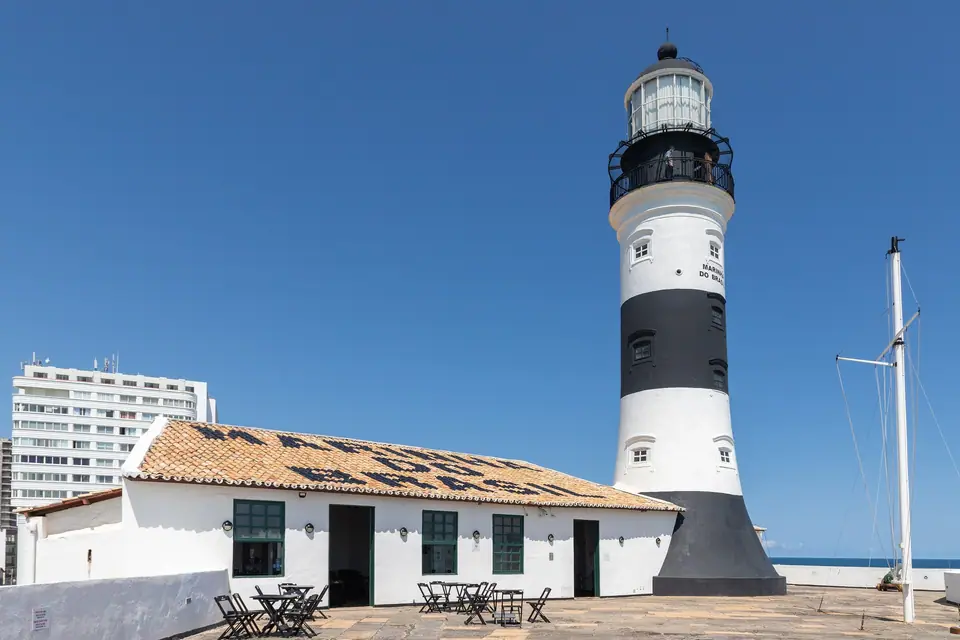
Barra, Farol da Barra Lighthouse & Porto da Barra Beach Guide
Explore the southwestern cape of Salvador: swim in the calm bay waters of Praia do Porto da Barra, tour the 1534 Fort of Santo Antônio, and watch Bahia's best sunset.
Rounding the southwestern cape of the Salvador peninsula where the open South Atlantic turns northward into the calm waters of Baía de Todos-os-Santos, the neighbourhood of Barra is where Portuguese explorers first dropped anchor on 1 November 1501 (All Saints' Day) and where Governor-General Tomé de Sousa stepped ashore in 1549. Today, its pedestrianised oceanfront promenade links three sixteenth- and seventeenth-century coastal forts, natural tide pools, and the city's favourite urban beach.
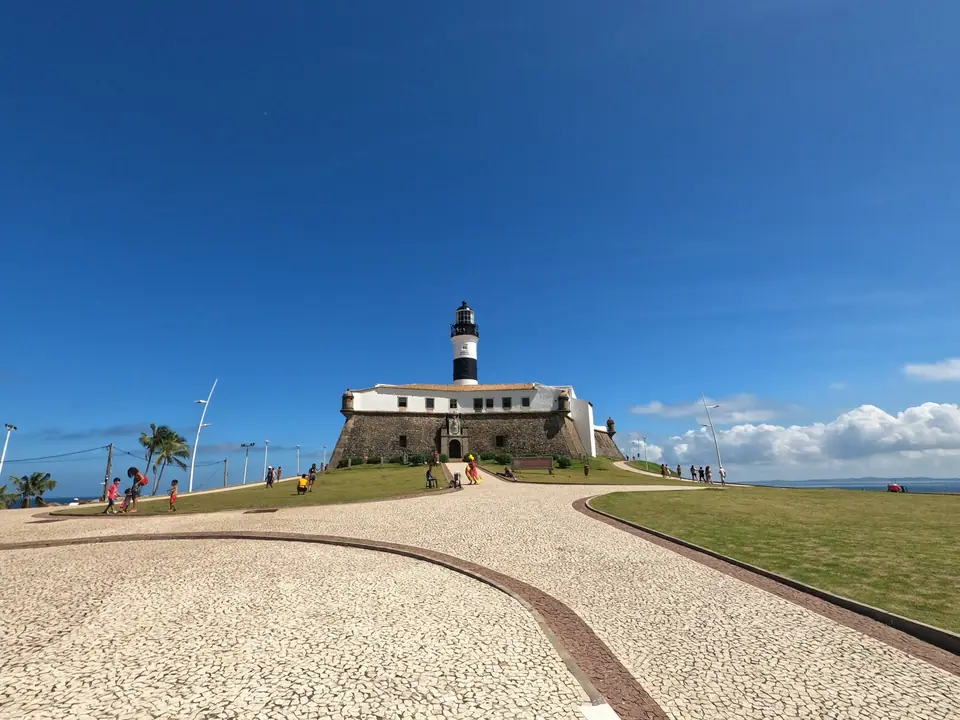
1. Forte de Santo Antônio da Barra, the Lighthouse & Nautical Museum
Jutting out on a rocky gneiss headland at the exact entrance to the bay stands the Forte de Santo Antônio da Barra. First erected as a rammed-earth palisade in 1534 by grantee Francisco Pereira Coutinho (making it the oldest military fortification in Brazil), it was rebuilt in its current star-shaped stone polygon between 1696 and 1702 under master engineer João Coutinho. Rising 22 metres from the central parade ground is the black-and-white striped cylindrical Farol da Barra, established in 1698 after the tragic shipwreck of the galleon Santíssimo Sacramento in 1668.
- Museu Náutico da Bahia: Housed inside the vaulted casemates of the fort, the Nautical Museum displays bronze cannons, silver coins, astrolabes, and seventeenth-century Portuguese porcelain recovered by marine archaeologists from the 1668 wreck of the Sacramento, and allows you to climb the spiral iron staircase of the 1839 British-cast lighthouse tower; check the official museum site for current entry details.
- The Sunset Ritual: Because the cape faces west across the mouth of All Saints' Bay, hundreds of locals gather on the grass lawn around the fort at 17:15 each afternoon to applaud as the sun sinks into the water.
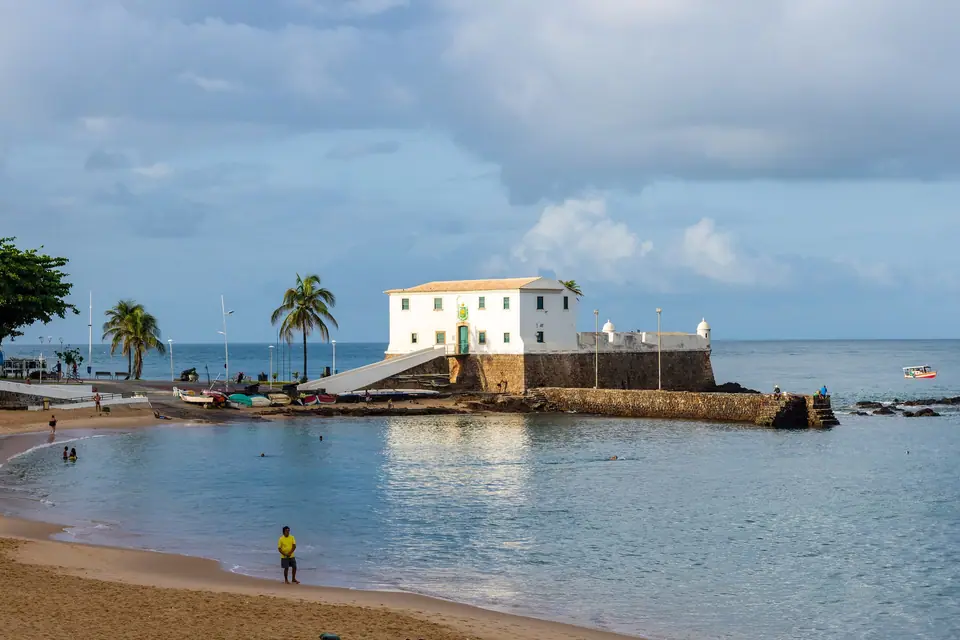
2. Swimming at Praia do Porto da Barra and the Twin Forts
Eight hundred metres north of the lighthouse along the tiled coastal promenade, the shoreline curves into the sheltered 600-metre crescent of Praia do Porto da Barra. Because it faces west inside the mouth of the bay rather than into the open Atlantic surf, its water is calm, clear, and warm year-round. Framing the two ends of the beach stand two whitewashed seventeenth-century fortifications built in 1614 to guard the landing cove: Forte de Santa Maria (hosting the Pierre Verger Photography Space) at the southern point and Forte de São Diogo (hosting the Carybé Arts Space) at the northern cliff.
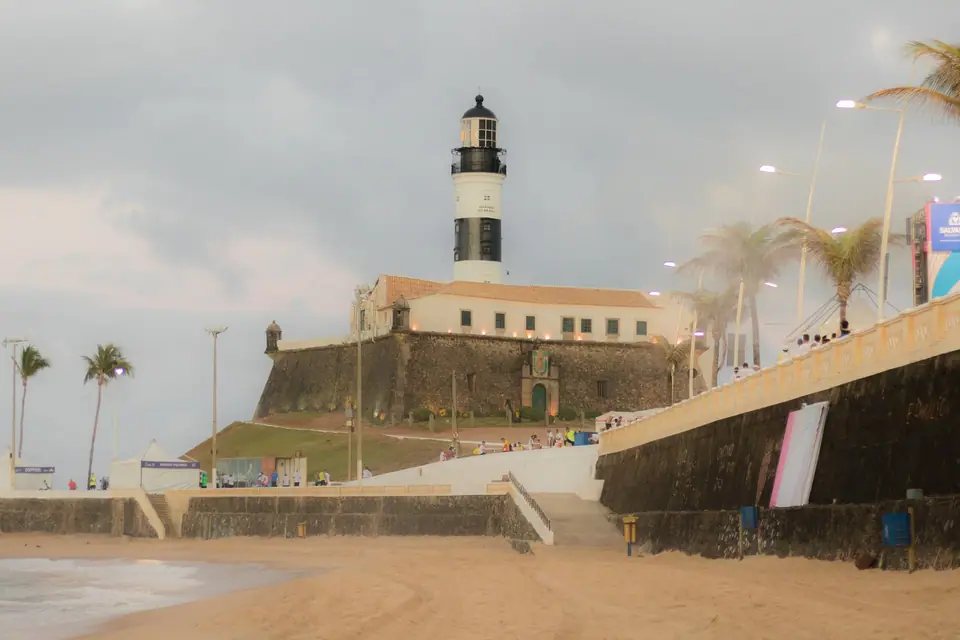
3. Low-Tide Rock Pools and Morro do Cristo
Walk east from the lighthouse toward Ondina at low tide, when the volcanic rock shelves along Praia do Farol da Barra trap warm, waist-deep natural swimming pools teeming with small colourful reef fish, continuing up to the green headland of Morro do Cristo.
Traveller tips
Real advice from people who have been to Barra, Farol da Barra Lighthouse & Porto da Barra Beach. Every tip is read by our team before it goes live.
No tips yet. Been here? Yours could be the first.
Thank you! Your tip will appear here after a quick review.
More in Salvador
Continue exploring Salvador with related neighbourhood, food, and planning guides
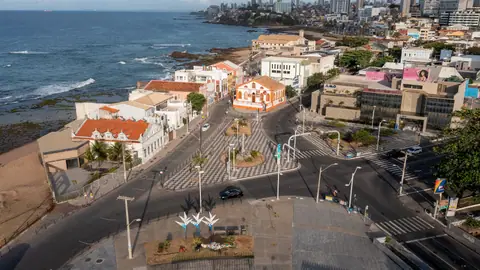
Rio Vermelho Guide: Casa de Jorge Amado, Iemanjá Shrine & Best Acarajé
Salvador, Brazil
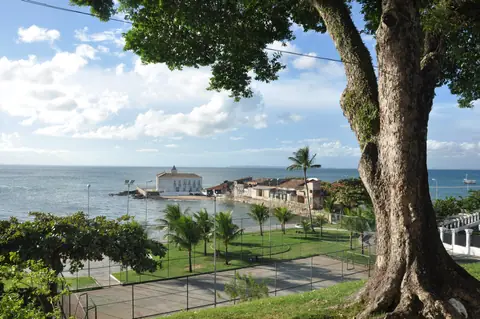
Bonfim Basilica, Forte de Monte Serrat & Itapagipe Peninsula Guide
Salvador, Brazil
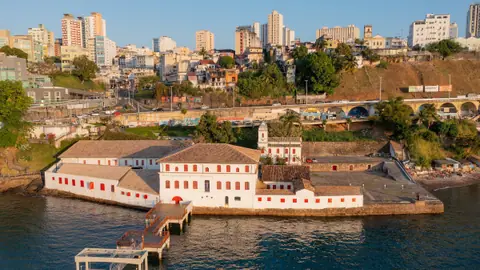
Santo Antônio Além do Carmo & Solar do Unhão (MAM) Guide
Salvador, Brazil
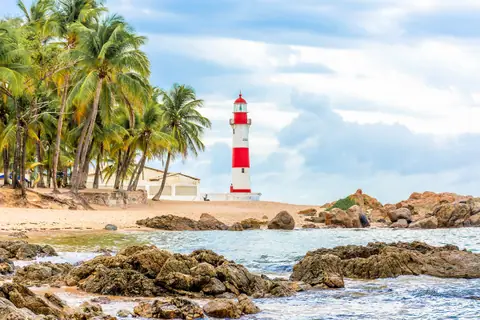
Itapuã, Stella Maris & Praia do Flamengo Guide: Salvador's North Beaches
Salvador, Brazil
