


























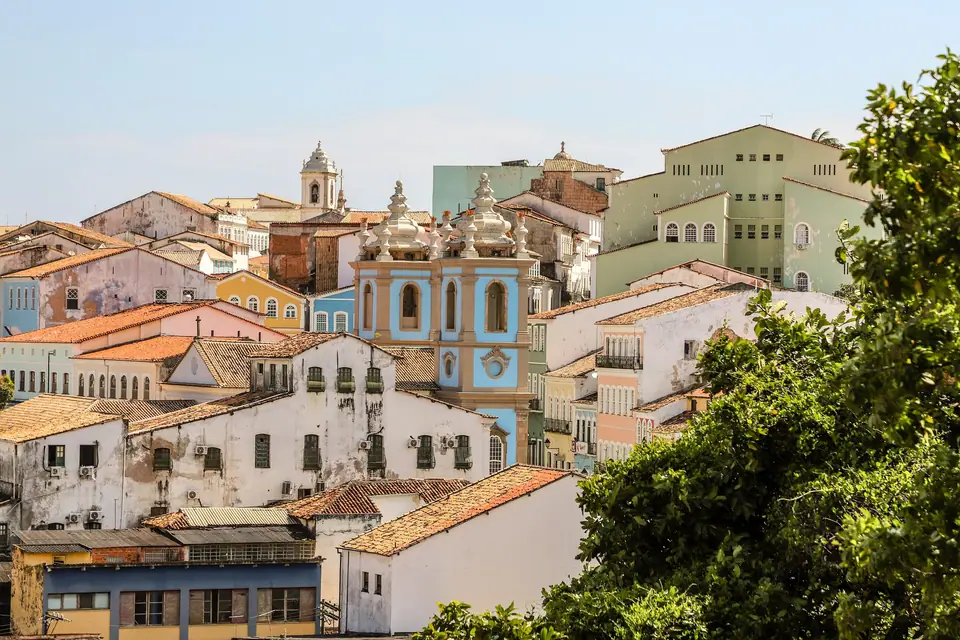
Pelourinho, Terreiro de Jesus & Golden São Francisco Church Guide
Walk through Salvador's UNESCO World Heritage historic centre: explore the gold-covered Church of São Francisco, the Cathedral Basilica, and Largo do Pelourinho.
Inscribed on the UNESCO World Heritage List in 1985, the Historic Centre of Salvador (Centro Histórico) stretches along the upper ridge of the city from Praça Municipal through Terreiro de Jesus and down the sloping triangular cobbles of Largo do Pelourinho. Built during the sixteenth- to eighteenth-century sugar and gold booms, it preserves over 800 pastel-painted baroque palaces, convents, and guild churches.
1. Terreiro de Jesus and the Cathedral Basilica (1657 to 1672)
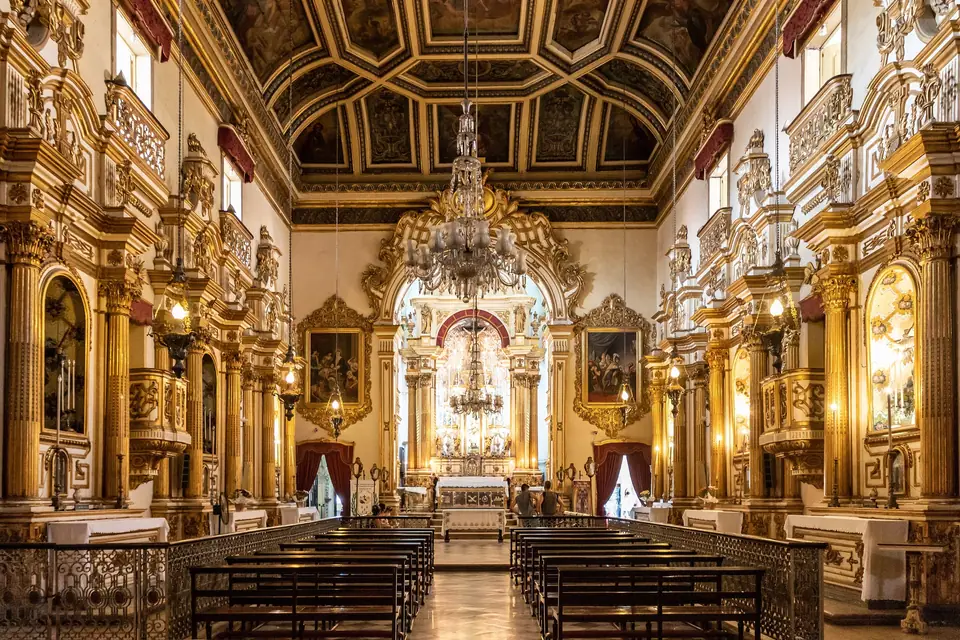
Begin on the wide Portuguese-stone mosaic square of Terreiro de Jesus, laid out in the 1550s around the Jesuit college. Its northern side is dominated by the Catedral Basílica Primacial de São Salvador (built between 1657 and 1672 using pale lioz limestone shipped as ballast from Portugal), whose vast single-aisle Mannerist nave houses thirteen gilded altars and a sacristy lined with coffered jacaranda wood and copper paintings. Across the square, the former Royal School of Medicine (1808) houses the Afro-Brazilian Museum (MAFRO), featuring the monumental carved cedar panels of the 27 Yoruba Orixás by sculptor Carybé.
2. The Golden Church of São Francisco and the Third Order
Walking fifty metres south onto Largo do Cruzeiro de São Francisco brings you to two architectural masterpieces standing side by side:
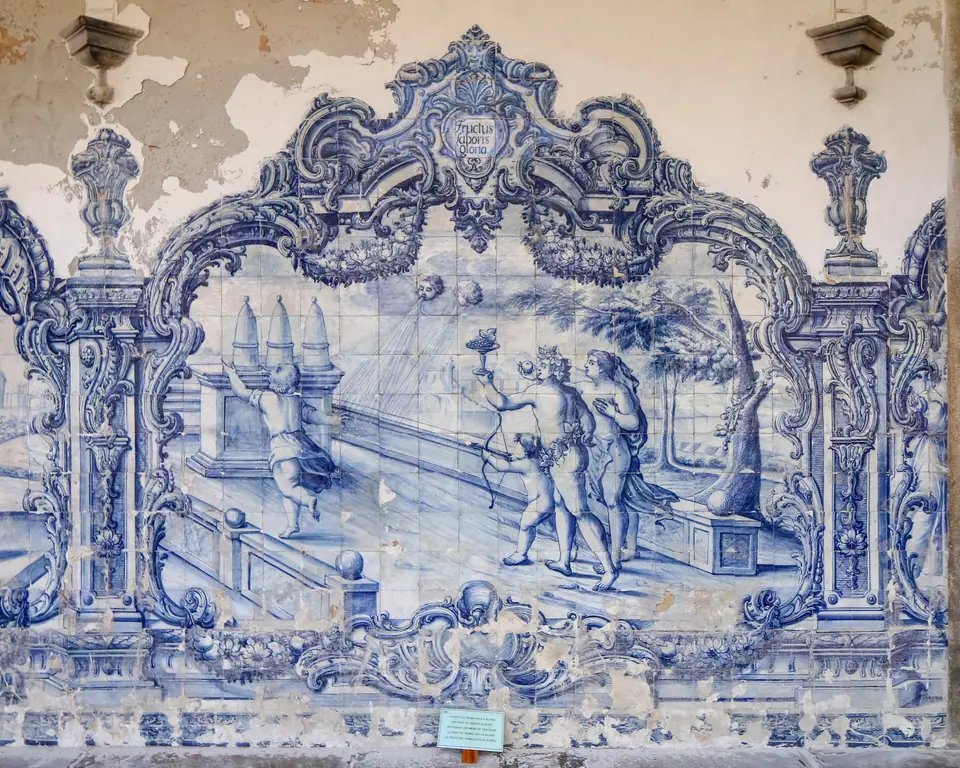
- Igreja e Convento de São Francisco (1686 to 1723): Behind a austere sandstone facade, the interior explodes into the richest baroque woodcarving (talha dourada) in the Americas: spiraling Solomonic columns, cherubs, pelicans, and acanthus leaves carved in cedar and overlaid with hundreds of kilograms of gold leaf. Don't miss the two-storey cloister lined with 37 monumental 1737 Portuguese blue-and-white azulejo panels painted in Lisbon by Bartolomeu Antunes de Jesus, depicting moral maxims from the Roman poet Horace.
- Igreja da Ordem Terceira de São Francisco (1702 to 1703): Next door, master mason Gabriel Ribeiro carved the sandstone facade in ornate Spanish Plateresque high-relief, discovered again in the 1930s when an electrician chipped away a layer of nineteenth-century white mortar that had hidden the sculptures for over a century.
3. Largo do Pelourinho, Rosário dos Pretos, and Casa de Jorge Amado
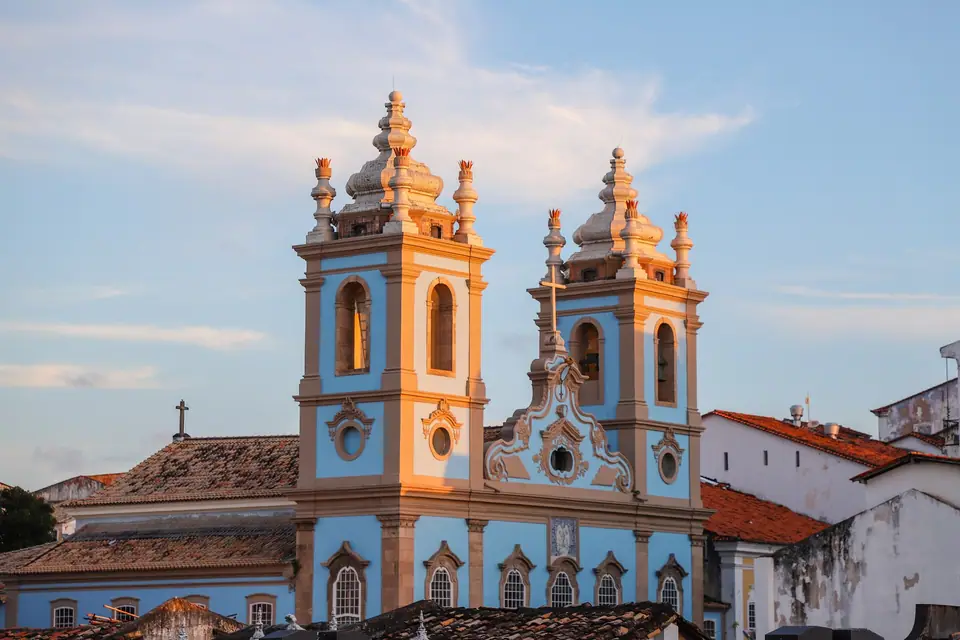
Follow Rua Gregório de Matos downhill into Largo do Pelourinho, flanked by the four-storey blue townhouse of the Fundação Casa de Jorge Amado (dedicated to the author of Dona Flor and Her Two Husbands) and the Museu da Cidade. Halfway up the slope stands the sky-blue rococo Igreja de Nossa Senhora do Rosário dos Pretos, begun in 1704 by the Catholic brotherhood of enslaved and freed Black craftsmen, where Catholic liturgy blends with West African drum rhythms during the famous Tuesday evening Mass (Terça da Bênção).
Traveller tips
Real advice from people who have been to Pelourinho, Terreiro de Jesus & Golden São Francisco Church. Every tip is read by our team before it goes live.
No tips yet. Been here? Yours could be the first.
Thank you! Your tip will appear here after a quick review.
More in Salvador
Continue exploring Salvador with related neighbourhood, food, and planning guides
Morro de São Paulo, Ilha dos Frades & Praia do Forte Day Trips Guide
Salvador, Brazil
Salvador: Essential Planning for Bahia's Historic Capital
Salvador, Brazil
12 Best Things to Do in Salvador: Golden Churches, Bay Sunsets & Acarajé
Salvador, Brazil
How to Get to Salvador: Airport (SSA), Bamboo Corridor, Metro & Ferries
Salvador, Brazil
