





















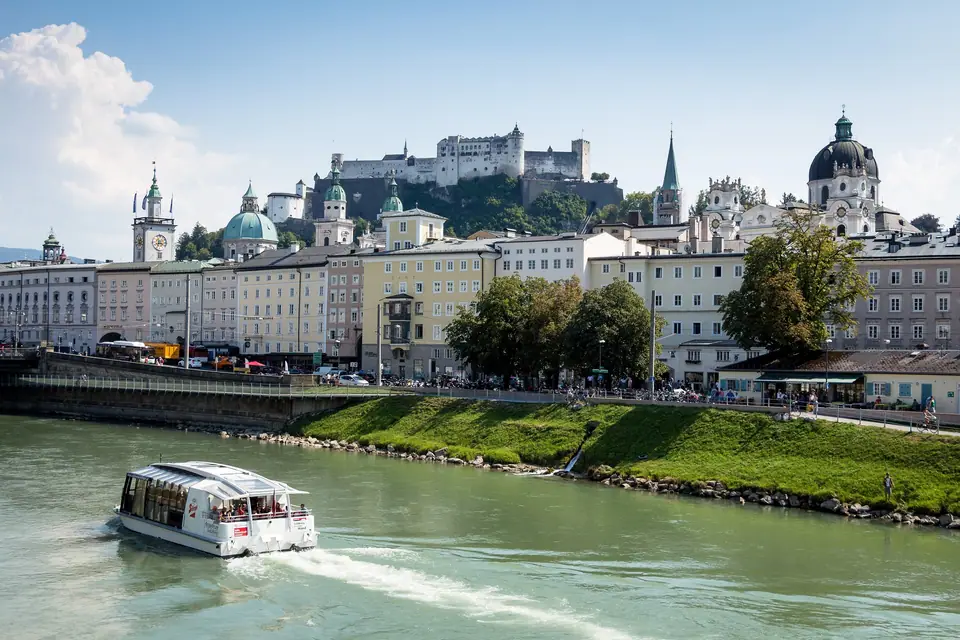
Best Time to Visit Salzburg: GeoSphere Austria Climate Normals, Salzburg Festival & Christkindlmarkt
Plan your visit around official GeoSphere Austria 1991 to 2020 climate normals, the summer Salzburg Festival, Mozart Week in January, and the 1491 Salzburg Christkindlmarkt.
Salzburg sits at 424 metres elevation at the northern edge of the Limestone Alps. Here moist Atlantic air masses rise against the 1,972-metre wall of the Untersberg. Official 1991 to 2020 climate normals come from GeoSphere Austria (formerly ZAMG) at the Salzburg Airport and Freisaal stations. Those records classify the city as a humid continental and pre-alpine border climate. Summer afternoons average a warm 23°C in June and 25°C in July and August. Winter highs hover at 3°C in January and 4°C in December, while overnight lows drop to -4°C in January and -3°C in February and December. Because humid westerly winds bank against the northern mountain rim, Salzburg receives roughly 1,180 to 1,200 millimetres of precipitation per year across 138 wet days. Locals have an affectionate nickname for this steady pre-alpine drizzle: Schnürlregen (pronounced SHNOOR-ul-ray-gen, meaning "string rain"). Choosing the right month depends on your travel style. You can aim for spring palace gardens, summer opera, quiet autumn hiking trails, or snow-dusted Advent squares.
May to June & September to October: The sweet spots for sightseeing and lakes
Many travellers want to explore the DomQuartier and Salzburg Cathedral and ride the Untersberg Cable Car without peak opera crowds. Late spring and early autumn are also ideal for day trips to Hallstatt and St. Wolfgang. Both shoulder seasons combine comfortable walking temperatures with open mountain railways and reasonable hotel availability:
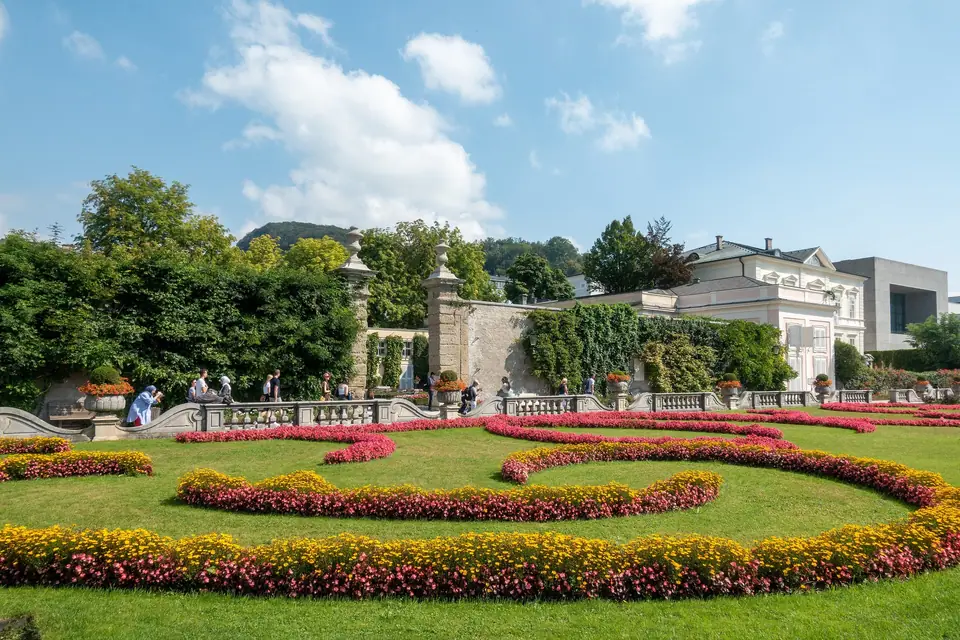
- May and June (Spring bloom & Whitsun Festival). Average daytime highs climb from 16°C in April (11 rain days) to 20°C in May (13 rain days). By June, afternoon highs reach 23°C (14 rain days) with overnight lows of 12°C. In early April, the 1615 Hellbrunn Trick Fountains, the Schafbergbahn cog railway on Lake Wolfgangsee, and the Hallstatt Salt Mine reopen for the warm season. Over the four-day Pentecost weekend in May or early June, the Salzburg Whitsun Festival (Pfingstfestspiele) stages baroque and bel canto operas inside the Festival Halls. Artistic director Cecilia Bartoli curates the annual programme. Long June days bring 16 hours of daylight. Mild evenings fill the chestnut beer garden of Augustiner Bräu Mülln.
- September and October (Golden Alpine visibility & Rupertikirtag). By September, summer thunderstorm clouds clear out. Daytime highs average a pleasant 20°C with 10°C overnight lows and 11 rain days. October brings crisp 15°C afternoons, 6°C lows, and just 10 rain days. That ties with January and November as one of the driest months after February. Clear dry air creates exceptional visibility from the 1,776-metre Geiereck station on the Untersberg. Beech and maple forests on the Kapuzinerberg and Mönchsberg turn amber and gold. Around 24 September (the feast day of patron Saint Rupert), the five-day Rupertikirtag cathedral fair fills Residenzplatz, Domplatz, and Kapitelplatz. Visitors enjoy historic wooden chain carousels, brass bands, craft tents, and local beer stalls.
July to August: The Salzburg Festival & peak summer warmth
July and August are the warmest months of the year in Salzburg. Afternoon highs average 25°C and overnight lows sit at 14°C. Convective afternoon showers and warm alpine storms make July (14 rain days) and August (13 rain days) the wettest months by rainfall volume. Even so, sunny mornings and warm evenings remain the norm. For six weeks from late July through the end of August, the city hosts the Salzburg Festival (Salzburger Festspiele). During this celebration, the Old Town becomes the world's premier classical music stage:
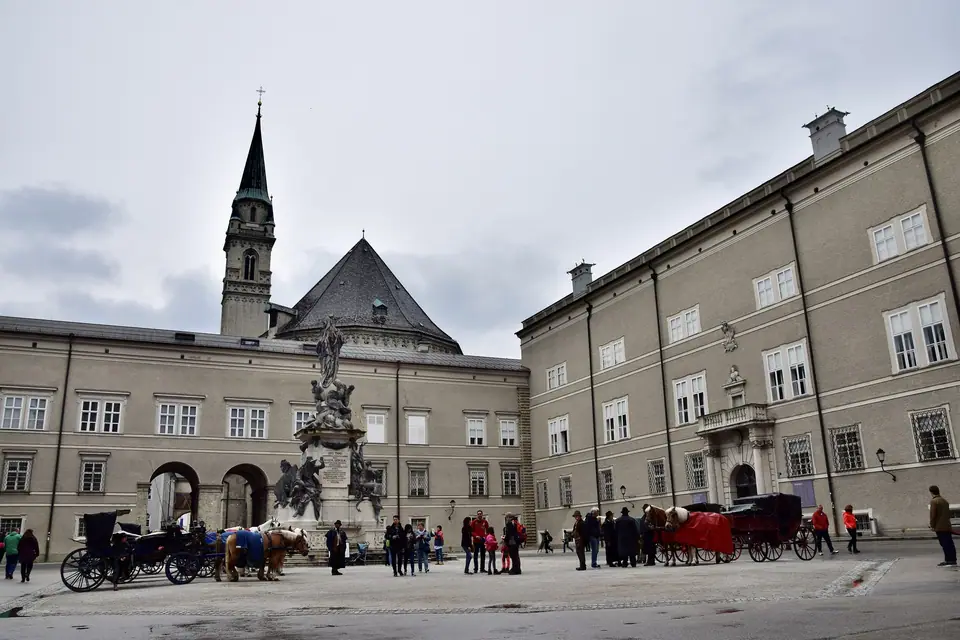
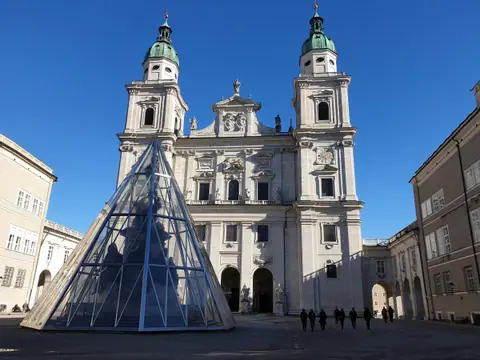
- Founded in 1920. Theatre director Max Reinhardt, poet Hugo von Hofmannsthal, and composer Richard Strauss launched the festival on 22 August 1920. Their opening performance was an open-air staging of Hofmannsthal's morality play Jedermann (Everyman) on the wooden stage in front of Salzburg Cathedral on Domplatz. Actors still call out "Jedermann!" from the Cathedral towers and Hohensalzburg Fortress during every summer performance.
- Over 200 performances across six weeks. Today the festival presents opera, drama, and orchestral concerts by the Vienna Philharmonic. Performances take place inside the Grosses Festspielhaus, Felsenreitschule, and Haus für Mozart, plus matinees at the Mozarteum. On opening weekend, the free two-day Fest zur Festspieleröffnung offers public brass concerts, open rehearsals, and torchlit folk dances on Residenzplatz. If you visit in July or August, book hotels and festival tickets several months ahead.
November to April: Christkindlmarkt, Krampuslauf, Adventsingen & Mozart Week
November cools to 8°C highs and 1°C lows (10 rain days). December averages 4°C highs and -3°C lows across 11 rain days. January brings 3°C highs and -4°C lows (10 rain days), while February reaches 6°C highs and -3°C lows (9 rain days). March warms to 11°C highs and 1°C lows (12 rain days). Keep in mind that the Hellbrunn Trick Fountains close from November through late March. In addition, the Untersberg Cable Car closes for annual maintenance throughout November and parts of April. In exchange, winter hosts four unforgettable Salzburg traditions:
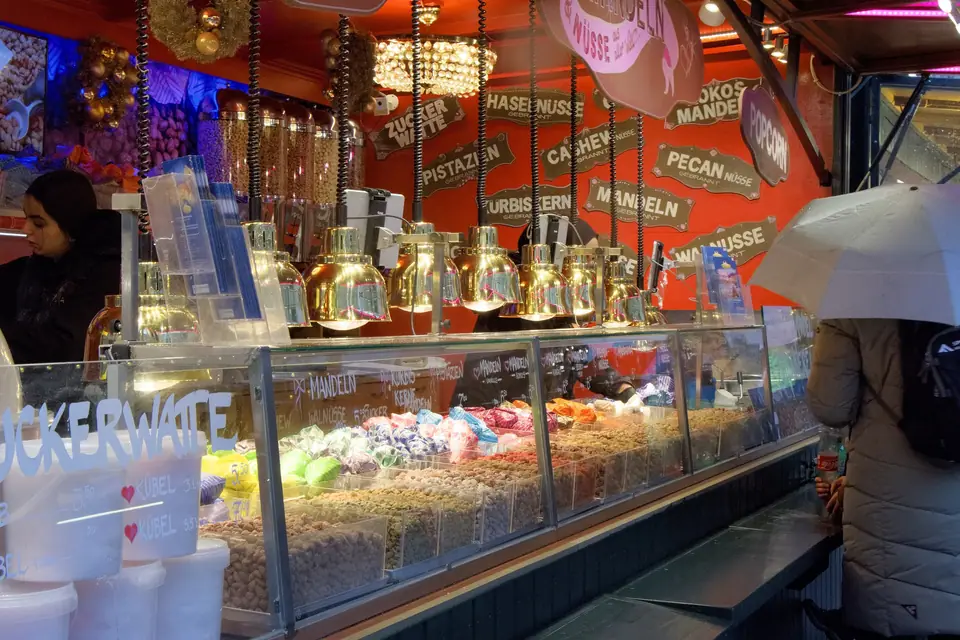
- Salzburger Christkindlmarkt (late November to 1 January). This market traces its roots to the 1491 Tandlmarkt. It has operated in its modern form since 1974 across Domplatz and Residenzplatz. Nearly 100 wooden huts surround the Cathedral under a canopy of star lights, accompanied by daily tower brass players (Turmblasen). A romantic courtyard market also fills Hellbrunn Palace, where the 24 palace windows form a giant Advent calendar.
- Salzburger Adventsingen (Advent weekends). Tobi Reiser founded this alpine choral and pastoral Nativity concert in 1946. Inscribed on Austria's UNESCO Intangible Cultural Heritage list, it takes place inside the 2,179-seat Grosses Festspielhaus.
- Krampuslauf & Perchtenlauf (late November to 6 January). Around 5 and 6 December (Saint Nicholas Day), folkloric figures parade through Getreidegasse, Linzer Gasse, and Gnigl. Performers wear hand-carved wooden masks, goat-horn headpieces, sheepskins, and heavy cowbells during traditional Krampus and Perchten runs.
- Mozart Week (Mozartwoche, late January). The International Mozarteum Foundation has organised this ten-day festival each year since 1956. It celebrates Wolfgang Amadeus Mozart's birthday on 27 January. Top conductors and chamber ensembles perform at the Mozarteum and Festival Halls when winter hotel rates are at their lowest.
Traveller tips
Real advice from people who have been to Salzburg. Every tip is read by our team before it goes live.
No tips yet. Been here? Yours could be the first.
Thank you! Your tip will appear here after a quick review.
More in Salzburg
Continue exploring Salzburg with related neighbourhood, food, and planning guides
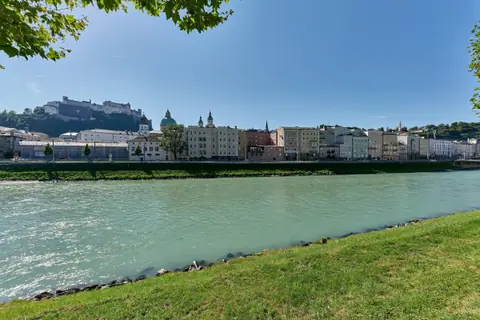
Where to Stay in Salzburg: Left Bank Altstadt, Right Bank Neustadt, Mülln, Nonntal & Leopoldskron Compared
Salzburg, Austria
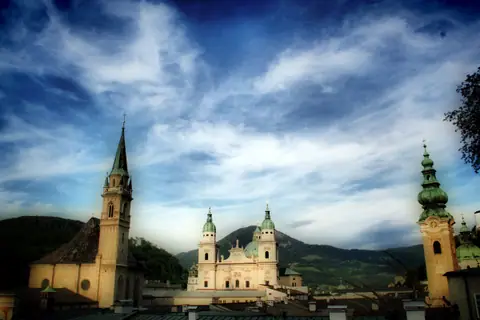
Salzburg 3-Day Itinerary: Old Town Domes, Hohensalzburg, Mozart & Mirabell, Hellbrunn & Salzkammergut Lakes
Salzburg, Austria
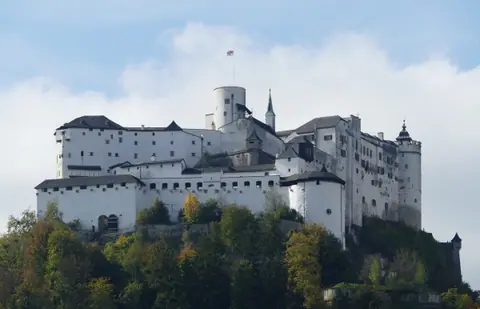
Hohensalzburg Fortress, 1892 Festungsbahn Funicular, Nonnberg Abbey & Mönchsberg Clifftop Walk
Salzburg, Austria
Salzburg Cathedral, DomQuartier State Rooms, St. Peter's Abbey, Catacombs & Kapitelplatz Guide
Salzburg, Austria
