





















Where to Stay in Salzburg: Left Bank Altstadt, Right Bank Neustadt, Mülln, Nonntal & Leopoldskron Compared
Compare the five best areas to stay in Salzburg: the pedestrian Left Bank Altstadt, the Right Bank around Mirabellplatz and Linzer Gasse, Mülln, Nonntal, and lakeside Leopoldskron.
Salzburg's UNESCO historic core is split neatly down the middle by the Salzach River and enclosed by rising pedestrian bollards. Choosing which riverbank to sleep on shapes your entire stay. In sprawling capitals, a poor hotel location can cost you forty minutes on a metro. In Salzburg, all five best accommodation zones sit within 10 to 25 minutes' walk (or a five-minute Obus trolleybus ride) of Salzburg Cathedral. The real decision is balancing medieval atmosphere against luggage logistics, quiet nights, and hotel room sizes. Every registered overnight stay in Salzburg also includes the free province-wide Salzburg Guest Mobility Ticket at check-in.
1. Left Bank Altstadt: Getreidegasse, Judengasse, Kaigasse & Festival District
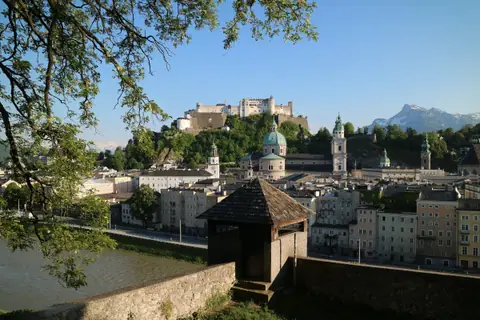
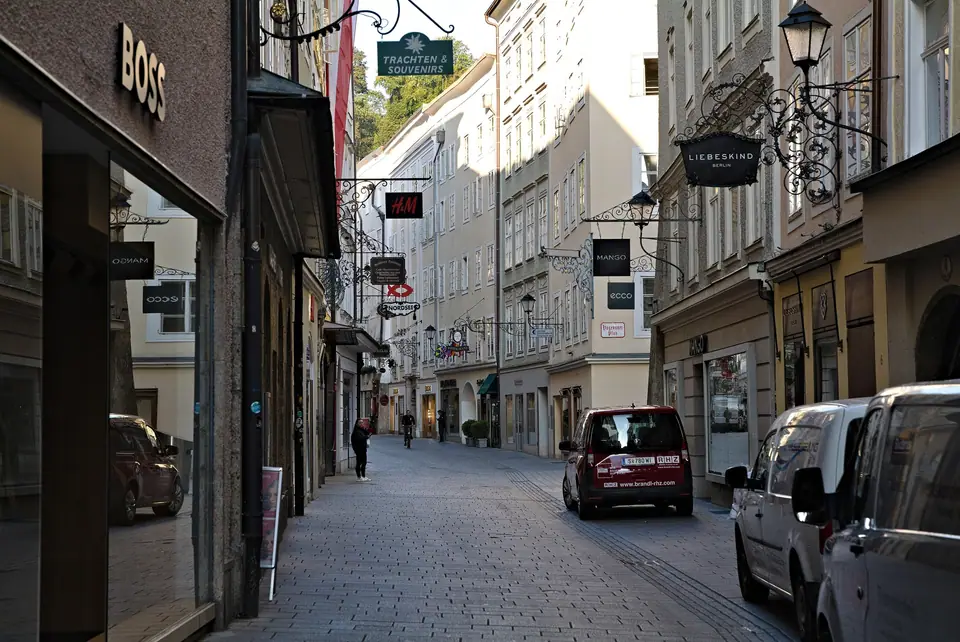
Staying on the Left Bank (Linkes Salzachufer) places you directly inside the sixteenth- and seventeenth-century Prince-Archbishops' capital. Step out of your hotel lobby at 08:00 and the wrought-iron guild signs of Getreidegasse are quiet. You have the marble fountains of Residenzplatz and Kapitelplatz to yourself before day-trippers arrive from Munich and Vienna. You can also board the first morning cabin of the Festungsbahn funicular without waiting in line. Several of Europe's oldest aristocratic inns operate inside five-hundred-year-old townhouses along Getreidegasse, Judengasse, Goldgasse, and Sigmund-Haffner-Gasse, featuring vaulted stone lobbies and wood-beamed ceilings.
- Best quiet pockets on the Left Bank. For peaceful nights away from late-evening pub crowds on Rudolfskai, look at the residential Kaiviertel at the southeastern foot of the Fortress cliff. Streets such as Kaigasse, Kajetanerplatz, and Krotachgasse sit three minutes from Domplatz yet feel calm after dusk. Another tranquil pocket sits near the Festival Halls along Hofstallgasse, Bürgerspitalgasse, and Herbert-von-Karajan-Platz, where horse-drawn carriages and concertgoers pass beneath the Mönchsberg cliff.
- Luggage & car trade-offs. Automatic rising steel bollards (Poller) protect the pedestrian streets of the Left Bank. Hotels can provide a bollard access code for brief luggage drop-off before you park in the underground Mönchsberg Garage inside the cliff. From the garage cavern, direct pedestrian exits open right onto Herbert-von-Karajan-Platz and Gstättengasse. If arriving by rail or air, ride Obus Trolleybus 1, 3, 5, 6, or 10 to Ferdinand-Hanusch-Platz and Rathaus. Keep in mind that medieval burgher houses follow strict UNESCO heritage preservation rules. Travellers visiting in July or August should confirm in advance that their Left Bank hotel provides full room air conditioning. Guests with heavy suitcases should check that a modern lift serves all upper floors.
2. Right Bank: Mirabellplatz, Makartplatz, Linzer Gasse & Steingasse (Best All-Round Base)
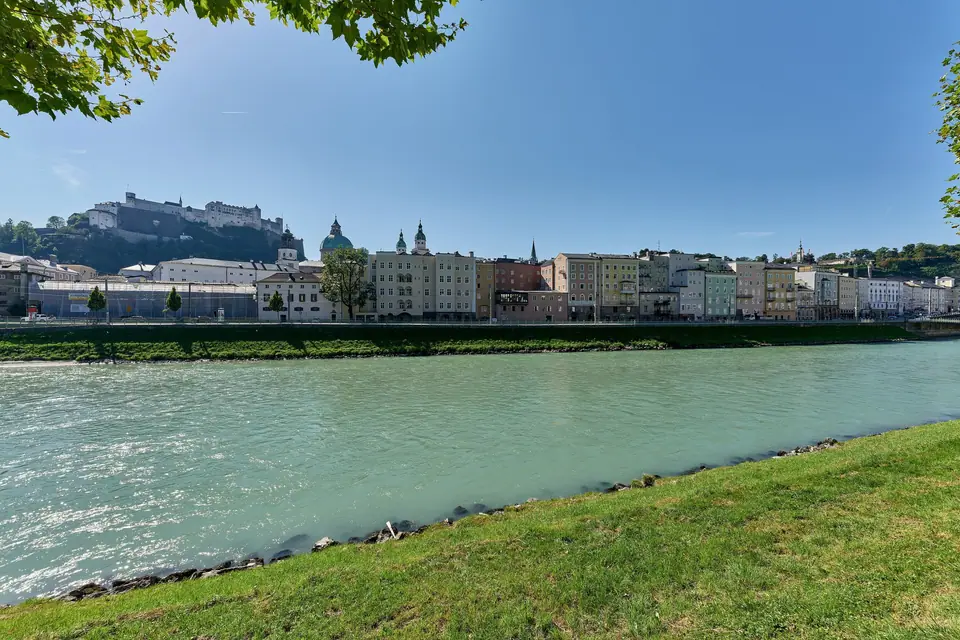
Directly across the Marko-Feingold-Steg footbridge and Staatsbrücke on the Right Bank (Rechtes Salzachufer) lies our favourite all-round base for most travellers. This side of the river combines two distinct neighbourhoods beneath the wooded bastions of the Kapuzinerberg. Embankment promenades along the water reward you with golden sunset views toward Hohensalzburg Fortress:
- Linzer Gasse & Steingasse (Southern Right Bank). Pedestrianised Linzer Gasse and narrow medieval Steingasse offer independent cafés, artisan bakeries, traditional Austrian taverns, and historic townhouse hotels. Room and dining rates here sit slightly gentler than on Getreidegasse. Even better, you are still just a three-minute walk across the Staatsbrücke from the Cathedral, and the Kapuzinerberg steps begin right outside your door.
- Mirabellplatz, Makartplatz & Dreifaltigkeitsgasse (Andräviertel / Neustadt). Surrounding Mirabell Palace and Gardens and Mozart's Residence, nineteenth-century Gründerzeit townhouses and four- and five-star hotels provide noticeably larger guest rooms. Most properties here feature modern elevators, full air conditioning, soundproofed windows, and easy taxi pull-ups outside the pedestrian bollard zone. Thursday mornings bring the popular Schranne farmers' market around St. Andrew's Church on Mirabellplatz, where local farmers sell alpine cheeses, cured meats, and warm pastries since 1906. In addition, Salzburg Hauptbahnhof is an easy 10-minute flat walk north (or 3 minutes on Obus Lines 1, 2, 3, 5, and 6). That proximity makes early rail day trips to Hallstatt, Munich, or Vienna effortless.
3. Mülln & North Mönchsberg (Local Beer Garden Atmosphere & S-Bahn Access)
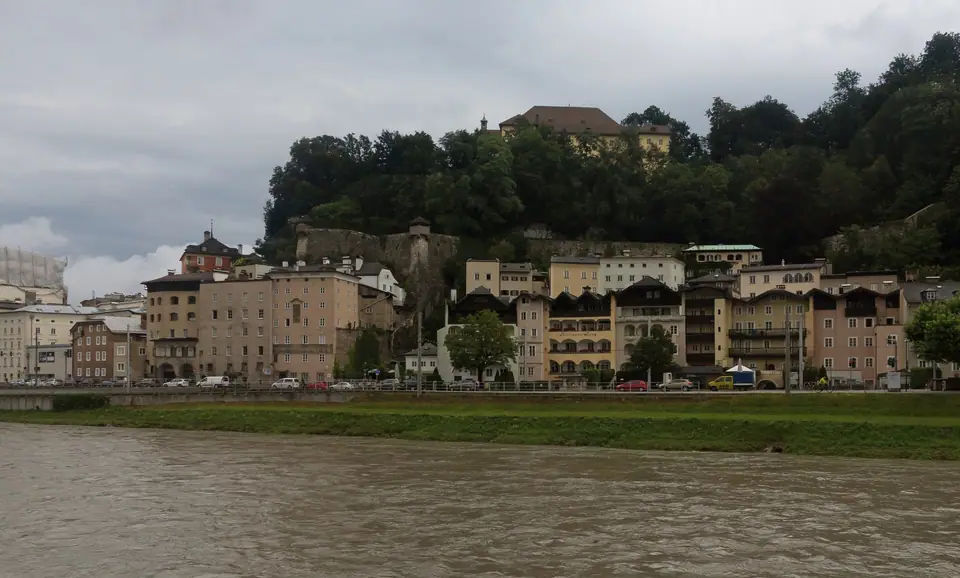
Just northwest of the Mönchsberg cliff where the river bends north sits the historic suburb of Mülln. The district is anchored by its 1453 baroque parish church and Augustiner Bräu Kloster Mülln (founded 1621). Staying along Augustinergasse or Müllner Hauptstrasse puts you a scenic 10-minute riverside walk along Franz-Josef-Kai from Getreidegasse. You can also walk over the wooded Mönchsberg ridge via the MönchsbergAufzug lift. The Salzburg Mülln-Altstadt S-Bahn station sits two minutes away for quick regional rail connections. Traditional taverns like 1663 Gasthof Bärenwirt serve classic Salzburg dishes right down the street.
4. Nonntal, Leopoldskron & Hellbrunner Allee (Lakeside & Alpine Calm)
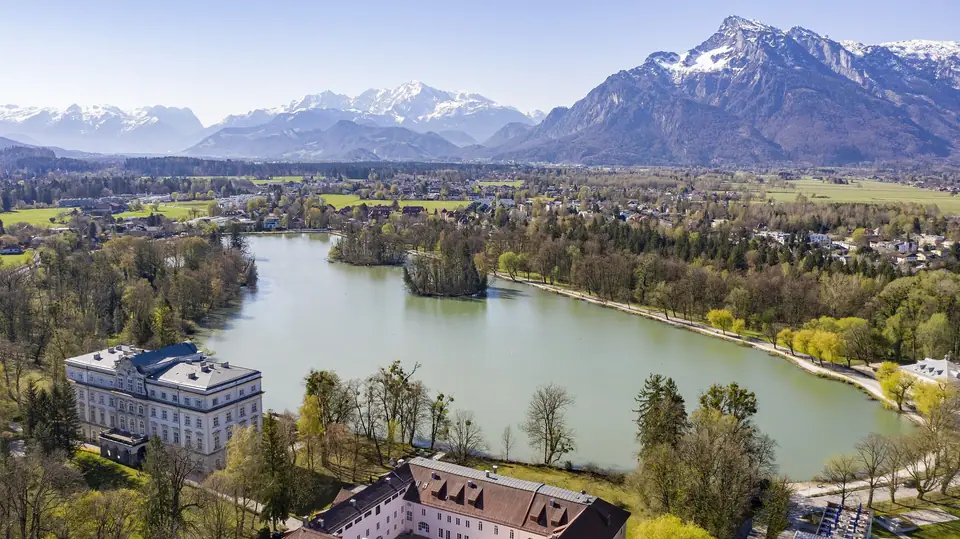
South of the Festungsberg cliff, the city opens into green meadows looking straight at the 1,972-metre wall of the Untersberg. Nonntal sits right below Nonnberg Abbey within a 12-minute walk of Kapitelplatz through the car-free Krauthügel orchard meadows. Further south at the artificial lake of Leopoldskroner Weiher stands the 1736 rococo palace of Schloss Leopoldskron. Today it operates as an international seminar centre and boutique hotel inside the adjacent Meierhof. Registered hotel guests enjoy breakfast overlooking the palace lake and morning access to the private grounds. Cycling paths along the 1615 Hellbrunner Allee and Bus 25 connect the neighbourhood directly to the Altstadt, Hellbrunn Palace, and the Untersberg Cable Car.
5. Salzburg Hauptbahnhof Perimeter: Practical for Rail, Less Historic at Night
Modern chain hotels clustered on Südtiroler Platz, Saint-Julien-Strasse, and Rainerstrasse outside Salzburg Hauptbahnhof are clean, safe, and practical for late-night rail arrivals or early morning departures. Trolleybuses outside the terminal reach the river in seven minutes. However, the station plaza feels commercial compared with the baroque riverbanks just 1.5 kilometres south. If you want easy rail access without sacrificing historic charm, book halfway between the station and the river around Mirabellplatz or Dreifaltigkeitsgasse instead. Review our 3-day Salzburg itinerary to match your hotel location with your daily sightseeing route.
Traveller tips
Real advice from people who have been to Salzburg. Every tip is read by our team before it goes live.
No tips yet. Been here? Yours could be the first.
Thank you! Your tip will appear here after a quick review.
More in Salzburg
Continue exploring Salzburg with related neighbourhood, food, and planning guides
Best Time to Visit Salzburg: GeoSphere Austria Climate Normals, Salzburg Festival & Christkindlmarkt
Salzburg, Austria
What to Wear in Salzburg: Alpine Schnürlregen Rain Gear, Cobblestone Footwear & Festspielhaus Dress Code
Salzburg, Austria
Salzburg 3-Day Itinerary: Old Town Domes, Hohensalzburg, Mozart & Mirabell, Hellbrunn & Salzkammergut Lakes
Salzburg, Austria
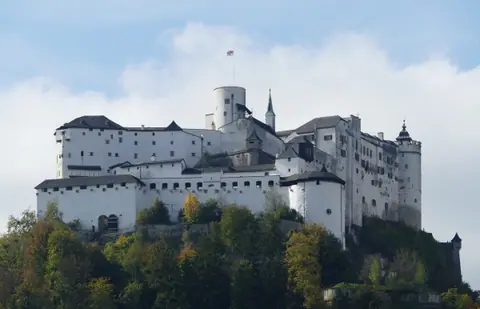
Hohensalzburg Fortress, 1892 Festungsbahn Funicular, Nonnberg Abbey & Mönchsberg Clifftop Walk
Salzburg, Austria
