





















Hellbrunn Palace & 1615 Trick Fountains, Schloss Leopoldskron & Untersberg Cable Car Guide
Explore Salzburg's southern green belt along Bus 25: the 1615 Hellbrunn Palace and Trick Fountains, the Sound of Music Pavilion, Schloss Leopoldskron, and the 1,776-metre Untersberg Cable Car.
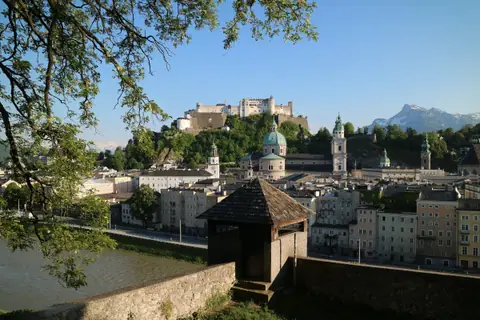
South of the Festungsberg cliff, the Baroque stone canyons of the Old Town give way to green meadows and spring-fed fishponds. Ahead rises the sheer 1,972-metre limestone wall of the Untersberg. Three major attractions line this southern corridor along Albus Line 25 and the 4.5-kilometre car-free linden avenue of the 1615 Hellbrunner Allee. First comes the 1736 rococo lake palace of Schloss Leopoldskron. Next stands Prince-Archbishop Markus Sittikus's 1615 Hellbrunn Palace and Trick Fountains (Wasserspiele). Ten minutes further south in Grödig rises the high-alpine Untersberg Cable Car (Untersbergbahn). Even better, your Salzburg Card covers Bus 25, Hellbrunn Palace, the Trick Fountains, Salzburg Zoo, and the return Untersberg Cable Car ascent at no extra cost.
1. Hellbrunn Palace (Schloss Hellbrunn) & the 1615 Trick Fountains (Wasserspiele)
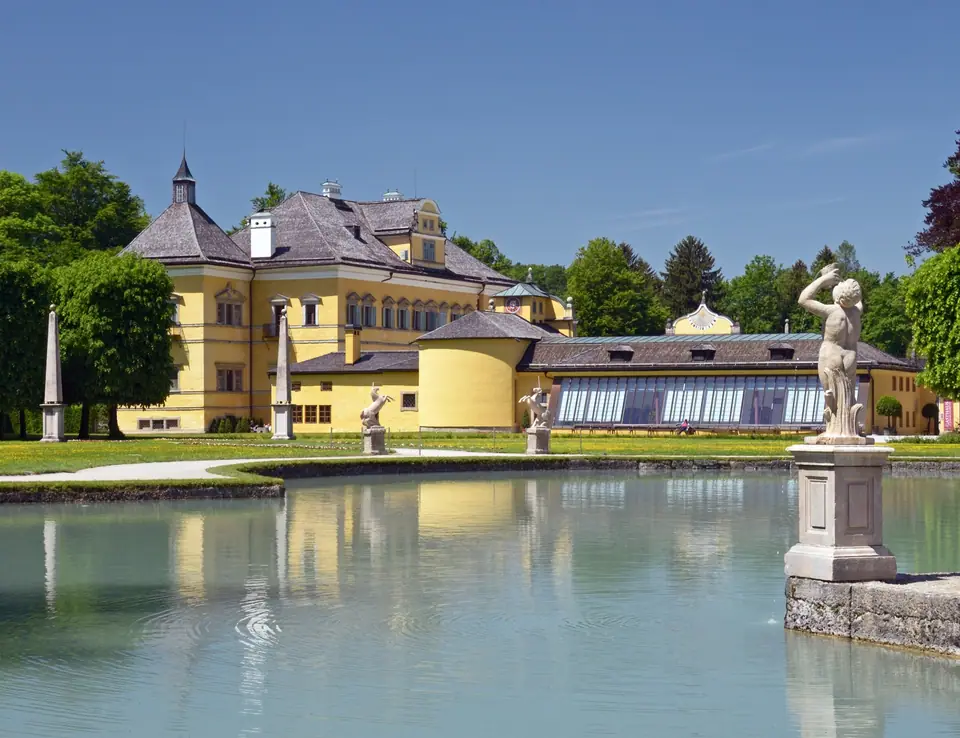
After deposing his uncle Wolf Dietrich in 1612, newly elected Prince-Archbishop Markus Sittikus von Hohenems looked south of the city walls. He commissioned cathedral architect Santino Solari to build an Italian-style summer villa (Villa suburbana) at the foot of the water-rich Hellbrunner Berg. Completed between 1612 and 1615, Schloss Hellbrunn was designed strictly as a daytime pleasure palace (Lustschloss) for banquets, hunting, and water entertainments. Because the Prince-Archbishop always returned to the Alte Residenz before nightfall, Hellbrunn contains not a single bedroom.
Gravity-fed mountain springs emerge directly from the Hellbrunner Berg behind the villa. Using that natural water pressure, Markus Sittikus and hydraulic engineer Salomon de Caus created the world's best-preserved late-Renaissance Trick Fountains (Wasserspiele). Operating daily from 1 April through early November (closed in winter), the 45-minute guided tour leads you through five centuries-old hydraulic surprises:
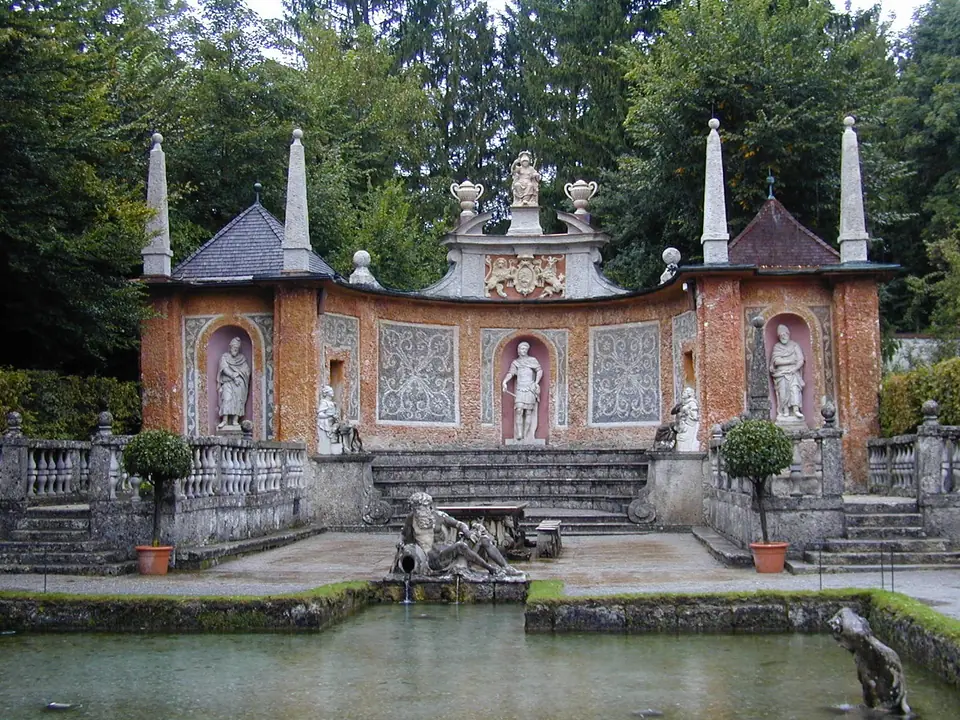
- The Roman Theatre & Prince's Stone Dining Table (Fürstentisch). At the centre of an exedra of marble statues stands a long stone banquet table surrounded by stone stools. When the fountain master turns a hidden valve, water jets shoot straight up through the guest stools to soak the diners. Meanwhile, the Prince-Archbishop's head seat at the top of the table remains dry.
- The Orpheus Grotto, Neptune Grotto & Mirror Grotto. Beneath the palace wing, pebble-and-shell mosaic grottos house water-powered singing mechanical birds. Inside the Neptune Grotto, water pressure rolls the eyes and sticks out the tongue of the monstrous mask of Germaul. In the adjacent grotto, a central water jet lifts a gilded metal crown five metres into the air.
- Water-Driven Mythological Automata. Along the shady canal path, miniature waterwheels power moving tableaux of Apollo flaying Marsyas, Perseus rescuing Andromeda, a miller's workshop, and a potter's wheel.
- The 1750 Mechanical Theatre (Mechanische Theater). Lorenz Rosenegger added this outdoor Baroque town stage between 1748 and 1752 for Prince-Archbishop Andreas Jakob von Dietrichstein. It sets 200 carved wooden figures into simultaneous motion. Water-driven brass axles animate guards, guildsmen, butchers, and acrobats while a hydraulic pipe organ plays an eighteenth-century score.
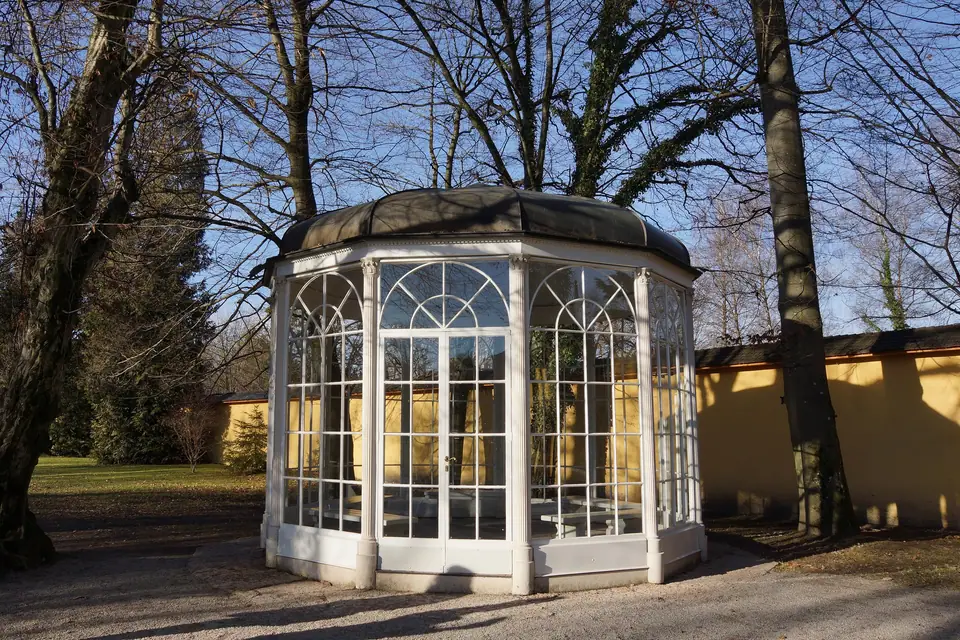
- Palace Audio Tour, Sound of Music Pavilion & Stone Theatre. Inside the yellow palace, the multilingual audio guide leads you into Arsenio Mascagni's trompe-l'oeil frescoed Festive Hall (Festsaal) and the Octagon music room. Out in the free 60-hectare park stands the white octagonal The Sound of Music Pavilion (Gazebo). Both "Sixteen Going on Seventeen" and "Something Good" were filmed inside it in 1964. Climb 15 minutes up the wooded Hellbrunner Berg behind the palace to the Stone Theatre (Steintheater). In this conglomerate rock quarry, Markus Sittikus staged the first open-air opera performance north of the Alps on 31 August 1617. Immediately below the cliff stretches the 14-hectare Salzburg Zoo.
2. Schloss Leopoldskron & the 1615 Hellbrunner Allee
Halfway between the Altstadt and Hellbrunn (at Leopoldskronstrasse 56 to 58) sits the tranquil lake of Leopoldskroner Weiher and the Rococo palace of Schloss Leopoldskron. Prince-Archbishop Firmian commissioned the palace in 1736 for his nephew from Benedictine monk Bernhard Stuart. In 1918, theatre director and Salzburg Festival co-founder Max Reinhardt purchased the estate and restored its Venetian Salon, library, and marble hall. Since 1947, the palace has housed the international nonprofit Salzburg Global Seminar and a boutique hotel.
In spring 1964, director Robert Wise filmed along the lakeside terrace of Schloss Leopoldskron for The Sound of Music. The estate served as the exterior of the von Trapp family villa. Here the film crew shot the scene where Maria and the children tip out of their rowboat into the lake. Because the palace grounds are private to Salzburg Global Seminar fellows and registered hotel guests, walk or cycle along the public northern lakeshore. That path follows Meierhofweg and König-Ludwig-Strasse directly across the water. From the public benches beside the swans, you look straight across the lake to the twin white seahorse statues on the Leopoldskron Venetian terrace. Above the palace roof rises Hohensalzburg Fortress.
3. Riding the Untersberg Cable Car (Untersbergbahn) to 1,776 Metres
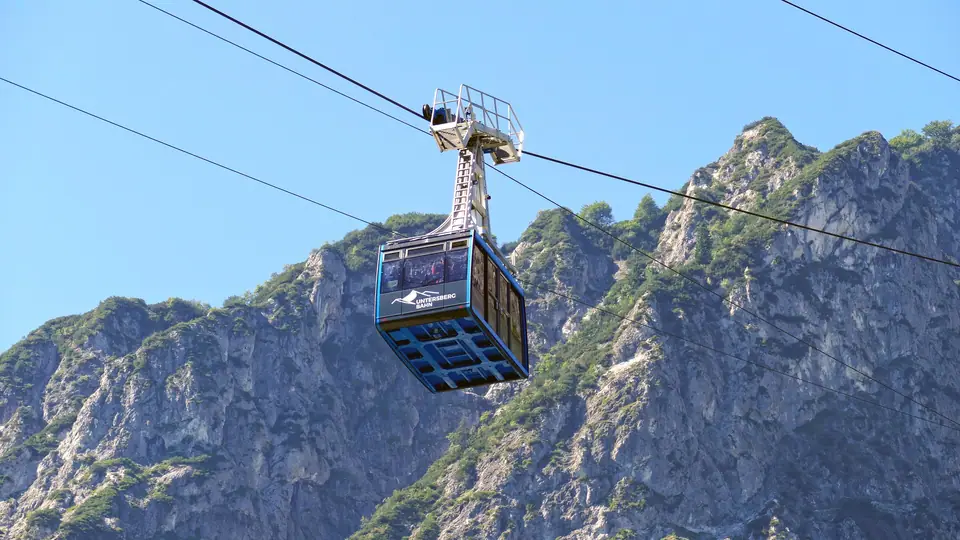
From the Hellbrunn bus stop (Fürstenweg), stay aboard Albus Line 25 for another 10 minutes south to its final stop at Grödig / St. Leonhard. Opened in April 1961 at the foot of the 1,972-metre Untersberg massif, the Untersberg Cable Car (Untersbergbahn) straddles the Austrian-Bavarian border. Cabins climb from the 456-metre valley station to the 1,776-metre Geiereck mountain station in 8.5 minutes. The cabin spans 1,320 vertical metres of limestone cliffs and is included free once on the Salzburg Card. Note that the lift closes in November and mid-April for cable maintenance; check wind and weather status on the official untersbergbahn.at site before setting out.
From the Geiereck sun terrace at 1,776 metres, the entire Salzburg basin, the Chiemsee in Bavaria, and the Salzkammergut lakes unfold below you. On clear days you can also spot the glaciated 2,995-metre Hoher Dachstein. Wear sturdy closed-toe walking shoes for the 25-to-30-minute alpine ridge path. That trail crosses the karst plateau to the summit cross of the Salzburger Hochthron (1,805 metres). Afterwards, pause on the wooden deck of the Zeppezauerhaus mountain hut (1,663 metres) before riding the afternoon cabin back down to the valley.
Traveller tips
Real advice from people who have been to Salzburg. Every tip is read by our team before it goes live.
No tips yet. Been here? Yours could be the first.
Thank you! Your tip will appear here after a quick review.
More in Salzburg
Continue exploring Salzburg with related neighbourhood, food, and planning guides
What to Eat in Salzburg: Salzburger Nockerl, Original Fürst Mozartkugel, Kasnocken, Bosna & Café Tomaselli
Salzburg, Austria
Salzburg Orientation: Salzach River Divide, Left Bank Altstadt, Right Bank Neustadt & Salzburg Card
Salzburg, Austria
Best Things to Do in Salzburg: Hohensalzburg Fortress, Mozart Sites, DomQuartier, Mirabell & Sound of Music
Salzburg, Austria
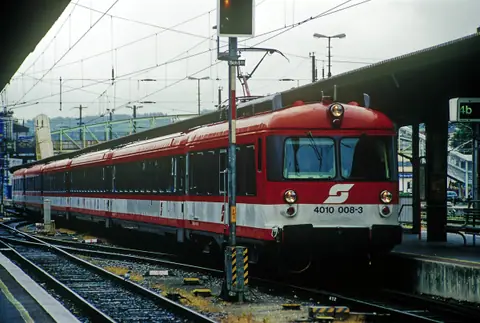
Arriving in Salzburg: Airport (SZG) Trolleybuses, Hauptbahnhof Rail Links from Vienna & Munich & Obus Network
Salzburg, Austria
