





















What to Wear in Salzburg: Alpine Schnürlregen Rain Gear, Cobblestone Footwear & Festspielhaus Dress Code
Pack smartly for Salzburg's pre-alpine Schnürlregen showers, steep cobblestone climbs to Hohensalzburg Fortress, 1,776-metre Untersberg winds, and evening dress codes at the Salzburg Festival.
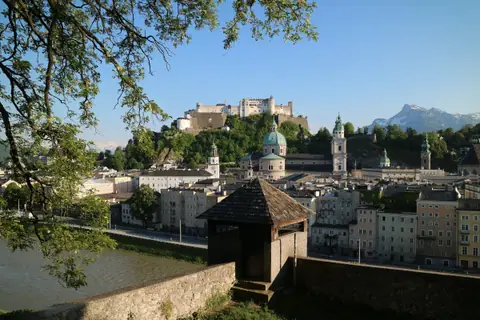
Packing for Salzburg requires preparing for three distinct microclimates within a single day. At 424 metres in the valley, you walk across polished river-stone passages and marble squares. Here moist Atlantic breezes meet the northern wall of the Alps to produce Schnürlregen (pronounced SHNOOR-ul-ray-gen, "string rain"). Twenty minutes south on the Untersberg Cable Car, you step out onto an exposed 1,776-metre limestone ridge. Summit temperatures sit 10 to 12°C colder than the Old Town. By evening, you may attend a candlelit concert at Mirabell Palace or an opera at the Grosses Festspielhaus. At those venues, locals wear dark evening suits, cocktail dresses, or silk Tracht.
Footwear for Altstadt cobblestones, Fortress ramps & Hellbrunn water jets
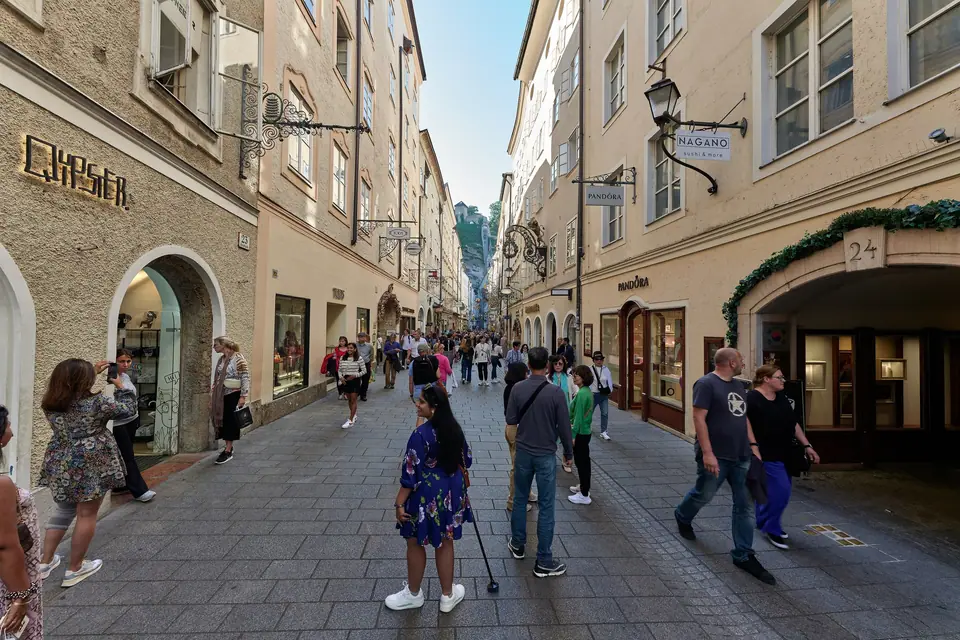
Even if you ride the 1892 funicular and Mönchsberg lift, Salzburg is a vertical, stone-paved city. The narrow medieval lanes of Getreidegasse, Judengasse, and Steingasse are paved in granite setts and smooth river pebbles (Katzenkopf cobbles). Meanwhile, the footpaths up to Nonnberg Abbey and Hohensalzburg Fortress (Festungsgasse) climb at a 20-percent gradient. On the Right Bank, the Imbergstiege up Kapuzinerberg ascends 250 steps. Packing two reliable pairs of shoes keeps your feet dry and comfortable:
- Everyday city walking shoes. Pack broken-in leather walking trainers, low-profile Gore-Tex trail shoes, or flat leather ankle boots with lugged rubber soles. Smooth leather dress soles slip easily on wet Adnet marble stairs inside the DomQuartier and on damp cobblestones after a summer shower. Leave stiletto heels in your hotel bag for indoor evening concerts.
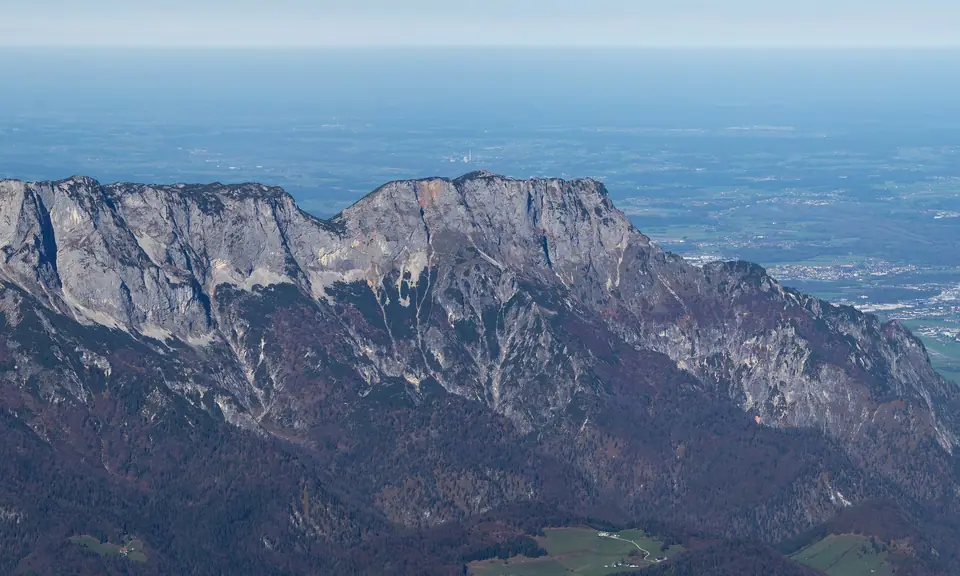
- Untersberg summit & Mönchsberg forest trails. Plan to wear closed-toe shoes with deep tread if you ride the Untersberg Cable Car. The 30-minute alpine ridge trail from the 1,776-metre Geiereck station to the 1,805-metre Salzburger Hochthron cross crosses uneven limestone rock. Never wear open sandals or smooth-soled canvas shoes on high karst trails.
- Hellbrunn Trick Fountains tip (April to October). Prince-Archbishop Markus Sittikus designed the 1615 Wasserspiele to spray unsuspecting guests. Hidden water nozzles shoot from stone benches, deer antlers, and courtyard paving stones. Wear quick-drying trousers and a light rain shell rather than delicate suede shoes or dry-clean-only silk when touring Hellbrunn.
Season-by-season layering for the 424 m valley and 1,776 m peaks
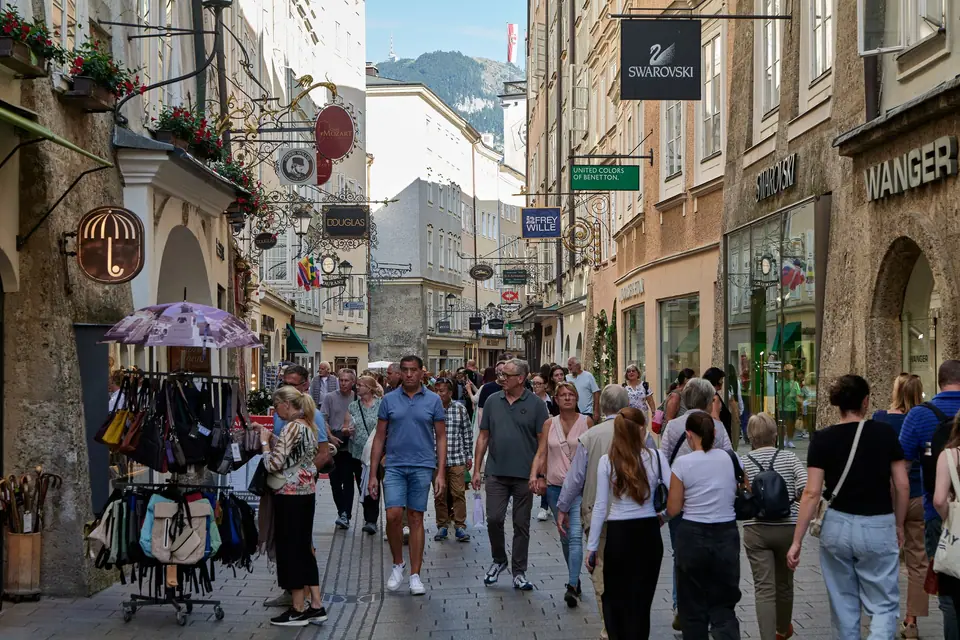
According to official GeoSphere Austria climate normals, Salzburg averages 9 to 14 rain days every month of the year. Umbrellas blow inside out on the Fortress ramparts and Mönchsberg cliffs. Consequently, a breathable hooded waterproof jacket or trench coat is essential in all four seasons. Pack thin, breathable layers that you can add or remove as you move between sunny squares and cool stone interiors:
- Spring (March to May, highs 11 to 20°C, lows 1 to 9°C). Layer a waterproof shell or trench coat over a merino wool jumper, cotton shirts, and chinos or dark jeans. Keep a light fleece and windproof scarf in your daypack for the Untersberg Cable Car, where snow patches linger into May.
- Summer (June to August, highs 23 to 25°C, lows 12 to 14°C). Pack breathable linen or cotton shirts, light tailored trousers or dresses, and UV sunglasses. Always carry a packable rain shell for late-afternoon pre-alpine thunderstorms. Bring a light cardigan for the cool 10°C rock-cut catacombs of St. Peter's Abbey. Inside the salt mines at Hallein or Berchtesgaden, temperatures stay at 10°C year-round, and staff provide protective miner overalls over your street clothes.
- Autumn (September to November, highs 8 to 20°C, lows 1 to 10°C). Bring a water-resistant wool coat or quilted jacket, medium-weight knitwear, wool socks, and waterproof leather boots. These layers keep you warm on crisp mornings aboard Lake Wolfgangsee and Hallstatt ferries.
- Winter (December to February, highs 3 to 6°C, lows -4 to -3°C). Standing for two hours with a mug of Glühwein on the stone paving of Residenzplatz during the Christkindlmarkt requires serious insulation. Cold air settles on the valley floor after sunset. Pack thermal base layers, a down parka or heavy wool overcoat, a fleece-lined hat, leather gloves, a wool scarf, and insulated boots with ice-grip soles.
Salzburg Festival dress code, palace concerts & traditional Tracht
Salzburg takes concert attire more seriously than almost any other European city. Even so, dress expectations vary by venue and time of day:
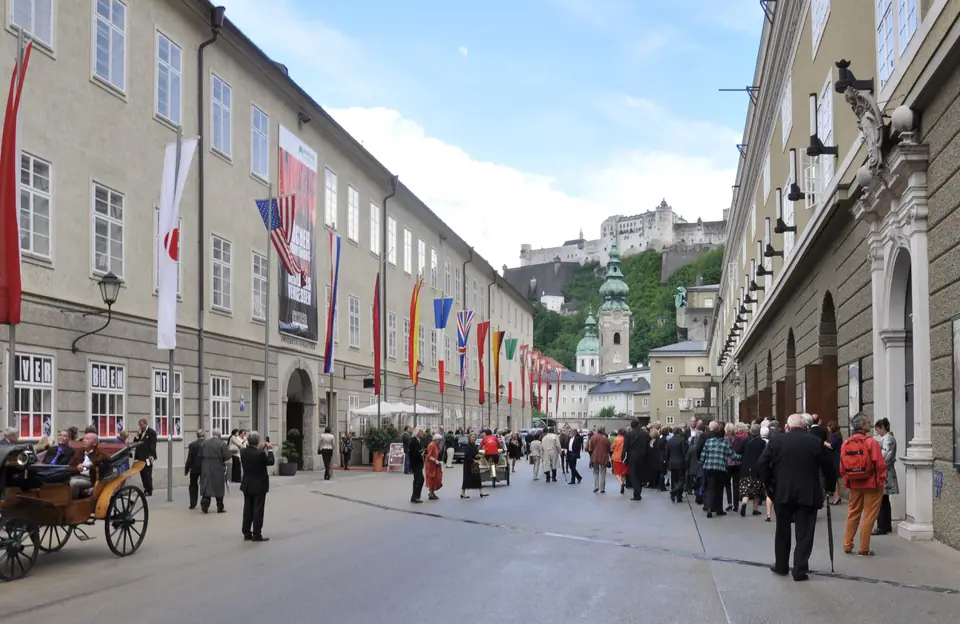
- Salzburg Festival (July & August) at the Festspielhäuser. Evening opera and orchestral performances at the Grosses Festspielhaus, Haus für Mozart, and Felsenreitschule are formal occasions. Dress codes are not printed as a legal rule on your ticket. However, nearly all evening guests wear dark evening suits, dinner jackets (tuxedos), cocktail dresses, floor-length evening gowns, or festive Austrian Festtracht. Daytime matinees at the Mozarteum and outdoor Jedermann performances on Domplatz are slightly more relaxed. A smart blazer, collared shirt, or summer dress works well, plus a warm wrap for outdoor seating.
- Year-round Mirabell Palace & Fortress Concerts. Smart-casual attire is standard for evening chamber concerts in the Marble Hall of Mirabell Palace or inside Hohensalzburg Fortress. Wear a collared shirt, neat trousers or dress, and clean shoes rather than athletic shorts or flip-flops.
- How locals wear Tracht (Lederhosen & Dirndl). Unlike tourist costume shops elsewhere, Salzburg residents of all ages wear authentic alpine attire throughout the year. Women wear tailored Dirndl dresses with silk aprons, while men wear embroidered deer-leather Lederhosen paired with a green-and-grey wool Loden jacket (Trachtenjanker). Boiled alpine wool Loden naturally repels light rain and wind across the valley. You will see locals wearing traditional dress at concerts, weddings, Sunday church, and the September Rupertikirtag. Historic ateliers along Getreidegasse, Judengasse, and Lanz Trachten by the Staatsbrücke have tailored authentic linen, loden, and silk garments for over a century. Pack a small reusable water bottle in your daypack as well, since public marble fountains dispense cold Untersberg spring water across the centre. Finally, uncover your head and keep shoulders covered when entering Salzburg Cathedral, St. Peter's Abbey, and Franciscan Church.
Traveller tips
Real advice from people who have been to Salzburg. Every tip is read by our team before it goes live.
No tips yet. Been here? Yours could be the first.
Thank you! Your tip will appear here after a quick review.
More in Salzburg
Continue exploring Salzburg with related neighbourhood, food, and planning guides
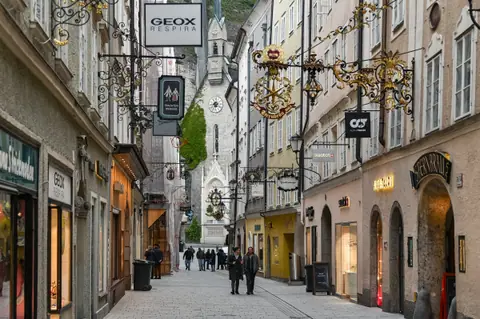
Getreidegasse Guild Signs, Mozart's Birthplace, Mozart Residence & Grosses Festspielhaus Walk
Salzburg, Austria
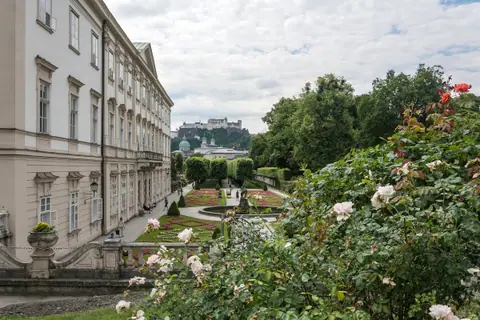
Mirabell Palace & Marble Hall, Pegasus Fountain, Linzer Gasse & Kapuzinerberg Bastion Walk
Salzburg, Austria
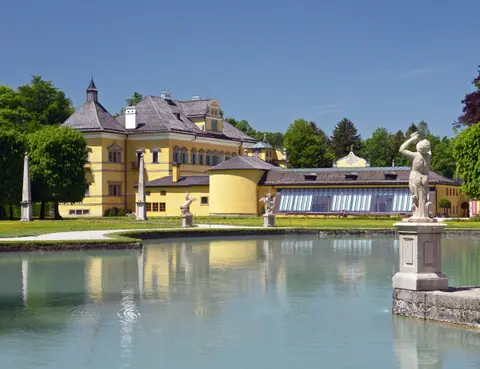
Hellbrunn Palace & 1615 Trick Fountains, Schloss Leopoldskron & Untersberg Cable Car Guide
Salzburg, Austria
Augustiner Bräu Mülln Monastery Brewery, Stiegl-Brauwelt Museum & Salzburg Beer Culture Guide
Salzburg, Austria
