





















Hohensalzburg Fortress, 1892 Festungsbahn Funicular, Nonnberg Abbey & Mönchsberg Clifftop Walk
Plan your visit to the 1077 Hohensalzburg Fortress via the 1892 Festungsbahn funicular, tour the gilded Princes' Chambers and Reckturm, visit 714 CE Nonnberg Abbey, and walk the Mönchsberg ridge.
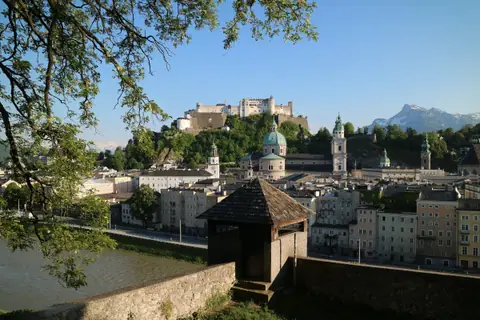
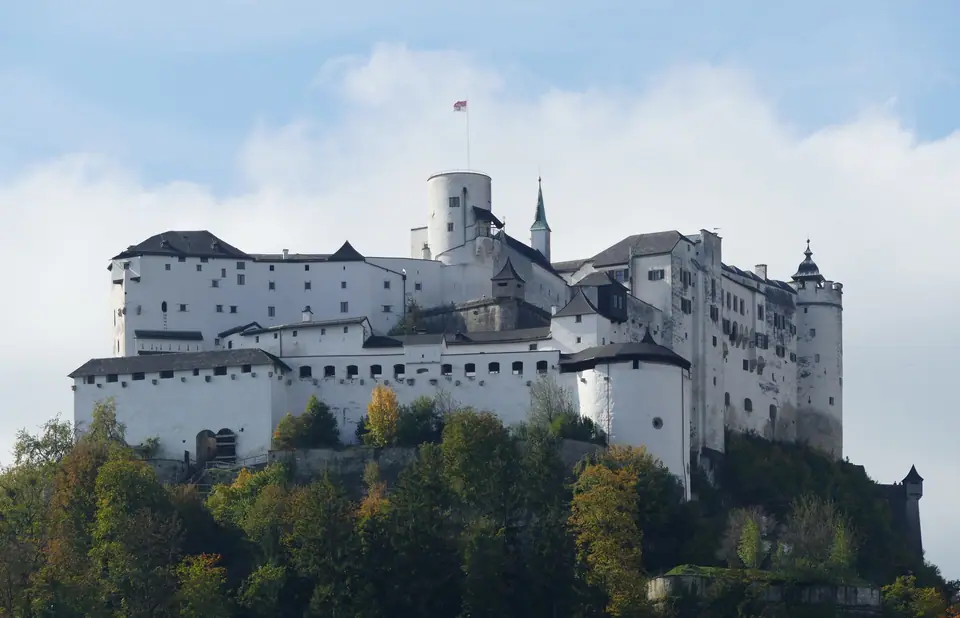
Hohensalzburg Fortress (Festung Hohensalzburg, pronounced HOH-en-zalts-boork) is the unmistakable crown of Salzburg. It rises 120 metres straight above the Baroque domes of the Left Bank on the 542-metre dolomite rock of the Festungsberg. Covering 30,000 square metres (250 metres long by 150 metres wide), it stands as the largest fully preserved medieval castle complex in Central Europe. Never once captured by siege troops in over nine centuries, the fortress links directly onto a two-kilometre clifftop walking trail. That woodland path follows the Mönchsberg (MUHNKS-bairk) ridge and descends to Benedictine Nonnberg Abbey.
From 1077 Investiture Fortress to Leonhard von Keutschach's 1500 court
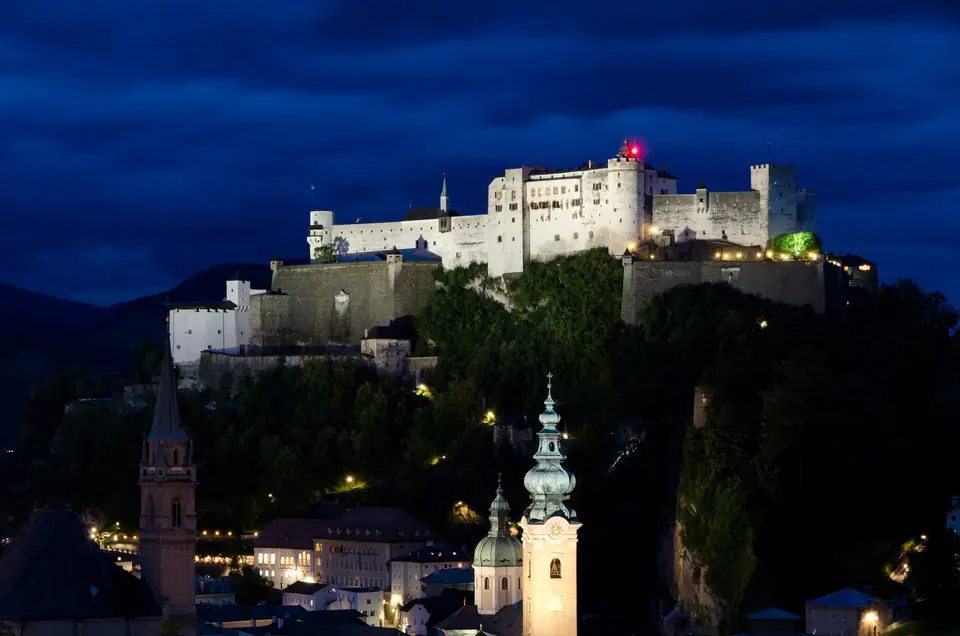
In 1077, the Investiture Controversy erupted between Pope Gregory VII and Holy Roman Emperor Henry IV. Papal supporter Archbishop Gebhard von Helfenstein built the first stone keep (Hoher Stock) atop the cliff to guard the northern Alpine pass. Over the next four hundred years, successive Prince-Archbishops surrounded the rock with curtain walls, artillery towers, and deep rainwater cisterns. Between 1495 and 1519, Prince-Archbishop Leonhard von Keutschach transformed the austere military citadel into a late-Gothic princely court. Across the fortress masonry you will spot Keutschach's personal coat of arms: a carved white beet or turnip (Rübe). Even in 1525, when rebellious miners and farmers besieged the rock for three months during the German Peasants' War, the fortress held firm.
Riding the 1892 Festungsbahn Funicular vs. climbing on foot
You can reach the fortress gates in two ways from Kapitelplatz:
- The 1892 Festungsbahn Funicular (Festungsgasse 4). Opened in 1892 as a water-ballast railway before electrification in 1960, this is Austria's oldest operating passenger funicular. Modern panoramic cabins climb 199 metres of track at a 62-percent gradient in just 54 seconds. In 1515, Leonhard von Keutschach built the adjacent Reisszug goods cable railway up the eastern cliff to haul provisions into the castle. Still operating for freight today, the 1515 Reisszug is the oldest surviving funicular railway in the world. If you hold a Salzburg Card, skip the ticket counter and scan your QR code directly at the Festungsbahn turnstile. Check the official salzburg-burgen.at portal for current seasonal hours.
- Walking up via Festungsgasse & Nonnbergstiege (20 to 25 minutes). Travellers who prefer to climb on foot can follow steep cobbled Festungsgasse up the saddle behind St. Peter's Abbey. You pass through three defensive arches (the Schartentor, Feuertor, and Bürgermeistertor) into the main courtyard.
Inside Hohensalzburg: Princes' Chambers, Salzburger Stier & Reckturm
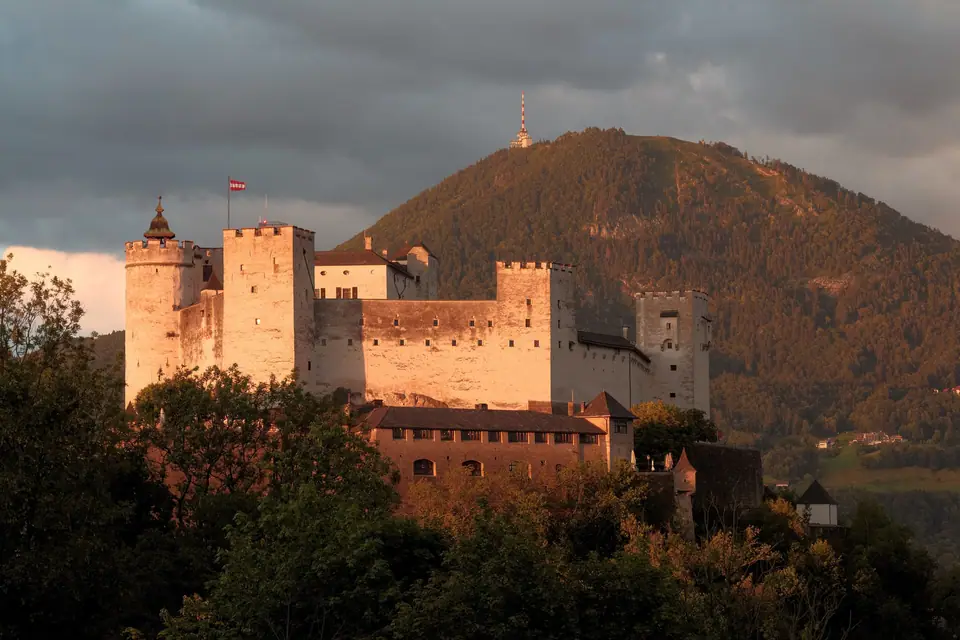
Once inside the central courtyard beside St. George's Chapel (1501) and the 1539 cistern, five interior highlights reward a two-hour visit:
- The Gilded Princes' Chambers (Fürstenzimmer, 1501). On the third floor of the Hoher Stock sit the best-preserved secular Gothic state apartments in Austria. Inside the Golden Hall (Goldener Saal), a 17-metre carved cedarwood ceiling beam rests on red Adnet marble pillars. The ceiling is painted with a blue starry sky and golden studs. Next door, the Golden Chamber (Goldene Stube) features wall panelling adorned with gilded vines and a 1501 polychrome tiled stove (Kachelofen).
- The 1502 "Salzburg Bull" (Salzburger Stier) inside the Krautturm. Installed in 1502 inside the artillery tower (Krautturm) and rebuilt in 1735 by Johann Rochus Egedacher, this barrel-operated mechanical pipe organ contains over 200 pipes. It bellows a loud F-major chord before playing melodies across the valley three times daily (at 07:00, 11:00, and 18:00).
- Reckturm & Kuenburg Bastion 360-Degree Viewpoint. The guided audio route climbs to the open wooden gallery atop the Reckturm watchtower. Looking north, the entire Baroque Altstadt and the winding Salzach River unfold below you. Looking south, the green villas of Nonntal and the Hellbrunner Allee lead straight to the 1,972-metre limestone wall of the Untersberg.
- Fortress Museum, Rainer Regiment Museum & Marionette Museum. Vaulted rooms inside the Hoher Stock display medieval armour, historic weapons, and Gothic church carvings. Lower casemates house the intricate string puppets of the Salzburg Marionette Theatre.
- The Magic Theatre (Magisches Theater). This interactive multimedia installation sits inside the historic living quarters. It traces Archbishop Wolf Dietrich's final years as a prisoner inside the fortress from 1612 until his death in 1617.
Nonnberg Abbey (714 CE) & the Mönchsberg Clifftop Walk to Mülln
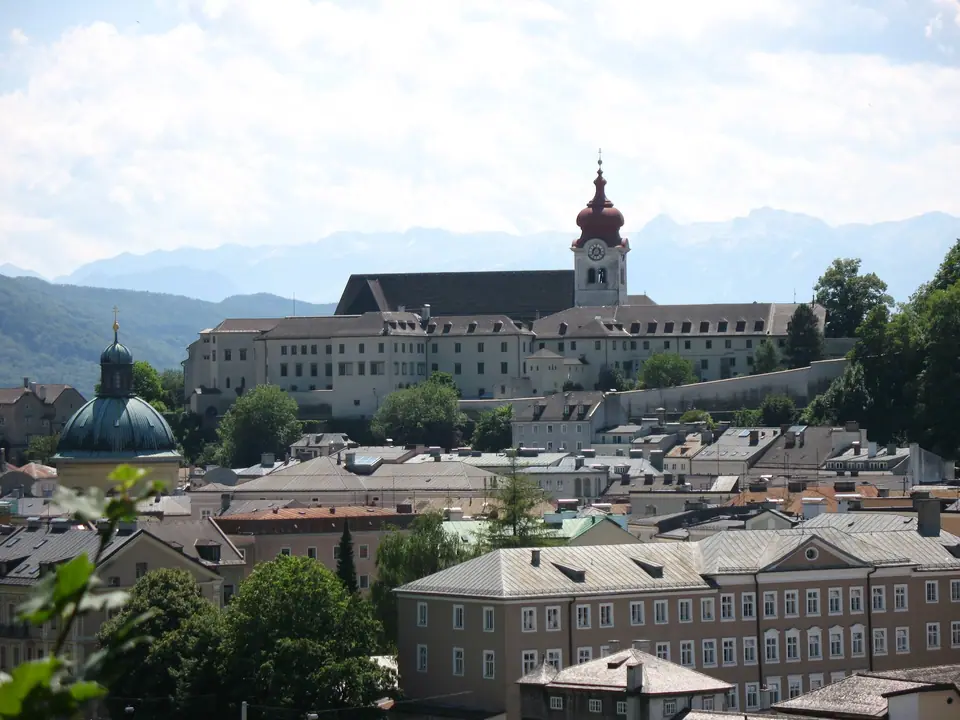
After exiting the fortress, walk 300 metres east along the cliff spur to Benedictine Nonnberg Abbey (Stift Nonnberg, Nonnberggasse 2). Saint Rupert founded the monastery around 712 to 714 CE and appointed his niece Saint Erentrudis as its first abbess. Nonnberg is the oldest continuously operating convent (Frauenkloster) in the German-speaking world. Rebuilt in late-Gothic style between 1464 and 1509 after a fire, the Abbey Church of Maria Himmelfahrt contains a 1515 winged altarpiece by Master Hans Waldburger. Behind the nuns' grille in the dark choir loft (known as the Paradies) survive twelve rare Romanesque fresco niches dating to circa 1150. In real life, Maria Augusta Kutschera served here as a postulant before becoming governess to the seven children of Captain Georg von Trapp. She married the captain inside Nonnberg Abbey Church on 26 November 1927. Director Robert Wise later filmed several scenes of the 1965 classic The Sound of Music at the abbey's Gothic gatehouse.
Alternatively, turn west from the fortress exit at the Schartentor onto the car-free Mönchsberg Clifftop Trail. This 2.2-kilometre woodland path follows the 1620s Thirty Years' War stone fortifications, including the Katzenbastei and panoramic Richterhöhe bastion. Along the way, you pass the fourteenth-century tower of the Marketenderschlössl and reach the cliffside terrace of the Museum der Moderne Mönchsberg. From there, ride the vertical MönchsbergAufzug lift down to Gstättengasse in 30 seconds. Or walk 15 minutes down the northern ramp through the 1621 Monikapforte gate straight to Augustiner Bräu Kloster Mülln.
Traveller tips
Real advice from people who have been to Salzburg. Every tip is read by our team before it goes live.
No tips yet. Been here? Yours could be the first.
Thank you! Your tip will appear here after a quick review.
More in Salzburg
Continue exploring Salzburg with related neighbourhood, food, and planning guides
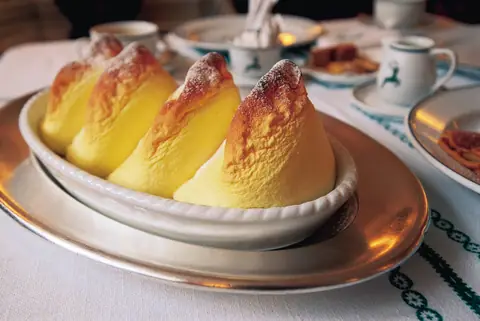
What to Eat in Salzburg: Salzburger Nockerl, Original Fürst Mozartkugel, Kasnocken, Bosna & Café Tomaselli
Salzburg, Austria
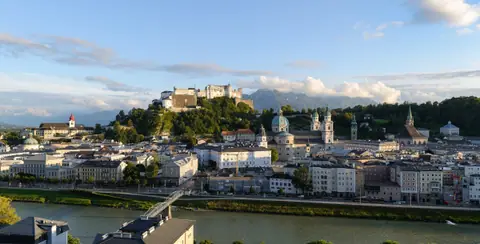
Salzburg Orientation: Salzach River Divide, Left Bank Altstadt, Right Bank Neustadt & Salzburg Card
Salzburg, Austria
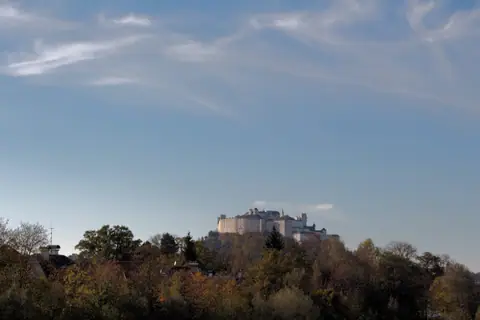
Best Things to Do in Salzburg: Hohensalzburg Fortress, Mozart Sites, DomQuartier, Mirabell & Sound of Music
Salzburg, Austria
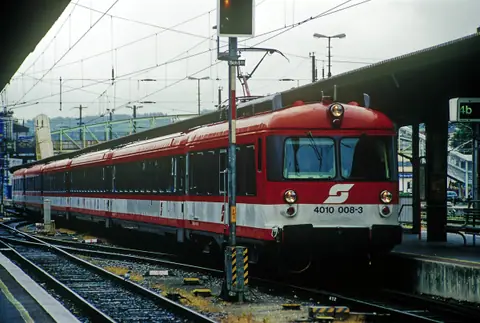
Arriving in Salzburg: Airport (SZG) Trolleybuses, Hauptbahnhof Rail Links from Vienna & Munich & Obus Network
Salzburg, Austria
