Old Tbilisi and Abanotubani: A Walk Around the Bath Quarter
Explore the river edge, bathhouse domes and old lanes of Abanotubani with a route that accounts for slopes and the gorge path.
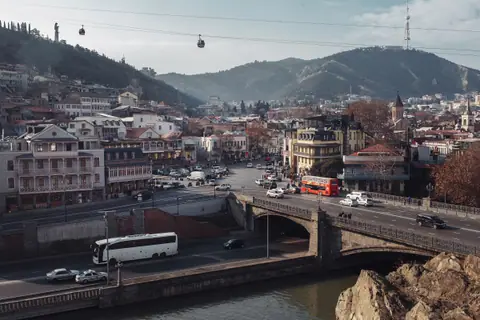
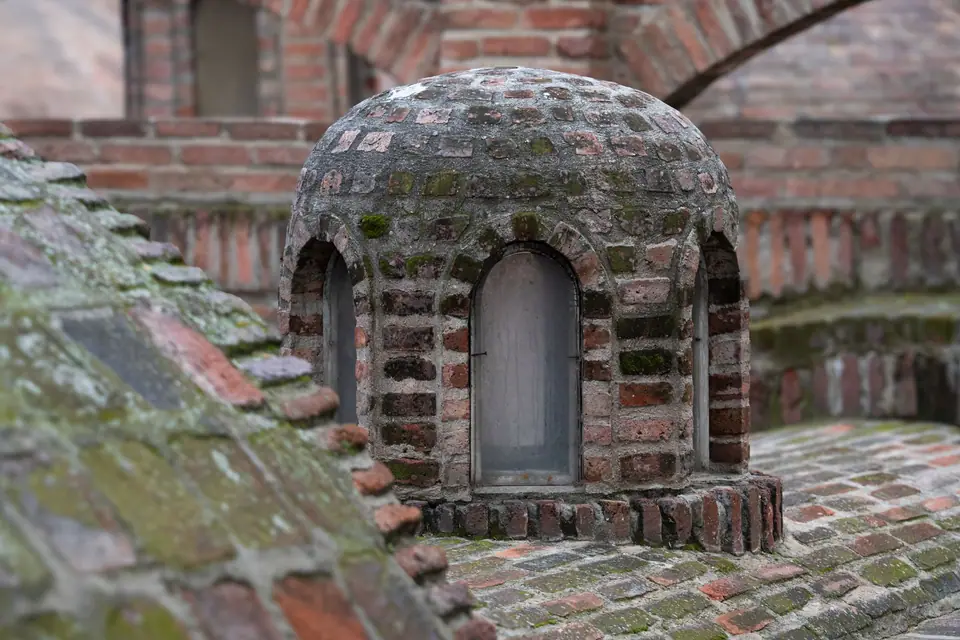
Abanotubani is the part of Tbilisi where the city's bath culture becomes visible in the street. Brick domes sit low against the slope, while narrow lanes rise towards the old residential quarter. The name is commonly associated with the bath district, but the visit extends beyond entering a bathhouse. The setting explains why the historic centre developed around warm springs and the river valley. Georgia Travel identifies the sulphur baths as a defining city experience and provides background on the district. Confirm services and access directly with the bathhouse you choose.
Begin at Meidani, then approach the bath quarter on foot. This order helps you understand how close the lanes, river and bath buildings are before the paths begin to climb. Leave time for the small details: domed roof forms, brickwork, doors and the changes in street level. If you have booked a bath visit, treat it as a separate block rather than assuming it can be added in a few spare minutes. Our things-to-do guide places the quarter within a wider city plan.
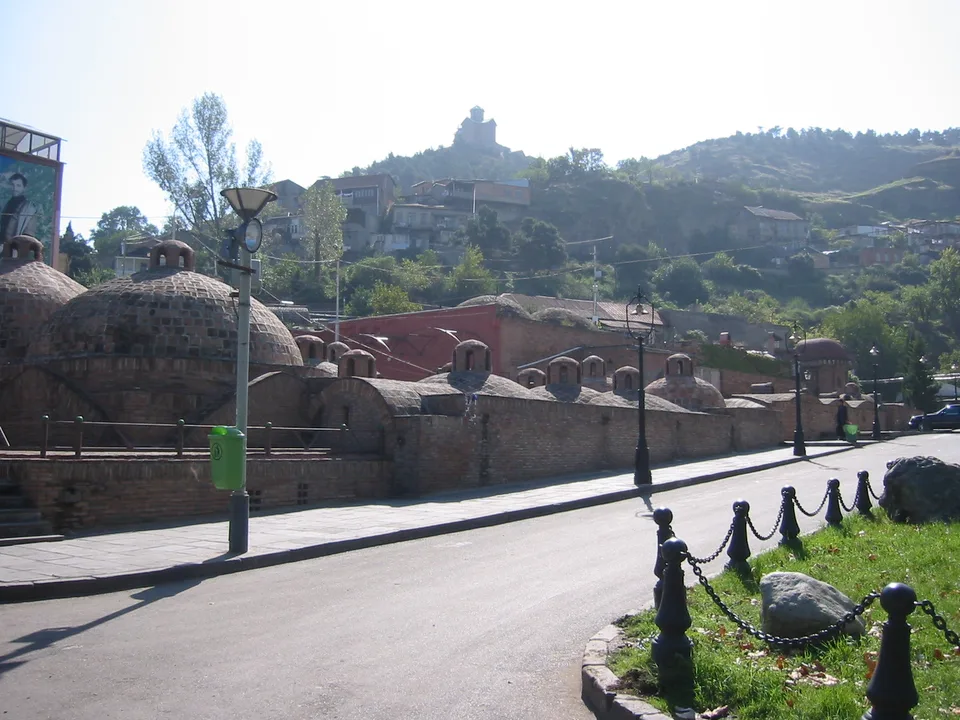
Meidani to the bath domes
Meidani makes a practical starting point because it connects the riverfront with the older streets. From here, head towards the domed bath structures and pause before choosing a route uphill. The geometry is easier to grasp on foot: buildings cluster close to the slope, and short lanes can end in stairs rather than a through street. Keep a map open, but check the actual path ahead when the route crosses a steep bank.
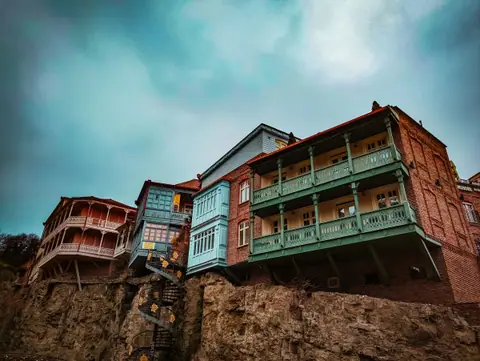
Look for differences between the public bath facades and the narrower residential lanes nearby. The district has changed over time, and not every old-looking building belongs to the same period or use. Avoid assigning an exact date or architectural label unless a sign or official source supports it. The visual experience is already rich without a guessed history. For a wider account of the city layers, consult the UNESCO Tentative List entry and remember that it is a proposal, not an inscription.
What a bath visit involves
Public descriptions of Tbilisi's sulphur baths cover several establishments, but their rooms, services, privacy arrangements and booking policies differ. Decide whether you want a shared bathing area or a private room, then confirm the details directly with the chosen bathhouse. Ask what is included, what you should bring and whether reservations are required. We do not list prices or opening times because these details can change and are controlled by each operator.
Consider comfort and health before bathing in hot mineral water. If you have a medical condition, are pregnant or are unsure about heat exposure, seek appropriate professional advice beforehand. Follow the bathhouse's own safety guidance and leave if you feel unwell. A bath visit is optional, not a test of whether you have experienced the city properly. Travellers who prefer to stay dry can still appreciate the district's architecture and walk towards the gorge.
Leghvtakhevi gorge and waterfall
From the bath quarter, a path leads into Leghvtakhevi, where the built streets give way to a narrow gorge and a waterfall. The route offers a sharp change of mood without requiring a transfer across town. Check the access conditions before entering, especially after rain or during maintenance. The gorge can be damp underfoot, and narrow paths are less comfortable for anyone who needs a wide, level surface.
Do not describe the route as a long wilderness walk. It is a close-in urban excursion, and the appeal lies in the contrast between the bath district and the rocky channel. If access is restricted, continue along the surrounding lanes and save the gorge for another time. There is no need to force the visit when conditions are poor. The official tourism page gives the waterfall location, while local notices should guide same-day decisions.
Continue towards Metekhi or Narikala
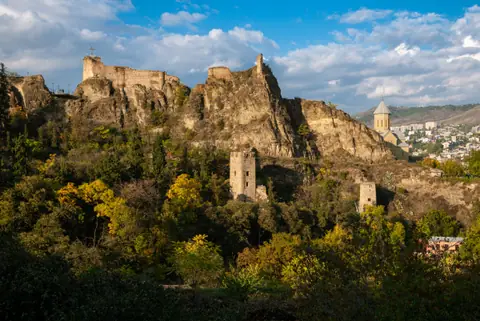
After the bath district, choose one direction. Crossing towards Metekhi gives a view back across the river and a different relationship to the old roofs. Climbing towards Narikala takes you above the quarter and involves more exertion. Trying to do both after a long walk can turn a thoughtful route into a hurried climb. Use the Avlabari and Metekhi guide for the opposite bank, or follow the Narikala route if the hillside is your priority.
Check the ropeway's current operation if you intend to use it for the ascent or return. Tbilisi Transport Company lists the service, but schedules and disruptions can change. Keep a walking alternative if the path and your mobility make it reasonable. The safest plan is one that does not depend on a single transport link for a fixed dinner booking.
Respectful ways to explore the quarter
- Street / bath interior: Public streets are open to view, but ask the bathhouse before photographing private rooms or guests.
- Historic facade / private home: Admire residential buildings from public space and do not enter courtyards without permission.
- Waterfall path / wet stone: Check access and footing before walking into the gorge.
- Bath booking / walk-in assumption: Confirm room type, conditions and current arrangements directly with the operator.
Give yourself time for a meal after the walk. The area connects easily with the wider Old Town, but Tbilisi's food deserves more than a hurried order. Read our guide to Georgian dishes to recognise dumplings, cheese breads and bean preparations. If this is your arrival day, the city orientation explains why the next district may require a climb even when it looks nearby.
Think of the bath quarter as a sequence of public spaces rather than a single entrance. The street view, bath domes, river edge and gorge each offer a different way to understand the district. If one part is closed, the remaining walk can still make sense. Keep enough time to return to the main streets without rushing, and check your next crossing before you start uphill. That leaves room to respond to weather, crowds or a temporary access change without abandoning the whole day.
Sources we checked
Where it is
- 1Old Tbilisi and Abanotubani
- Tbilisi International Airport (TBS) · about 12 km from here in a straight line
- Directions in Google Maps
Stations and taxi ranks: OpenStreetMap. Airports: OurAirports. Distances are in a straight line.
Traveller tips
Real advice from people who have been to Tbilisi. Every tip is read by our team before it goes live.
No tips yet. Been here? Yours could be the first.
Thank you! Your tip will appear here after a quick review.
More in Tbilisi
Continue exploring Tbilisi with related neighbourhood, food, and planning guides