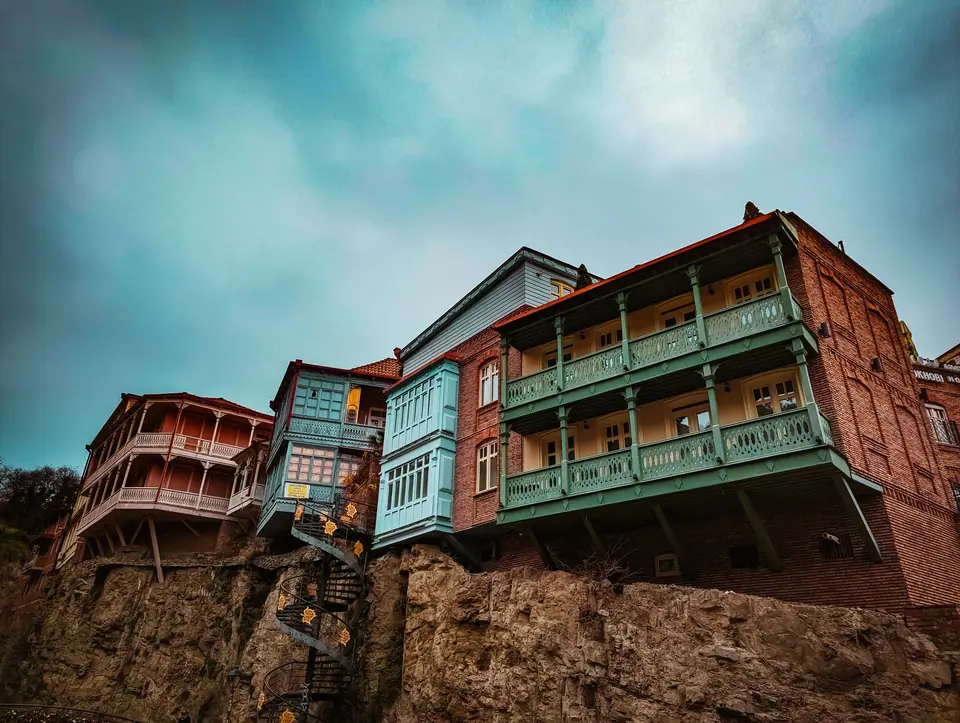
Sololaki Architecture Walk: Balconies, Streets and Courtyards
Read Sololaki through its residential facades, balconies and street pattern while respecting private courtyards and steep approaches.
Sololaki is best approached as a neighbourhood walk, not a single monument. Its residential streets sit close to the Old Town and show a different side of central Tbilisi: balconies, decorative facades, courtyard openings and the wear of buildings still used in everyday life. Georgia Travel presents Sololaki as a distinct district with its own architectural character. That makes it a useful counterpoint to the bath quarter, where public buildings and visitor routes dominate the view.
The walk rewards patience more than a checklist. Look up for timber balconies and facade details, then look back down for the street's slope and surface. Some beautiful courtyards are private or semi-private. Admire them from the public street unless a sign or resident clearly invites entry. Use the city orientation to understand where Sololaki sits relative to the river, and combine the walk with Rustaveli if you still have energy for a second district.
Begin with the street pattern
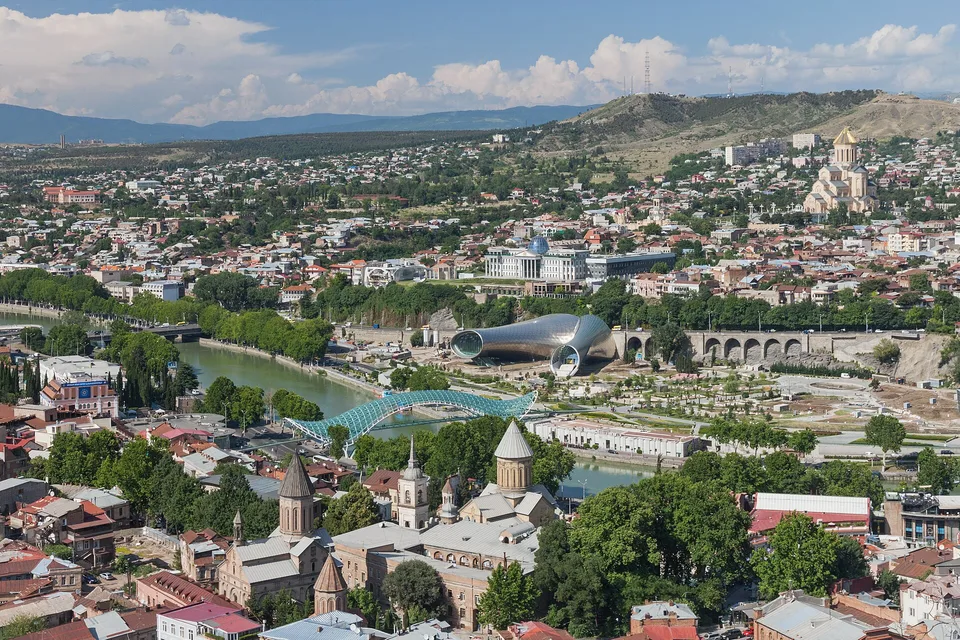
Start near the lower central streets and work gradually uphill. This direction helps you notice how the district's buildings meet the slope rather than treating the neighbourhood as a level grid. Pick a few parallel streets and move slowly between them instead of following a single route line. Side streets often reveal a different facade rhythm, but keep to public pavements and watch for uneven steps.
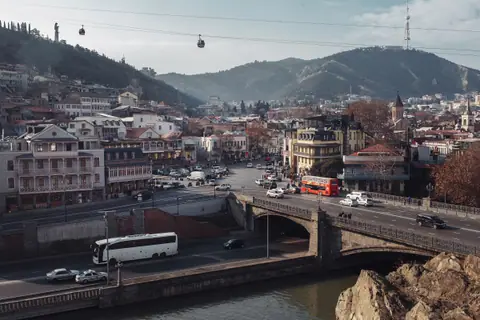
The city's geography explains some of the contrasts. The Mtkvari valley channels movement, and the central neighbourhoods climb away from the water. Sololaki is close to the best-known sights, yet its approach can feel steeper than a map implies. If you are carrying bags or walking with someone who needs step-free routes, check elevation before setting out. Our where-to-stay guide uses the same principle when comparing hotel areas.
What to look for on the facades
Balconies are a strong visual cue, but they are not the sole detail to notice. Compare enclosed and open balcony forms, carved or painted wood, metal supports and how a facade meets the street. Some buildings have been repaired, altered or repainted over time. Avoid assigning a precise period or style from appearance alone. If a building has an official plaque, use that information. Otherwise, describe what you can see without turning a visual impression into a historical claim.
Look at doors and window proportions from the pavement. A small change in height can signal how the street rises. Courtyard gateways offer glimpses into shared domestic space, but they do not grant public access. Do not photograph residents at windows or enter a building to capture a balcony from inside. This is a lived district, not a set. The best frame usually comes from across the street, where the facade remains in context.
A considerate route through residential streets
- Public pavement / private courtyard: Stay in public space unless an owner or sign clearly welcomes visitors.
- Facade photograph / resident privacy: Avoid close images of people, windows or domestic interiors without permission.
- Short map distance / uphill route: Check the incline and steps before choosing to walk.
- Old appearance / verified history: Use plaques or official material before assigning a date to a building.
Pause on wider corners rather than blocking a narrow entrance. Keep voices low near homes, and do not lean on old railings or gates. If a resident is using the shared entrance, give them space rather than holding the doorway for a photograph. Small courtesies matter in a district where people live above and around the visitor route.
Combine architecture with a meal or museum
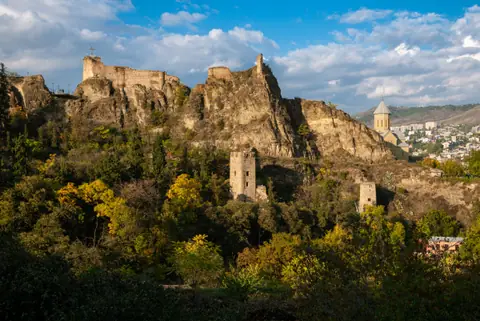
Sololaki can fill a slow morning without a formal ticketed attraction. After the walk, choose a nearby meal or continue towards Rustaveli if a museum is part of your plan. The transition from residential lanes to a broad avenue makes the difference between the districts easy to see. Avoid adding the botanical garden or Narikala at the far end of the same route unless you are prepared for more climbing.
If you want to keep the day architecture-led, cross-check the route with our Rustaveli guide. If you prefer to turn it into a food day, use the Georgian dishes guide to choose what to order rather than wandering until tired. The three-day plan places Sololaki on a separate day from the steepest Old Town route.
Photographing the district
Soft light can bring out balcony textures, but the weather and building orientation matter more than a promised hour. Return to a facade if the initial view is flat, and make a wider image that shows the street rather than cropping away its context. Avoid photographing through open doors or windows. Ask permission before making a person the subject, and do not assume a courtyard is public because the gate is open.
For a respectful visit, leave room for residents and their routines. If scaffolding, repairs or a closed passage interrupts the route, move on instead of searching for access. The open streets still give a clear sense of the neighbourhood. Georgia Travel's Sololaki page provides official context, while UNESCO's proposed historic-district entry helps place the district within the wider city landscape. Neither source means every building is protected or accessible.
Sololaki suits a traveller who enjoys careful looking and does not need every stop to have an entrance desk. Set a modest route, notice the changes in balconies and street slope, then stop when the details begin to repeat. A cafe or museum can complete the day, but neither is required to make the walk worthwhile.
Who will enjoy this walk
Sololaki suits travellers interested in urban detail, architecture and unhurried neighbourhood time. It is less rewarding if you want a quick panoramic view or expect a curated museum route. Wear comfortable shoes and keep the plan flexible. Travellers with limited mobility should check the precise route and consider a car to a flatter starting point, while still confirming where vehicles can stop.
To see how Sololaki contrasts with the bath quarter, read our Old Town guide. To place it in the wider visitor map, return to the Tbilisi orientation. A few streets studied carefully can say more about the city than a fast march through every named attraction.
Sources we checked
Where it is
- 1Sololaki Architecture Walk
- Tbilisi International Airport (TBS) · about 13 km from here in a straight line
- Directions in Google Maps
Stations and taxi ranks: OpenStreetMap. Airports: OurAirports. Distances are in a straight line.
Traveller tips
Real advice from people who have been to Tbilisi. Every tip is read by our team before it goes live.
No tips yet. Been here? Yours could be the first.
Thank you! Your tip will appear here after a quick review.
More in Tbilisi
Continue exploring Tbilisi with related neighbourhood, food, and planning guides