Rustaveli Avenue and Tbilisi's Museum Quarter
Use Rustaveli Avenue as a cultural spine for museums and civic buildings, and check each institution before planning a visit.
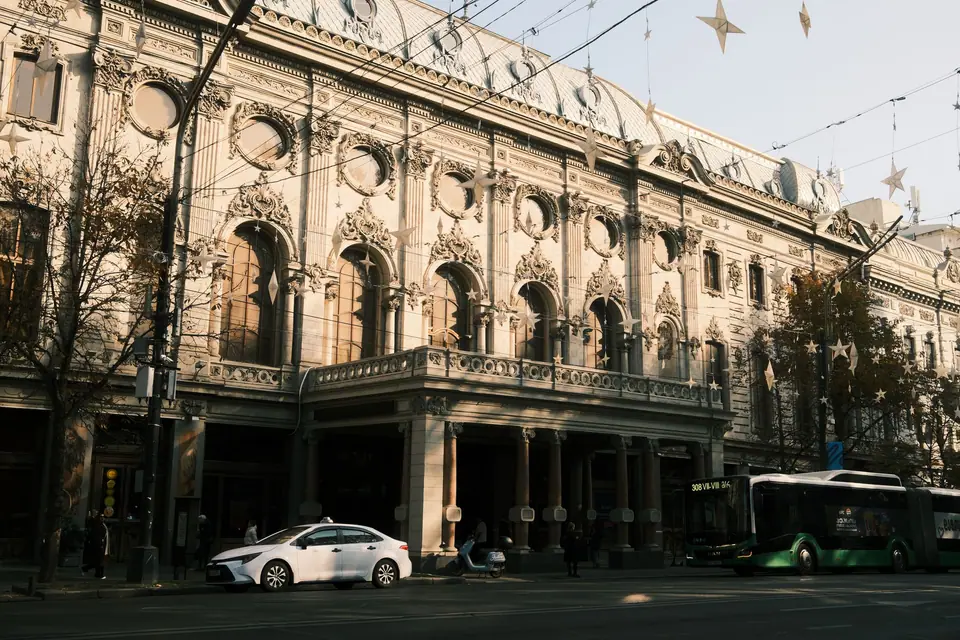
Rustaveli Avenue is useful when you want Tbilisi's cultural institutions and a clear street to navigate. It feels different from the Old Town: broader, more formal and easier to follow, with museums and public buildings creating natural anchors for a walk. That clarity is practical, though the avenue does not replace the narrow lanes and steep views that define the historic centre. Use it as a separate district day, or as an indoor alternative when the weather makes the hills less appealing.
Before visiting a museum, check the institution's official site for current exhibitions, access arrangements and any temporary closure. A general city guide cannot guarantee what will be on view on your travel date. The Georgian National Museum operates several museums and publishes visitor information through its channels. Choose one collection that matches your interests, then leave time for the avenue and nearby streets. Our sights guide compares cultural visits with the city's outdoor landmarks.
Walk the avenue as a sequence
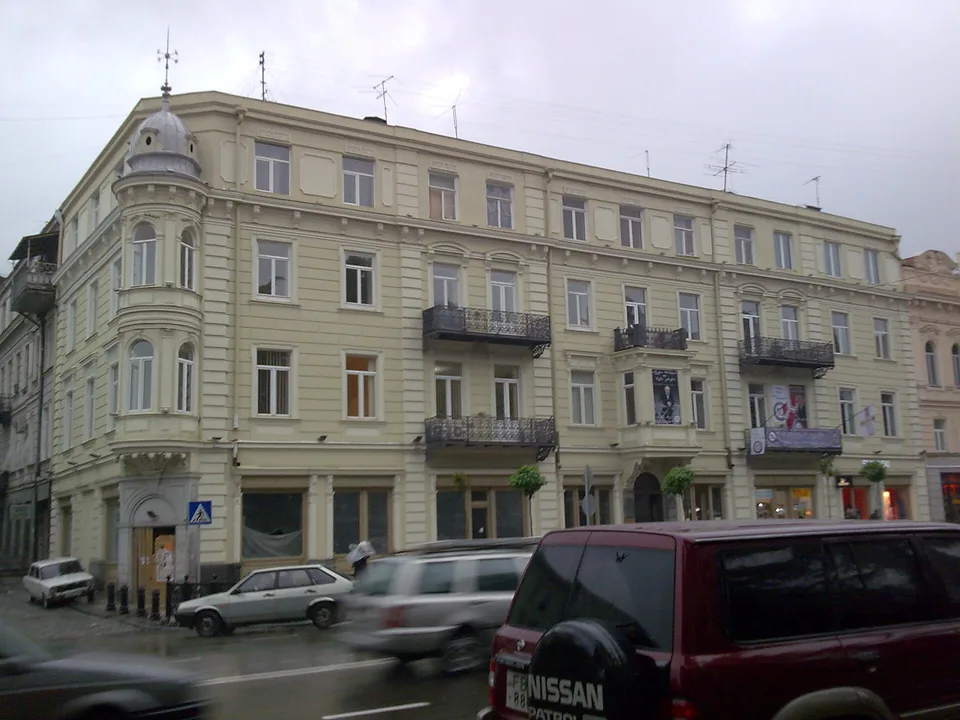
Begin with a clear anchor, such as a museum or a public building you intend to visit. Then walk the avenue in one direction rather than repeatedly crossing it to chase distant pins. The street's width and traffic make it a different experience from the Old Town. Look at the facades, entrances and changing street rhythm, but use crossings and follow pedestrian signals.
Do not assume every institution is open simply because it appears on a map. Confirm the date-specific information on the museum's own page. Some displays or rooms may be unavailable, and special programmes can alter admission arrangements. If a visit requires a ticket, verify that directly with the institution. We do not reproduce opening hours or prices here because they are changeable. The official Georgian National Museum website is the place to confirm its current information.
Choose a museum by the question you want answered
The Museum of Georgia is a useful choice for travellers interested in the country's history and material culture. Georgia Travel's guide introduces its collections and visitor role. Read the current description before you go so you know whether the exhibits match your interests. A museum visit is more engaging when you decide what you want to learn, rather than treating the building as a box to tick between meals.
The Georgian Museum of Fine Arts offers another kind of visit, centred on visual art. Confirm the current exhibition and collection details through the museum or national tourism authority. Do not assume that a named artist or work is on display year-round. If your time is limited, choose between a history-focused and art-focused visit instead of trying to see every institution in one block. Both options work well with a walk along the avenue, but they create different days.
Pair the museum with a nearby neighbourhood
After an indoor visit, take a short walk through the surrounding central streets before deciding where to eat. This keeps the day balanced and helps you compare the avenue's broad urban form with the smaller scale of the old lanes. If you want more residential architecture, continue towards Sololaki another day rather than extending the route into a long climb without checking the map.
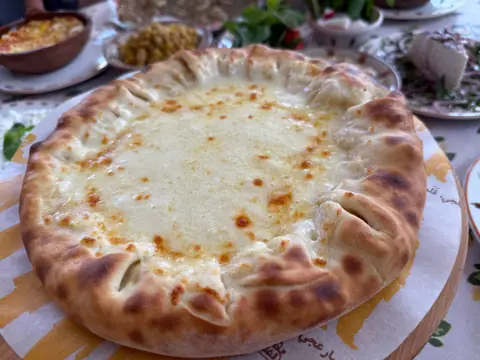
For lunch, choose from the city's Georgian dishes with a little preparation. Khinkali, khachapuri and bean-based plates have different portion sizes and ingredients. Our food guide gives plain-language explanations and questions to ask. If the museum schedule runs longer than expected, do not force a distant restaurant into the plan. A nearby meal can be the better choice.
Rustaveli or the Old Town?
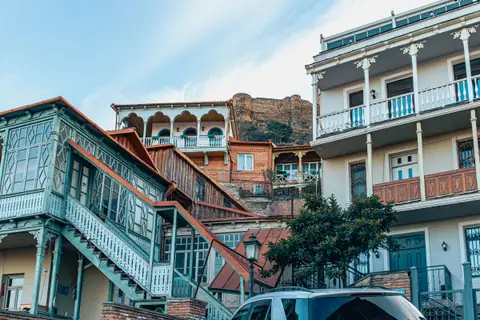
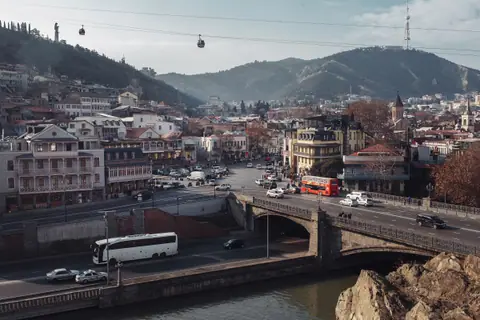
- Rustaveli / Abanotubani: Choose the avenue for museums and civic streets, the bath quarter for old lanes and the river slope.
- Museum collection / street architecture: Choose a museum when you want context indoors, a neighbourhood walk when you want to read the buildings outside.
- Fixed ticket / flexible walk: Anchor the day around any timed museum booking, then leave the street portion open.
- Broad avenue / steep lane: Rustaveli is easier to navigate, while the Old Town involves more uneven ground and climbs.
These are not rival versions of the same visit. Rustaveli helps explain the city's modern civic and cultural life; the Old Town gives a closer look at the river, bath district and historic lanes. A three-day trip can include both, but a short stay should decide which experience matters more. Our itinerary gives each its own space.
Practical checks for museum day
Check the calendar and any visitor notices before leaving your hotel. Confirm whether identification, bag checks or advance reservations apply, and use the museum's official guidance rather than an old visitor review. Make a note of the entrance address because large institutions can occupy more than one building. If you require step-free access, contact the museum directly and ask which entrance to use.
Keep one alternative nearby in case a gallery is closed or a queue is longer than expected. The National Museum's site may list more than one venue, so verify the exact branch. A cafe break or a second short street walk is a more reliable backup than assuming you can reach a faraway sight quickly. The slopes and traffic make cross-city transitions slower than a straight line suggests.
When Rustaveli is the right call
Choose this district if museums, public architecture and a legible city walk are central to your trip. It is also a practical option for a rainy or very hot day when you want indoor time. It may disappoint visitors expecting every corner to look like the old bath quarter. The districts are different, and the trip gains from that contrast.
For history outside museum walls, continue to Sololaki's residential streets or read the Old Town guide. For a broader view of how all these areas fit together, return to our Tbilisi orientation.
Keep an indoor alternative nearby if an exhibition is temporarily unavailable. A short walk along the avenue still gives the day structure, and a meal nearby can replace a visit that no longer fits. The point of a museum plan is to make room for the collection you care about, not to force a set number of institutions into one afternoon.
Sources we checked
Where it is
- 1Rustaveli Avenue and Tbilisi's Museum Quarter
- Tbilisi International Airport (TBS) · about 14 km from here in a straight line
- Directions in Google Maps
Stations and taxi ranks: OpenStreetMap. Airports: OurAirports. Distances are in a straight line.
Traveller tips
Real advice from people who have been to Tbilisi. Every tip is read by our team before it goes live.
No tips yet. Been here? Yours could be the first.
Thank you! Your tip will appear here after a quick review.
More in Tbilisi
Continue exploring Tbilisi with related neighbourhood, food, and planning guides