Tbilisi: Reading the City by River, Ridge and District
Get oriented around Tbilisi's river valley, steep historic lanes and distinct central districts before planning your visit.
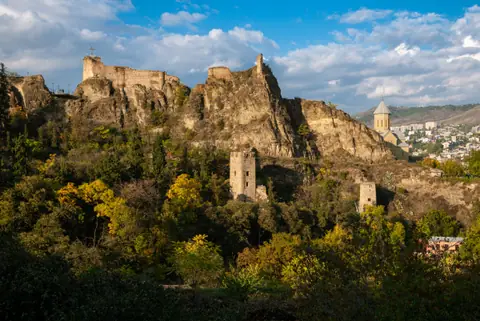
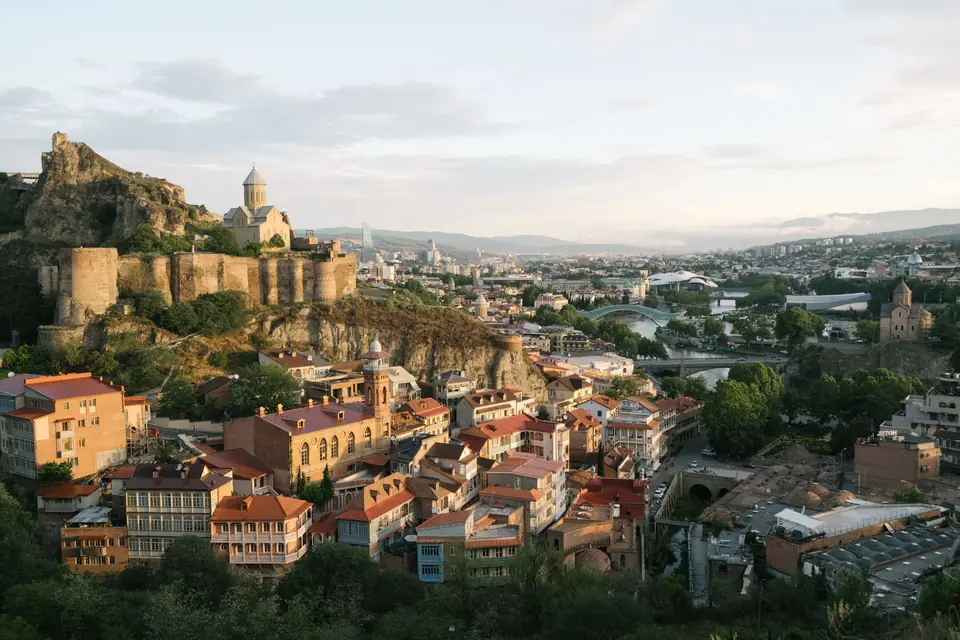
Tbilisi makes more sense when we stop treating it as a flat collection of pins. Georgia's capital follows the Mtkvari River through a valley bordered by steep slopes. The historic centre rises from the water towards Narikala, while later avenues and residential districts spread along the valley. That geography shapes almost every decision: where to sleep, which sights belong together, and whether a walk that looks short will feel easy. The official tourism board introduces the city's principal districts and sights; UNESCO's Historic District entry gives useful context, but it remains a Tentative List proposal rather than an inscription.
For an initial visit, keep the river as your reference line. The old bath quarter, the lanes around Meidani, the Metekhi side and the lower approaches to Narikala can form one connected day, although steep paths and stairs slow the route. A second day can focus on Sololaki and central museums. A third leaves room for the botanical garden, a return to favourite streets or a meal-led wander. If you have another day, consider Mtskheta rather than trying to squeeze it between city districts. Our three-day itinerary shows how to sequence these areas without crossing the valley repeatedly.
Use the river to understand the centre
The Mtkvari is the city's organising feature, not just a view from a bridge. It divides walks and gives the historic neighbourhoods their shape. Near the old core, the banks sit below streets that climb towards churches, fortifications and residential lanes. A map may show a direct line between two landmarks, yet the river, a steep incline or a limited crossing can add effort. Before setting off, look at the route profile and choose a bridge that actually serves your next stop. If the route includes both banks, avoid returning to the same side several times in one afternoon.
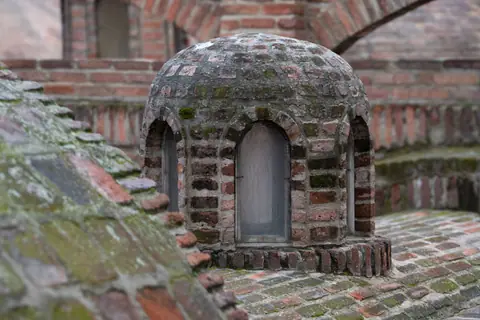
Start around Meidani when you want to connect the riverfront with the old bath district. From there, the lanes lead towards the brick bath domes of Abanotubani and the gorge path at Leghvtakhevi. The route is compact, but it is not a level promenade. Wear shoes with grip and leave time to look at the architecture rather than treating the baths as a quick photo stop. The separate Old Town and Abanotubani walk explains where the route narrows and where a detour adds worthwhile context.
Choose a district before choosing a hotel
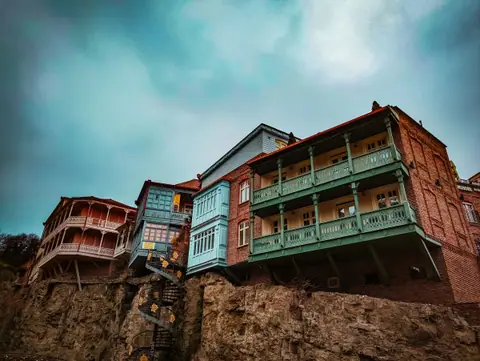
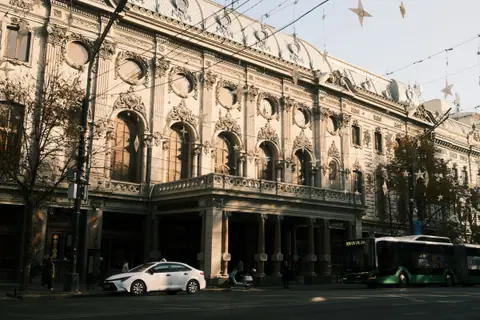
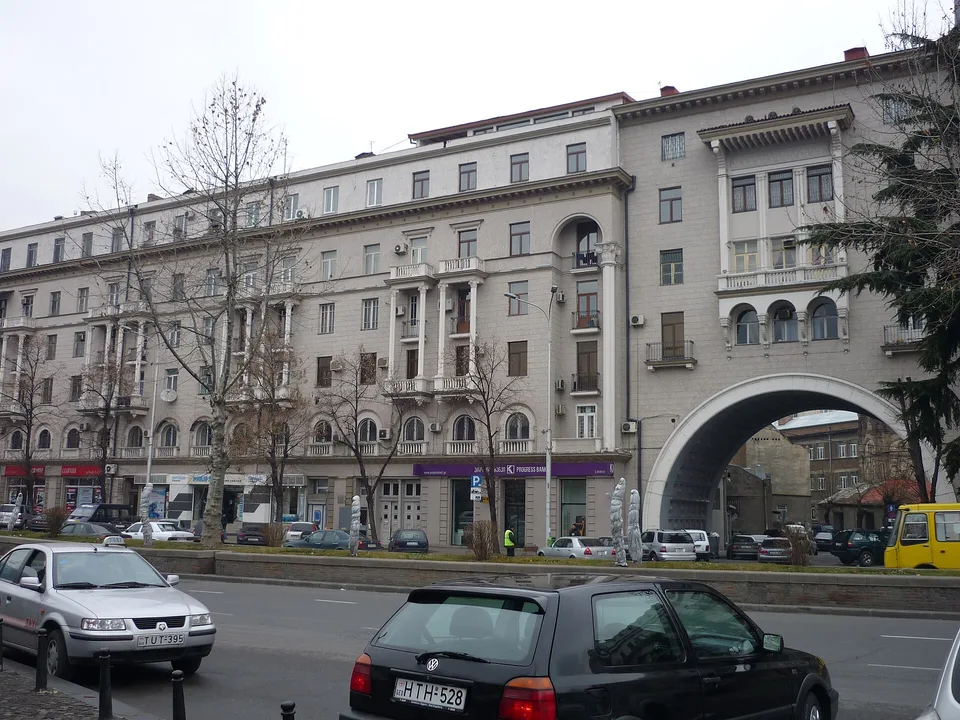
Travellers often search for a single central neighbourhood, but Tbilisi's centre has several useful bases. The Old Town is practical for historic lanes, the river and bath quarter. Its trade-off is uneven ground and a more visitor-focused setting on some streets. Rustaveli Avenue offers broader streets, cultural institutions and straightforward orientation, though it sits away from some of the historic lanes. Sololaki is residential in feel and architecturally rewarding, but its hillside streets are not ideal for rolling luggage. Chugureti adds another perspective north of the river and suits travellers who want markets and a less monument-led day. Compare them in our where-to-stay guide.
Check the precise address, the district label alone. An accommodation can be described as central while still being uphill from the nearest flat route. Ask the host about stairs, lift access and the steepest approach if mobility or heavy bags matter. We avoid calling a neighbourhood universally best because the answer depends on the balance between quiet, walking and transport.
When to walk and when to use public transport
The historic core rewards walking because its smaller details sit in lanes and courtyards. Use public transport when the distance crosses a larger part of the city or when a climb would drain the day. Tbilisi Transport Company operates the metro and municipal buses. Its official app provides route-planning information, and the airport lists bus route 337 between the terminal and the city. These services can change, so verify current operating details shortly before travel. We explain the practical distinctions in our local transport guide and cover arrival separately in how to get to Tbilisi.
Do not assume that a metro station is always a short walk from a named sight. The network is useful for longer connections, while the last leg may still involve an incline or a bus. Check the stop name against the landmark address and leave extra time when changing modes. If a journey requires several changes, a direct car ride may save effort, but traffic can make road time unpredictable. We leave live route choices to the operator's current planner rather than promising fixed journey durations.
Build an initial itinerary with clear priorities
Decide which experience matters most before adding more stops. If the baths are the priority, reserve a generous part of the day for the district and a proper bathing visit. If architecture interests you more, combine the old lanes with Sololaki rather than rushing between viewpoints. Museum visitors should centre their day on Rustaveli and check each institution's current programme and access details. Food-focused travellers can use a market visit as a way to learn ingredients and meal customs, then plan a seated meal later. Our Georgian food guide explains dish names and useful questions to ask.
For a broader list, start with the sights that define Tbilisi. Narikala and the botanical garden work best when you are prepared for slopes. Mtskheta deserves a separate day because it is outside the capital and its historic monuments have their own setting. The city is not improved by collecting every landmark in one route. Give the river, a neighbourhood and a meal room to breathe, and the shape of Tbilisi becomes easier to understand.
Before arrival, save the address of your accommodation in both its written form and on an offline map. Georgian place names can appear in transliteration, so matching a pin to the street entrance helps when asking for directions. Keep the airport and railway information pages bookmarked if you are arriving by either route. A host or hotel can clarify the best final approach, especially where a central address sits above a steep lane. This small preparation is more useful than planning a rigid minute-by-minute schedule.
Sources we checked
Where it is
- 1Tbilisi
- Tbilisi International Airport (TBS) · about 12 km from Tbilisi in a straight line
- Directions in Google Maps
Stations and taxi ranks: OpenStreetMap. Airports: OurAirports. Distances are in a straight line.
Traveller tips
Real advice from people who have been to Tbilisi. Every tip is read by our team before it goes live.
No tips yet. Been here? Yours could be the first.
Thank you! Your tip will appear here after a quick review.
More in Tbilisi
Continue exploring Tbilisi with related neighbourhood, food, and planning guides