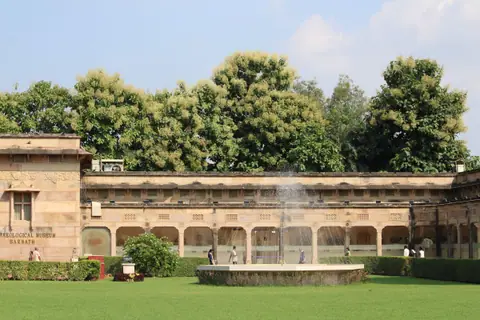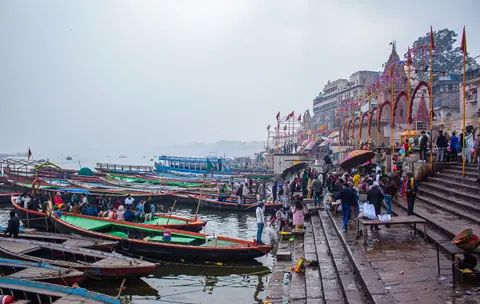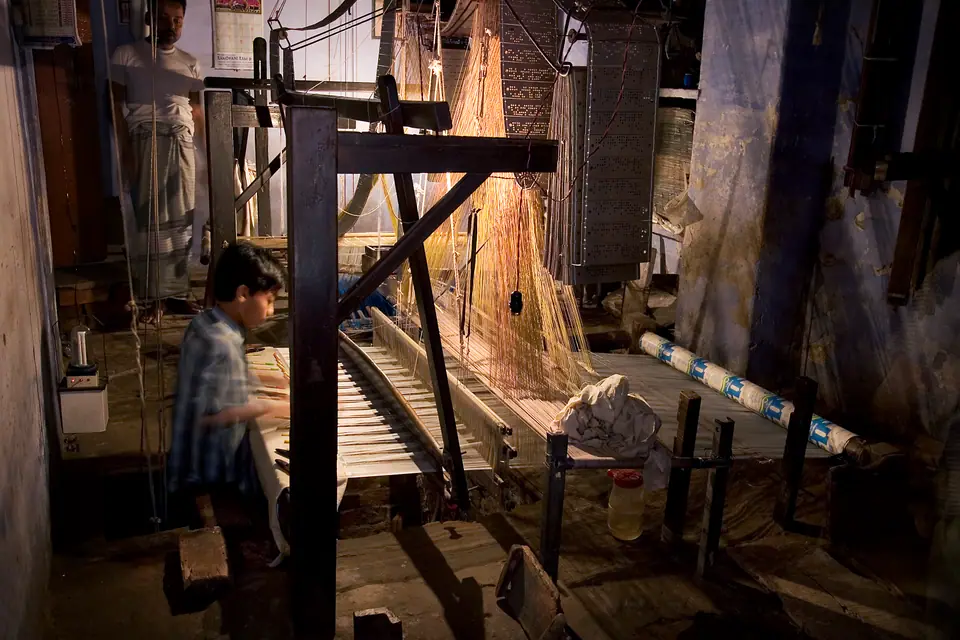
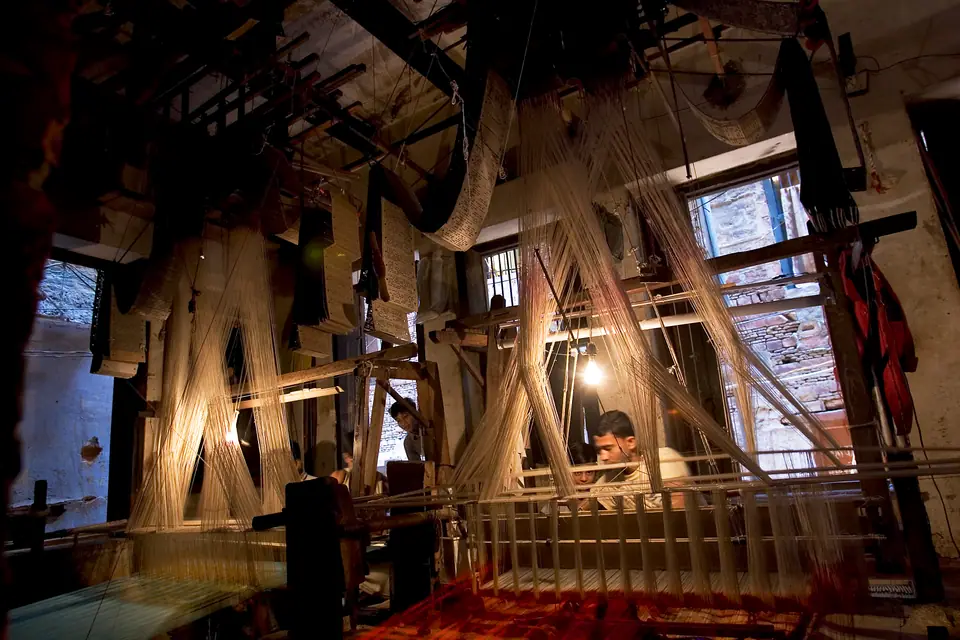
Photo: Jorge Royan · CC BY-SA 3.0
Banarasi Silk and Weaving: GI Labels and Careful Buying
A source-based guide to Banarasi textiles and responsible shopping questions.
Banarasi silk is both a recognised local craft and a shopping category that requires careful questions. The District Varanasi government identifies silk weaving and Banarasi sarees among the city's crafts. India's official Geographical Indications registry lists “Banaras Brocades and Sarees” as a registered handicraft product. That registration describes a protected regional product category; it does not prove that every item sold in Varanasi is registered, pure silk, handwoven or made by an authorised producer. Use the registry record as context, not a shortcut to authenticate a particular purchase. For other craft listings, see the district's handicraft page and read the wider city guide.
What the official sources establish
The district's handicraft page describes silk weaving as a notable craft of Varanasi and refers to Banarasi sarees produced by local craftspeople. The district's art and craft page lists Banaras Brocades and Sarees among geographical indications. The Intellectual Property India record gives the registered product name, status and geographical area. These sources establish a regional craft identity and a registered category.
They do not establish the fibre content, weaving method, origin or quality of an individual item in a shop. A saree may be marketed with the word “Banarasi” without the available evidence showing that it belongs to the registered GI product. If authenticity matters, ask the seller what documentation accompanies that particular piece and how the claim can be checked. Do not rely on visual appearance alone.
The Ministry of Textiles' Textiles Committee has published documentation on Banaras sarees and brocades. Use that resource for craft context, but do not treat a general document as certification for an item being offered for sale. Current registration details should be checked in the GI registry before making a claim about validity or scope.
Ask specific questions before buying
Start with the material. Ask whether the piece is silk, a blend or another fibre, and request that the seller distinguish warp, weft and decorative threads if relevant. The available district sources identify a weaving tradition but do not set a single fibre standard for every product sold under a Banarasi label. Get the answer in writing on a receipt or product description if the material claim affects your decision.
Ask how the textile was made and whether the seller describes it as handloom or machine-produced. Do not assume that “woven” means handwoven, or that an elaborate motif proves a particular technique. The official GI record includes registered authorised users, but checking a specific seller against that list requires care. A shop sign or a verbal assurance is not the same as a verifiable record.
- Product name / GI product: Ask whether the exact item is represented as “Banaras Brocades and Sarees” under the registered indication.
- GI claim / seller claim: Request the relevant mark or documentation and verify it against the official registry.
- Silk / blend: Ask for the fibre composition in writing rather than judging by shine or touch.
- Handloom / other production: Ask what the seller means by the term and whether a product record supports it.
- Care / maintenance: Request written care instructions for the actual fabric and embellishment.
Understand the GI label's limits
A geographical indication connects a product name with a defined place and product specification. The IP India record for Banaras Brocades and Sarees lists the geographical area as Uttar Pradesh and describes the registered goods as handicraft. The district page also identifies the product as a GI. Those details should not be stretched into a guarantee that every Varanasi shop carries certified pieces.
The current registry entry includes registration status and authorised users. If you want to make a purchase based on GI status, check the live record and ask the seller for evidence that the item is covered. Keep in mind that a general regional reputation is not the same as a product-level authenticity test. Avoid claims such as “all genuine Banarasi sarees are handwoven” unless a current authoritative source supports the exact wording.
Compare quality without inventing a shortcut
There is no single visual feature in the sources reviewed here that proves fibre content or production method. Motifs, weight and finish can help you discuss preferences with a seller, but they do not independently verify origin. Ask for close inspection of the reverse, seams and finishing if you are comparing construction, and make sure the seller explains what you are looking at.
Take time to compare a small number of pieces rather than feeling pressured by a large display. Ask the same questions of each seller and compare written descriptions. If the answers conflict or the documentation is unclear, pause the purchase. No guide can guarantee that a verbal claim is accurate. A clear product description and a seller willing to explain it are more useful than a dramatic claim about rarity.
Plan a craft visit with realistic expectations
A shopping visit and a weaving demonstration are different activities. The sources reviewed establish Varanasi's silk craft and provide government documentation, but they do not verify which workshops currently admit visitors or demonstrate a process. Do not arrive expecting access to a working loom without an appointment and direct confirmation. Ask in advance what can be observed and whether photography is permitted.
The district handicraft page lists craftspeople and other craft categories, but its information is not a current endorsement or assurance that every listed contact remains active. It was last updated in 2020, so verify any details directly before relying on them. Do not publish a named shop recommendation from that list without current confirmation.
Transport and shopping logistics
Textile shopping can be combined with an old-city visit only if the route and carrying plan suit your day. The temple trust's Godowlia to Maidagin vehicle restriction affects nearby access, while the transport options depend on current local conditions. Ask a shop or accommodation for a precise meeting point, and avoid carrying a valuable purchase through a long itinerary if you can store it securely.
Check the seller's current payment and shipping arrangements directly; this guide does not make claims about prices, export paperwork or delivery. Keep the product description, receipt and any certification information together. If you are travelling onward, ask the seller how the item should be packed and whether the packaging protects any delicate zari or embellishment.
A careful buyer's checklist
- Identify the exact material and ask for the fibre composition in writing.
- Clarify whether the piece is handloom or another production type.
- Ask whether the seller claims the item is GI-covered and request supporting documentation.
- Check the current IP India record rather than relying on a generic “Banarasi” label.
- Get care instructions and keep them with the receipt.
Banarasi textiles deserve interest as a documented regional craft, but careful buying depends on the item in front of you. The official records provide a starting point, not an automatic certificate for every product. Ask clear questions, check current documentation and leave if the answers do not support the claims being made. For other cultural context, our sightseeing guide and food guide cover separate parts of the city's visitor experience.
Where it is
- 1Varanasi
- Lal Bahadur Shastri International Airport (VNS) · about 19 km from Varanasi in a straight line
- Directions in Google Maps
Stations and taxi ranks: OpenStreetMap. Airports: OurAirports. Distances are in a straight line.
Traveller tips
Real advice from people who have been to Varanasi. Every tip is read by our team before it goes live.
No tips yet. Been here? Yours could be the first.
Thank you! Your tip will appear here after a quick review.
More in Varanasi
Continue exploring Varanasi with related neighbourhood, food, and planning guides