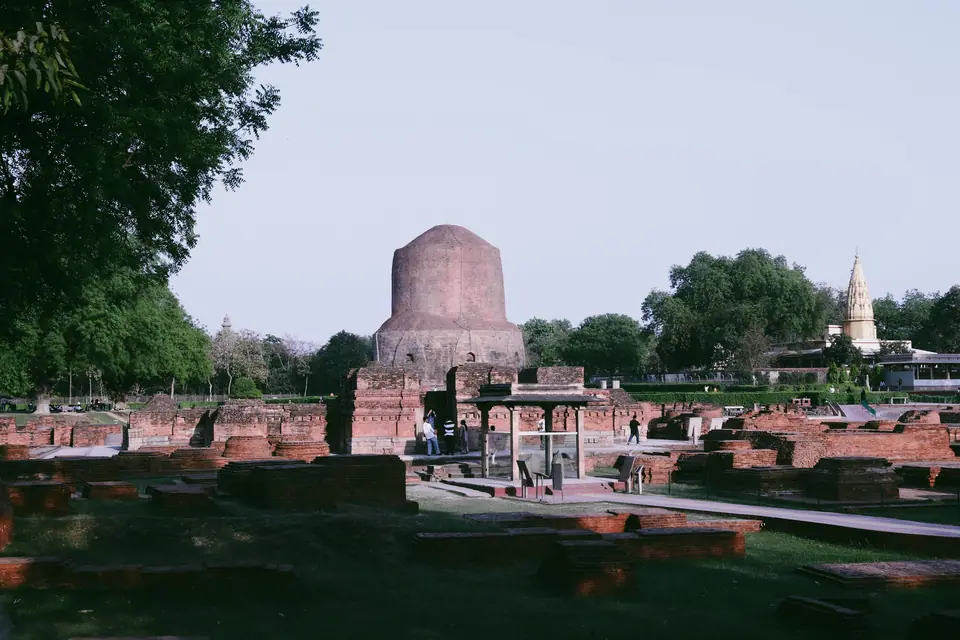
Sarnath Buddhist Heritage: Stupas, Monastery Remains and Museum
A guide to Sarnath's archaeological landscape and the separate journey from Varanasi.
Sarnath is a separate archaeological visit outside Varanasi's central riverfront. The district describes it as the place where the Buddha preached his first sermon and gives the site as 10 kilometres from Varanasi. Its visitor list names Dhamekh Stupa, Chaukhandi Stupa, monastery remains and the Archaeological Museum. Treat those as parts of a wider heritage landscape rather than a single monument stop. The journey and site access need their own planning. Our day-trip guide covers transport decisions, while the three-day plan shows where the excursion fits.
Understand the site as a group of places
The district's official excursion page identifies several elements at Sarnath: Dhamekh Stupa, Chaukhandi Stupa, remains of monasteries and the Archaeological Museum. These are not all the same type of stop. The archaeological grounds invite you to read structures and remains in their setting; the museum is a separate indoor collection with its own visitor information. Check the Archaeological Survey of India's current notices for access, closures and monument rules before travelling.
Do not assume a visit to one point automatically includes every other area. Confirm the museum and archaeological site's current arrangements, and leave time for the route between them. This guide does not give opening times or prices because those details can change and were not verified in the research pack. Use the official ASI information close to your travel date.
The district associates the Lion Capital now used as India's national emblem with the pillar erected at Sarnath by Ashoka. That is a useful point of context, but avoid adding construction dates, dimensions or claims about the original pillar's precise appearance unless an authoritative source supports them. Sarnath's significance does not need unsupported superlatives to make the visit worthwhile.
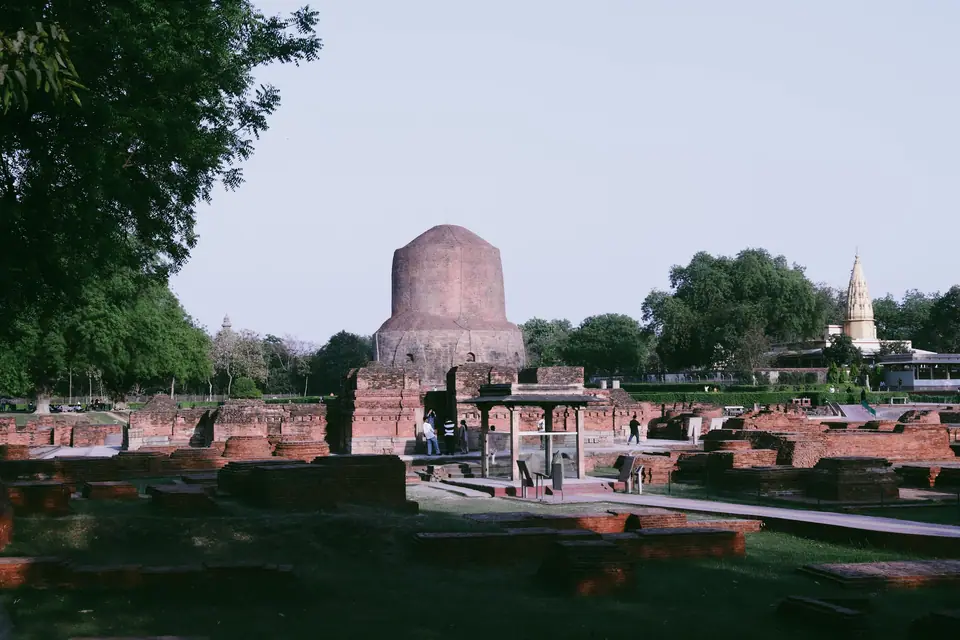
Dhamekh Stupa and the surrounding remains
Dhamekh Stupa is one of the named archaeological places in the district's visitor description. Give yourself time to look at its position among the surrounding remains rather than treating it as a quick photograph. The district also names monastery remains, which help place the stupa within a broader site. Read signs on location and follow barriers or conservation instructions. A general guide cannot replace the current interpretation provided by the archaeological authority.
Avoid repeating exact dates or measurements from unsourced summaries. The research verified the site's named components and the district's description of Sarnath's association with the Buddha's first sermon. It did not verify a chronology for each surviving structure. If detailed architectural or archaeological interpretation is important to your visit, consult ASI materials or the museum's current exhibits.
Chaukhandi Stupa and the museum
Chaukhandi Stupa is another site listed by the district. Plan it as a distinct stop in the larger Sarnath area, checking the current approach and access conditions. Do not assume that transport can wait at every entrance or that the site will be open in a particular form. Confirm the route with your driver and the official visitor information.
The Archaeological Museum belongs in the same excursion but has separate rules and access. The ASI is the responsible authority to consult for current museum information. Museum collections can add context to the remains outdoors, but the available source pack does not verify specific objects, gallery arrangements or current opening details. Avoid naming an artefact or promising that a particular display will be available unless the museum confirms it.
Why Sarnath deserves its own day block
The district's 10-kilometre figure is a stated distance from Varanasi, not a travel-time estimate. Traffic, pickup location, route and current conditions can affect the journey. A short-looking distance can still consume a meaningful part of a visit when combined with site movement and museum access. Arrange transport based on live information, and avoid placing a tightly timed temple appointment immediately after returning.
For many itineraries, Sarnath works best as the main purpose of a half-day or longer block. That is a planning recommendation, not an official duration. The actual time depends on your interest in archaeology, the museum's current access and the transport arrangement. If you want a slower visit, choose fewer stops in central Varanasi that day. Our things to do guide separates the central city from its outer excursions.
Getting there without guessing
Arrange a current transfer from your accommodation or another confirmed pickup point. Ask the driver where the return pickup will be and whether it is the same location. Do not rely on a fixed journey time copied from a general travel article. The official district page provides a distance; it does not guarantee a road condition or schedule.
If you use a taxi or local vehicle, agree the destination and fare before departure. Ask whether the driver will wait or return later, and establish the plan in advance. Do not assume a vehicle can access every point at the archaeological site. Follow local signs and ASI staff instructions. For general city transfer questions, read getting around Varanasi.
A considered order for the visit
- Check official notices: review ASI information for current site and museum access.
- Confirm transport: agree the pickup point, destination and return arrangement.
- Start with the outdoor remains: orient yourself around the listed stupas and monastery area.
- Visit the museum if open: verify its current operation rather than assuming entry.
- Keep the return flexible: avoid a tight connection with another timed activity.
This order is a practical framework, not a required route. If current signage or staff guidance suggests another sequence, follow it. If the museum is closed or access changes, do not force the schedule. You can still focus on the outdoor remains that are open to visitors.
What not to expect
Sarnath is not an extension of the ghats, and it should not be squeezed into the same walk as the old city. It is a separate destination with its own archaeological setting and journey. The district sources reviewed here do not establish a UNESCO designation, a universal visit duration or a guaranteed programme. Avoid itineraries that promise a fixed sequence of activities without checking what is operating.
Also avoid treating the site as a backdrop detached from living religious communities. Follow posted rules, keep noise and movement considerate, and ask before photographing people. The sources consulted for this guide establish the named archaeological places and historical association, not a complete visitor etiquette code. When in doubt, follow ASI instructions and local guidance.
Pair the excursion with the right city plan
Put Sarnath on the day that allows a relaxed return to Varanasi. Do not add Ramnagar by default; the district lists it as a separate excursion 14 kilometres from the city, and that distance does not prove it is a quick stop between destinations. If you are choosing between them, compare your interests and current access rather than trying to fit both into one day.
Use the dedicated excursion plan for the practical journey, then keep your remaining days for the riverfront and temple area. The main Varanasi guide offers a wider orientation. Separating these settings makes the visit easier to plan and leaves room to respond to current ASI information.
Where it is
- 1Varanasi
- Lal Bahadur Shastri International Airport (VNS) · about 19 km from Varanasi in a straight line
- Directions in Google Maps
Stations and taxi ranks: OpenStreetMap. Airports: OurAirports. Distances are in a straight line.
Traveller tips
Real advice from people who have been to Varanasi. Every tip is read by our team before it goes live.
No tips yet. Been here? Yours could be the first.
Thank you! Your tip will appear here after a quick review.
More in Varanasi
Continue exploring Varanasi with related neighbourhood, food, and planning guides