


























Varanasi: Read the City by River, Lane and District
A practical orientation to Varanasi's riverfront, old city and separate visitor districts.
Varanasi is easiest to plan when you stop treating it as one compact sightseeing zone. The city’s best-known places sit in distinct settings: a long riverfront of ghats, a closely packed old-city quarter, temples with their own visitor rules, and Sarnath beyond the central riverfront. The district tourism directory lists these places separately, which is a useful clue for building a realistic visit. Start with the sightseeing guide to see which visits belong together, then use the three-day plan to order them.
Use the river as your orientation line
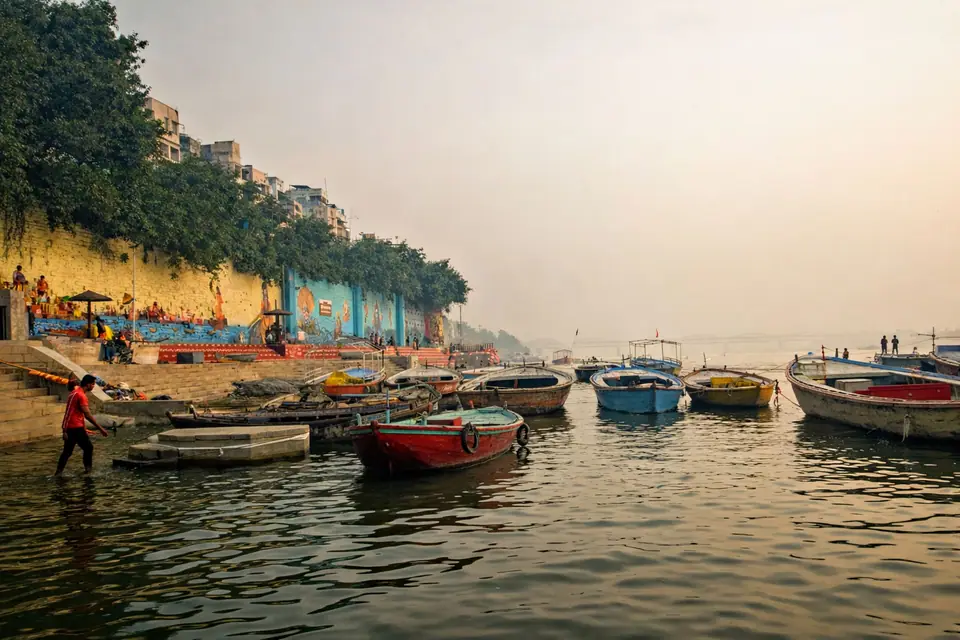
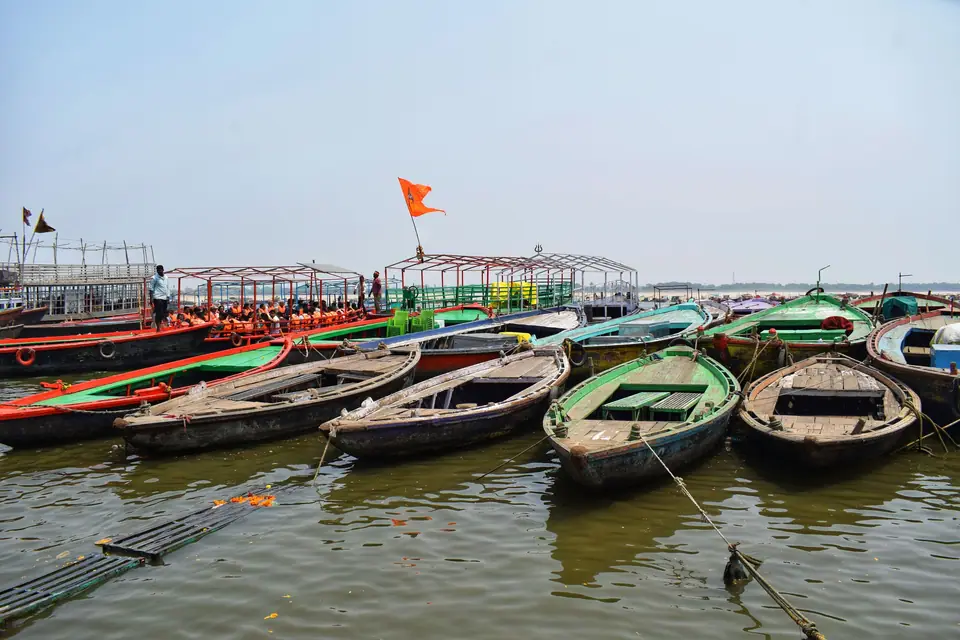
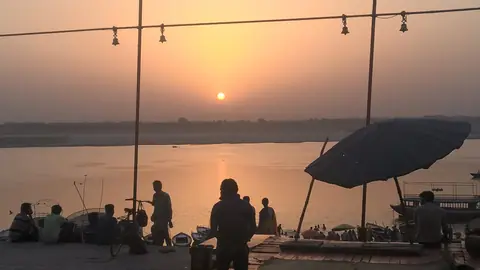
The Ganges provides the clearest mental map. The ghats are stepped riverfront spaces, but they are not interchangeable attractions. The official Kashi portal separately lists places such as Assi Ghat, Manikarnika Ghat and Namo Ghat. Read each place by its setting and purpose, and follow local signs and instructions. A walk along the river can help you understand how the city meets the water, but it should not be treated as permission to enter every structure or participate in every activity.
River conditions affect access. The Kashi Vishwanath Temple Trust specifically says that access through Ganga Dwar may change with water conditions and safety requirements. That is a practical reason to keep plans flexible rather than building a tightly timed sequence around a single river entrance. For the southern stretch, our Assi Ghat guide explains how to approach that area as its own visit.
Old-city lanes change the pace
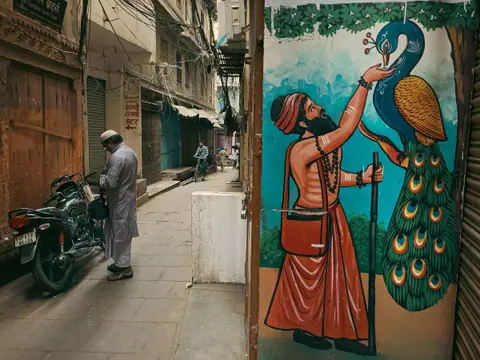
Behind the riverfront, narrow lanes lead through a dense urban fabric where a car is a poor tool for the final part of many journeys. The temple trust identifies the Godowlia to Maidagin stretch as vehicle-restricted. This has consequences for hotel choice, luggage transfers and meeting points. Ask accommodation providers for current arrival instructions, and do not assume that a map pin means a vehicle can reach the door.
Walking these lanes is less about covering distance quickly than understanding how the city is arranged around small routes and local destinations. Keep navigation simple: use a known landmark, confirm the return route, and allow extra time if you need to find a specific entrance. Our old-city lanes and ghats guide focuses on route planning and the difference between the streets and the river steps.
Temple visits need their own preparation
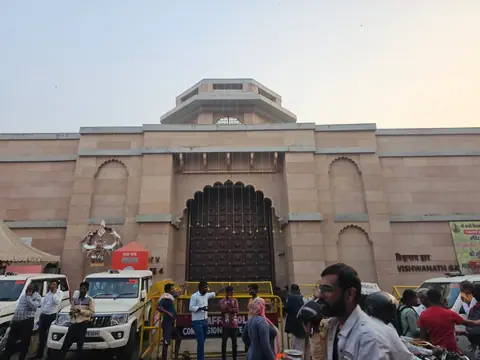
Shri Kashi Vishwanath Temple is a major city visit, but it should not be planned like an ordinary monument. The official trust notices currently prohibit electronic devices inside temple premises and describe restrictions on vehicle access. Rules can change, so check the official notice close to your visit. Do not arrive assuming that a phone, camera or other device can be carried through every part of the visit.
The Kashi government portal describes the present temple form as built by Ahilyabai Holkar in 1780 and says the Uttar Pradesh government took over management in 1983. That wording matters: it refers to the current building and its administration, rather than claiming that one structure has stood unchanged throughout the city’s history. For practical planning and the distinction between the temple precinct and nearby lanes, read our Kashi Vishwanath guide.
Give Sarnath a separate block of the trip
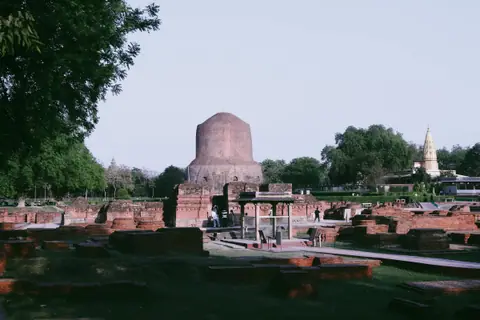
Sarnath is not an extra stop on a walk around the ghats. The district excursion page gives it as 10 kilometres from Varanasi and lists the Dhamekh Stupa, Chaukhandi Stupa, monastery remains and Archaeological Museum. That distance is a source-reported measurement, not a promise about travel time. Road conditions and the order of your other visits will shape the day.
Separating Sarnath from the central riverfront makes the visit easier to understand. The archaeological area and museum have different visitor information, so check the relevant official notices before leaving. Use the dedicated Sarnath day-trip guide to plan transport and decide how much of the day to reserve.
Choose a base by the journeys you will actually make
Accommodation near the river may shorten some walks, while a base by a rail arrival point can simplify luggage transfers. These advantages do not make every attraction walkable. The district lists Sarnath separately, and the temple trust’s vehicle restriction affects access in the old-city area. Before booking, ask the property how guests reach it by vehicle and where a driver can set down luggage.
UPSTDC lists its Rahi Tourist Bungalow at Parade Kothi. Treat this as a location reference, not an endorsement or a statement about current availability. Our where to stay guide compares base decisions without inventing neighbourhood ratings or hotel prices.
Keep the first day light
Arrival days are a poor time to stack a temple visit, a long riverfront walk and Sarnath. Use the first part of the trip to learn your route from accommodation to the river and confirm current access information. Save visits with separate transport needs for another day. If weather or river conditions alter a plan, switching the order is easier when every day is not already full.
That first orientation is useful even when your accommodation is central. A short test walk shows where the vehicle journey ends, which landmark is easiest to recognise, and whether you need to adjust later plans.
Food can be part of that orientation. Official tourism material names dishes including kachori-sabzi, chooda matar and tamatar chaat, but it does not establish that a particular vendor is best or consistently available. Use the food guide to recognise local dishes, then choose vendors based on what is open and suitable when you visit.
Practical checks before setting out
- Temple access: Read the current trust notices for device rules, vehicle restrictions and river access.
- Transport: Check the rail operator or airline for your travel date; older tourism route lists are not live timetables.
- Sarnath: Treat it as a separate excursion and check current ASI visitor information.
- Accommodation: Confirm vehicle access and luggage drop-off directly with the property.
- Weather: Use the IMD city-station normals as context, not as a forecast for your dates.
Varanasi becomes more manageable when the riverfront, temple quarter and Sarnath each have their own space in the itinerary. That approach is less hurried and gives you room to respond to current access conditions without turning the visit into a checklist.
Where it is
- 1Varanasi
- Lal Bahadur Shastri International Airport (VNS) · about 19 km from Varanasi in a straight line
- Directions in Google Maps
Stations and taxi ranks: OpenStreetMap. Airports: OurAirports. Distances are in a straight line.
Traveller tips
Real advice from people who have been to Varanasi. Every tip is read by our team before it goes live.
No tips yet. Been here? Yours could be the first.
Thank you! Your tip will appear here after a quick review.
More in Varanasi
Continue exploring Varanasi with related neighbourhood, food, and planning guides
Varanasi's Old-City Lanes and Ghats: A Respectful Walking Plan
Varanasi, India
Shri Kashi Vishwanath Temple: History, Access and Visitor Rules
Varanasi, India
Sarnath Buddhist Heritage: Stupas, Monastery Remains and Museum
Varanasi, India
Assi Ghat, Subah-e-Banaras and the Southern Riverfront
Varanasi, India
