


























Things to Do in Varanasi: Ghats, Temples and Sarnath
A geography-led guide to Varanasi's main visits and how to group them.
The most useful way to plan things to do in Varanasi is to group visits by setting. The riverfront ghats form one experience, the lanes and temples of the old city another, while Sarnath requires a separate journey. The official Kashi portal lists Shri Kashi Vishwanath Temple, Assi Ghat, Manikarnika Ghat, Namo Ghat and Durga Temple among its attractions. The district directory lists Sarnath separately. That distinction helps avoid an itinerary that looks short on a map but repeatedly crosses different parts of the city. For a day-by-day sequence, use our three-day Varanasi itinerary.
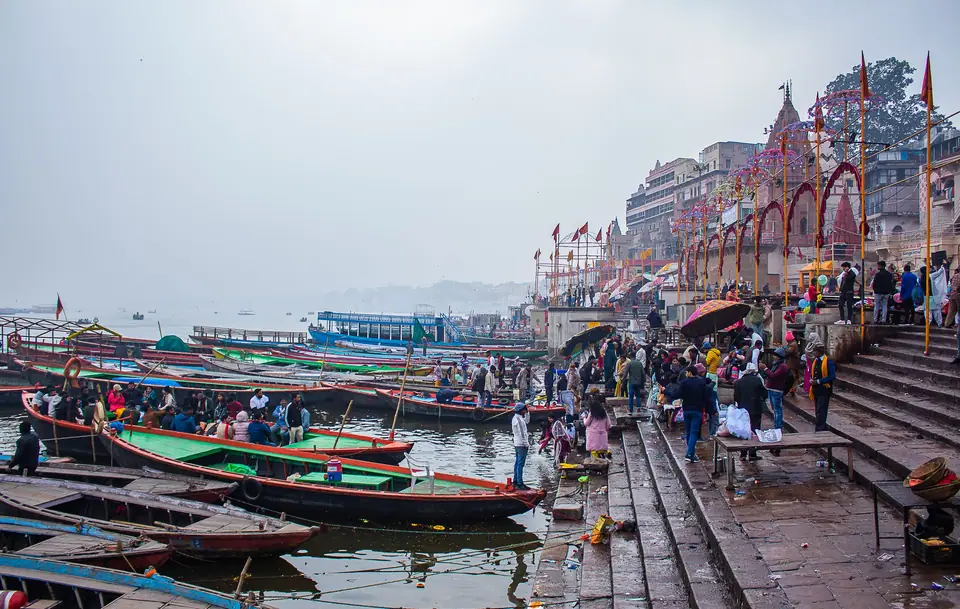
Read the riverfront as a sequence of places
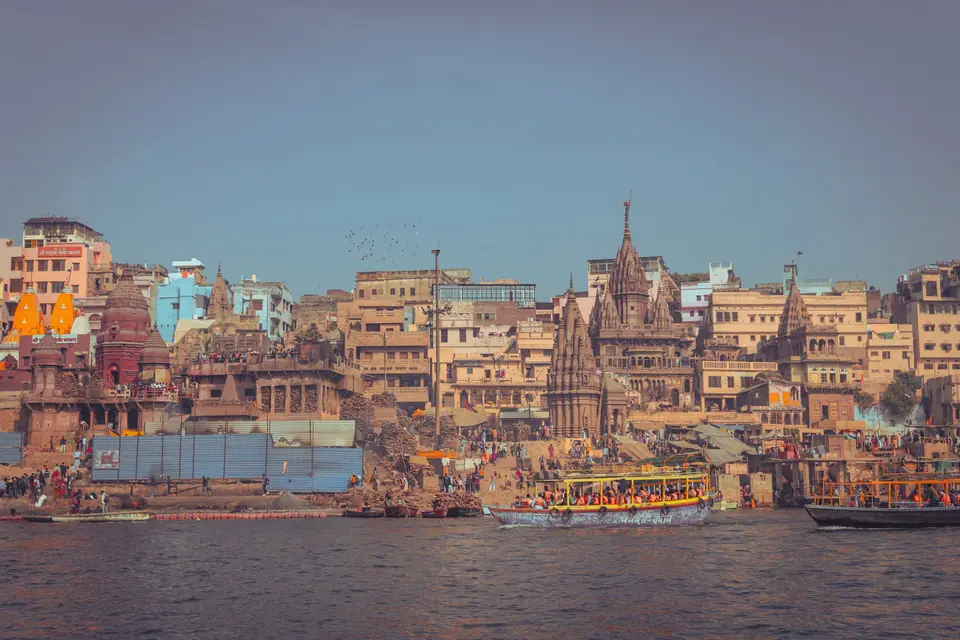
The ghats are stepped spaces on the Ganges, but each named ghat should be approached as a distinct place rather than a generic viewpoint. The official portal separately describes Assi, Dashashwamedh and other ghats. Walk only where access is open and follow signs and local directions. The river edge can change with water conditions, and the temple trust specifically says that Ganga Dwar access may change for river conditions and safety requirements.
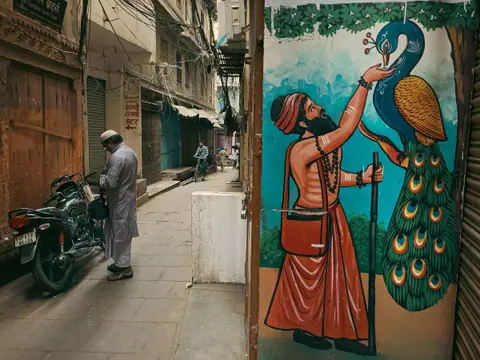
A riverfront visit works best when you give it a clear purpose. You might focus on the built edge and its relationship to the city, or use a chosen ghat as a starting point for a walk. Avoid assuming that a boat will be available, that a particular stretch is accessible, or that every activity is suitable for visitors. Those details are not fixed by a general tourism description. The dedicated old-city lanes and ghats guide helps distinguish the river steps from the streets behind them.
Make the temple district its own visit
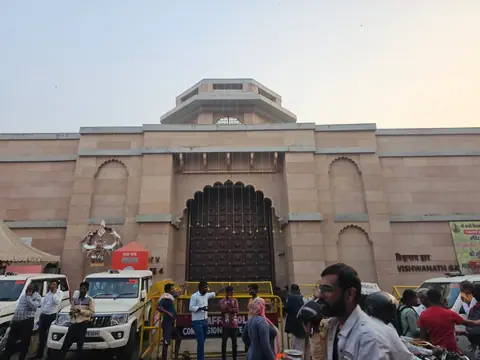
Shri Kashi Vishwanath Temple is central to many visitors' plans, but the visit has specific rules. The trust's notices state that electronic devices are prohibited inside temple premises and that vehicles cannot enter the Godowlia to Maidagin restricted area. Check the current notice before travelling, and decide in advance how you will manage devices and the final approach. Do not assume that a general city sightseeing pass or a driver can take you to the entrance.
The Kashi government portal dates the present form of the temple to a building commissioned by Ahilyabai Holkar in 1780 and notes the Uttar Pradesh government's management takeover in 1983. This is useful context when reading the current site, but it should not be simplified into a claim that one building has survived unchanged through every period. Set aside a separate block for the precinct and its approach lanes. Our temple guide covers the visitor checks in greater detail.
Choose museums for context, not as filler
Bharat Kala Bhavan is a university museum at Banaras Hindu University. Its institutional page is the authority for current collection and visitor information. It makes a different kind of visit from the riverfront: use it when you want a museum setting and allow for the journey to the university area. Check the museum's current access details before setting out, since an institutional web page may change and entry arrangements should not be inferred from a general city guide.
The Archaeological Museum at Sarnath belongs with the archaeological area rather than with a central-city museum stop. The district excursion page identifies the museum and nearby remains as part of Sarnath's visitor landscape. Check current Archaeological Survey of India notices for entry details. A visit to both the site and museum is easier to plan when you have a separate transport block, rather than attempting to combine it with a long old-city walk.
Give Sarnath a full excursion slot
The district's official excursion page gives Sarnath as 10 kilometres from Varanasi and lists Dhamekh Stupa, Chaukhandi Stupa, monastery remains and the Archaeological Museum. This is a source-reported distance, not a travel-time estimate. The historic site is separate from the ghats and temples, so combine it with nearby stops only when you have verified their locations and current access.
Do not build the visit around an unsupported claim that Sarnath has a particular global designation. The city district's own visitor page provides enough to plan a meaningful archaeological visit without relying on superlatives. Read the Sarnath heritage guide for the site's components and the day-trip page for transport and timing decisions.
Include a textile visit when craft matters to you
Banaras brocades and sarees are documented in the Indian government's Geographical Indications registry. That supports describing a registered textile tradition, but it does not prove that an individual shop's product is authentic or certified. If shopping is part of the trip, ask sellers direct questions about materials, provenance and documentation, and do not treat a label or a neighbourhood name as proof by itself.
A craft-focused visit has a different rhythm from monument sightseeing. It is most useful when you want to understand how a textile is made or compare products thoughtfully. Avoid promising access to a working loom or a particular workshop unless it has been confirmed directly. Our Banarasi silk and weaving guide explains the source-backed craft context and what to verify before buying.
Use a compact geographic plan
- Riverfront: Choose a manageable stretch and check current access conditions before walking.
- Temple precinct: Read the trust's latest rules and plan for the vehicle restriction.
- University museum: Check Bharat Kala Bhavan visitor information and account for the separate journey.
- Sarnath: Reserve a distinct excursion and verify ASI notices.
- Craft: Treat textile shopping as a deliberate activity, not an assumed stop on a monument route.
This order is not a prescribed itinerary. It is a way to prevent the city's different settings from collapsing into one rushed day. If the riverfront or temple access changes, keep the museum or craft visit as a flexible alternative, subject to its own current information.
What to leave flexible
Exact opening arrangements, transport availability and river access can change. A general page cannot confirm that a boat is operating on your chosen date or that a particular entrance is open. Check the temple trust for temple notices, the museum or ASI for institutional access, and the relevant operator for transport. For weather context, use the India Meteorological Department's city station data rather than treating old seasonal advice as a forecast.
Varanasi's main visits reward separation and choice. You do not need to cover every named attraction to understand the city. Prioritise the setting that matters most to you, allow a separate journey for Sarnath, and keep the day flexible enough to respond to current access information. The orientation guide and local transport guide help turn that list into a workable plan.
Where it is
- 1Varanasi
- Lal Bahadur Shastri International Airport (VNS) · about 19 km from Varanasi in a straight line
- Directions in Google Maps
Stations and taxi ranks: OpenStreetMap. Airports: OurAirports. Distances are in a straight line.
Traveller tips
Real advice from people who have been to Varanasi. Every tip is read by our team before it goes live.
No tips yet. Been here? Yours could be the first.
Thank you! Your tip will appear here after a quick review.
More in Varanasi
Continue exploring Varanasi with related neighbourhood, food, and planning guides
What to Eat in Varanasi: Chaat, Kachori and Banarasi Paan
Varanasi, India
Getting Around Varanasi: Lanes, Rickshaws and Vehicle Limits
Varanasi, India
Varanasi's Old-City Lanes and Ghats: A Respectful Walking Plan
Varanasi, India
Shri Kashi Vishwanath Temple: History, Access and Visitor Rules
Varanasi, India
