


























Getting Around Varanasi: Lanes, Rickshaws and Vehicle Limits
A practical guide to Varanasi transport, drop-off points and walking routes.
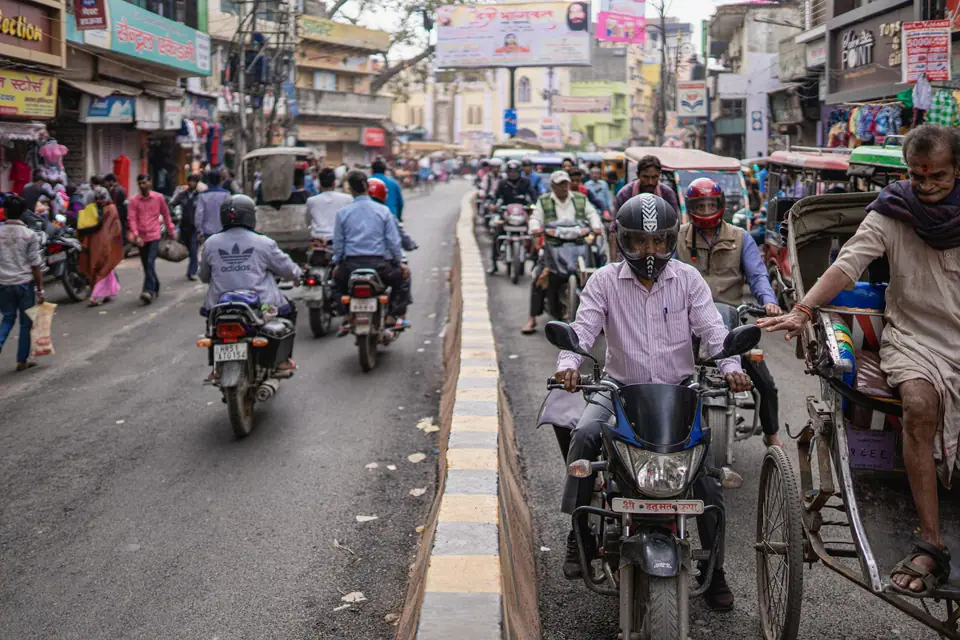
Getting around Varanasi means combining short walks with road transport, rather than expecting one vehicle to reach every attraction. The district arrival page lists taxis, e-rickshaws and cycle-rickshaws as local options, while noting that some older temple and market routes restrict larger vehicles. The temple trust states that vehicles are not permitted between Godowlia and Maidagin. That makes the final walk part of the route, not an inconvenience to discover after arriving. For your first journey, ask the accommodation where a driver can stop and how guests continue on foot. Our base guide covers the same access question before booking.
Think in legs, not one door-to-door ride
Divide each trip into three parts: the road journey to the general area, the nearest suitable drop-off point, and the walk to the exact entrance. This simple model is especially useful around the old city, where a property or temple can be close in map distance but inaccessible to a larger vehicle. Ask the driver and destination directly about the current stopping point. Avoid relying on an old online map or an informal direction that names only a ghat or market.
For journeys within the central lanes, a cycle-rickshaw or e-rickshaw may be available, but routes and access can depend on local restrictions. Confirm the route and fare with the operator before setting out; this guide does not quote prices or promise that a vehicle can enter a specific lane. If the final portion is on foot, wear footwear suitable for uneven surfaces and keep the route back to your pickup point clear.
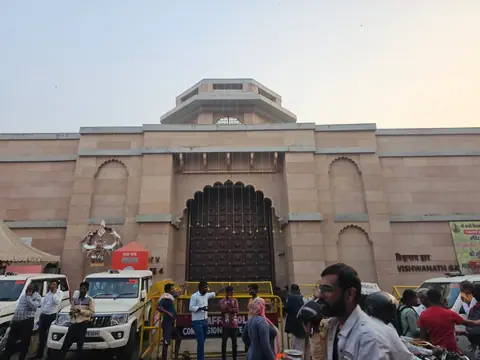
The trust currently says vehicles cannot enter the Godowlia to Maidagin stretch. Its notice also mentions limited e-cart service for visitors with disabilities. Check eligibility, service operation and current instructions with the temple trust before relying on that option. Do not assume that a service shown in a notice will be running at the time of your visit.
Use transport modes for the right job
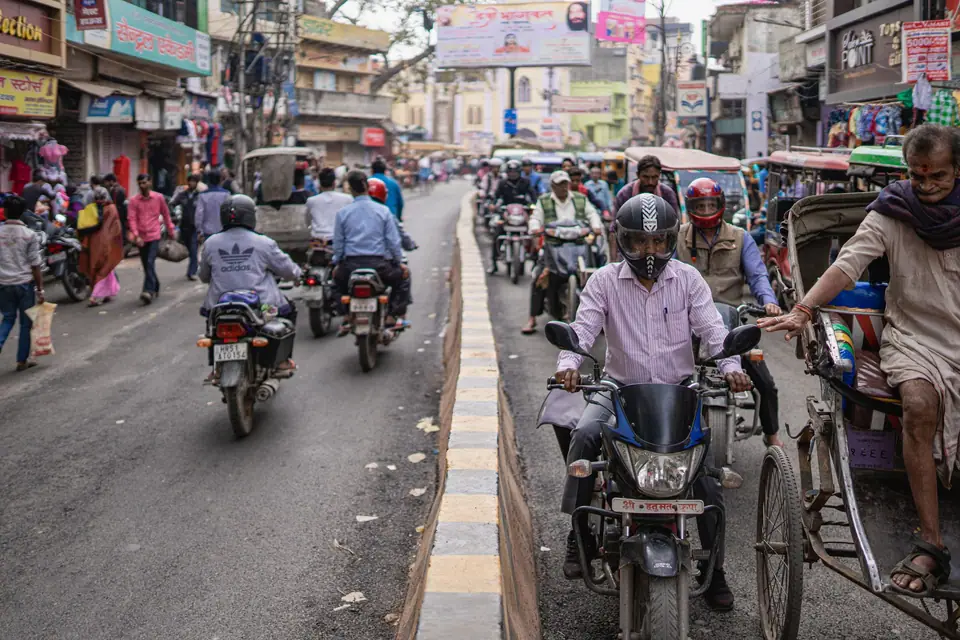
- Taxi / airport or rail transfer: suitable for the main road journey, but confirm whether the vehicle can reach the accommodation or only a nearby drop-off.
- E-rickshaw / shorter local connection: ask the operator whether the route is permitted and where the ride ends.
- Cycle-rickshaw / lane approach: agree the destination and fare before departure, and check whether the lane is reachable.
- Walking / old-city final leg: keep a landmark and return direction available, especially when the vehicle restriction applies.
- Bus or metro / city-wide trip: this research did not verify a current city bus or metro route map, so do not plan around an assumed service.
This comparison is about use, not a ranking of providers. The best choice changes with luggage, mobility, traffic and the exact destination. Ask your accommodation for current pickup instructions and confirm the fare directly with the operator. Do not accept an estimate copied from a travel page as a fixed city rate.
Plan the riverfront on foot
The ghats form a long river edge, and a visit to one section does not automatically place you beside another. Decide which part of the riverfront you want to see, then choose a vehicle drop-off that leaves a manageable walk. The Kashi portal lists named ghats separately, and each has its own approach from the streets behind it. Check current access where river conditions or local instructions may affect the route.
Do not assume that you can walk continuously along every stretch at water level. Steps, local activity, closures or river conditions can change the route. Follow signs and directions on the day. If a section is inaccessible, return to the street network and approach another public point rather than attempting an unmarked route.
A boat is not a substitute for land transport. Availability and river access change, and a boat does not solve the last-mile route to a hotel or temple. Treat a river journey as an optional activity after checking current conditions, not as an essential connection in the itinerary. Our Assi Ghat guide and ghat and lane guide explain how to group the riverfront on foot.
Keep Sarnath and Ramnagar as separate trips
Sarnath and Ramnagar are excursions from the central city. The district gives Sarnath as 10 kilometres and Ramnagar as 14 kilometres from Varanasi. Those distances do not say how long a journey takes or which road is best on a particular day. Arrange a current transfer with a trusted operator or ask your accommodation for advice, then leave a margin for traffic and site access.
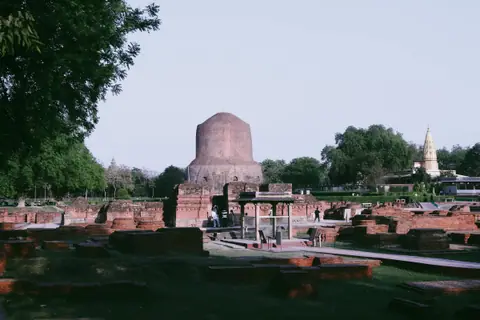
Confirm the exact destination and pickup point before starting. Sarnath includes separate archaeological and museum areas, so do not assume one drop-off covers every part. Ramnagar is another destination and should not be inserted into a day without checking its access and the onward route. Our Sarnath excursion guide separates transport planning from the central-city walk.
Rail stations and arrival transfers
UPSTDC names Varanasi Cantt and Mughal Sarai as rail junctions in its visitor information. Use the station shown on your current rail ticket, not an older page or a remembered station name. Rail services and station naming can change, so confirm the booking and live operator information before arranging a pickup. Share the exact station with the driver and accommodation.
The district also lists taxis, e-rickshaws and cycle-rickshaws for local movement. A large vehicle may not reach the final address in the restricted old-city area. Ask the property whether staff can meet you or explain the remaining walk. Keep the written directions accessible offline, and avoid scheduling a timed visit immediately after arrival.
Mobility and luggage considerations
If anyone in your party has limited mobility, evaluate each route separately. A vehicle restriction, an uneven walking surface, steps at a ghat and a property's internal stairs are different issues. Contact the accommodation and relevant site directly with the details of your needs. The temple trust mentions e-cart service for visitors with disabilities, but you should confirm current eligibility and operation before planning around it.
Large suitcases are difficult in a lane where a vehicle cannot reach the door. Ask the property whether there is a practical luggage transfer or an accessible drop-off. If no clear answer is available, consider another base or pack lighter. Do not assume that a cycle-rickshaw can carry every bag or that a driver will be allowed to wait near the destination.
Before each journey
- Confirm the exact destination and a recognisable drop-off point.
- Ask whether the vehicle type can use the route today.
- Agree the fare with the operator before departure.
- Check the return pickup plan, especially for excursions.
- Recheck temple and riverfront notices when they affect the route.
Varanasi is easier to navigate when every transfer has a clear final approach. Confirm the last walking leg, keep excursions separate from the central lanes and use current information rather than assumed schedules. Then group visits with our three-day plan and keep enough flexibility to respond to local access instructions.
Where it is
- 1Varanasi
- Lal Bahadur Shastri International Airport (VNS) · about 19 km from Varanasi in a straight line
- Directions in Google Maps
Stations and taxi ranks: OpenStreetMap. Airports: OurAirports. Distances are in a straight line.
Traveller tips
Real advice from people who have been to Varanasi. Every tip is read by our team before it goes live.
No tips yet. Been here? Yours could be the first.
Thank you! Your tip will appear here after a quick review.
More in Varanasi
Continue exploring Varanasi with related neighbourhood, food, and planning guides
What to Eat in Varanasi: Chaat, Kachori and Banarasi Paan
Varanasi, India
Varanasi's Old-City Lanes and Ghats: A Respectful Walking Plan
Varanasi, India
Shri Kashi Vishwanath Temple: History, Access and Visitor Rules
Varanasi, India
Sarnath Buddhist Heritage: Stupas, Monastery Remains and Museum
Varanasi, India
