Where to Stay in Varanasi: River Access, Lanes and Arrival Points
A practical comparison of accommodation priorities and access questions to confirm before booking.
Choosing where to stay in Varanasi is less about finding one universally best neighbourhood than matching a base to your actual journeys. The riverfront, old-city temple area, railway arrival point and Sarnath are not one walkable cluster. The district's official visitor pages list them as separate places, and the temple trust identifies a vehicle-restricted area between Godowlia and Maidagin. That restriction can change how luggage reaches a hotel, even when the property looks close on a map. Before booking, consider how you will arrive, what you plan to visit first and whether you are comfortable with a final walk from a vehicle drop-off. Our arrival guide and local transport guide help evaluate those trade-offs.
Start with the door-to-door route
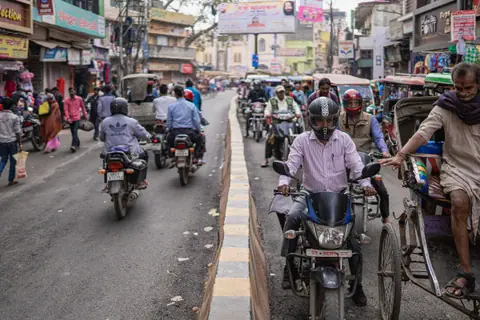
Map distance is only part of the accommodation decision. Ask each property how a guest reaches its entrance from the nearest place a car can stop. This matters particularly for accommodation in or near the old-city lanes, where the temple trust says vehicles are not permitted between Godowlia and Maidagin. The notice describes the temple area; it should not be read as a full traffic map for the city. Confirm your exact route directly with the property and check current local instructions before arrival.
Ask specific questions before paying a deposit: can a vehicle reach the property, where is luggage unloaded, how far is the final walk, and can staff share written directions? If travelling with children, older companions or mobility needs, describe those requirements plainly. Do not assume that a hotel listing's “central” label guarantees step-free access or a vehicle entrance. These details are property-specific and cannot be established from a city guide.
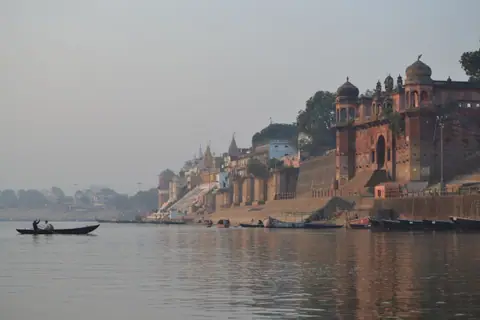
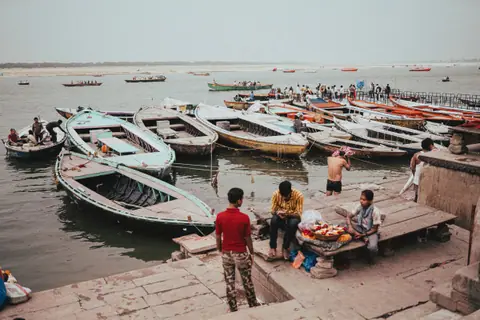
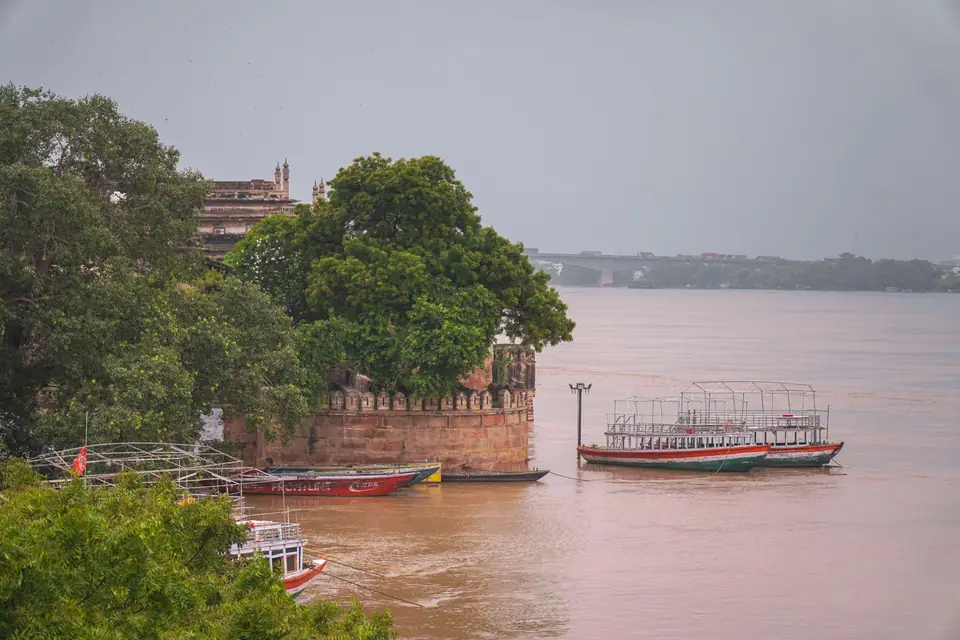
A river-facing address may sound convenient, but it does not automatically simplify every visit. Ghats are places along the water, while roads and lanes behind them determine vehicle access. A route to the river may involve steps or a walk, and access can vary with local conditions. Use the property's exact address and current directions rather than assuming all riverfront accommodation is equally close to a usable entrance.
Riverfront or old-city setting
A base near the ghats can suit a traveller whose main interest is the riverfront and the lanes around it. The practical question is how the property handles access and luggage. A short distance on a map can still involve a walk from a vehicle point, and the route may not be suitable for every traveller. Contact the accommodation before booking and ask whether its access instructions remain current.
Staying near the river does not place you beside every attraction. Sarnath is a separate excursion, and the district gives it as 10 kilometres from Varanasi. The university museum and other listed sites also require their own route planning. If your priority is a quiet arrival and straightforward vehicle access, compare other bases rather than choosing solely for a river view. Our old-city guide explains why the lane network and the ghat edge should be considered separately.
Near the railway arrival point
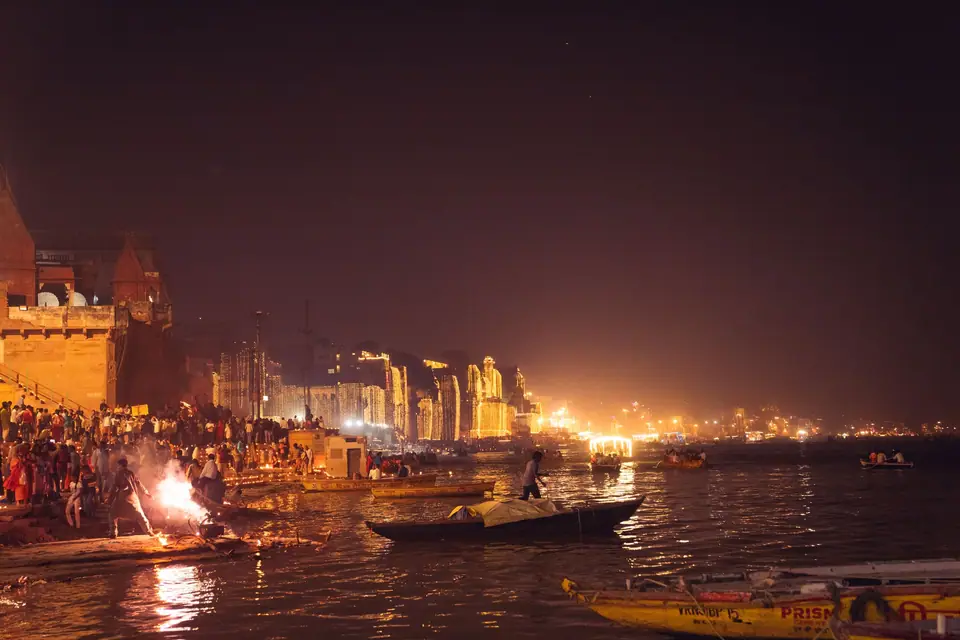
UPSTDC lists the Rahi Tourist Bungalow at Parade Kothi, and the district arrival page places the regional tourist office at Parade Kothi opposite the railway station. These details provide a documented reference point for comparing accommodation around the rail arrival area. They do not establish the quality, availability or suitability of any particular hotel. Check the current property listing, exact location and guest access arrangements directly.
A station-area base can make sense if a train arrival or departure shapes your schedule. It may be less convenient for someone whose day is centred on the southern riverfront or who wants to explore the old lanes on foot. Avoid assuming that proximity to a station means easy access to every district. Compare the actual route to your first planned visit and the onward journey to Sarnath.
Choosing for a short stay
For a short visit, prioritise one main journey over a list of attractions. If the riverfront and temple precinct are the focus, ask about access to the old-city area and how the hotel handles the restricted vehicle zone. If you arrive by rail and leave early, compare a base near the station against the additional transfer from a riverside property. If Sarnath is essential, check the likely road transfer from each option instead of assuming the closest-looking location will be fastest.
Three nights can still feel fragmented if you change accommodation or spend each day crossing the city. Keeping one base and grouping visits geographically is often simpler, but only if its access arrangements suit your party. Use the three-day plan to see how a central base affects the order of visits. If you have less time, focus on one area rather than trying to reach every district.
Questions to ask a property
- Vehicle access / final walk: Can a taxi reach the entrance, or does the guest walk from a separate drop-off point?
- Luggage / arrival: Where should a driver stop, and can staff meet or guide guests from there?
- Mobility / stairs: Are there steps on the route into the property and between the entrance and room?
- River access / conditions: Which ghat or public route is nearby, and are there current access changes?
- Transport / Sarnath: Can the property advise how guests arrange an onward transfer, without promising a fixed travel time?
Ask these questions before making a non-refundable booking. If the property gives only a landmark rather than an address, request a map pin and written directions. Keep those instructions available offline. Do not rely on a third-party map alone in a dense lane network or treat a hotel photograph as proof of an accessible route.
What the official listings can and cannot tell you
UPSTDC's hotel page is useful for locating state tourism accommodation, while the district's tourist and arrival pages help orient you to official visitor locations. They do not compare private properties, verify room conditions or guarantee present availability. Review current information from the property itself and assess independent reviews carefully, especially when access is important to your stay.
Terms such as “heritage”, “river view” or “near the temple” do not explain stairs, vehicle access, noise, room layout or the exact distance to a usable entrance. Ask for details that matter to your trip rather than relying on promotional wording. If the answer is vague, choose a property that can explain its arrival process clearly.
Make the final choice
Choose the base whose access arrangements fit your arrival and mobility needs, then plan each visit as a separate journey. A riverfront address can help with a river-focused trip. Parade Kothi offers a documented reference around the rail station. A location beyond the restricted lanes may simplify vehicle access, but its suitability depends on the places you plan to reach.
Before booking, confirm the address, vehicle drop-off, luggage route and cancellation terms directly with the property. Check the temple trust's current notices if your stay depends on access near Godowlia or Maidagin. Then organise the riverfront, temple district and Sarnath into separate blocks with our sightseeing guide. This method makes the accommodation decision concrete without relying on unverified claims about neighbourhood character or hotel quality.
Where it is
- 1Varanasi
- Lal Bahadur Shastri International Airport (VNS) · about 19 km from Varanasi in a straight line
- Directions in Google Maps
Stations and taxi ranks: OpenStreetMap. Airports: OurAirports. Distances are in a straight line.
Traveller tips
Real advice from people who have been to Varanasi. Every tip is read by our team before it goes live.
No tips yet. Been here? Yours could be the first.
Thank you! Your tip will appear here after a quick review.
More in Varanasi
Continue exploring Varanasi with related neighbourhood, food, and planning guides