Stavanger
A southwestern Norwegian port on the North Sea where 173 white wooden houses in Gamle Stavanger and the medieval soapstone nave of Stavanger Cathedral meet Lysefjorden cliffs at Preikestolen and Kjerag.
Quick decisions
Overview
Stavanger is the administrative centre of Rogaland county in southwestern Norway and the country's fourth-largest city, with a municipal population of 149,048 across 262 square kilometres and 239,055 residents in the contiguous Stavanger and Sandnes urban area. The city received its cathedral and bishopric between 1120 and 1125 when King Sigurd Jorsalfare established the Diocese of Stavanger under Bishop Reinald of Winchester, and officially marks 1125 as its founding year. After the shipping and herring-salting boom of the nineteenth century and the sardine-canning industry that peaked with over 50 canneries before the 1960s, Stavanger was selected in 1969 as the onshore capital of Norway's North Sea oil industry following the discovery of the Ekofisk field on 23 December 1969.
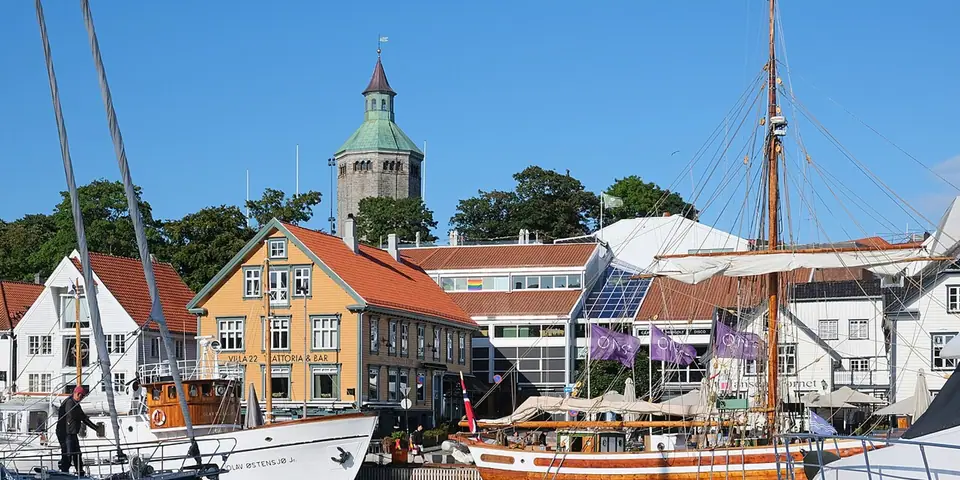
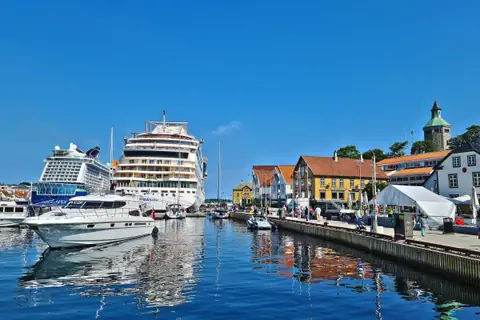
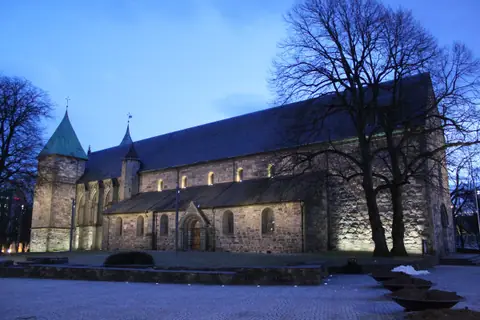
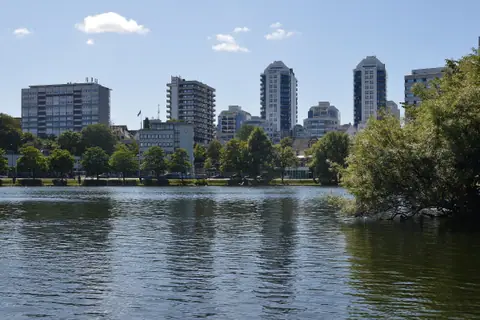
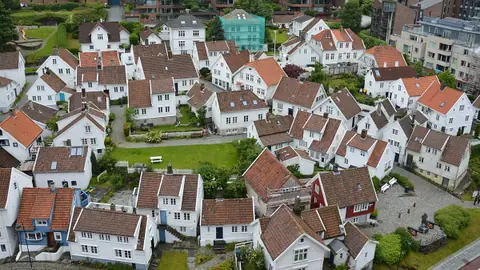
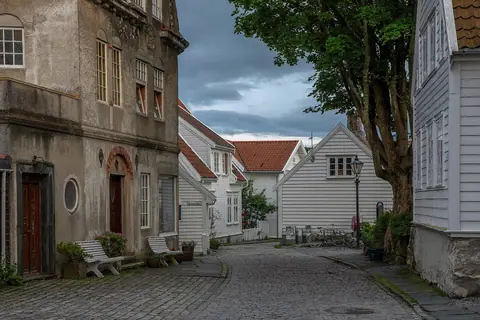
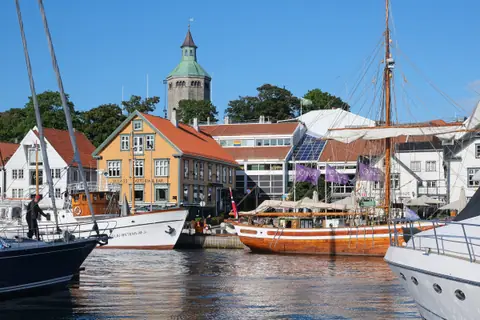
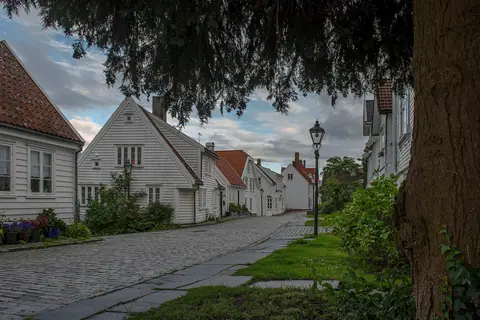
Despite rapid industrial expansion, the historic core around the Vågen harbour inlet retains Norway's densest concentration of protected timber architecture. On the western slope above the water, Gamle Stavanger preserves 173 wooden buildings erected primarily at the end of the eighteenth and during the nineteenth centuries, while around 8,000 wooden houses survive across the wider municipality. East of the harbour, the medieval soapstone nave and Gothic chancel of Stavanger Cathedral stand beside the Byparken gardens and Breiavatnet lake, minutes from the painted timber facades of Øvre Holmegate and the 1853 octagonal stone watchtower Valbergtårnet. This compact urban peninsula allows visitors to walk effortlessly between maritime wharves, granite viewpoints, and leafy lakeside paths.
Getting there
Stavanger Airport, Sola (IATA: SVG) lies 11 kilometres southwest of the city centre in Sola Municipality and opened on 29 May 1937 as Norway's oldest civilian airport and the second airport in Europe built with a concrete runway. Airport buses and local routes connect the terminal with central Stavanger, while Stavanger Station on the southern shore of Breiavatnet serves as the western terminus of the 545-kilometre Sørlandet Line from Oslo via Kristiansand and the double-track Jæren Line to Sandnes. Since April 2020, the Ryfast subsea tunnel network, anchored by the 14.3-kilometre Ryfylke Tunnel descending to 292 metres below sea level, has linked Stavanger directly with Strand Municipality and the trailhead for Preikestolen.
Within the urban core, passenger ferries and high-speed express boats depart from Strandkaien and Fiskepiren for island communities across Boknafjorden and villages along Lysefjorden, while Kolumbus city buses link the cathedral square with Hafrsfjord, Ullandhaug, and Mosvatnet lake.
Where to stay
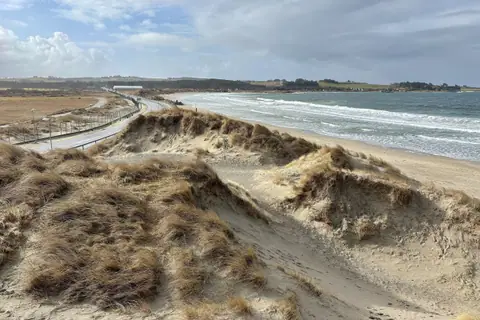
Most visitors base themselves within the compact pedestrian triangle formed by Vågen harbour, Skagenkaien, and Breiavatnet lake, where hotels occupy converted merchant warehouses and modern waterfront blocks within ten minutes on foot of both the railway station and the fjord boat quays. Travellers seeking quieter evening streets look to the residential edges of Gamle Stavanger and Eiganes, or stay south of the city along the 2,300-metre sandy shoreline of Solastranden near Sola Airport.
Choosing a central address near Torget or Byparken simplifies early morning departures for Lysefjorden catamarans and regional mountain buses, while also placing guests within easy reach of evening concerts at Sandvigå and neighbourhood dining along Øvre Holmegate. Visitors arriving with a car for coastal drives across Jæren or island excursions toward Klosterøy often favour suburban properties in Hillevåg, Hinna, or beside the coastal dunes of Sola.
Things to do
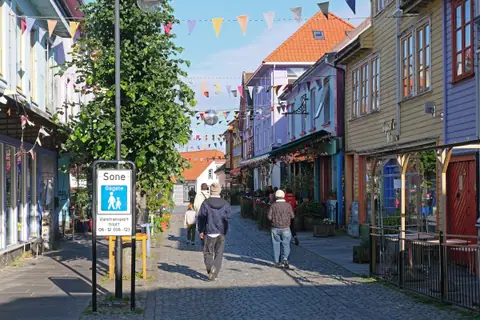
Begin on the western side of Vågen in Gamle Stavanger, walking Øvre Strandgate past white wooden artisan cottages to IDDIS, which unites the Norwegian Canning Museum (established in 1975 and opened in 1982 in a cannery dating from 1916) and the Norwegian Printing Museum. Cross Torget to visit Stavanger Cathedral, dedicated to Saint Swithun and rebuilt with a Gothic chancel after the 1272 city fire, alongside the 1759 timber manor of Kongsgård Upper Secondary School. Walk north along Skagenkaien to the Norwegian Petroleum Museum at Kjeringholmen, opened on 20 May 1999 in a 5,000-square-metre stone-and-glass building designed by Lunde & Løvseth, and climb Valberget hill to the 26.66-metre Valbergtårnet watchtower before exploring the turquoise and magenta wooden storefronts of Øvre Holmegate, painted in 2005 according to a colour plan by artist Craig Flannagan.
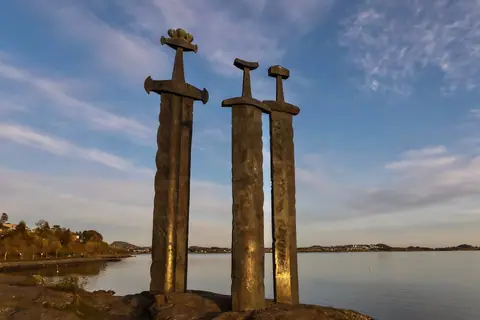
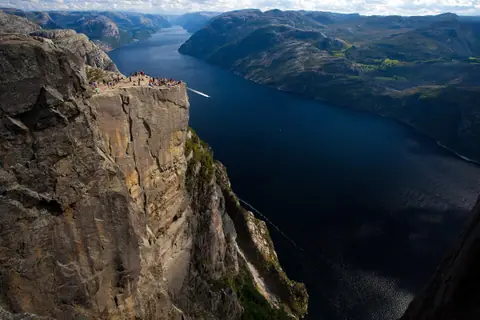
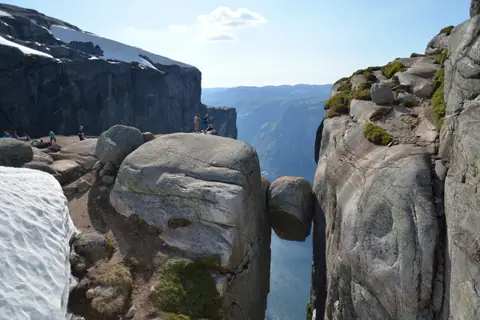
Beyond the city centre, Sverd i fjell rises on Mølleberget at Hafrsfjord, where sculptor Fritz Røed's three bronze swords up to 9.2 metres tall were unveiled by King Olav V in 1983 to commemorate King Harald Fairhair's ninth-century naval victory. Nearby on Ullandhaug stand the three reconstructed Migration Period longhouses (c. 350 to 550 AD) of Jernaldergården and the 64-metre Ullandhaugtårnet telecommunications tower. Across the fjords to the east, the 42-kilometre trench of Lysefjorden leads to the 604-metre cliff plateau of Preikestolen, the 4,444 wooden steps ascending to 741 metres at Flørli, and the 5-cubic-metre glacial boulder Kjeragbolten wedged 984 metres above the water.
Food and drink
Stavanger's table combines North Sea seafood landed at Vågen, agricultural produce from the 700-square-kilometre lowland plain of Jæren, and traditional western Norwegian comfort dishes. On Thursdays, local cafes serve komle (also known as raspeball), grated potato dumplings boiled with barley or wheat flour alongside salted lamb, smoked sausage, bacon, and mashed rutabaga (kålrabistappe). Every summer the harbour hosts the Gladmat food festival, while winter tables feature pinnekjøtt, cured and smoked mutton ribs steamed over birch twigs.
Throughout the year, bakeries, fishmongers, and waterfront brasseries highlight cold-water prawns, pan-fried cod, oak-smoked brisling sardines packed in local tins, and free-range Jæren lamb simmered with cabbage in autumn fårikål stews. Because mild maritime temperatures extend the agricultural growing season across coastal Rogaland, local chefs pair greenhouse vegetables, root crops, and artisan dairy cheeses with freshly landed shellfish along Skagenkaien and inside the restored timber cottages of the historic centre.
Culture
Designated a European Capital of Culture in 2008 alongside Liverpool, Stavanger supports a major performing arts and museum network under Museum Stavanger, founded in 1877. Along Sandvigå west of the harbour stands Stavanger Konserthus, opened on 15 September 2012 with the 1,500-seat Fartein Valen orchestral hall and the 1,900-capacity Zetlitz hall. Around Mosvatnet lake, Stavanger Art Museum displays over 70 watercolours and oil paintings by nineteenth-century Rogaland landscape painter Lars Hertervig and coordinates Antony Gormley's 23 cast-iron figures in the Broken Column sculpture project installed across the city.
Historic patrician estates along Eiganesveien, including the royal manor Ledaal and the shipping villa Breidablikk, preserve the domestic interiors of nineteenth-century merchant families and reflect the literary heritage of novelist Alexander Kielland. Down on the waterfront, maritime wharves, printing workshops, and former smokehouses document the generations of sailors, coopers, and cannery workers who shaped the coastal identity of southwestern Norway before the offshore energy era.
Weather by month
Stavanger is warmest in July, with average highs around 20°C, and coldest in January, when nights drop to about 1°C. October is the wettest month, with rain on about 3 days. For mild weather with fewer rainy days, aim for June, July and August.
| Month | Low | Range | High | Rain | Rainy days |
|---|---|---|---|---|---|
| Jan | 1°C | 4°C | 16 mm | 3 d | |
| Feb | 1°C | 4°C | 14 mm | 2 d | |
| Mar | 2°C | 7°C | 13 mm | 2 d | |
| Apr | 4°C | 11°C | 11 mm | 2 d | |
| May | 8°C | 15°C | 10 mm | 2 d | |
| Jun | 10°C | 18°C | 10 mm | 2 d | |
| Jul | 12°C | 20°C | 12 mm | 2 d | |
| Aug | 13°C | 20°C | 14 mm | 2 d | |
| Sep | 10°C | 16°C | 15 mm | 3 d | |
| Oct | 7°C | 12°C | 17 mm | 3 d | |
| Nov | 4°C | 8°C | 16 mm | 3 d | |
| Dec | 1°C | 5°C | 17 mm | 3 d |
Averages of daily values from 2015 to 2024. Rainy days are days with at least 1 mm of rain. Source: Open-Meteo · Compare destinations by month.
Stavanger on the map
Every place we cover in Stavanger. Tap a category or pin to explore.
In-depth Stavanger guides
Browse the guides grouped by topic: sights, neighbourhoods, food, transport, day trips and trip planning.
Sights, Landmarks & Parks
Key monuments, viewpoints, museums and nature trails.
- Essential Sights from Vågen to LysefjordenPrioritise Stavanger's top historic quarters, industrial museums, concert halls, royal manors, and fjord excursions across the city and Rogaland.
- Stavanger Cathedral (Domkirke), Kongsgård and BreiavatnetExamine Norway's oldest cathedral on its original twelfth-century footprint beside the 1759 Kongsgård timber manor and Breiavatnet lake.
- Norwegian Petroleum Museum and Vågen Harbour WharvesExplore Lunde & Løvseth's platform-inspired museum at Kjeringholmen and walk the eighteenth-century merchant quays of Skagenkaien.
- Sverd i fjell (Swords in Rock), Hafrsfjord and Iron Age FarmSee Fritz Røed's three bronze Viking swords at Møllebukta on Hafrsfjord and step inside three reconstructed Migration Period longhouses on Ullandhaug.
- Met Norway Climate Normals and Fjord Hiking SeasonsCompare Stavanger's 1991 to 2020 Met Norway climate normals, May to June dry spells, July to August 20 °C highs, and seasonal access to Preikestolen and Kjerag.

Neighbourhoods & Where to Stay
Districts, historic quarters and the best bases for your stay.
- Orientation and City LayoutNavigate Stavanger's twin harbour basins, medieval cathedral core, subsea Ryfast tunnels, and Jæren commuter rail with verified local logistics.
- Gamle Stavanger (Old Town) and IDDIS Canning MuseumWalk Øvre Strandgate's 173 protected eighteenth- and nineteenth-century wooden houses and tour the 1916 brisling smokehouses at IDDIS.
- Øvre Holmegate (Fargegaten) and Valbergtårnet WatchtowerStroll Craig Flannagan's 2005 pastel-and-neon timber street and climb Christian H. Grosch's 1853 octagonal stone fire tower on Valberget.
- Best Areas: Vågen Harbour, Breiavatnet and Sola BeachCompare staying along Skagenkaien and Vågen harbour, beside Breiavatnet and Stavanger Station, in quiet Gamle Stavanger, or on Sola Beach.
- Gamle Stavanger, Lysefjorden and the Viking CoastFollow a logical 3-day route covering Vågen's timber quarters and museums on Day 1, Preikestolen and Lysefjorden on Day 2, and Hafrsfjord, Sola, and Utstein on Day 3.
Food & Drink
Local dishes, markets, cafés and dining districts.

Getting Around & Arrival
Airport transfers, public transit, passes and driving rules.

Day Trips & Excursions
Easy half-day and full-day trips from the city.
- Preikestolen (Pulpit Rock) Hike and Lysefjorden CruisesHike the 3.8 km Sherpa-upgraded granite trail to the 604-metre Preikestolen cliff plateau or sail the 42-kilometre trench of Lysefjorden.
- Kjerag, Kjeragbolten, Flørli 4,444 Steps and LysebotnTackle the 984-metre Kjeragbolten boulder hike from Øygardsstølen, climb the 4,444 wooden steps at Flørli, and drive Lysebotn's 27 hairpin bends.
- Sola Beach, Jæren Coastline and Utstein MonasteryWalk the 2,300-metre sandy arc of Solastranden and the 5 km dunes of Orrestranda on Jæren, then tour Norway's only preserved medieval abbey at Utstein.
Need your embassy or consulate in Norway? See embassies and consulates in Norway.
Reviews
Log in to write a review.
No reviews yet.