Trondheim
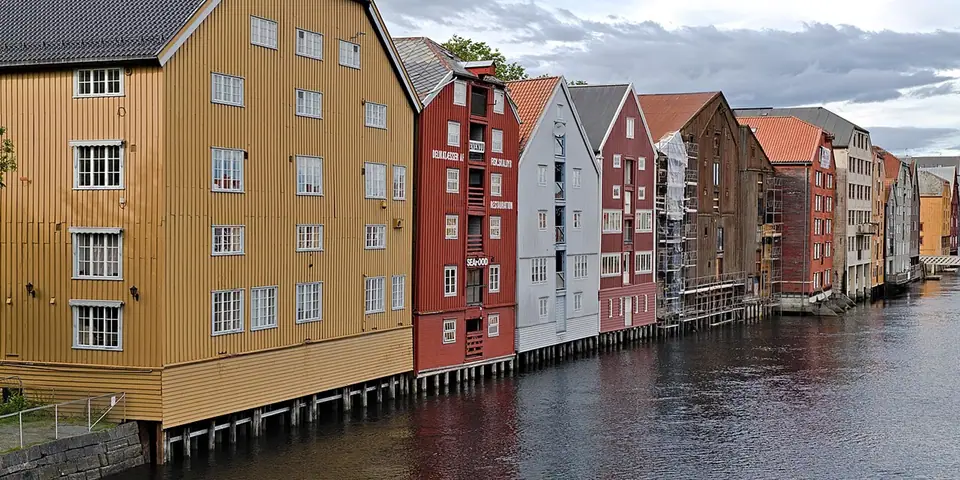
Founded in 997 by King Olav Tryggvason where the Nidelva river enters the 130-kilometre Trondheimsfjord, Trondheim unites Nidaros Cathedral, 18th-century Bryggene wharves, and Bakklandet.
Quick decisions
Overview
Trondheim stands at 63°25′N where the meandering Nidelva river enters the 130-kilometre Trondheimsfjord. Founded in 997 by King Olav Tryggvason as Kaupangen i Nidaros, the city served as Norway's capital during the Viking Age until 1217 and as the seat of the Roman Catholic Archdiocese of Nidaros from 1152 until 1537. Today Trondheim is Norway's third most populous municipality, recording 212,660 residents in the third quarter of 2022 and 196,948 in the urban area in 2023. After the Horneman Fire of 18 and 19 April 1681, King Christian V commissioned Major General Johan Caspar de Cicignon, assisted by Quartermaster General Anthony Coucheron, to lay out the wide Baroque avenues of Midtbyen around Torvet and Munkegata.
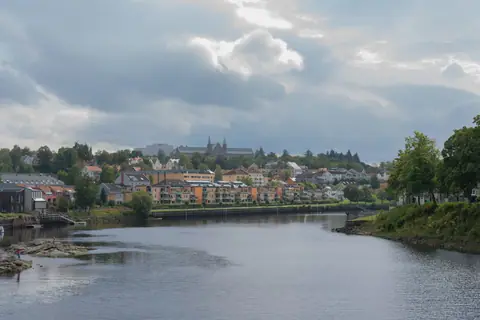
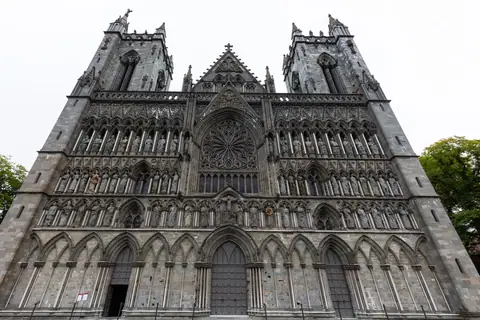
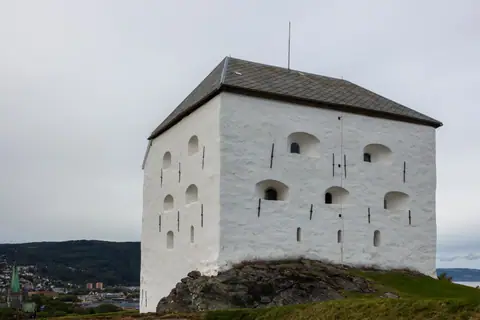
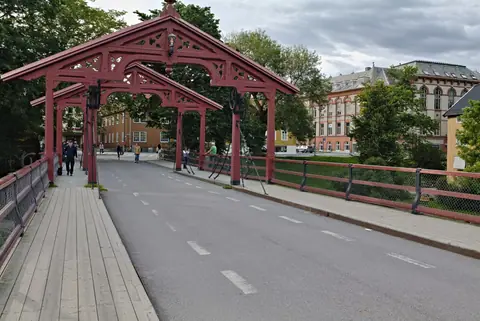
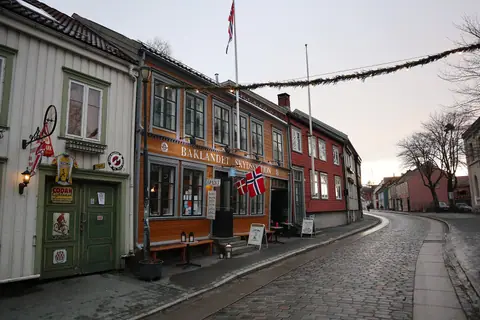
At the southern neck of the river loop rises Nidaros Cathedral, the northernmost medieval cathedral in the world, built from 1070 to 1300 over the burial site of King Olav Haraldsson (St. Olav), who fell at the Battle of Stiklestad in 1030. Directly south stands Erkebispegården, the stone palace of the Catholic archbishops, while across the Nidelva via Gamle Bybro (first built in 1681 and rebuilt in 1861) spreads the timber suburb of Bakklandet beneath the 1682 ramparts of Kristiansten Fortress. Because the historic centre occupies a compact peninsula framed by water on nearly every side, visitors can cross between medieval stone vaults, painted timber wharves on river pilings, and royal reception halls on foot within minutes.
Getting there
Trondheim Airport, Værnes (IATA: TRD) lies in Stjørdal Municipality, 19 kilometres (10 nautical miles) east of Trondheim, and connects to Trondheim Central Station (Trondheim S) via the integrated Værnes railway station opened with Terminal A in 1994. SJ Norge operates Trøndelag Commuter Rail trains between Steinkjer, Værnes, and Trondheim S, alongside long-distance services on the 548-kilometre Dovre Line from Oslo, the Røros Line, the Meråker Line toward Storlien, and the 729-kilometre Nordland Line north to Bodø. Within the city, AtB runs Metrobus corridors and local buses, while the 8.8-kilometre metre-gauge Gråkallbanen tram (Line 9) climbs from St. Olavs gate in Midtbyen to Lian at the edge of the 80-square-kilometre Bymarka forest reserve.
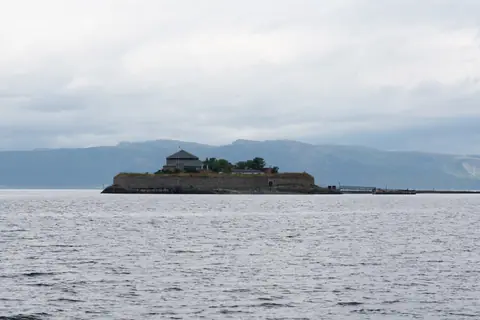
Maritime connections remain equally central to local movement. Coastal express vessels berth daily at the Brattøra cruise quays, high-speed passenger catamarans depart from Pirterminalen across the fjord to Fosen and Kristiansund, and seasonal summer boats link Ravnkloa directly with Munkholmen island, giving visitors simple foot and water access across the entire fjord basin.
Where to stay
Most travellers stay inside the river loop of Midtbyen along Munkegata, Kongens gate, and Kjøpmannsgata, within ten minutes on foot of Nidaros Cathedral, Ravnkloa, and the central station. Visitors seeking quieter cobbled lanes choose the 18th-century wooden houses of Bakklandet east of Gamle Bybro, while rail and coastal cruise passengers favour the waterfront hotels at Brattøra and the converted Trondhjems Mekaniske Værksted shipyard at Nedre Elvehavn (Solsiden).
Because the peninsula is flat and well connected by pedestrian bridges across both the Nidelva and the northern harbour canal, none of these four bases requires reliance on taxis or private cars. Staying near Torvet puts city buses and the St. Olavs gate tram terminus close at hand for afternoon trips into Bymarka, whereas rooms overlooking the canal at Brattøra or the marina basin at Solsiden suit travellers catching early morning trains on the Dovre or Nordland lines or disembarking from coastal Hurtigruten and Havila ships.
Things to do
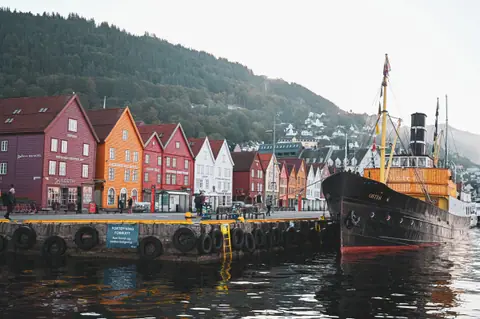
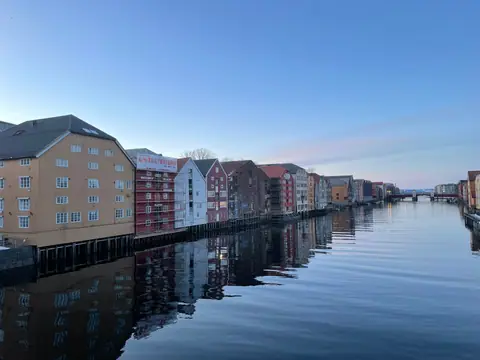
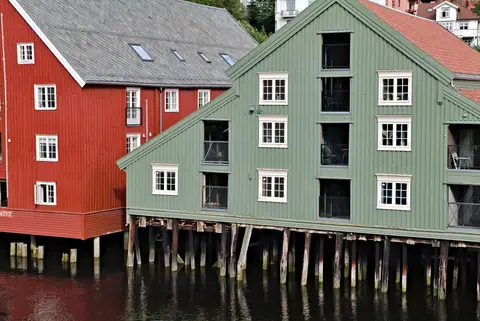
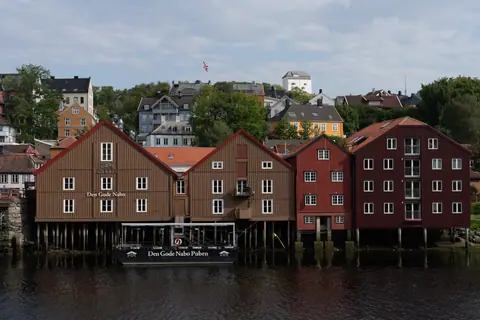
Begin at Nidaros Cathedral to study the West Front sculptures completed in 1983, the Gothic Octagon, the 1930 Steinmeyer organ, and the 1738 to 1740 Wagner Baroque organ, then visit the 12th-century stone wings of Erkebispegården and the Norwegian Crown Regalia. Cross the 82-metre Gamle Bybro through the red wooden arches of Lykkens Portal to view the 18th-century Bryggene warehouses along Kjøpmannsgata and Bakklandet, ride the 130-metre Trampe bicycle lift up Brubakken, and climb to the 1682 to 1684 Kristiansten Fortress and the 124-metre Tyholttårnet tower.
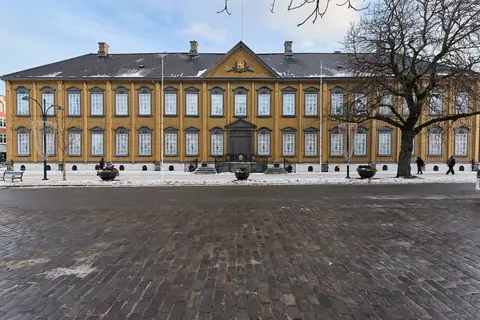
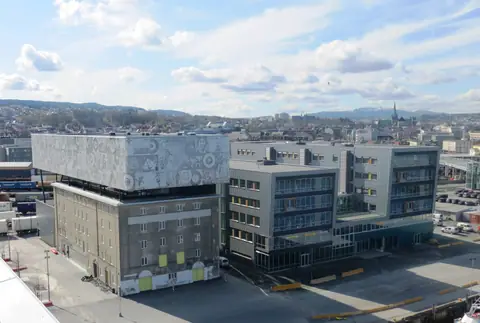
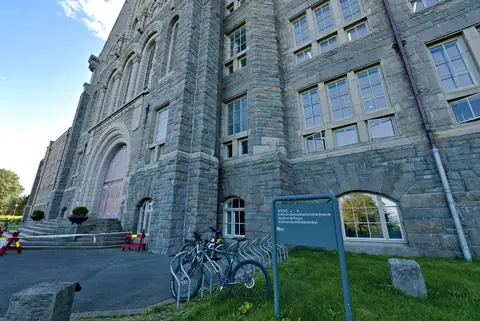
Along Munkegata, tour the 140-room wooden royal residence Stiftsgården (1774 to 1778) and see the 1921 Olav Tryggvason column and 1930 sundial on Torvet before boarding a summer boat from Ravnkloa out to the 1028 abbey and 1658 fortress on Munkholmen. On the northern harbourfront, explore Rockheim and Pirbadet on Brattøra, then visit Ringve Music Museum on Lade and the 1910 stone Hovedbygningen at NTNU Gløshaugen. The contrast between soapstone Gothic carving in the south and modern cantilevered architecture along the fjord gives a full route through the city real visual range.
Food and drink
Trondheim's table is led by Festsodd fra Trøndelag, a Protected Geographical Indication broth of mutton, beef, and ginger-and-nutmeg meatballs served with separately boiled potatoes, carrots, and paper-thin Innherred skjenning flatbread brushed with milk and sugar. Along the canal at Ravnkloa Fish Hall (opened in December 2000), locals buy fresh fjord prawns and Atlantic salmon, while E. C. Dahls Brewery, founded by Erich Christian Dahl in 1856, pours Dahls Pils and craft beers at Lade.
Surrounding lowland farms across the Trøndelag basin and cold waters out in the fjord supply neighbourhood kitchens in Midtbyen, cobbled Bakklandet, and the converted brick shipyard halls at Nedre Elvehavn (Solsiden). Daytime stops often pair dark roast coffee with warm tykklefse rolled around butter, cinnamon, and sugar, crisp iron-baked krumkaker cones, or slices of caramelised whey cheese known as brunost. In late summer and autumn, traditional tables turn to slow-simmered mutton and cabbage stew (fårikål) and dry-cured gravlaks dressed with sweet dill and mustard sauce.
Culture
Home to the Norwegian University of Science and Technology (NTNU), with around 42,000 students, 9,000 staff, and roots in the 1760 Royal Norwegian Society of Sciences and Letters and its 1768 Gunnerus Library, Trondheim pairs academic life with two national music museums united in 2021: Ringve Music Museum (opened in 1952 with some 2,000 instruments) and Rockheim (opened in 2010 in a 1919 Brattørkaia grain warehouse).
During the academic term, university faculties on the Gløshaugen plateau and student societies animate the cafés, bookshops, and concert halls of Midtbyen and Bakklandet. Musical heritage runs from the 1738 to 1740 Baroque Wagner organ and 1930 Steinmeyer organ inside Nidaros Cathedral to classical keyboard demonstrations in the 1880s rooms of Ringve Manor House and interactive Norwegian pop, rock, and black metal galleries at Brattørkaia. Each summer, the St. Olav's Day (Olsok) commemorations at the end of July recall medieval pilgrimage traditions around the cathedral courtyard and Archbishop's Palace, while December brings the annual winter market to the stone flags of Torvet.
Weather by month
Trondheim is warmest in July, with average highs around 20°C, and coldest in January, when nights drop to about -4°C. September is the wettest month, with rain on about 3 days. For mild weather with fewer rainy days, aim for June, July and August.
| Month | Low | Range | High | Rain | Rainy days |
|---|---|---|---|---|---|
| Jan | -4°C | 1°C | 14 mm | 2 d | |
| Feb | -4°C | 2°C | 13 mm | 2 d | |
| Mar | -2°C | 5°C | 13 mm | 2 d | |
| Apr | 1°C | 9°C | 10 mm | 2 d | |
| May | 5°C | 14°C | 10 mm | 2 d | |
| Jun | 9°C | 17°C | 13 mm | 2 d | |
| Jul | 12°C | 20°C | 13 mm | 2 d | |
| Aug | 11°C | 19°C | 14 mm | 2 d | |
| Sep | 8°C | 15°C | 15 mm | 3 d | |
| Oct | 3°C | 9°C | 14 mm | 2 d | |
| Nov | -1°C | 5°C | 13 mm | 2 d | |
| Dec | -3°C | 2°C | 14 mm | 2 d |
Averages of daily values from 2015 to 2024. Rainy days are days with at least 1 mm of rain. Source: Open-Meteo · Compare destinations by month.
Trondheim on the map
Every place we cover in Trondheim. Tap a category or pin to explore.
In-depth Trondheim guides
Browse the guides grouped by topic: sights, neighbourhoods, food, transport, day trips and trip planning.
Sights, Landmarks & Parks
Key monuments, viewpoints, museums and nature trails.
- Essential Sights and ExperiencesExplore Nidaros Cathedral, Erkebispegården, Gamle Bybro, Bakklandet, Kristiansten Fortress, Munkholmen island, Rockheim, and Ringve Music Museum.
- Nidaros Cathedral, Archbishop's Palace and the Crown JewelsVisit the world's northernmost medieval cathedral (1070 to 1300), the 12th-century stone wings of Erkebispegården, and the Norwegian Crown Regalia.
- Kristiansten Fortress and Tyholttårnet ViewsClimb to the 1682 to 1684 bastion ramparts and whitewashed donjon of Kristiansten Fortress and visit the 124-metre Tyholttårnet observation tower.
- Stiftsgården Royal Residence, Torvet Square and Vår Frue KirkeExplore Stiftsgården, the 140-room wooden royal palace built in 1774 to 1778 on Munkegata, alongside Torvet's sundial and medieval Vår Frue kirke.
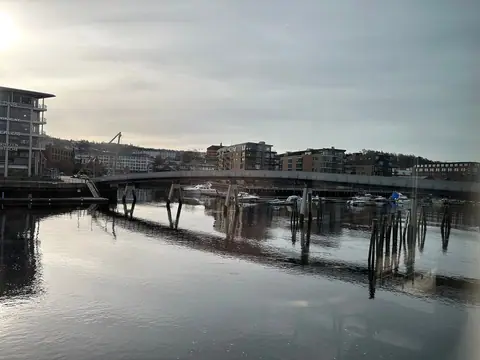
- Rockheim, Pirbadet and the Brattøra WaterfrontExplore Trondheim's northern harbourfront at Brattøra and Solsiden: Rockheim pop and rock museum, Pirbadet water park, and the TMV shipyard docks.
- Ringve Music Museum, NTNU Gløshaugen and Bymarka TrailsVisit Ringve Music Museum and its 130-decare botanical garden on Lade, Bredo Greve's 1910 Hovedbygningen at NTNU, and Bymarka via the Gråkallbanen tram.
Neighbourhoods & Where to Stay
Districts, historic quarters and the best bases for your stay.
- Orientation and City LayoutNavigate Cicignon's 1681 Baroque street grid in Midtbyen, the Nidelva river loop, Bakklandet, Brattøra, and the Gråkallbanen tram into Bymarka.
- Bakklandet, Gamle Bybro and the Trampe Bicycle LiftCross the 82-metre Gamle Bybro through Lykkens Portal into cobbled Bakklandet and see the 130-metre Sykkelheisen Trampe bicycle lift on Brubakken.
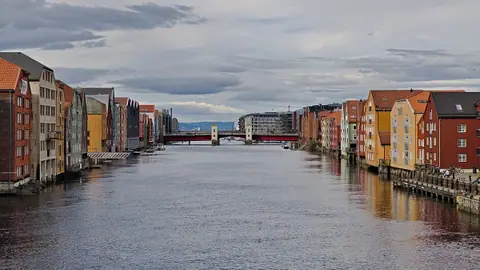
- Bryggene Wharves, the Nidelva River and Ravnkloa CanalDiscover Trondheim's four protected rows of 18th-century Bryggene wooden warehouses, the salmon-rich lower Nidelva river, and Ravnkloa square.
- Where to Stay: Midtbyen, Bakklandet, Solsiden and BrattøraCompare Trondheim's four main accommodation neighbourhoods: walkable Midtbyen around Torvet, historic Bakklandet, waterfront Solsiden, and Brattøra.
- Best Time to Visit: Monthly Weather, Daylight and SeasonsPlan around Trondheim's 1991 to 2020 Met Norway climate normals, 20-hour summer daylight, May to September Munkholmen boats, and Bymarka ski snow.
- Three-Day Trondheim Itinerary: Cathedral, Fjord and BymarkaFollow a step-by-step three-day route across Nidaros Cathedral, Erkebispegården, Bakklandet, Kristiansten Fortress, Munkholmen, Rockheim, and Bymarka.
Food & Drink
Local dishes, markets, cafés and dining districts.
Getting Around & Arrival
Airport transfers, public transit, passes and driving rules.
Day Trips & Excursions
Easy half-day and full-day trips from the city.
Need your embassy or consulate in Norway? See embassies and consulates in Norway.
Reviews
Log in to write a review.
No reviews yet.