Tromsø
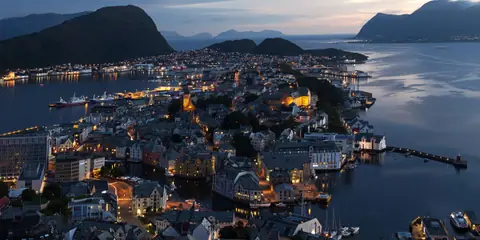
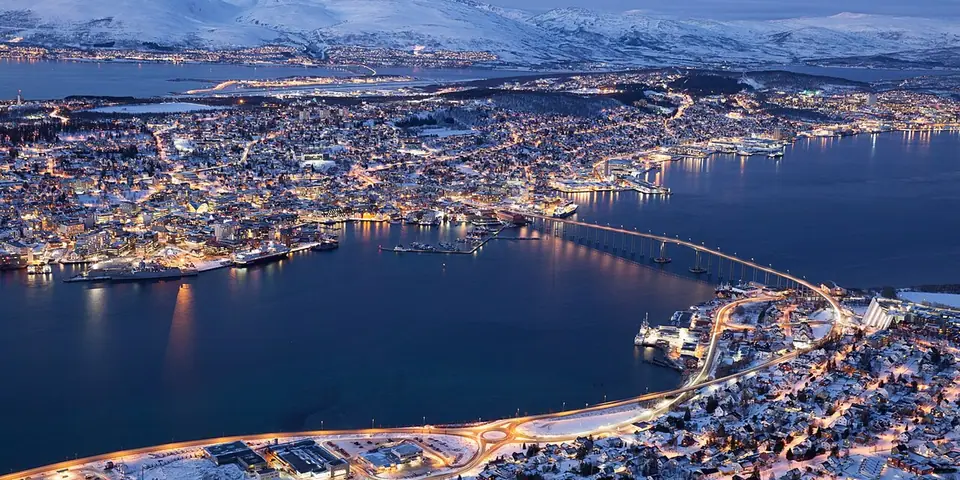
Centred on the 22-square-kilometre island of Tromsøya nearly 350 kilometres north of the Arctic Circle, Tromsø combines Norway's densest historic wooden town north of Trondheim with nineteenth-century polar expedition heritage, the 1965 Arctic Cathedral, and direct bridge access to the fjords of Kvaløya.
Quick decisions
Overview
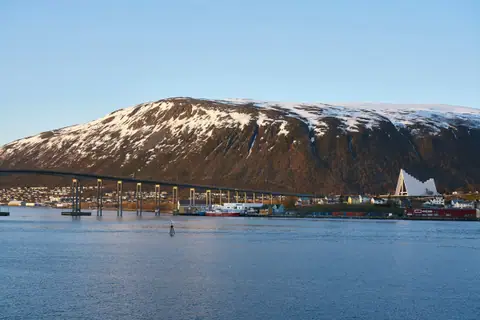
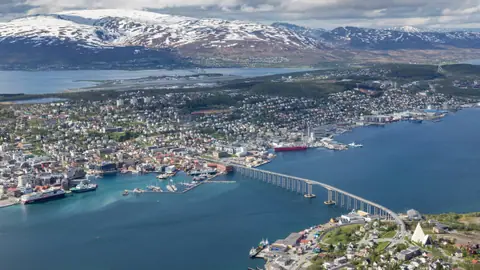
Tromsø is the administrative centre of Troms county in Northern Norway, situated at approximately 69 degrees 40 minutes north latitude, nearly 350 kilometres north of the Arctic Circle. The urban core occupies the 10-kilometre-long, 22-square-kilometre island of Tromsøya, which rises to 159 metres at Varden in the north and holds Lake Prestvannet at 96 metres above sea level in its southern interior. Across the Tromsøysundet strait to the east lies the mainland suburb of Tromsdalen beneath the 1,238-metre peak of Tromsdalstinden, connected to Tromsøya by the 1,036-metre cantilever Tromsø Bridge (opened in 1960) and the 3,500-metre undersea Tromsøysund Tunnel (opened in 1994). To the west across the Sandnessundet strait lies the 737-square-kilometre mountainous island of Kvaløya, linked by the 1,220-metre Sandnessund Bridge (opened in 1974).
Although its first church was consecrated at the Skansen site around 1252 during the reign of King Haakon IV Haakonsson, Tromsø remained a church and parish site until King Christian VII issued its town charter on 20 June 1794, when around 80 people lived on the island. From the 1820s onward, Arctic sealing and hunting turned the port into the main staging ground for polar expeditions led by Fridtjof Nansen, Roald Amundsen, and Umberto Nobile. Start planning with the Tromsø travel guide, the overview of things to do in Tromsø, and the Tromsø 3-day itinerary.
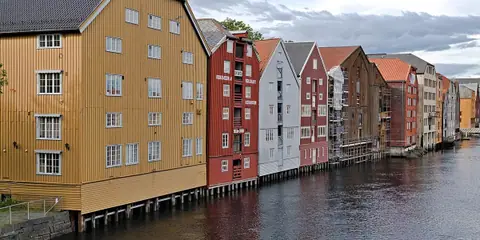
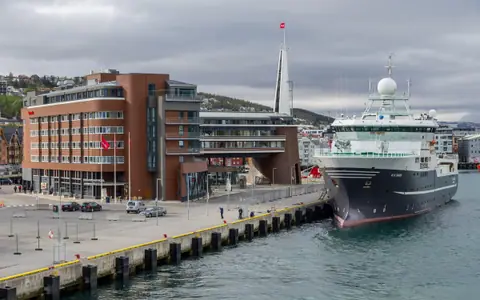
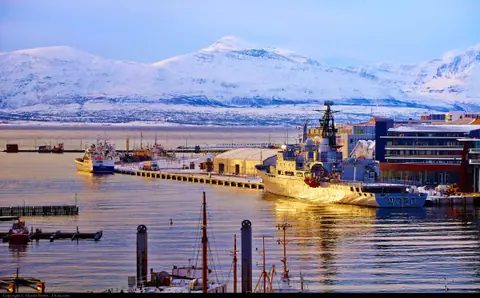
Despite its far-northern position, the island city benefits from warm Atlantic currents flowing along the Norwegian coast, which keep the surrounding fjords free of sea ice throughout the winter months and allow marine traffic, fishing fleets, and research vessels to operate year-round from the sheltered eastern harbour. The historic wooden centre slopes gently down toward the Tromsøysundet strait, creating a compact pedestrian district where timber merchant mansions, parish churches, academic institutes, and waterfront warehouses stand within easy walking distance of one another, while wooded paths along the central ridge of Tromsøya offer quiet cross-country ski trails and summer walking circuits above the rooftops.
Getting there
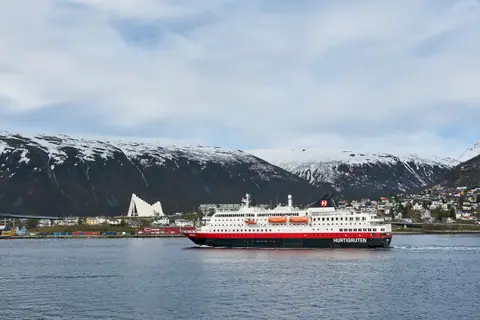
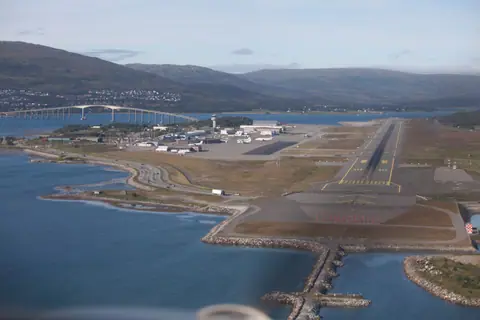
Tromsø Airport, Langnes (IATA code TOS) sits on the western shore of Tromsøya about 5 kilometres northwest of the city centre. Opened on 14 September 1964 with a single runway measuring 2,447 by 45 metres (01/19), getting to and around Tromsø combines direct flights from Oslo, Bergen, Trondheim, Bodø, and Longyearbyen via SAS, Norwegian, and Widerøe with daily northbound afternoon and southbound late-night Hurtigruten and Havila Kystruten steamers and regional buses at the Prostneset Harbour Terminal.
Once on the island, underground rock tunnels channel motor traffic directly between the airport on the western shore, the commercial quays on the east side, and the residential neighbourhoods in the north and south, keeping the historic timber streets calm for pedestrians. Frequent municipal buses managed through the regional mobile ticketing system connect the airport terminal, the university campus at Breivika, the museum district near Telegrafbukta, and the mainland suburbs, while sheltered walkways along both sides of the cantilever bridge make crossing the strait on foot a scenic part of everyday city movement.
Where to stay
Choosing where to stay in Tromsø comes down to whether you want walkable access to museums, restaurants, and tour pick-up points along the eastern waterfront of Prostneset, Sjøgata, and Storgata, or a quiet coastal cabin facing the open Norwegian Sea 15 to 36 kilometres west at Ersfjordbotn and Sommarøy.
Staying in the walkable downtown core between Skansen and Polaria places travellers steps away from the express bus stops, the coastal steamer berth, and the evening assembly points used by northern lights minibuses and fjord excursion operators, removing the need to navigate snowy hills by car in winter. Those who prefer quiet surroundings with darker skies right outside their door can base themselves across the bridge in Tromsdalen near the cable car valley station or rent self-catering seaside cabins and rorbuer along the western fjords, trading immediate urban convenience for direct shoreline views of the mountains and the night sky.
Things to do
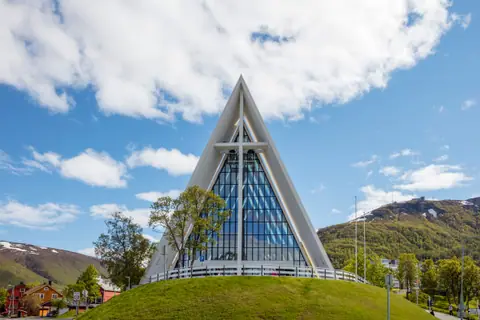
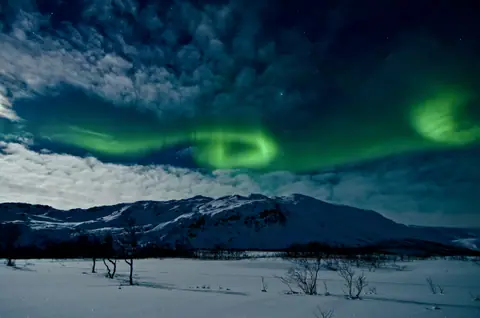
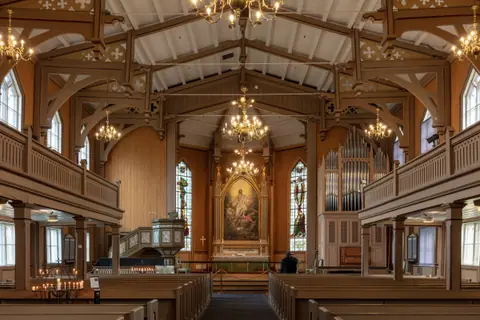
Cross the 1,036-metre bridge to Jan Inge Hovig's 1965 Arctic Cathedral (Ishavskatedralen) and Tromsø Bridge, then ride the 1961 aerial tramway or climb the 1,203 stone steps of the Fjellheisen cable car, Storsteinen, and Sherpatrappa. On Tromsøya, visit Jaf Arkitektkontor's tilted slabs at Polaria, the 1949 sealing ship MS Polstjerna, and the Arctic University Museum, explore the 1830s customs wharf of the Polar Museum, Skansen, and Roald Amundsen memorials, and walk Storgata past the 1861 wooden Tromsø Cathedral and the 1877 Mack Brewery. Outdoors, stroll the free Arctic-Alpine Botanic Garden, Lake Prestvannet, and Telegrafbukta, watch the northern lights and midnight sun, and drive west across the Sandnessund Bridge for Kvaløya, Sommarøy, and Lyngen Alps day trips.
Because the principal landmarks cluster along the eastern shore of Tromsøya and directly across the water in Tromsdalen, visitors can link cultural museums, historic churches, and mountain viewpoints without complicated transfers. Morning hours suit the harbourfront exhibitions at Skansen, Søndre Tollbodgate, and Framsenteret, where indoor galleries trace polar navigation, overwintering trappers, and Barents Sea ecology, while clear afternoons and evenings reward crossing the bridge toward the mainland valley or travelling out to the granite headlands and coral-sand bays of Kvaløya for open-sky views over the surrounding fjords and islands.
Food and drink
Traditional food in Tromsø brings together Barents Sea fisheries and Sámi reindeer herding: try slow-simmered Sámi biđus and creamy finnbiff sautéed reindeer stew, winter skrei cod and wind-dried tørrfisk (stockfish), Barents Sea red king crab, golden multekrem cloudberry cream, and draught beers poured at the 1928 Ølhallen beneath Mack Brewery.
Across the city centre, dining rooms and harbourside bistros follow the rhythm of the northern seasons, shifting from rich winter cod dishes and slow-braised game stews during the dark months to light summer plates featuring cold-water prawns, halibut, spotted wolffish, and Arctic char under the midnight sun. Bakeries and daytime cafés along Storgata and the revitalised Vervet quarter serve warm cinnamon buns, open-faced sandwiches on dark rye bread, and roasted coffee to walkers returning from the harbour quays, while historic beer halls and waterfront tables pair regional brews with cured meats, smoked fish, and berry desserts harvested from surrounding mountain plateaus and coastal marshes.
Culture
Checking the best time to visit Tromsø helps you align your trip with the 1991 to 2020 Met Norway climate normals (January mean -3.0 °C, July mean 12.3 °C), the 69-day midnight sun season from 18 May to 25 July, the winter polar night from 26 November to 15 January, and annual events on Storgata such as the January Tromsø International Film Festival and the February Norwegian Reindeer Racing Championship.
Cultural life in this university and research city stays active through every shift in daylight, moving from outdoor concerts, midnight sun road races, and coastal music festivals in summer to indoor chamber recitals, choral performances inside the parish churches, and cinema screenings projected onto snow walls on the main square during the winter months. Strong Sámi traditions and polar exploration heritage remain woven into public museums, academic collections, and municipal celebrations, giving visitors clear insight into how coastal communities, Indigenous reindeer herders, and Arctic scientists have shaped life at this high-latitude crossroads.
Weather by month
Tromsø is warmest in July, with average highs around 16°C, and coldest in February, when nights drop to about -6°C. October is the wettest month, with rain on about 3 days.
| Month | Low | Range | High | Rain | Rainy days |
|---|---|---|---|---|---|
| Jan | -5°C | -1°C | 15 mm | 3 d | |
| Feb | -6°C | -1°C | 13 mm | 2 d | |
| Mar | -4°C | 1°C | 11 mm | 2 d | |
| Apr | -2°C | 4°C | 12 mm | 2 d | |
| May | 2°C | 9°C | 11 mm | 2 d | |
| Jun | 6°C | 13°C | 10 mm | 2 d | |
| Jul | 9°C | 16°C | 13 mm | 2 d | |
| Aug | 8°C | 15°C | 13 mm | 2 d | |
| Sep | 5°C | 11°C | 15 mm | 3 d | |
| Oct | 1°C | 5°C | 18 mm | 3 d | |
| Nov | -2°C | 2°C | 14 mm | 2 d | |
| Dec | -4°C | 0°C | 16 mm | 3 d |
Averages of daily values from 2015 to 2024. Rainy days are days with at least 1 mm of rain. Source: Open-Meteo · Compare destinations by month.
Tromsø on the map
Every place we cover in Tromsø. Tap a category or pin to explore.
In-depth Tromsø guides
Browse the guides grouped by topic: sights, neighbourhoods, food, transport, day trips and trip planning.
Sights, Landmarks & Parks
Key monuments, viewpoints, museums and nature trails.
- Things to Do in Tromsø: Top Arctic Landmarks, Museums and FjordsTromsø's main sights cluster within walking distance along the eastern shore of Tromsøya and directly across the Tromsø Bridge in Tromsdalen, where the Arctic Cathedral and Fjellheisen cable car stand.
- Arctic Cathedral (Ishavskatedralen) and Tromsø Bridge GuideStanding at the eastern foot of the 1,036-metre Tromsø Bridge in Tromsdalen, Jan Inge Hovig's 1965 Arctic Cathedral pairs 11 concrete roof plates with Victor Sparre's monumental 1972 glass mosaic.
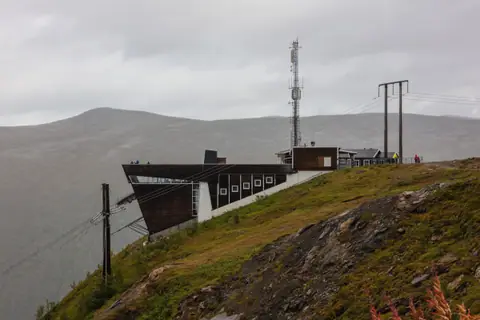
- Fjellheisen Cable Car, Storsteinen and Sherpatrappa GuideRising from Tromsdalen to the Storsteinen mountain ledge at 421 metres above sea level, the 1961 Fjellheisen cable car and the 1,203-step Sherpatrappa staircase command panoramic views over Tromsøya and Kvaløya.
- Northern Lights (Aurora Borealis) and Midnight Sun in TromsøPositioned directly beneath the auroral oval at nearly 70 degrees north, Tromsø experiences both the winter aurora borealis season from September to April and 69 days of continuous midnight sun from 18 May to 25 July.
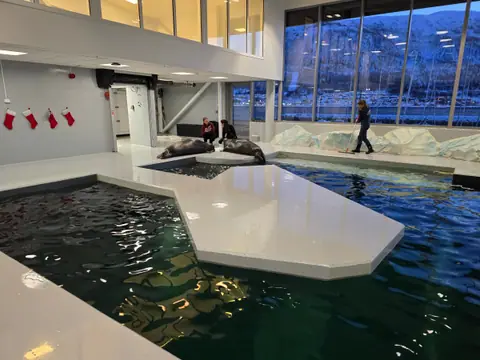
- Polaria, MS Polstjerna and the Arctic University Museum GuideAlong the southern waterfront and parkland of Tromsøya, the 1998 Polaria aquarium and the glass-housed 1949 sealing ship MS Polstjerna connect with Northern Norway's oldest museum, founded in 1872.
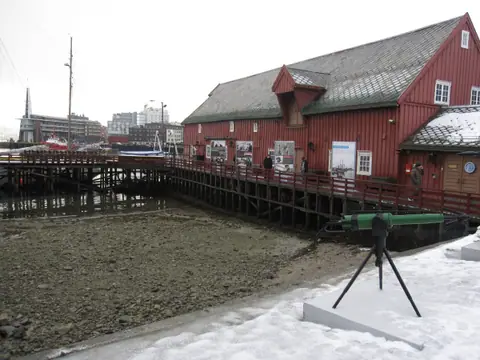
- Polar Museum (Polarmuseet), Skansen and Roald Amundsen GuideClustered around the historic Skansen fortification on the northeastern shore of Tromsøya, the 1830s red customs warehouses of the Polar Museum chronicle Arctic winter trappers and Roald Amundsen's expeditions.
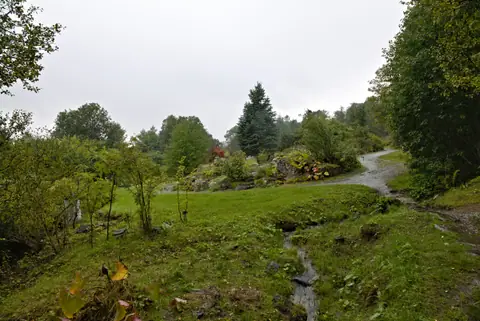
- Arctic-Alpine Botanic Garden, Prestvannet and Telegrafbukta GuideAcross Tromsøya island, three free outdoor green spaces showcase high-latitude nature: the 1994 Arctic-Alpine Botanic Garden at Breivika, the 1867 reservoir lake Prestvannet, and the beach park of Telegrafbukta.
Neighbourhoods & Where to Stay
Districts, historic quarters and the best bases for your stay.
- Tromsø: Island Layout, Arctic Climate and EssentialsSituated on the 22-square-kilometre island of Tromsøya at nearly 70 degrees north, Tromsø combines an eighteenth- and nineteenth-century wooden city centre with bridge connections to Tromsdalen and mountainous Kvaløya.
- Storgata, Tromsø Cathedral, Our Lady Church and Mack BreweryFollowing the eighteenth-century shoreline path across Tromsøya, pedestrian Storgata links Christian Heinrich Grosch's 1861 wooden cathedral, the world's northernmost Catholic bishopric, and Ludwig Markus Mack's 1877 brewery.
- Where to Stay in Tromsø: Best Areas from Storgata to SommarøyMost visitors base themselves within the compact harbourfront between Prostneset, Sjøgata, and Storgata on Tromsøya for walkable access to museums, tour pick-up points, and airport buses.
- Best Time to Visit Tromsø: Aurora Season, Midnight Sun and ClimateTromsø has two distinct peak seasons: the dark sky and snow season from October to March for the aurora borealis, and the continuous daylight of 18 May to 25 July for midnight sun hiking.
- Tromsø 3-Day Itinerary: Wooden Centre, Fjellheisen and KvaløyaThree days in Tromsø allow you to explore the historic wooden city and polar museums on Tromsøya on day one, cross the Tromsø Bridge to the Arctic Cathedral and Fjellheisen on day two, and tour Kvaløya and Sommarøy on day three.
Food & Drink
Local dishes, markets, cafés and dining districts.

Getting Around & Arrival
Airport transfers, public transit, passes and driving rules.
Day Trips & Excursions
Easy half-day and full-day trips from the city.
Need your embassy or consulate in Norway? See embassies and consulates in Norway.
Reviews
Log in to write a review.
No reviews yet.