


























La Candelaria, Chorro de Quevedo and Colonial Streets in Bogotá
Walk the cobbled lanes of La Candelaria from Plazoleta del Chorro de Quevedo and mural-filled Calle del Embudo to Teatro Colón and colonial courtyards.
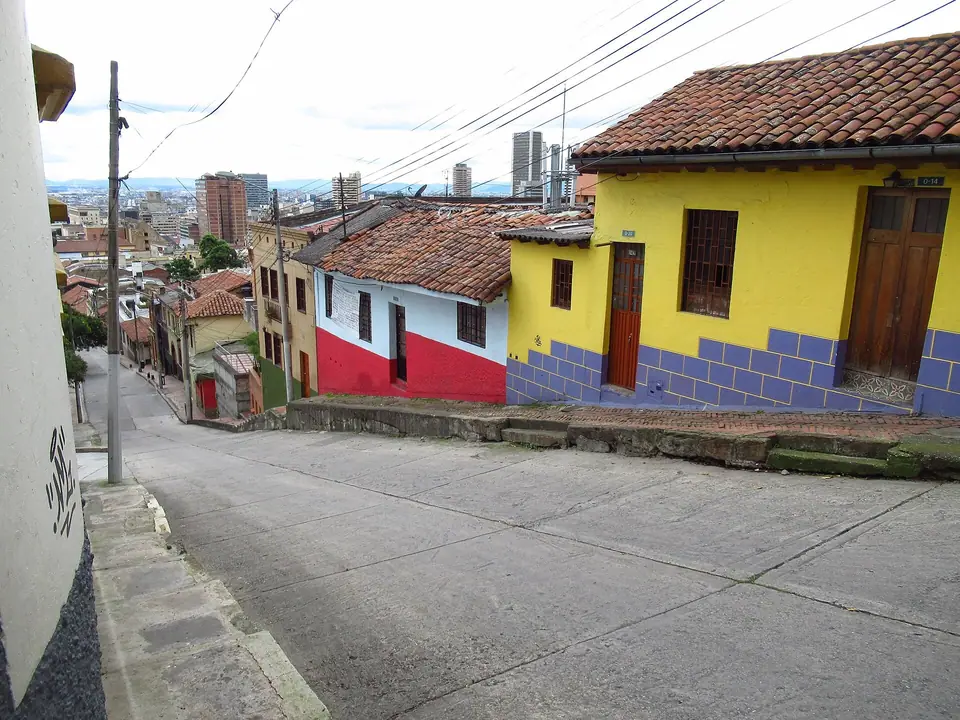
Clinging to the lower slopes of the Eastern Hills between Carrera 1 and Carrera 10, Locality 17 (La Candelaria) preserves the intimate streetscape of colonial and early Republican Santafé de Bogotá. Declared a National Monument in 1963, the district is a patchwork of steep stone-paved lanes, single- and two-storey houses topped with red clay tiles (tejas de barro), overhanging cedar balconies, and quiet interior courtyards that now house universities, theatres, libraries, and museums.
Plazoleta del Chorro de Quevedo and Calle del Embudo
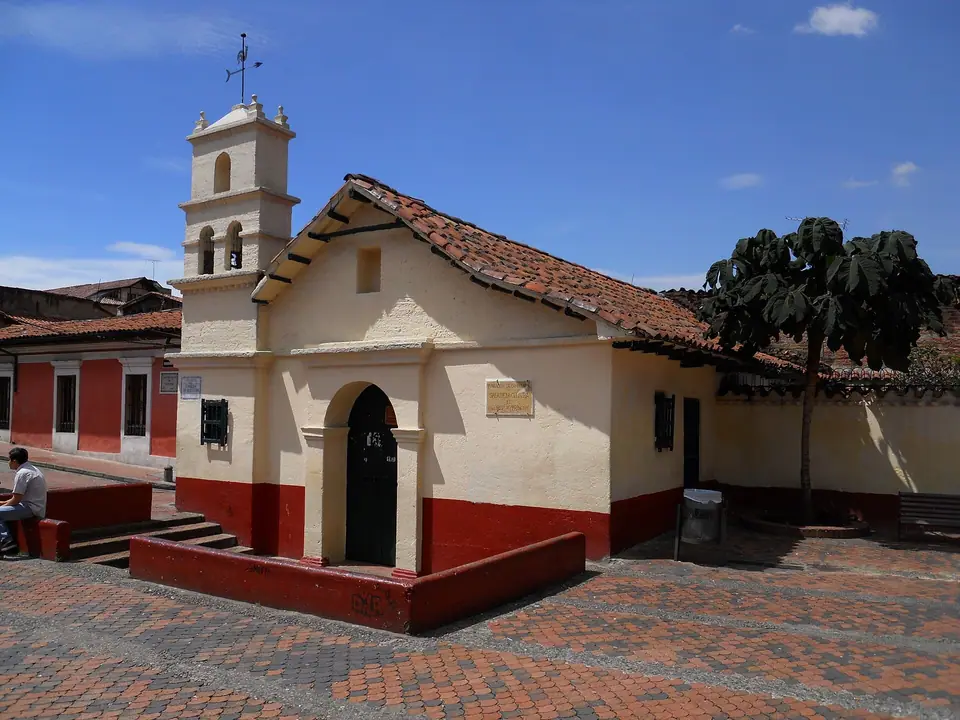
At the upper eastern edge of the neighbourhood on Calle 12B with Carrera 2, Plazoleta del Chorro de Quevedo occupies the elevated vantage point from which conquistador Gonzalo Jiménez de Quesada surveyed the savanna before establishing his military camp in August 1538. In 1832 the Augustinian friar Padre Quevedo installed a public stone water fountain here for local residents. On the eastern side of the cobbled square stands the miniature whitewashed Ermita de San Miguel del Príncipe, built in 1969 and modelled after Bogotá's original 1538 thatched chapel.
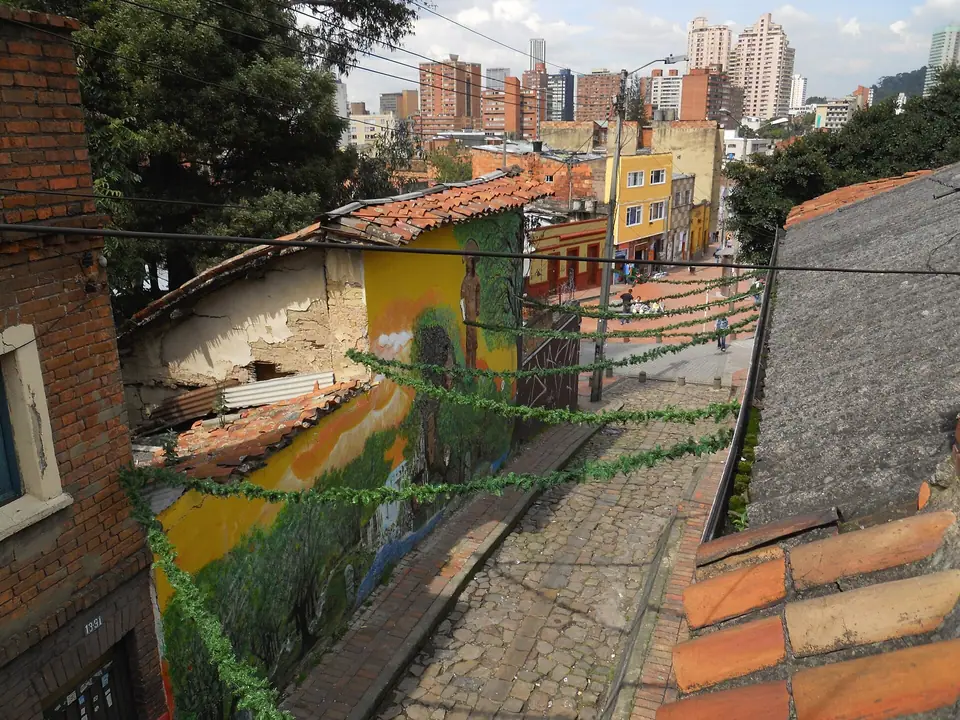
Entering the square from the south, the narrow funnel-shaped alleyway of Calle del Embudo (Carrera 2) dazzles visitors with floor-to-roof street art depicting Muisca cosmology, Andean condors, and indigenous portraits, flanked by tiny cafés pouring fermented maize chicha and specialty Colombian coffee.
Colonial Architecture, Iglesia de la Candelaria and Plazoleta del Rosario
Walking downhill along Calle 11 and Calle 10 reveals the architectural transition from unadorned 17th-century Spanish whitewashed walls to ornate late 19th-century Republican facades painted in ochre, cobalt blue, and terracotta. On the corner of Calle 11 and Carrera 4 stands the Iglesia de Nuestra Señora de la Candelaria, begun in 1686 by the Augustinian Recollects, which gave the entire locality its name. A few blocks northwest at Plazoleta del Rosario, students gather outside the 1653 Claustro de Nuestra Señora del Rosario beside a bronze statue of city founder Jiménez de Quesada, midway between the Banco de la República cultural block and Museo del Oro.
Teatro Cristóbal Colón and Palacio de San Carlos
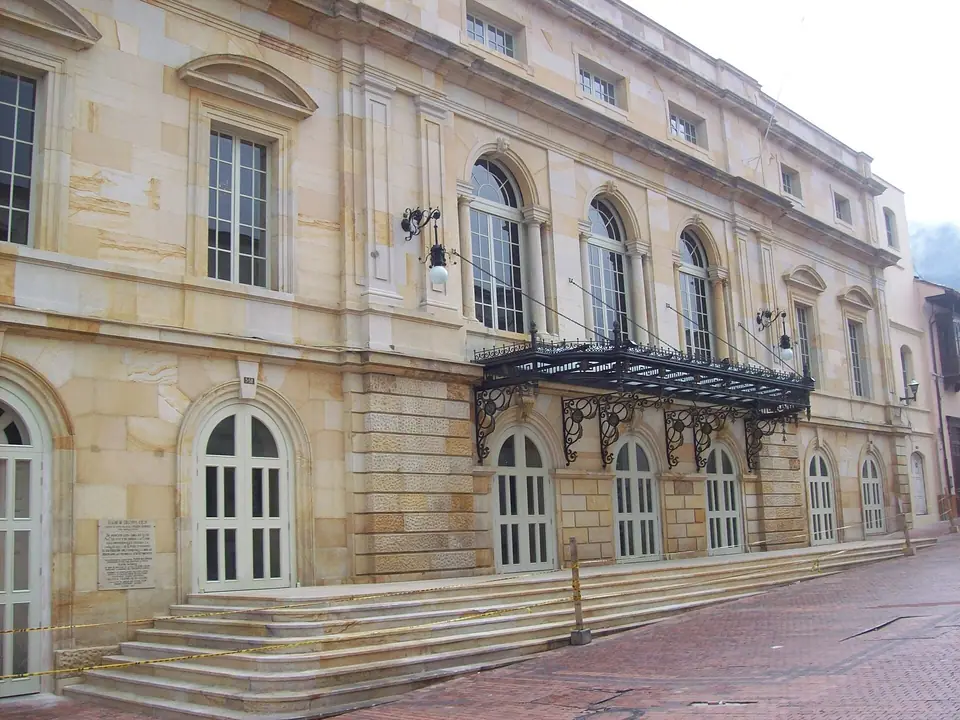
One block east of Plaza de Bolívar on Calle 10 (#5-32), the Teatro Cristóbal Colón is Colombia's national theatre, designed in Italianate neoclassical style by Florentine architect Pietro Cantini and inaugurated on 12 October 1892 with a horseshoe auditorium of four tiered galleries and a frescoed ceiling of the nine Muses. Directly across the narrow street stands the 16th-century Palacio de San Carlos, where Simón Bolívar escaped an assassination attempt on the night of 25 September 1828 by leaping from a bedroom window; today the palace serves as the chancellery of the Ministry of Foreign Affairs.
Traveller tips
Real advice from people who have been to La Candelaria, Chorro de Quevedo and Colonial Streets in Bogotá. Every tip is read by our team before it goes live.
No tips yet. Been here? Yours could be the first.
Thank you! Your tip will appear here after a quick review.
More in Bogotá
Continue exploring Bogotá with related neighbourhood, food, and planning guides

Things to Do in Bogotá: Best Attractions, Museums and Mountain Views
Bogotá, Colombia
How to Get to Bogotá: El Dorado Airport (BOG), TransMilenio and Transit
Bogotá, Colombia
Best Time to Visit Bogotá: Month-by-Month Andean Climate and Seasons
Bogotá, Colombia
Where to Stay in Bogotá: La Candelaria, Chapinero, Zona T and Usaquén
Bogotá, Colombia
