


























Museo Nacional de Colombia, Centro Internacional and Torre Colpatria
Visit Colombia's oldest museum inside Thomas Reed's stone Panóptico fortress, admire Rogelio Salmona's brick Torres del Parque, and climb Torre Colpatria.
Immediately north of Calle 24 along Carrera 7 and Carrera 10, the colonial roofs of La Candelaria give way to Centro Internacional, Bogotá's mid-20th-century financial and cultural district. Here, 19th-century stone penitentiary walls, curving red-brick modernist towers, a planetarium, and a 50-storey skyscraper trace the architectural evolution of modern Colombia.
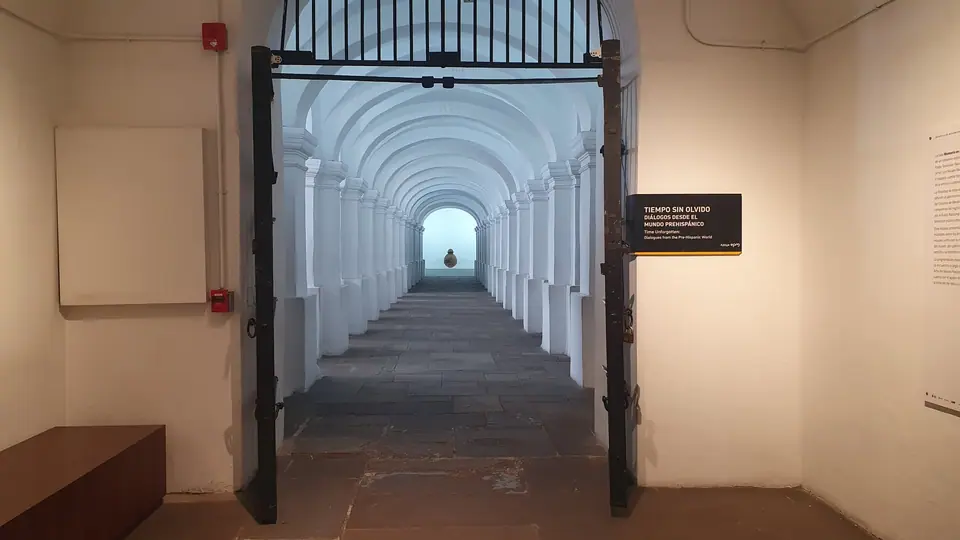
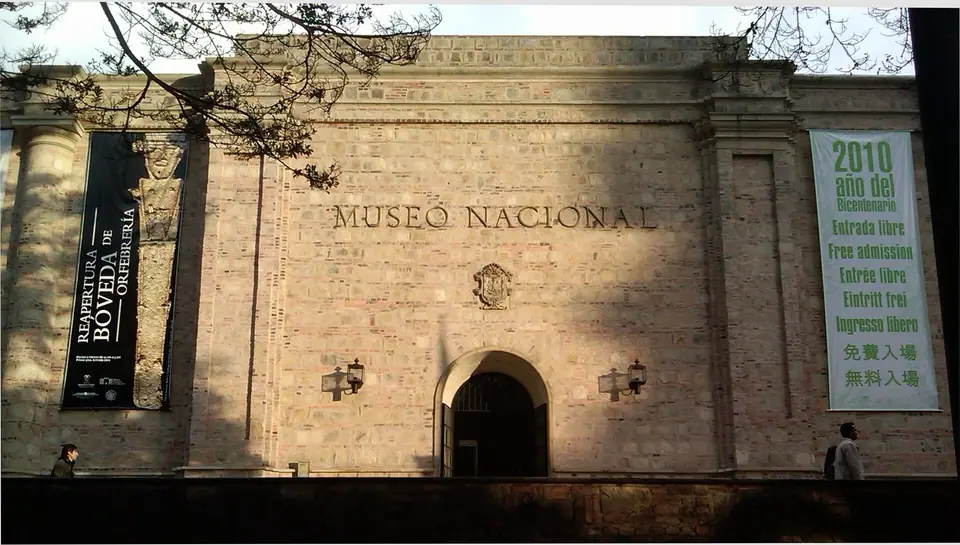
Museo Nacional de Colombia (The Former Panóptico)
Located at Carrera 7 (#28-66), the Museo Nacional de Colombia was established by an act of Congress on 28 July 1823 under the Vice Presidency of Francisco de Paula Santander, making it the oldest museum in Colombia and one of the oldest in the Americas. Since 1948, the museum has occupied the imposing limestone walls of the former Central Penitentiary of Cundinamarca (El Panóptico), designed in 1874 by architect Thomas Reed on a radial cross-shaped panopticon plan inspired by Jeremy Bentham, which operated as a prison until 1946.
Archaeological Vaults and Colombian Masterworks
Across three vaulted levels radiating from the central rotunda, the museum displays more than 20,000 archaeological, ethnographic, historical, and artistic pieces spanning 12,000 years of human presence in Colombia. Highlights include monolithic stone funerary statues from San Agustín, pre-Hispanic ceramics and textiles in the basement vault, personal belongings and uniforms of Simón Bolívar and Antonio Nariño, colonial religious paintings by Gregorio Vásquez de Arce y Ceballos, and an extensive third-floor gallery of 19th- and 20th-century works by Epifanio Garay, Andrés de Santa María, Alejandro Obregón, Enrique Grau, and Fernando Botero.
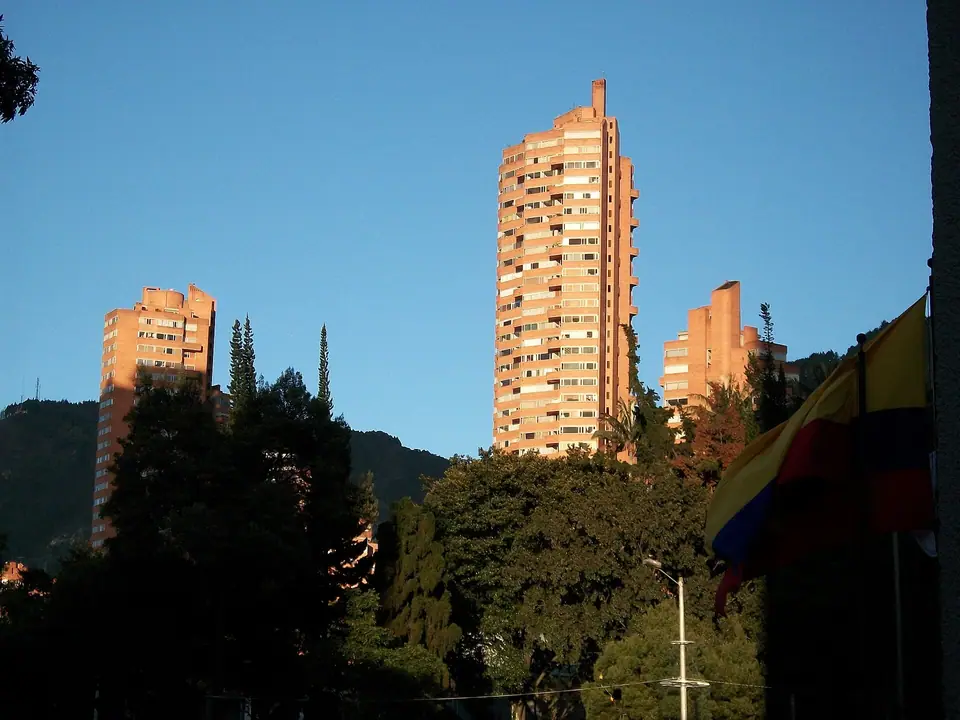
Torres del Parque, Plaza de Toros de Santamaría and Parque de la Independencia
Directly south of the Museo Nacional between Carrera 5 and Carrera 7, Parque de la Independencia (opened in 1910 for the centenary of independence) climbs the hillside beside the 1969 Planetario de Bogotá and the Mudéjar-style brick ring of the 1931 Plaza de Toros de Santamaría. Wrapping around the curved contour of the bullring and stepped to echo the profile of Cerro de Monserrate behind them, the three spiralling red-brick residential towers of Torres del Parque (built 1965 to 1970) are the masterpiece of Colombian architect Rogelio Salmona. Public brick stairways, planted terraces, and water channels weave freely between the towers, linking Carrera 5 with the park without gates or fences.
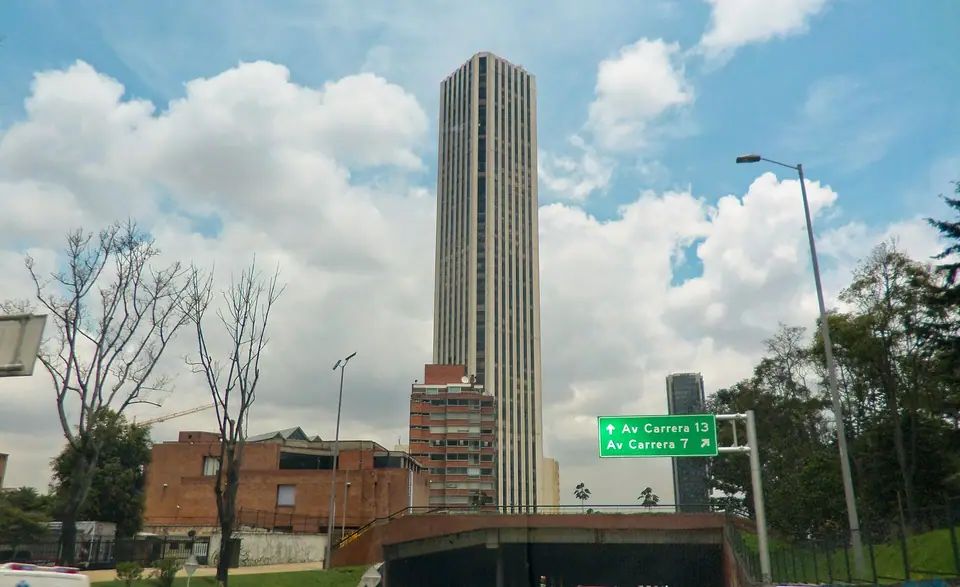
Torre Colpatria Observation Deck and MAMBO
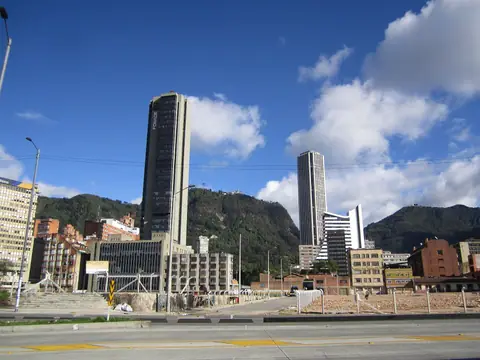
At the intersection of Carrera 7 and Calle 24 rises the 50-storey Torre Colpatria, completed in 1979 and standing 196 metres tall. Illuminated at night by vertical LED strips in the yellow, blue, and red of the Colombian flag, the tower opens its 48th-floor rooftop observation deck on weekends and public holidays (check the official site before visiting), offering a 360-degree view right down the spine of Carrera 7 toward Plaza de Bolívar. At the foot of the tower on Calle 24 (#6-00), another Rogelio Salmona brick building houses the Museo de Arte Moderno de Bogotá (MAMBO).
Traveller tips
Real advice from people who have been to Museo Nacional de Colombia, Centro Internacional and Torre Colpatria. Every tip is read by our team before it goes live.
No tips yet. Been here? Yours could be the first.
Thank you! Your tip will appear here after a quick review.
More in Bogotá
Continue exploring Bogotá with related neighbourhood, food, and planning guides
Bogotá: Complete Planning for Colombia's Andean Capital
Bogotá, Colombia

Things to Do in Bogotá: Best Attractions, Museums and Mountain Views
Bogotá, Colombia

How to Get to Bogotá: El Dorado Airport (BOG), TransMilenio and Transit
Bogotá, Colombia
Best Time to Visit Bogotá: Month-by-Month Andean Climate and Seasons
Bogotá, Colombia
