





















Atomium, Royal Greenhouses of Laeken, Parc du Cinquantenaire & Train World Guide
Explore Brussels' monumental northern and eastern landmarks: the 102-metre 1958 Atomium, Design Museum Brussels, the Royal Greenhouses of Laeken, Parc du Cinquantenaire, and Train World.
Beyond the medieval cobbles of the Pentagon, two monumental eras shaped the northern and eastern horizons of Brussels. In the late nineteenth century, King Leopold II laid out the Royal Domain of Laeken and the Parc du Cinquantenaire. In 1958, engineer André Waterkeyn raised the 102-metre stainless-steel spheres of the Atomium on the Heysel Plateau for Expo 58. Linked by STIB-MIVB Metro Lines 6, 1, and 5 and suburban rail to Schaerbeek, these sights make a rewarding full-day pairing.
The 1958 Atomium on the Heysel Plateau and Design Museum Brussels
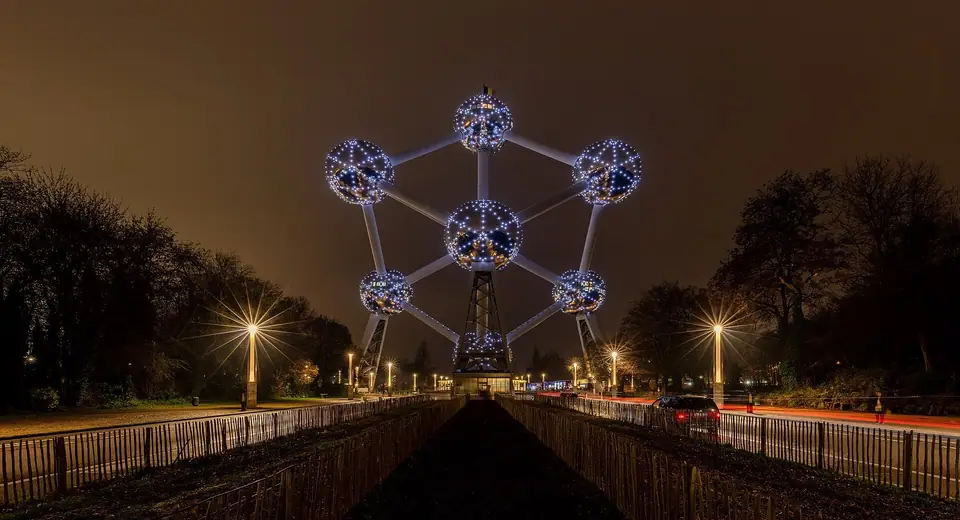
Step out of Heysel / Heizel station on Metro Line 6 after a 20-minute ride from Gare du Midi or Arts-Loi. You look straight up Boulevard du Centenaire toward the Atomium. Belgian engineer André Waterkeyn (1917 to 2005) conceived the monument in 1955 with architects André and Jean Polak. It served as the centrepiece of the 1958 Brussels Universal and International Exhibition (Expo 58), which welcomed 41.4 million visitors between April and October 1958. The Atomium represents a body-centred cubic unit cell of an alpha-iron crystal magnified 165 billion times.
- Dimensions and the 2006 restoration. Standing 102 metres tall and weighing 2,500 tonnes, the structure consists of nine spheres, each measuring 18 metres in diameter. Twenty steel tubes (3 to 3.3 metres wide and 23 to 29 metres long) connect the spheres. They follow the 12 edges and 8 diagonals of the cube, braced by three two-legged support pylons. Between 2004 and February 2006, crews replaced its weathered 1958 aluminium skin with 2,973 mirror-polished stainless-steel panels covering 17,000 square metres.
- Inside the six public spheres. Open seven days a week (including Mondays), six of the nine spheres are accessible to visitors. First, a high-speed central lift carries you to the Top Sphere at 92 metres above ground. Moving at 5 metres per second, it was the fastest elevator in Europe in 1958. From the windows, a 360-degree panorama takes in the Heysel Plateau, the Royal Park of Laeken, and the Pentagon skyline. On clear days, you can spot Antwerp Cathedral 40 kilometres north. Returning to the base, you ride Europe's longest 1958 escalator (35 metres) through the diagonal tubes. Along the way, you cross the two-level Expo 58 exhibition and digital sound-and-light installations by Visual System.
- Design Museum Brussels and Mini-Europe. Keep your Atomium barcode ticket after exiting. It includes admission to Design Museum Brussels 150 metres east at Place de la Belgique. Its halls house the permanent Plastic Design Collection (over 2,000 injection-moulded polymers and space-age furniture pieces from the 1950s onward) and the Belgisch Design gallery. Next door sit Mini-Europe (displaying 350 scale models at a 1:25 ratio) and the 1935 Art Deco Centenary Palace (Palais du Centenaire).
The Royal Domain of Laeken, the 1874 to 1895 Royal Greenhouses & the Royal Crypt
Immediately southeast of the Atomium stretches the 186-hectare Royal Domain of Laeken. The eighteenth-century neoclassical Castle of Laeken is the private working residence of the King and Queen of the Belgians. Around it, the royal parkland holds three landmarks:
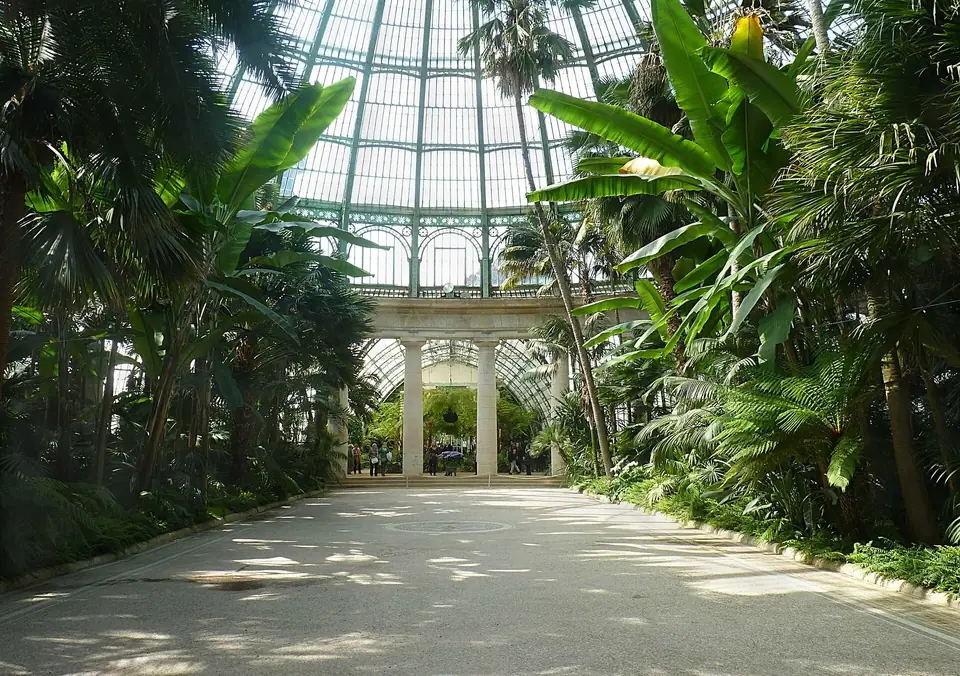
- The Royal Greenhouses of Laeken (1874 to 1895). Court architect Alphonse Balat (mentor to Victor Horta) designed this glass-and-iron botanical complex for King Leopold II. It spans 2.5 hectares (25,000 square metres) along an 800-metre glazed promenade. Its centrepiece, the 1874 to 1876 Winter Garden (Jardin d'Hiver), rises to a 25-metre cupola spanning 57 metres in diameter. Inside, 36 Doric stone columns encircle subtropical palms and tree ferns. Glazed galleries link the Congo Dome, the Iron Church, and the Orangery, home to 200-year-old orange trees and the world's oldest royal camellia collection. As noted in our Brussels seasonal calendar, the greenhouses open for only three weeks each year between mid-April and early May by advance online reservation.
- The Japanese Tower (1901 to 1904) and Chinese Pavilion (1905 to 1909). These two royal pavilions stand at the northeastern edge of the park along Avenue Van Praet. Parisian architect Alexandre Marcel built the five-tiered red pagoda of the Japanese Tower after the 1900 Paris Exposition.
- Church of Our Lady of Laeken and the Royal Crypt. Ten minutes south on Parvis Notre-Dame rises Joseph Poelaert's 1854 neo-Gothic basilica. It shelters the Royal Crypt, the burial vault of every reigning Belgian monarch since King Leopold I. Next door in Laeken Cemetery sits an original bronze cast of Auguste Rodin's The Thinker.
Parc du Cinquantenaire (Jubelpark): The 1905 Triple Arch, Autoworld & Art and History Museum
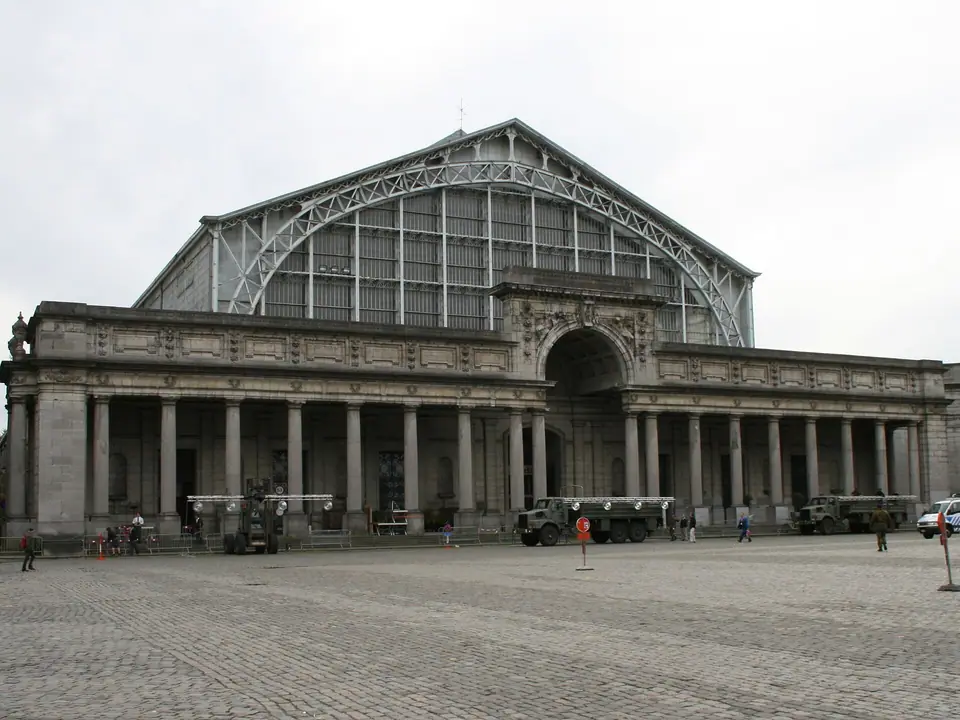
From Heysel, ride Metro Line 6 to Arts-Loi and transfer onto Line 1 or 5 east to Schuman or Merode. There you enter the 30-hectare Parc du Cinquantenaire (Jubelpark), created for the 1880 National Exhibition marking the 50th anniversary of Belgian independence. Dominating the eastern axis of the European Quarter is the 45-metre-high Triple Triumphal Arch (Arcades du Cinquantenaire). Begun by Gédéon Bordiau, it was completed in stone in 1905 by French architect Charles Girault for the 75th anniversary of independence. Thomas Vinçotte and Jules Lagae crowned the arch with a bronze quadriga representing the Province of Brabant. Near the northwest corner stands Victor Horta's 1889 to 1897 neoclassical Pavilion of Human Passions housing Jef Lambeaux's marble relief. Three vast museums flank the central esplanade:
- Autoworld (South Hall). Beneath Bordiau's iron-and-glass exhibition roof, Autoworld showcases more than 250 vintage European and American automobiles from 1886 to the late twentieth century. Highlights include early Belgian marques Minerva, Imperia, and FN.
- Art and History Museum (Musée Art & Histoire, South Wing). Belgium's largest federal museum (founded in 1835) spans Egyptian sarcophagi and Paul Bigot's 1:150 plaster scale model of fourth-century Imperial Rome. Visitors also see the Peruvian statuette that inspired Hergé's 1935 Tintin album The Broken Ear and fifteenth-century Brussels tapestries. Another hall preserves Victor Horta's salvaged 1909 to 1912 Wolfers Frères Art Nouveau jewellery showroom.
- Royal Museum of the Armed Forces (North Hall). Displays medieval armour and the 1923 Bordiau Aviation Hall with over 100 historic aircraft. It also provides access to the panoramic walkway atop the Cinquantenaire Triumphal Arch.
Train World in Schaerbeek: Continental Europe's oldest steam locomotive (1835)
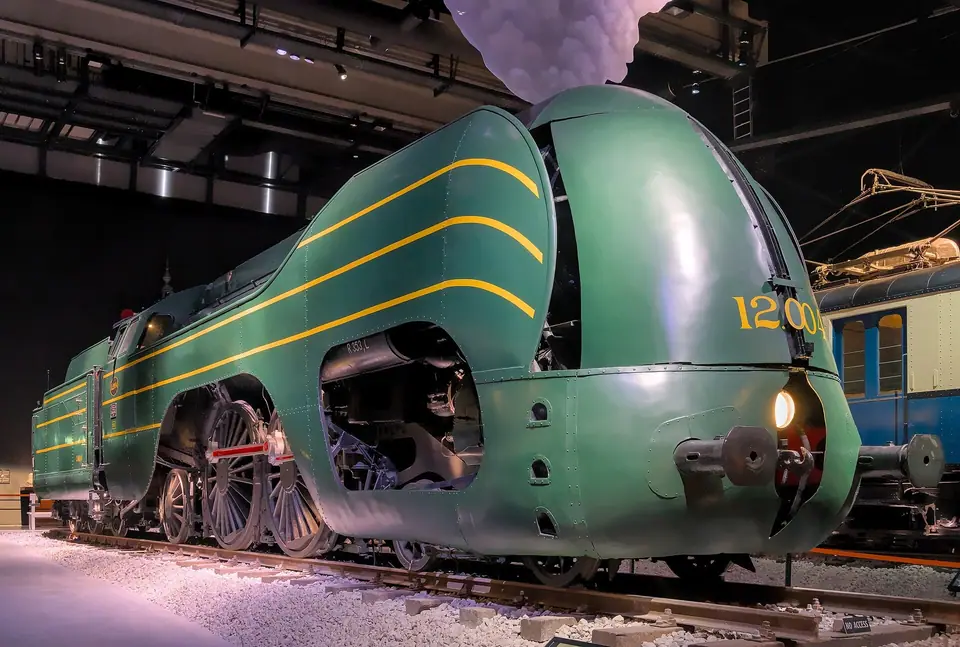
One rail stop north of Brussels-North sits the 1887 and 1913 neo-Flemish Renaissance station of Schaerbeek. Comic artist François Schuiten transformed it in 2015 into Train World (closed Mondays). Belgium was the first country in continental Europe to open a public steam railway. That inaugural train ran from Brussels-Allée Verte to Mechelen on 5 May 1835. Inside the halls stand 22 historic locomotives and royal carriages. They are led by the 1835 Pays de Waes, the oldest preserved steam locomotive on the European continent. Beside it stands the green 1939 Type 12 Atlantic steam locomotive, which set a 165 km/h speed record.
Traveller tips
Real advice from people who have been to Brussels. Every tip is read by our team before it goes live.
No tips yet. Been here? Yours could be the first.
Thank you! Your tip will appear here after a quick review.
More in Brussels
Continue exploring Brussels with related neighbourhood, food, and planning guides
Arriving in Brussels: Zaventem Airport (BRU), Midi Eurostar Terminal, Central Station & STIB-MIVB
Brussels, Belgium
Best Time to Visit Brussels: RMI Climate Normals, Laeken Greenhouses & Biennial Flower Carpet
Brussels, Belgium
What to Wear in Brussels: Cobblestone Footwear, North Sea Rain Layers & Museum Cloakroom Rules
Brussels, Belgium
Where to Stay in Brussels: Grand-Place, Sainte-Catherine, Sablon, Ixelles & European Quarter Compared
Brussels, Belgium
