





















Galeries Royales Saint-Hubert, Comic Strip Route, Bourse & Sainte-Catherine Walk
Walk the Lower Town from the 1847 glass vault of the Galeries Royales Saint-Hubert and Victor Horta's Belgian Comic Strip Center to outdoor BD murals, the 1873 Bourse, and Place Sainte-Catherine.
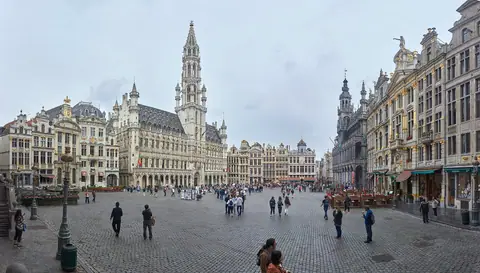
Fifty metres northeast of the Grand-Place begins a Lower Town circuit that captures three defining Brussels passions in a two-kilometre loop. First comes the nineteenth-century glazed arcade architecture where the chocolate praline was invented. Next comes the Franco-Belgian comic strip tradition, celebrated across Belgium as the Ninth Art. The walk finishes along the former inland harbour basins around the Bourse and Place Sainte-Catherine.
The 1847 Galeries Royales Saint-Hubert and the 1912 invention of the praline
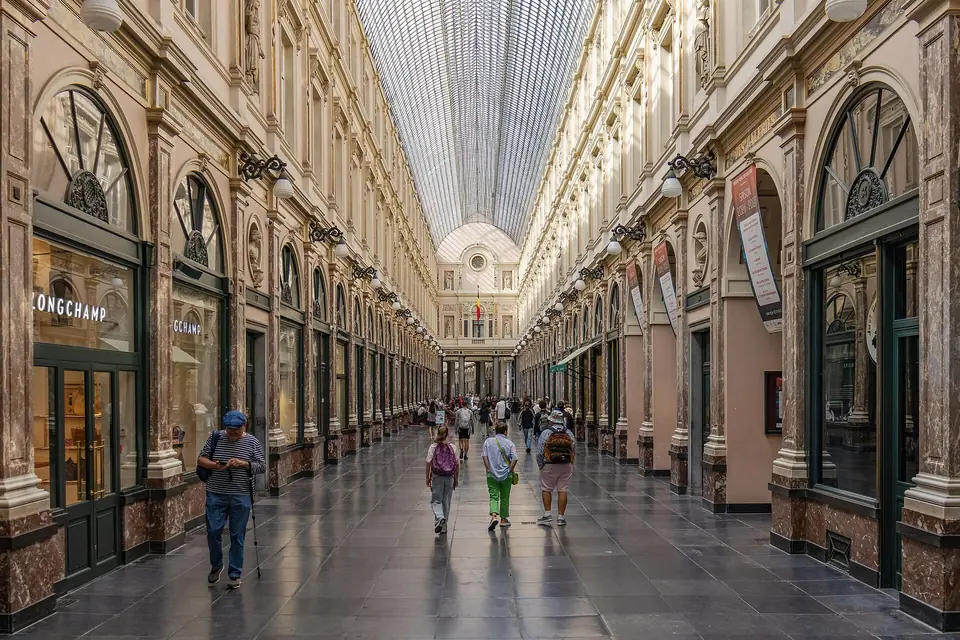
In 1836, twenty-four-year-old architect Jean-Pierre Cluysenaer and banker Jean-André Demot proposed replacing a dark labyrinth of medieval alleys north of the Grand-Place. King Leopold I laid the foundation stone on 6 May 1846. The Galeries Royales Saint-Hubert (Koninklijke Sint-Hubertusgalerijen) opened to the public on 20 June 1847. Predating Milan's Galleria Vittorio Emanuele II by twenty years, it stands among the oldest monumental glass-roofed shopping arcades in Europe. Carved across the neoclassical entrance pediments is the Latin motto Omnibus omnia (Everything for everybody).
Overhead arches a wrought-iron and glass barrel vault measuring 213 metres in length, 18 metres in height, and 8.3 metres in width. Beneath the glass roof, the Italianate palazzo facades divide into three wings:
- The Galerie de la Reine (Queen's Gallery). Running south toward Rue du Marché aux Herbes, this wing is the historic cradle of modern Belgian chocolate. At Galerie de la Reine 23, Swiss-born apothecary Jean Neuhaus opened a pharmaceutical confectionery shop in 1857, coating bitter medicines in dark chocolate. In 1912, his grandson Jean Neuhaus II filled a moulded chocolate shell with crushed hazelnut gianduja and ganache, inventing the Belgian praline. In 1915, his wife Louise Agostini patented the ballotin gift box to protect delicate pralines. Across the mosaic aisle stand royal warrant chocolatier Mary (founded 1919), Maison Dandoy (founded 1829), and Pierre Marcolini.
- The Galerie du Roi (King's Gallery). Extending north across the colonnaded intersection of Rue des Bouchers, this wing houses the 1847 Théâtre Royal des Galeries. Leather, glove, and lace boutiques line the arcade.
- The Galerie des Princes (Princes' Gallery). Branching west from the King's Gallery, this quieter passage leads to the gilded nineteenth-century mirrors of the Tropismes bookshop inside the former Taverne du Passage. Next door stands the 1939 Art Deco Cinéma des Galeries.
Jeanneke Pis, St. Michael and St. Gudula Cathedral, and the 1906 Horta Comic Strip Center
Where Rue des Bouchers crosses the arcade, step 30 metres north into the short cul-de-sac of Impasse de la Fidélité (Getrouwheidsgang). Halfway down on the left, behind iron bars, sits the 50-centimetre bronze fountain of Jeanneke Pis. Sculpted by Denis-Adrien Debouvrie in 1985 and inaugurated in 1987, she forms a sister counterpart to Manneken Pis. Directly opposite lie the beer cellars of Delirium Café, which set a 2004 Guinness World Record for offering 2,004 different beers.
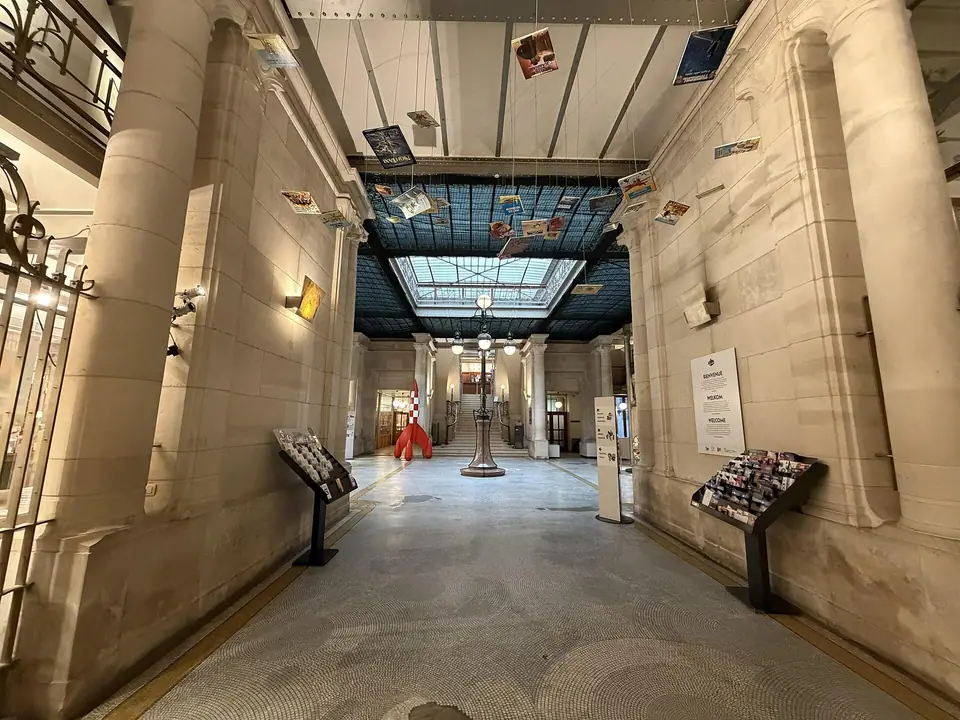
Climbing east up Rue Montagne aux Herbes Potagères brings you to the parvis of the Cathedral of St. Michael and St. Gudula. Begun in 1226 and completed in 1519, Belgium's national church features twin 64-metre Brabantine Gothic towers. Inside shine sixteenth-century Habsburg stained-glass windows by Bernard van Orley and Hendrick Frans Verbruggen's carved 1699 baroque oak pulpit. Walk 400 metres north to Rue des Sables 20 (Zandstraat 20) to see the Waucquez Fabric Warehouse (Magasins Waucquez). Victor Horta built this stone building between 1903 and 1906. Saved from demolition in 1975, it opened on 6 October 1989 as the Belgian Comic Strip Center (Centre Belge de la Bande Dessinée). Its luminous freestone and cast-iron Art Nouveau atrium has glass-brick floor tiles and a double curving staircase. Exhibitions trace Franco-Belgian comics from Hergé (who launched Tintin on 10 January 1929), Peyo (The Smurfs, 1958), and Morris (Lucky Luke, 1946). Displays also honour André Franquin (Gaston Lagaffe) and Edgar P. Jacobs (Blake and Mortimer).
Following the outdoor Comic Strip Route (Parcours BD) across the Pentagon
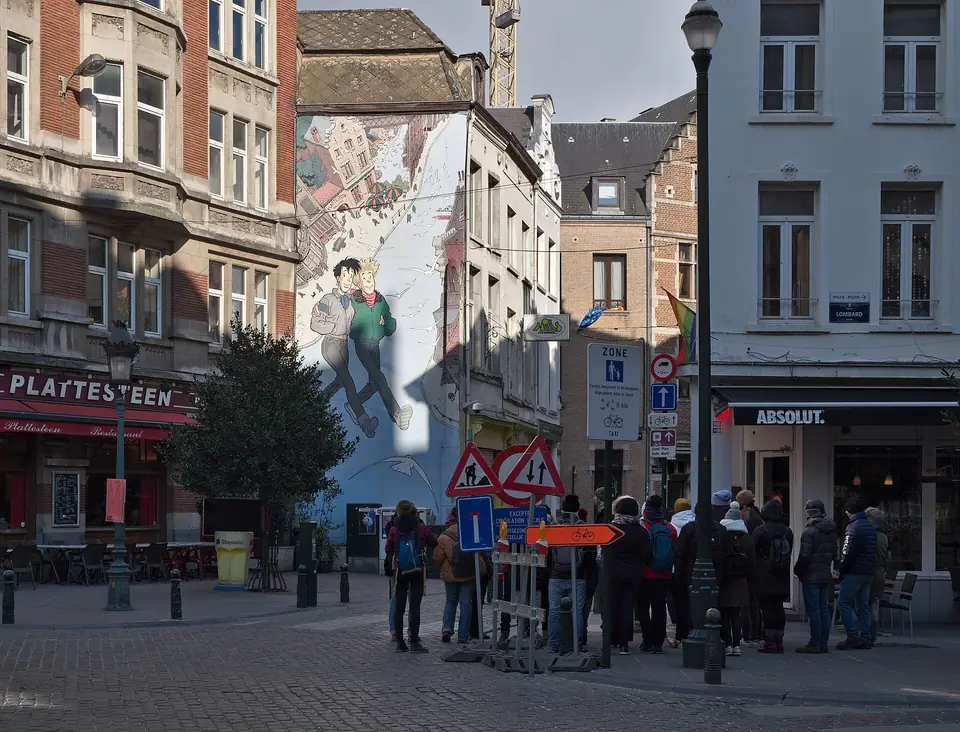
Outside the museum, Brussels turns its blind gable walls into an open-air gallery. The City of Brussels and the Comic Strip Center launched the Comic Book Route (Parcours BD) in 1991. Today the trail numbers more than 65 giant hand-painted facade frescoes across the region. Walking back through the Lower Town toward Boulevard Anspach, you can spot five celebrated murals within 15 minutes:
- Broussaille by Frank Pé (Rue du Marché au Charbon 39). This inaugural 1991 mural of the trail shows the young dreamer walking hand-in-hand with Catherine through Brussels.
- Le Passage (Les Cités Obscures / Brüsel) by François Schuiten and Benoît Peeters (Rue du Marché au Charbon 17). A trompe-l'oeil architectural portal opens onto imaginary domes between the brick facades.
- Tintin: The Calculus Affair (L'Affaire Tournesol) by Hergé (Rue de l'Étuve 37). Steps from Manneken Pis, Tintin, Captain Haddock, and Snowy clamber down a metal fire escape.
- Le Jeune Albert by Yves Chaland (Rue des Alexiens 49). A mischievous wartime Brussels street-kid fresco unfolds in classic ligne claire (clear line) style.
- Lucky Luke by Morris (Rue de la Buanderie 31). The cowboy rides Jolly Jumper accompanied by the four Dalton brothers.
The 1873 Bourse (Belgian Beer World), Halles Saint-Géry, Zinneke Pis & Place Sainte-Catherine
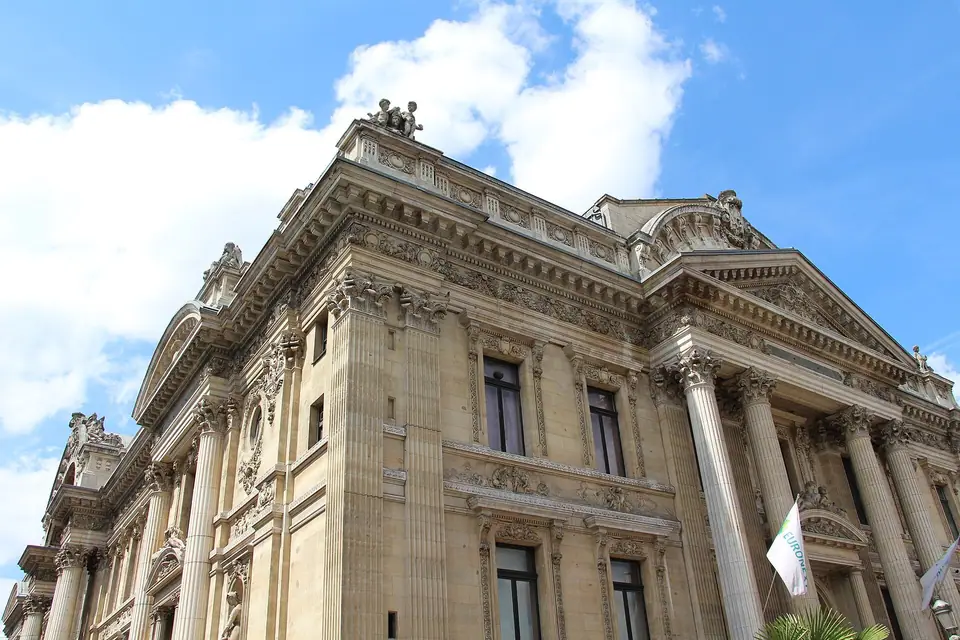
Crossing onto the car-free esplanade of Boulevard Anspach brings you to the monumental neoclassical Palais de la Bourse (Brussels Stock Exchange). Architect Léon-Pierre Suys built it between 1868 and 1873 over the thirteenth-century Franciscan Recollects friary. A young Auguste Rodin helped carve the exterior stone friezes. Beneath the building, the Bruxella 1238 archaeological site preserves the tomb site of Duke John I of Brabant, linked to beer patron Gambrinus. Reopened in September 2023 after restoration, the Bourse features a free ground-floor vaulted public passage and Belgian Beer World upstairs, crowned by a rooftop tasting terrace.
Two blocks west stands the 1881 red-brick market hall of Halles Saint-Géry on the island where Brussels was founded in 979 CE. Walk north along Rue des Chartreux to the corner of Rue du Vieux-Marché-aux-Grains. There stands sculptor Tom Frantzen's 1998 bronze street dog Het Zinneke (Zinneke Pis). The sculpture lifts its leg against a bollard, completing the trio with Manneken Pis and Jeanneke Pis. From there, you emerge onto Place Sainte-Catherine and the old fish market basins (Vismet). Here the 1854 to 1874 Church of Saint Catherine and the 1629 Baroque Tour Noire frame outdoor terraces for seafood croquettes, mussels, and artisanal gelato. Right beside the square sits Sainte-Catherine station on Metro Lines 1 and 5.
Traveller tips
Real advice from people who have been to Brussels. Every tip is read by our team before it goes live.
No tips yet. Been here? Yours could be the first.
Thank you! Your tip will appear here after a quick review.
More in Brussels
Continue exploring Brussels with related neighbourhood, food, and planning guides
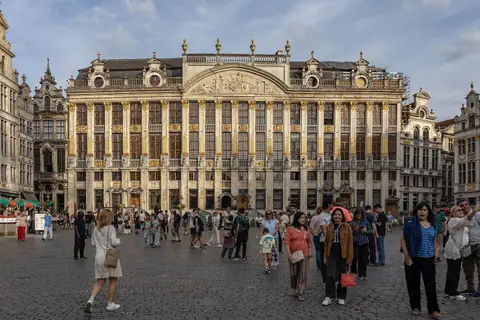
Best Things to Do in Brussels: Grand-Place, Magritte, Horta Art Nouveau, Atomium & Beer Culture
Brussels, Belgium
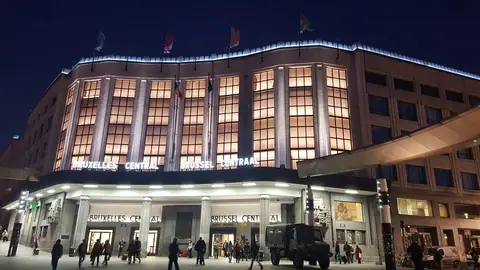
Arriving in Brussels: Zaventem Airport (BRU), Midi Eurostar Terminal, Central Station & STIB-MIVB
Brussels, Belgium
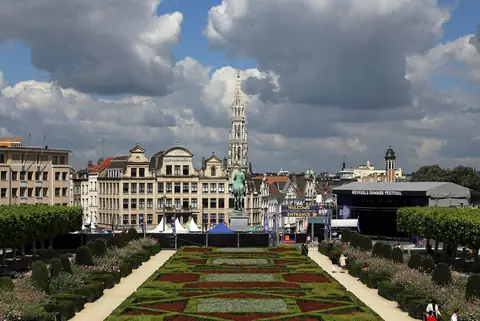
Best Time to Visit Brussels: RMI Climate Normals, Laeken Greenhouses & Biennial Flower Carpet
Brussels, Belgium
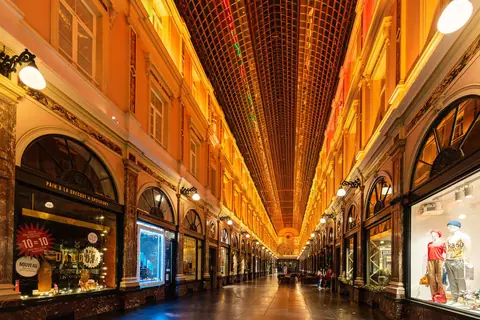
What to Wear in Brussels: Cobblestone Footwear, North Sea Rain Layers & Museum Cloakroom Rules
Brussels, Belgium
