





















Flanders Day Trips from Brussels by Train: Bruges Canals, Ghent Gravensteen & Antwerp Guide
Take direct unreserved InterCity trains from Brussels-Central to Flanders' three great art cities: medieval Ghent (32 minutes), UNESCO Bruges (58 minutes), and Rubens' Antwerp (42 minutes).
Basing yourself in central Brussels puts three of Northern Europe's great medieval and Renaissance art cities less than an hour away by rail. Ghent (Gent), Bruges (Brugge), and Antwerp (Antwerpen) all sit on high-frequency NMBS/SNCB InterCity (IC) lines. Up to four direct trains an hour depart from Brussels-North, Brussels-Central, and Brussels-South. Even better, domestic Belgian IC trains require no seat reservations, so your ticket is valid on any train on that route all day. If you travel between Friday evening (after 19:00) and Sunday night, the official NMBS/SNCB Weekend Ticket reduces return fares by 50 percent.
1. Ghent (Gent): The 1432 Van Eyck Mystic Lamb, Graslei Quays & 1180 Gravensteen (32 Minutes)
Ghent lies just 30 to 35 minutes northwest of Brussels-Central (and 28 minutes from Brussels-South). The city pairs a lively university spirit with a medieval river core that attracts fewer tour buses than Bruges. Disembark at Gent-Sint-Pieters Station (built for the 1913 Ghent World's Fair). Outside the main hall, board De Lijn Tram 1 for the 10-minute ride to Korenmarkt in the historic Kuip centre:
- Saint Bavo's Cathedral and the 1432 Ghent Altarpiece. Emperor Charles V was baptised in 1500 inside this Brabantine Gothic cathedral beneath its 89-metre tower. Today the church holds Hubert and Jan van Eyck's 12-panel polyptych The Adoration of the Mystic Lamb (Het Lam Gods), completed in 1432. Pre-book a timed slot on the official cathedral portal to descend into the Romanesque crypt. An augmented-reality headset guides you before you view the restored panels in the Villa Chapel.
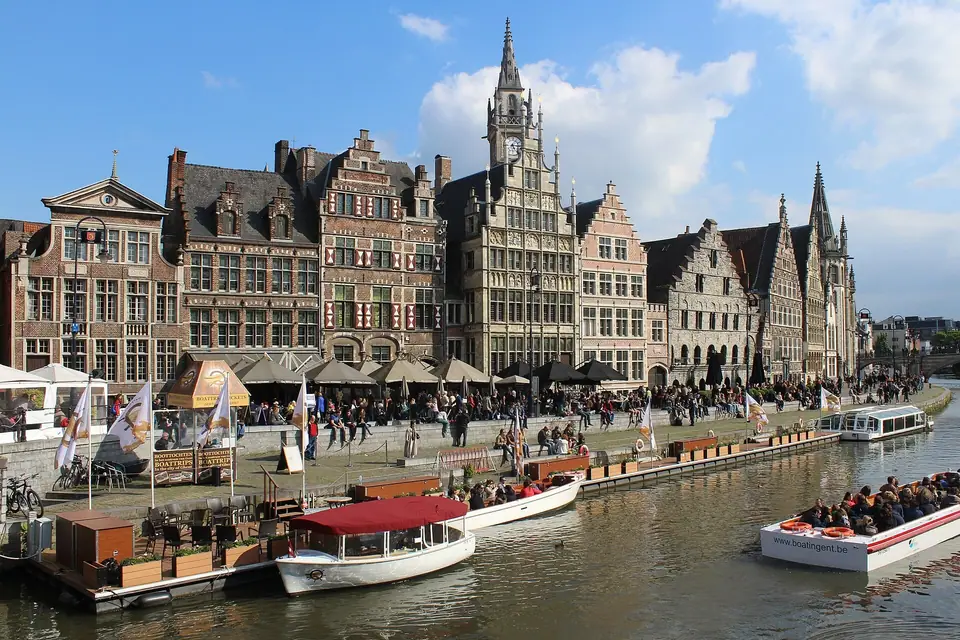
- The Three Towers Row, Graslei, and Korenlei. Walk west past the 91-metre UNESCO Belfry of Ghent (Belfort, built 1313 to 1380), topped by a 1377 gilded copper dragon. Next door stands thirteenth-century Scheldt Gothic Saint Nicholas' Church. Stepping onto Saint Michael's Bridge (Sint-Michielsbrug) frames Ghent's alignment of three medieval stone spires in a single row. Below the bridge stretch the twin quays of the medieval grain harbour along the Leie River, Graslei on the east bank and Korenlei on the west. Stepped guild gables include the 1200 Romanesque Grain Staplers' House (Spijker, the oldest stepped-gable stone warehouse on the quay). Beside it stand the 1531 Brabantine Gothic Free Boatmen's Guildhouse and the tiny 1682 Tollkeeper's House.
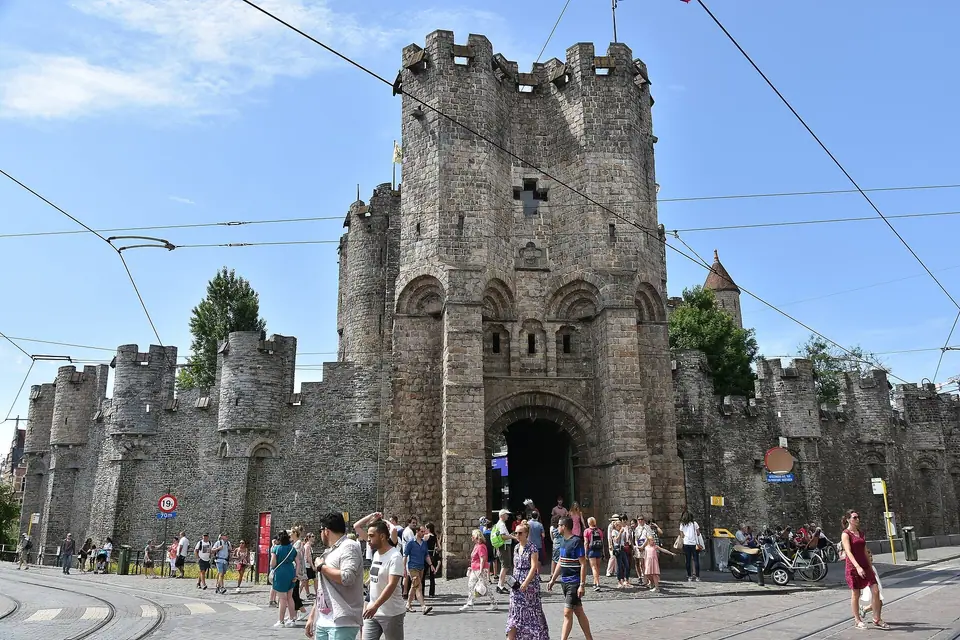
- Castle of the Counts (Gravensteen, 1180) and Patershol. Five minutes north at the junction of the Leie and Lieve canals rises the Gravensteen. Count Philip of Alsace raised it in 1180 after returning from the Crusades. A water moat and 24 semicircular wall turrets surround the keep. It is the only medieval moated castle in Flanders with its defensive ramparts preserved virtually intact. Across the square stand the 1407 Great Butchers' Hall (Grote Vleeshuis) and the cobbled weavers' alleys of Patershol.
2. Bruges (Brugge): UNESCO Canals, the 83-Metre Belfry & Michelangelo's Madonna (58 Minutes)
Staying on the same westbound IC train for another 23 minutes past Ghent brings you in 55 to 60 minutes total from Brussels-Central to Bruges. A 7-kilometre oval canal moat and four surviving windmills ring the town. Its entire brick Gothic historic centre was inscribed as a UNESCO World Heritage Site in 2000. Bruges was the wealthiest wool and banking port of fourteenth- and fifteenth-century Northern Europe until the Zwin tidal channel silted up around 1500. Today the town is best explored on foot. Walk 15 minutes from Brugge Station through the tranquil Minnewater (Lake of Love) and the 1245 Princely Beguinage (Begijnhof Ten Wijngaerde):
- Church of Our Lady and Saint John's Hospital. The Church of Our Lady rises to a 115.6-metre brick spire, the second-tallest brickwork tower in the world. Inside, the church preserves Michelangelo's 1504 white Carrara marble sculpture Madonna and Child (Madonna of Bruges). Purchased by Flemish cloth merchants Giovanni and Alessandro Mouscron, it was the only sculpture by Michelangelo to leave Italy during his lifetime. Beside it rest the gilded bronze tombs of Charles the Bold and Mary of Burgundy. Across the street, twelfth-century Saint John's Hospital (Sint-Janshospitaal) exhibits six panel paintings by Hans Memling, led by the 1489 St. Ursula Shrine. Nearby, the Groeningemuseum displays Jan van Eyck's 1436 Madonna with Canon Joris van der Paele.
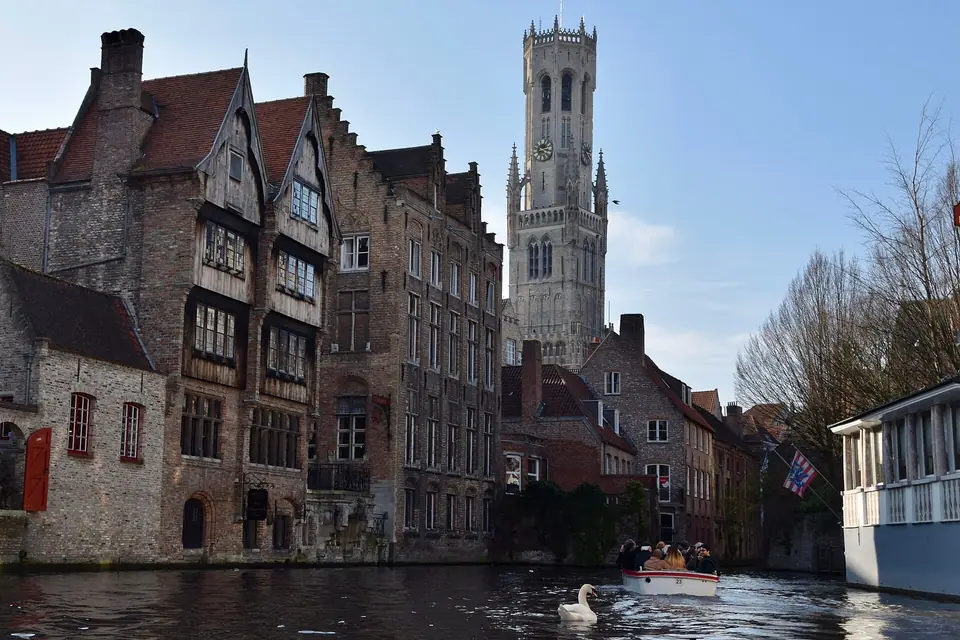
- Rozenhoedkaai, Canal Boats, the Burg, and the 83-Metre Belfry. Pause at the willow-draped bend of the Dijver canal at Rozenhoedkaai, where electric canal boats depart between March and mid-November. Step into the Burg square to see the 1376 to 1421 Brabantine Gothic City Hall (Stadhuis). It is one of the oldest monumental town halls in the Low Countries. Next door stands the twelfth-century Basilica of the Holy Blood, venerating a relic phial brought from the Second Crusade in 1150. One block west opens the Markt, dominated by the thirteenth- to fifteenth-century Belfry of Bruges (Belfort). There, 366 spiral steps lead to the 83-metre lantern and its 47-bell carillon.
3. Antwerp (Antwerpen): The 1905 Railway Cathedral, Rubens' Altarpieces & Plantin-Moretus (42 Minutes)
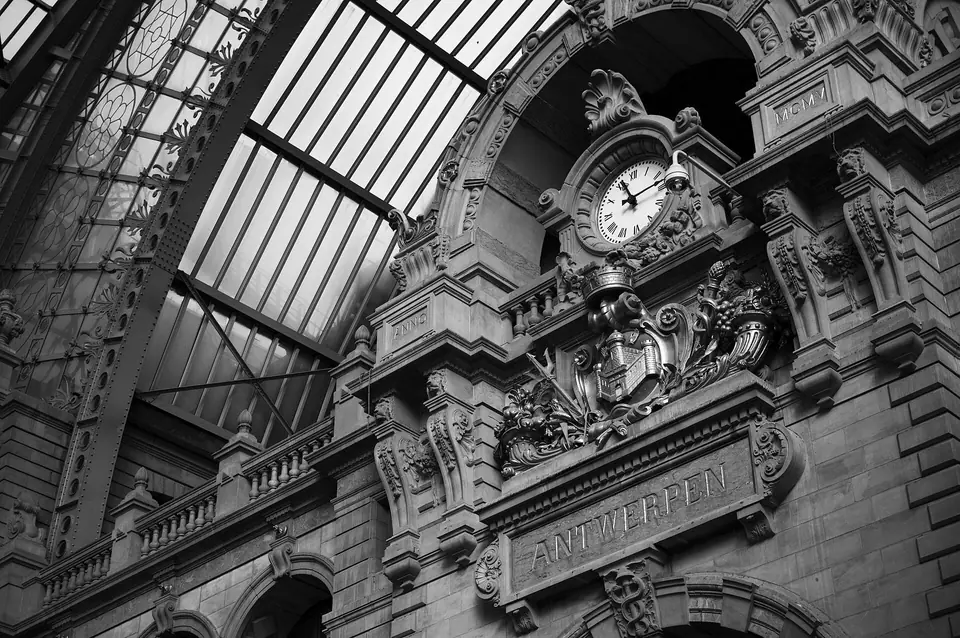
Trains heading north from Brussels-Central on the Amsterdam corridor reach Antwerp in 40 to 45 minutes. Belgium's diamond, fashion, and port metropolis sits on the Scheldt River. Step off the train inside Antwerp Central Station (Antwerpen-Centraal), built between 1895 and 1905 above four stacked levels of 14 tracks. Engineer Clément Van Bogaert designed its 43-metre iron-and-glass train shed, while architect Louis Delacenserie built the 75-metre stone dome.
Walk 20 minutes west down the Meir boulevard past the seventeenth-century Italianate garden portico and library of the Rubenshuis. Baroque master Peter Paul Rubens lived and ran his studio there from 1610 until 1640. On Vrijdagmarkt stands the UNESCO-listed Plantin-Moretus Museum, founded in 1555 by publisher Christophe Plantin. It is the only surviving Renaissance and Baroque printing workshop in the world and houses the world's two oldest surviving printing presses (circa 1600). Five minutes north rises the Cathedral of Our Lady (Onze-Lieve-Vrouwekathedraal, built 1352 to 1521). Its 123-metre Gothic north spire is the tallest church tower in the Benelux. Inside the nave hang four monumental altarpieces by Peter Paul Rubens. You see The Raising of the Cross (1610) and The Descent from the Cross (1612 to 1614). Nearby hang The Resurrection of Christ (1612) and The Assumption of the Virgin Mary (1626). Right outside on the Grote Markt stand the 1561 to 1565 Renaissance City Hall and the 1887 Brabo Fountain.
Traveller tips
Real advice from people who have been to Brussels. Every tip is read by our team before it goes live.
No tips yet. Been here? Yours could be the first.
Thank you! Your tip will appear here after a quick review.
More in Brussels
Continue exploring Brussels with related neighbourhood, food, and planning guides
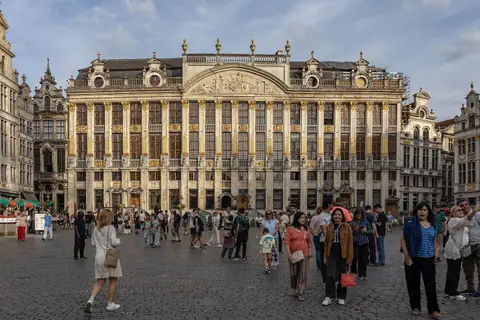
Best Things to Do in Brussels: Grand-Place, Magritte, Horta Art Nouveau, Atomium & Beer Culture
Brussels, Belgium
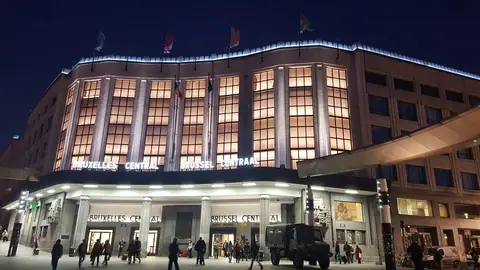
Arriving in Brussels: Zaventem Airport (BRU), Midi Eurostar Terminal, Central Station & STIB-MIVB
Brussels, Belgium
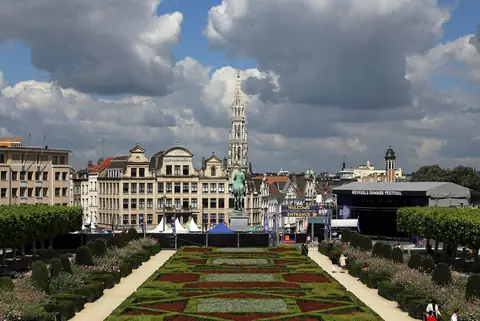
Best Time to Visit Brussels: RMI Climate Normals, Laeken Greenhouses & Biennial Flower Carpet
Brussels, Belgium
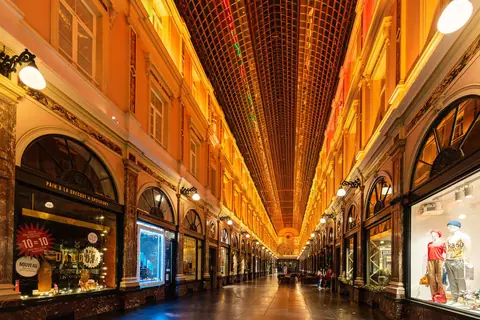
What to Wear in Brussels: Cobblestone Footwear, North Sea Rain Layers & Museum Cloakroom Rules
Brussels, Belgium
