





















European Quarter Guide: Parlamentarium, Hemicycle, House of European History, Berlaymont & Leopold Park
Explore Brussels' European Quarter on foot: the Berlaymont Commission headquarters, Europa Building, free Parlamentarium and Brussels Hemicycle, House of European History, and Leopold Park.
Many first-time visitors assume that Brussels' European Quarter (Quartier Européen / Europese Wijk) is merely a closed administrative district of glass office blocks. In reality, the one-kilometre corridor between Rond-Point Schuman, the wooded valley of Leopold Park, and Place du Luxembourg is a rewarding museum zone. Planners laid out the Quartier Léopold in 1837 as Brussels' first aristocratic residential expansion outside the Pentagon walls. The area later became the institutional core of the European Union after the 1957 and 1958 Treaties of Rome. Today the district offers four major visitor centres and parliamentary chambers free of charge. Each one provides interactive multimedia guides in all 24 official languages of the European Union.
1. Rond-Point Schuman: The Berlaymont, Experience Europe & the Europa Building
Start your walk by riding Metro Line 1 or 5 to Schuman station, just four stops east of Gare Centrale. Emerging onto the circular plaza of Rond-Point Schuman places you directly between the executive and intergovernmental branches of the European Union:
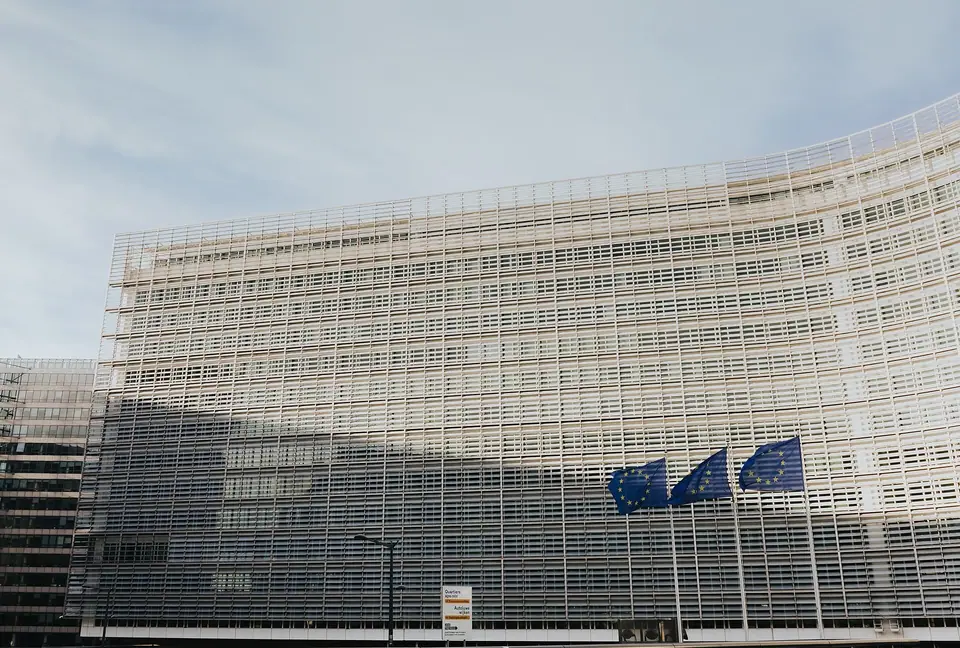
- The Berlaymont Building (European Commission Headquarters). Built between 1963 and 1969 on the former orchard of the Convent of the Ladies of Berlaymont, the complex was designed by Lucien De Vestel. He worked with Jean Gilson and brothers André and Jean Polak, who also co-designed the 1958 Atomium. The asymmetric four-winged X-shaped 14-storey building spans 240,000 square metres. External steel hangers suspend the floors from a 55-metre central concrete core wrapped in automated glass sun-louvres from its 1991 to 2004 renovation. Inside, the President of the European Commission and the College of 27 Commissioners draft EU legislation.
- Experience Europe (Expérience Europe, Rond-Point Schuman 14). Directly across the roundabout from the Berlaymont, the European Commission's interactive exhibition centre welcomes visitors seven days a week free of charge. A 360-degree immersive cinema and touch tables explain how the Commission works.
- The Europa Building ("The Lantern") and Justus Lipsius Building. On the southern side of Rue de la Loi stands the Europa Building, inaugurated in December 2016 by architect Philippe Samyn. Behind the restored 1922 to 1927 Art Deco facade of Michel Polak's Résidence Palace, Samyn erected a double-glazed cube. Its outer walls use 3,750 recycled oak window frames salvaged across every EU member state. Inside rises an 11-storey egg-shaped "Lantern" atrium where heads of state and government gather for European Council summits next to the 1995 Justus Lipsius Building.
2. Leopold Park, the 1927 Solvay Conference Library & the House of European History
From Schuman, walk five minutes south down Rue Archimède or Rue Belliard into the 10-hectare Leopold Park (Parc Léopold). It opened in 1851 as the Royal Zoological and Botanical Garden of Brussels around the Maelbeek pond, then became a municipal park in 1880. Later, this hillside green space turned into a scientific campus under industrialist Ernest Solvay. On the western slope stands the 1902 Solvay Library (Bibliothèque Solvay). The building is linked to the historic Solvay Conferences on Physics begun in 1911. Most famously, the Fifth Solvay Conference of October 1927 met in Brussels to debate quantum mechanics. Attendees included Albert Einstein, Marie Curie, Niels Bohr, Max Planck, Werner Heisenberg, Erwin Schrödinger, and Hendrik Lorentz.
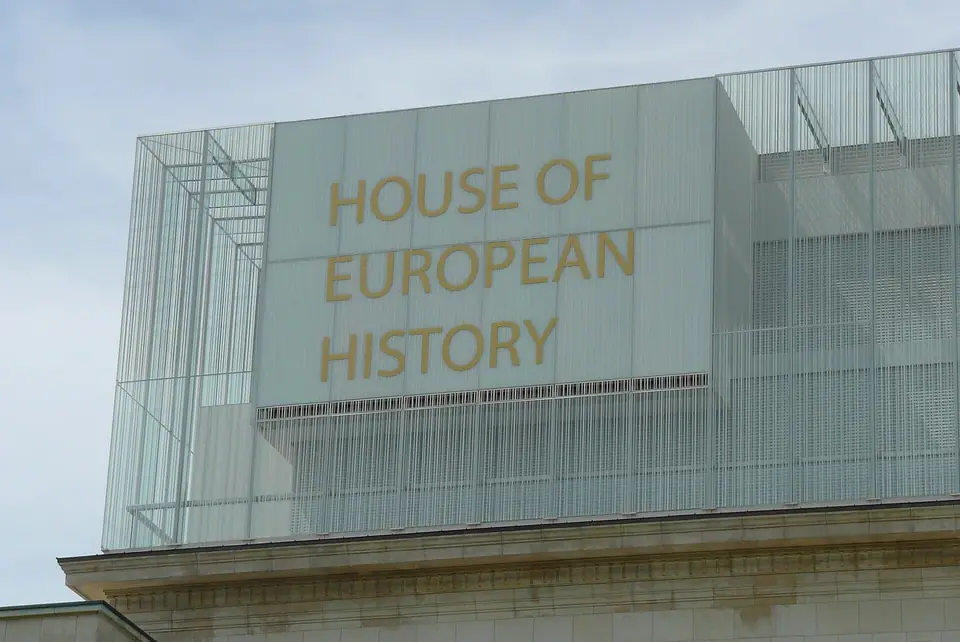
At the top of Leopold Park (Rue Belliard 135) rises the 1935 Art Deco George Eastman Dental Institute. Swiss architect Michel Polak designed it with funding from Kodak founder George Eastman to provide free dental care to disadvantaged Brussels children. Original 1935 waiting-room murals of La Fontaine's fables by Jean-Jacques Gailliard are still preserved inside. Since 6 May 2017, the building has housed the House of European History (Maison de l'Histoire Européenne):
- Six free exhibition floors. Open Tuesday to Sunday (closed Mondays), both admission and the tablet guide in 24 EU languages are free of charge. Spanning 4,000 square metres, the permanent exhibition traces shared European memory from the ancient myth of Europa and nineteenth-century industrialisation. Middle galleries examine the First and Second World Wars and the Holocaust. Upper floors cover the Cold War, the 1957 Treaties of Rome, the 1989 fall of the Berlin Wall, and modern integration.
3. Parlamentarium, the 720-Seat Brussels Hemicycle & Place du Luxembourg
Climbing the steps along the western edge of Leopold Park brings you onto the pedestrian Simone Veil Agora (Esplanade Solidarność 1980). A preserved segment of the Berlin Wall stands beside the curved glass dome of the European Parliament (Espace Léopold). This esplanade leads to three stops:
- The Parlamentarium (Willy Brandt Building, Rue Wiertz 60). Opened in October 2011 as the largest parliamentary visitor centre in Europe, it welcomes visitors seven days a week (including Mondays) free of charge. Audio guides are provided in 24 EU languages and International Sign Language. Walk across a giant interactive map of Europe and sit inside a 360-degree digital cinema replicating the Parliament chamber. Displays also share citizen stories from the 27 member states.
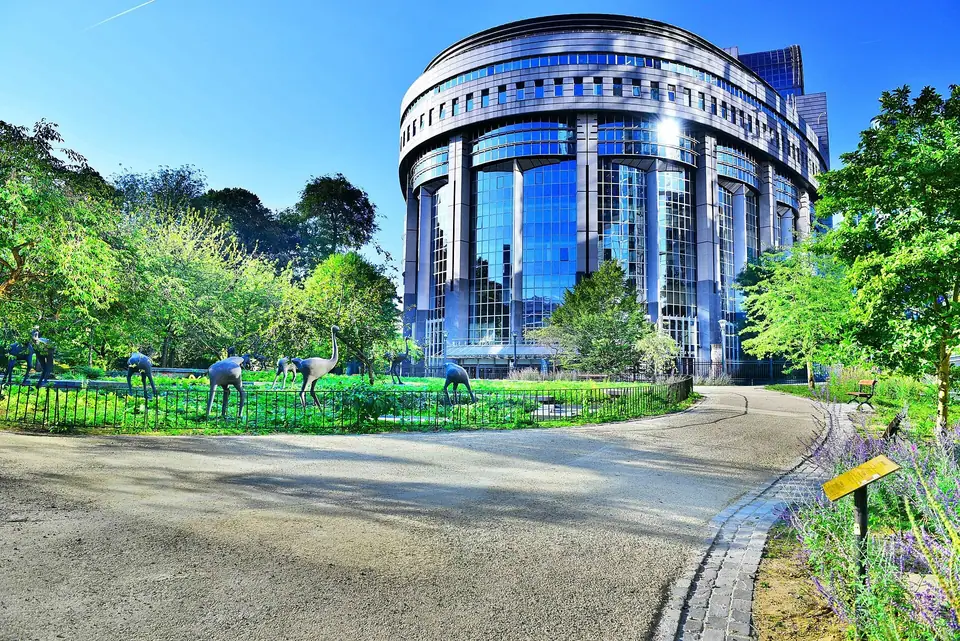
- The Brussels Hemicycle (Paul-Henri Spaak Building, Rue Wiertz 60). Completed in 1993 beneath a glass roof nicknamed the Caprice des Dieux, the 720-seat Brussels Hemicycle debating chamber welcomes visitors free from Monday to Friday. Entry includes a multimedia guide in 24 languages; check the official European Parliament visiting portal for daily slots.
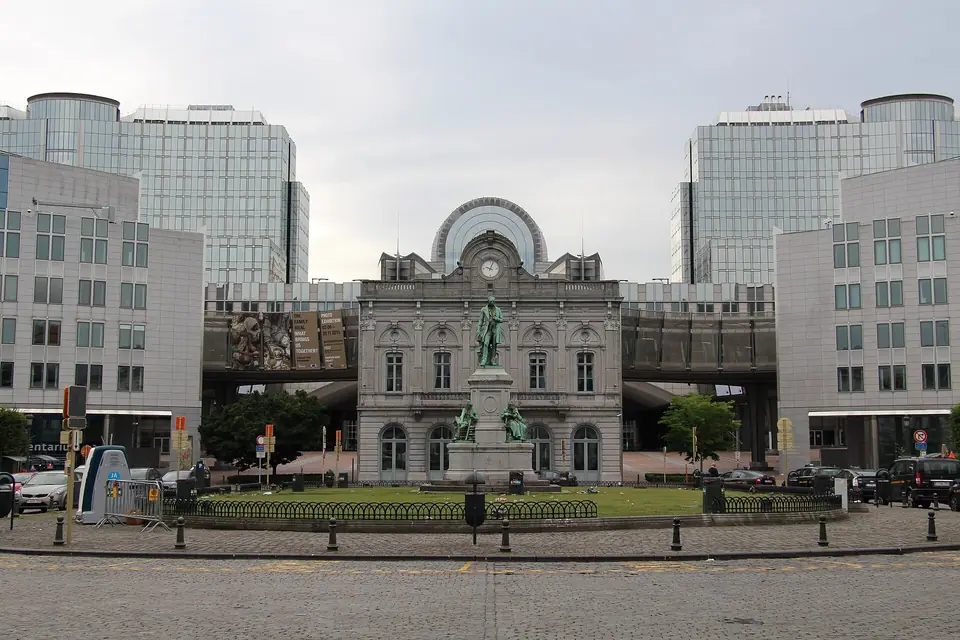
- Station Europe and Place du Luxembourg (Plux). Exiting on the western side leads to the 1855 neoclassical stone facade of the original Brussels-Luxembourg railway station by Gustave Saintenoy, now housing Station Europe. Outside stands Armand Cattier's 1871 bronze monument to industrialist John Cockerill on Place du Luxembourg. Every Thursday evening, the square's café terraces fill with parliamentary staff. Five minutes east on Place Jourdan, you can grab double-fried beef-tallow fries at 1948 Maison Antoine and carry them into the surrounding beer cafés.
Traveller tips
Real advice from people who have been to Brussels. Every tip is read by our team before it goes live.
No tips yet. Been here? Yours could be the first.
Thank you! Your tip will appear here after a quick review.
More in Brussels
Continue exploring Brussels with related neighbourhood, food, and planning guides
Victor Horta & Art Nouveau Walk: Horta Museum, Hôtel Tassel, Hôtel Solvay, Maison Hannon & Ixelles
Brussels, Belgium
Atomium, Royal Greenhouses of Laeken, Parc du Cinquantenaire & Train World Guide
Brussels, Belgium
Flanders Day Trips from Brussels by Train: Bruges Canals, Ghent Gravensteen & Antwerp Guide
Brussels, Belgium
What to Eat in Brussels: Double-Fried Frites, Moules-Frites, Carbonnade, Waffles, Pralines & Lambic Beer
Brussels, Belgium
