





















Best Things to Do in Brussels: Grand-Place, Magritte, Horta Art Nouveau, Atomium & Beer Culture
Explore the essential experiences in Brussels, from the gilded guildhalls of the Grand-Place and the Magritte Museum to Victor Horta's Art Nouveau mansions and the Atomium.
Few European capitals pack such a diverse range of artistic movements into a walkable five-kilometre radius. Within a single weekend in Brussels, you can stand inside a fifteenth-century Brabantine Gothic square. The surrounding guildhalls shine in gilded late-Baroque splendour after being rebuilt following the 1695 French bombardment. Up on the royal hill, sixteenth-century oil panels by Pieter Bruegel the Elder hang near René Magritte's surrealist canvases. Further south, you can step beneath the stained-glass winter gardens where Victor Horta pioneered Art Nouveau in 1893. To the north, a high-speed lift ascends the 102-metre stainless-steel Atomium built for Expo 58 in 1958.
Eight essential experiences across the capital
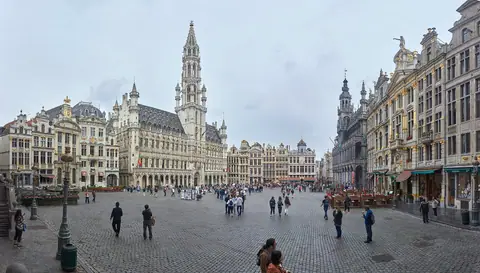
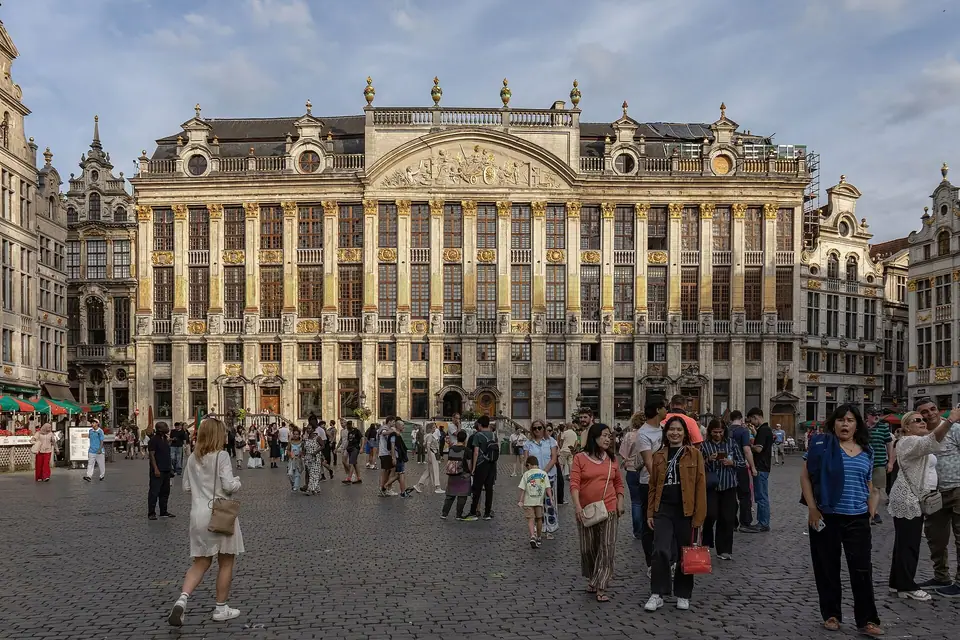
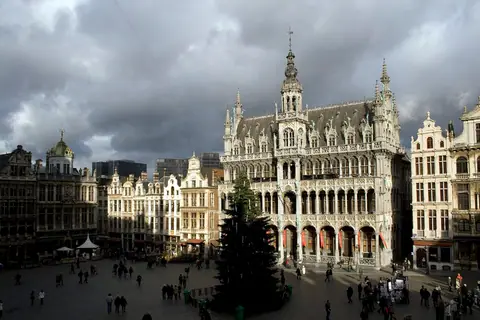
- Study the gilded guildhalls on the UNESCO Grand-Place: Begin in the 110-by-68-metre medieval square of the Grand-Place (Grote Markt), inscribed by UNESCO in 1998. Look up at the 96-metre openwork belfry of the 1401 to 1455 Town Hall. Martin van Rode's 5-metre gilt statue of Archangel Michael crowns the spire. Decode the golden trade emblems of the Bakers', Brewers', Archers', and Boatmen's guildhalls rebuilt between 1695 and 1700. Then enter the neo-Gothic Maison du Roi (Broodhuis) to see the original 1619 bronze Manneken Pis. Over 1,000 miniature costumes are preserved before you walk 250 metres to the fountain on Rue de l'Étuve.
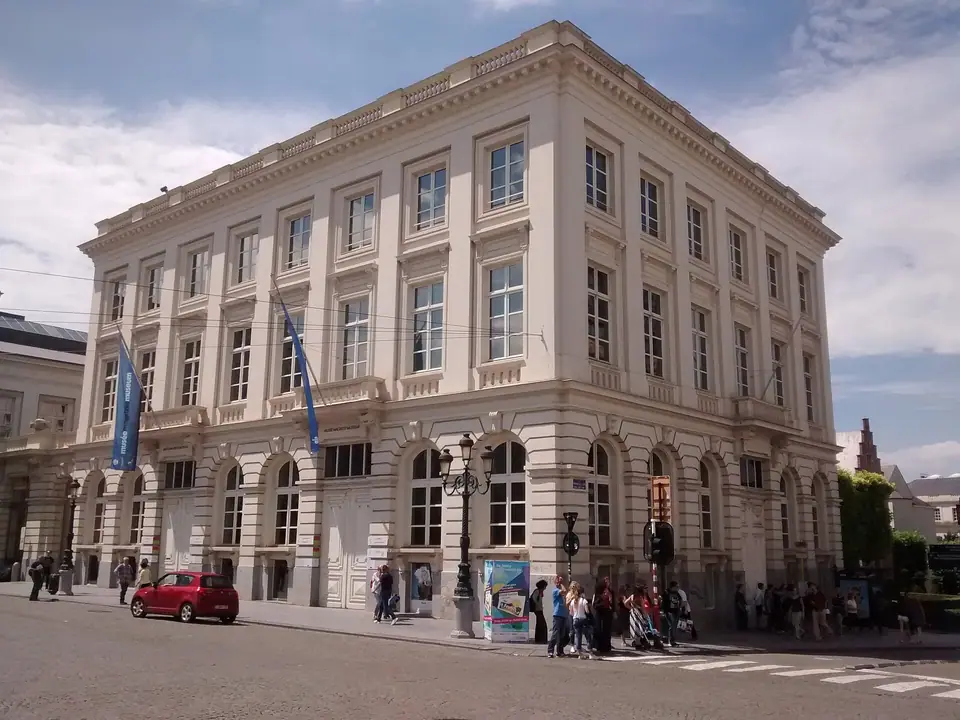
- Enter the surrealist world of René Magritte: Above the Mont des Arts on Place Royale stands the Magritte Museum. Opened in 2009 inside the neoclassical Hôtel Altenloh, it displays over 200 paintings, gouaches, and photographs across three floors. It forms the world's largest collection of René Magritte and includes The Empire of Light (1954). Next door, the Old Masters Museum holds the world's second-largest collection of Pieter Bruegel the Elder. Highlights include Landscape with the Fall of Icarus, The Fall of the Rebel Angels, and The Census at Bethlehem. You also see Winter Landscape with Ice Skaters, Rubens altarpieces, and Jacques-Louis David's 1793 The Death of Marat.
- Listen to 1,200 instruments at Old England: At the top of the Mont des Arts rises architect Paul Saintenoy's 1899 Art Nouveau department store. Built from bolted wrought iron and plate glass, it houses the Musical Instruments Museum (MIM). The collection totals over 8,000 instruments, with 1,200 displayed across four exhibition floors. An interactive headphone guide lets you hear Adolphe Sax's 1846 saxophone prototypes and seventeenth-century Ruckers harpsichords. Afterwards, step onto the upper terrace for views across the Lower Town rooftops.
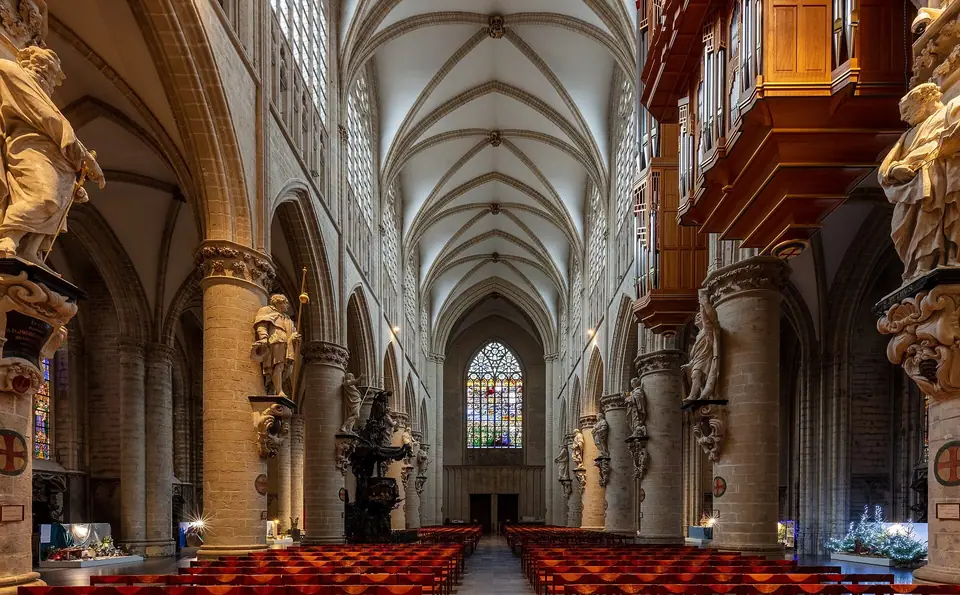
- Stroll the 1847 Galeries Royales Saint-Hubert: Walk beneath the 213-metre glass barrel vault of the Galeries Royales Saint-Hubert. Opened in 1847, it ranks among Europe's oldest glazed shopping arcades. Here Jean Neuhaus II created the first filled chocolate praline in 1912. Next, visit Victor Horta's 1906 Waucquez fabric warehouse at the Belgian Comic Strip Center. Admire the twin Gothic towers of the Cathedral of St. Michael and St. Gudula (1226 to 1519). Across the Pentagon, more than 65 facade murals celebrate Hergé's Tintin (1929), Morris's Lucky Luke (1946), and Peyo's The Smurfs (1958).
- Visit Victor Horta's UNESCO Art Nouveau townhouses: Ride Tram 92 south to follow our Victor Horta and Art Nouveau walking route. Start beneath the golden mirrored skylight of the Horta Museum, built between 1898 and 1901. Continue to the symbolist frescoes and Gallé glass of Maison Hannon (1902) and the 1893 facade of Hôtel Tassel. Round out your tour with the octagonal winter garden of Hôtel van Eetvelde (1895) and Hôtel Solvay on Avenue Louise. At Hôtel Solvay, Horta combined 23 types of marble and 17 tropical woods.
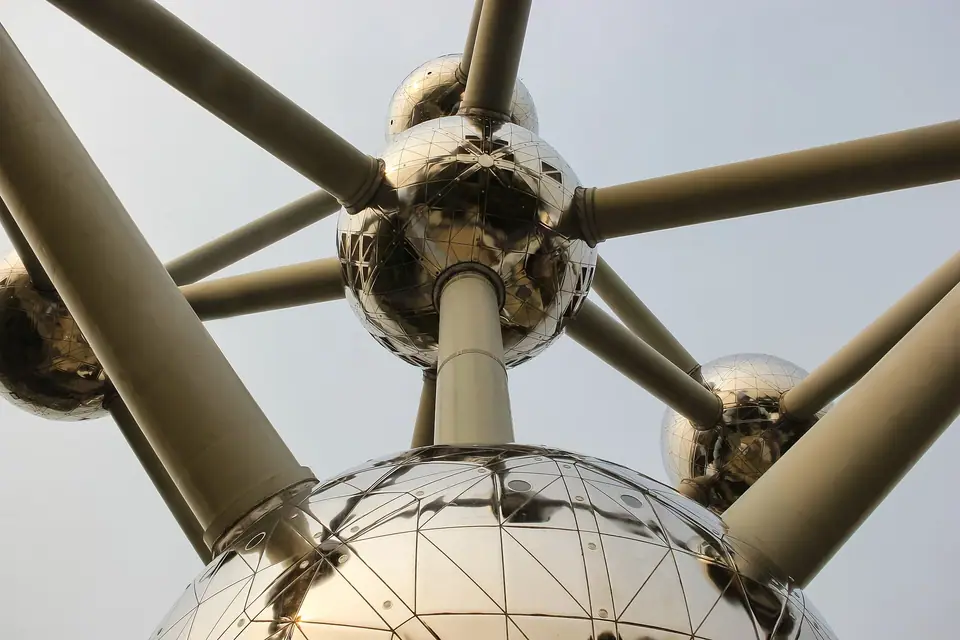
- Ascend the 1958 Atomium and visit Cinquantenaire: Take Metro Line 6 to the Heysel Plateau to visit the 102-metre Atomium and Design Museum Brussels. Six of the nine spheres are open to the public. In spring, add the 1874 to 1895 Royal Greenhouses of Laeken during their three-week opening. Then ride the metro east to the 45-metre triple arch in the 30-hectare Parc du Cinquantenaire. Flanking the arch stand Autoworld (with over 250 vintage automobiles) and the Art and History Museum.
- Tour the House of European History: In the European Quarter, three major visitor centres welcome guests without an admission fee. The six-floor House of European History occupies the 1935 Art Deco Eastman Building inside Leopold Park. Nearby stand the interactive Parlamentarium and the 720-seat Brussels Hemicycle debating chamber. All three provide free multimedia guides in the 24 official European Union languages.
- Taste beef-tallow frites and lambic beer: Order a freshly fried paper cone at 1948 Maison Antoine on Place Jourdan or Frit Flagey in Ixelles. Compare crisp rectangular Brussels waffles with caramelised Liège waffles at a historic tearoom. Visit Belgian Beer World inside the restored 1873 Bourse on Boulevard Anspach. Then tour the 1900 copper cooling pan and oak barrels of Brasserie Cantillon in Anderlecht using our Brussels food and beer guide.
Balancing in-city neighbourhood walks with Flanders rail excursions
If you have three days in Brussels, resist rushing out of the capital after a single afternoon. Beneath Place Royale lie the subterranean vaulted ruins of Emperor Charles V's Coudenberg Palace. Down the street, 48 bronze guild statues ring the Petit Sablon beside the Gothic lancets of Notre-Dame du Sablon. Every morning since 1873, a lively vintage flea market has filled Place du Jeu de Balle in the Marolles. Combined with the Art Nouveau interiors of Saint-Gilles and Train World in Schaerbeek, these sights easily fill 72 hours. Train World displays 22 historic locomotives led by the 1835 Pays de Waes, continental Europe's oldest preserved steam locomotive. Once you add a fourth day, Brussels-Central Station launches unreserved Flanders day trips by InterCity train. Direct trains reach the 1432 Van Eyck altarpiece and 1180 Gravensteen Castle in Ghent in 30 to 35 minutes. Northbound trains reach the Rubens altarpieces and 1905 Central Station of Antwerp in 40 to 45 minutes. Westbound services arrive at the medieval canals and 83-metre Belfry of Bruges in 55 to 60 minutes.
Traveller tips
Real advice from people who have been to Brussels. Every tip is read by our team before it goes live.
No tips yet. Been here? Yours could be the first.
Thank you! Your tip will appear here after a quick review.
More in Brussels
Continue exploring Brussels with related neighbourhood, food, and planning guides
Brussels 3-Day Itinerary: Lower Town Guilds, Royal Museums, Art Nouveau, Atomium & EU Quarter
Brussels, Belgium
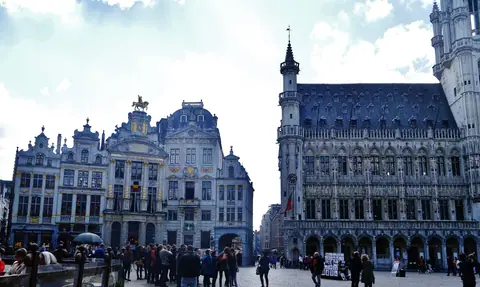
Grand-Place Walking Guide: Gothic Town Hall, 1695 Baroque Guildhalls, King's House & Manneken Pis
Brussels, Belgium
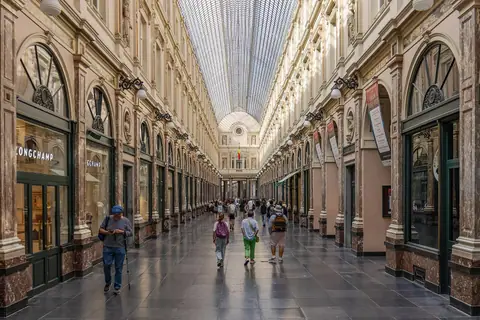
Galeries Royales Saint-Hubert, Comic Strip Route, Bourse & Sainte-Catherine Walk
Brussels, Belgium
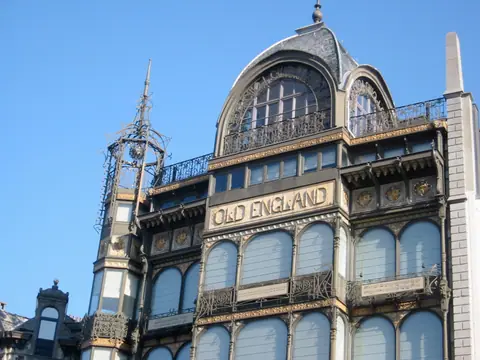
Mont des Arts, Royal Museums, Magritte Museum, MIM, Sablon & Marolles Guide
Brussels, Belgium
