





















What to Eat in Brussels: Double-Fried Frites, Moules-Frites, Carbonnade, Waffles, Pralines & Lambic Beer
Taste the best of Brussels cuisine: beef-tallow double-fried frites at Maison Antoine, Zeeland moules-frites, carbonnade flamande, Brussels vs Liège waffles, 1912 Neuhaus pralines, and Cantillon lambic beer.
Brussels takes everyday comfort dishes and elevates them to craft traditions protected by national heritage law and UNESCO status. You might stand on a cobbled square holding a paper cone of thick-cut fries blistered in beef tallow. At lunch, you can lift the lid off a steaming black pot of Dutch Zeeland mussels in an 1890s tiled brasserie. Afternoon brings feather-light rectangular Brussels waffles dusted with icing sugar, followed by bone-dry spontaneous-fermentation gueuze brewed from wild Senne valley yeasts. Knowing a few local rules separates authentic Brussels institutions from tourist traps around the Grand-Place.
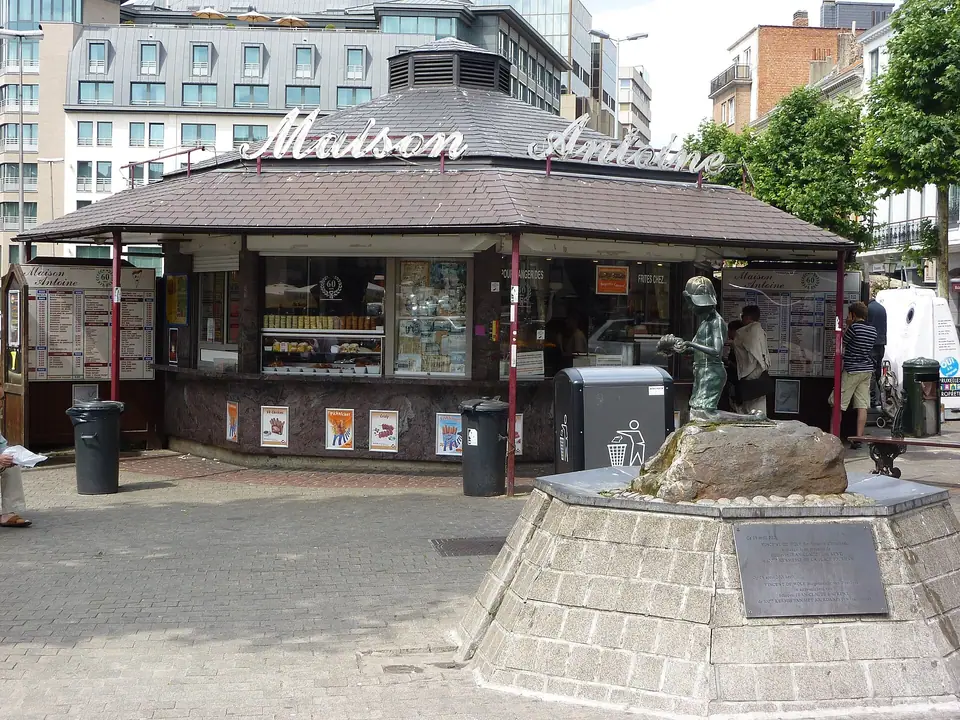
1. Double-fried Belgian frites (frieten) in beef tallow and the best frietkoten
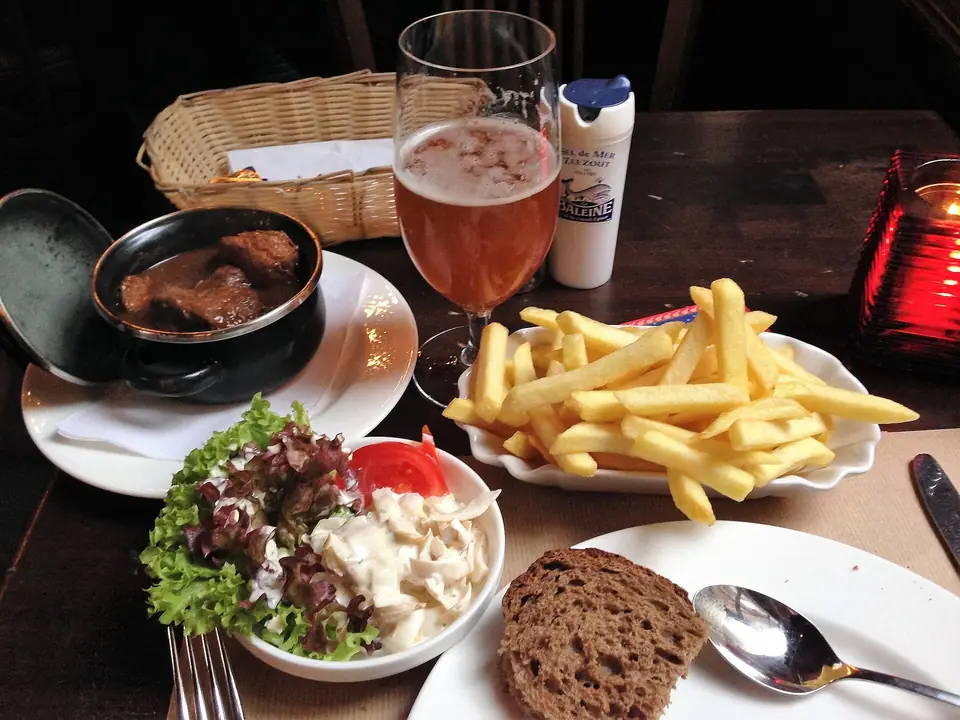
Inscribed on Belgium's national inventory of intangible cultural heritage between 2014 and 2017, authentic Belgian frites (frieten in Dutch) follow three strict rules. First, fry masters use high-starch Bintje potatoes cut into thick 10-to-12-millimetre batons. Second, they cook in rendered beef tallow (blanc de boeuf / ossewit) rather than thin vegetable oil. Third, they use a two-stage frying process separated by a cooling rest. Raw batons are blanched (pochés) at 130°C to 150°C for six to eight minutes, then cooled on trays. When you order at a fry shack (frietkot), the fry master plunges a portion into a second vat at 175°C to 180°C for two minutes. After shaking them with salt in a paper cone (cornet), they add Belgian mayonnaise, yellow Pickles sauce, Andalouse, or spicy Samouraï.
- Where to eat the best frites in Brussels. Head to Maison Antoine on Place Jourdan in the European Quarter, founded in 1948 by Antoine Desmet. Surrounding bars on Place Jourdan let you bring your paper cone of fries indoors or onto their terraces when you buy a beer. Other top shacks include Frit Flagey on Place Eugène Flagey beside the Ixelles Ponds, Friterie Tabora near the Bourse, and Chouke in Saint-Gilles.
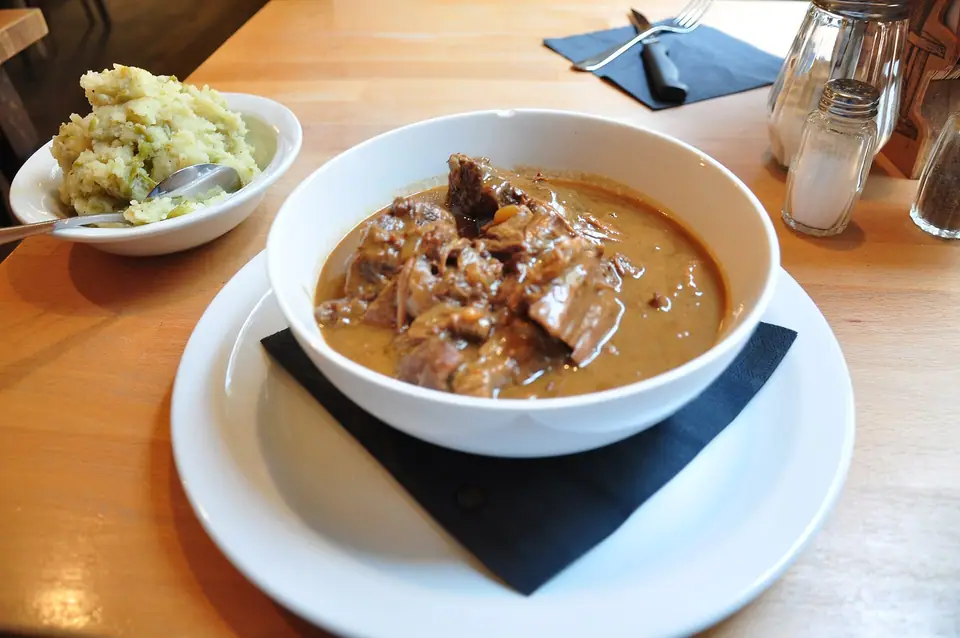
2. Moules-frites, carbonnade flamande, chicons au gratin & grey-shrimp croquettes
In the traditional brasseries around Place Sainte-Catherine, the Galeries Royales Saint-Hubert, and Rue de Rollebeek below the Sablon, five savoury classics anchor every chalkboard menu:
- Moules-frites (Zeeland Mussels with Fries). Brasseries serve individual 1-to-1.2-kilogram black enamelled steel pots (casseroles). Diners use an empty double shell as natural pincers to pluck out the rest. Plump blue mussels (Mytilus edulis) are farmed in the cold tidal waters of the Eastern Scheldt (Oosterschelde) in Dutch Zeeland. Peak season runs from July through February. Order them marinières (steamed with white onion, celery heart, butter, and parsley). Other classics are au vin blanc (dry white wine and shallots) and à la bière blanche (steamed in Belgian wheat beer).
- Carbonnade à la flamande (Stoofvlees). Tender chuck beef is braised for three to four hours with sweet caramelised onions in dark Belgian abbey ale or sour-sweet Flemish red-brown ale. Cooks top the pot with country bread spread with sharp Ghent Tierenteyn mustard and Liège pear-and-apple syrup (sirop de Liège).
- Croquettes aux crevettes grises & Tomates-Crevettes. Tiny brown North Sea grey shrimp (Crangon crangon) are peeled by hand after landing along the Belgian coast. Chefs fold them into a rich shrimp-stock béchamel, coat them in breadcrumbs, and serve them with flash-fried parsley and lemon. Alternatively, they stuff the peeled shrimp cold with homemade mayonnaise inside a hollowed tomato.
- Stoemp Bruxellois & Chicons au gratin. Rustic Brussels stoemp (STOOMP) mashes buttery potatoes with braised savoy cabbage, carrots, leeks, or chicory underneath grilled country pork sausage and bacon. Equally classic is Belgian endive (chicons / witloof). Head gardener Franciscus Bresoux discovered it around 1830 to 1850 at the Brussels Botanical Garden in Saint-Josse. Cooks wrap each braised head in ham and bake it under Gruyère Mornay sauce.
- Américain préparé (Filet américain). Finely ground raw beef tenderloin is seasoned with egg yolk, capers, shallots, Worcestershire sauce, and Piccalilli mustard, then served with watercress and hot frites.
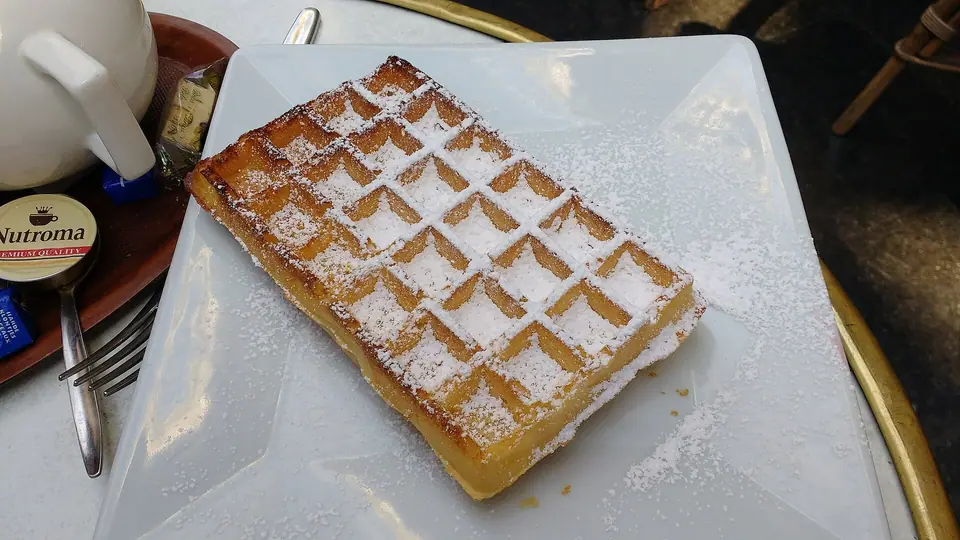
3. Brussels waffle vs. Liège waffle: how to spot the difference
Tourists often talk about a generic "Belgian waffle", but locals distinguish between two completely different recipes:
- The Brussels Waffle (Gaufre de Bruxelles / Brusselse wafel). Maximilien Consael popularised this waffle at fairs between 1839 and 1856, and Maurice Vermersch introduced it globally at Expo 58 in 1958. It uses a thin, airy yeast-and-whipped-egg-white batter. Bakers pour it into deep rectangular cast-iron plates with 20 (4 by 5) large square pockets. It has straight rectangular corners, a crisp golden shell, and a feather-light, unsweetened interior. Locals eat it seated with a knife and fork in tearooms such as Maison Dandoy (founded in 1829) inside the Galeries Royales Saint-Hubert. Toppings stay simple: icing sugar (sucre impalpable) or warm dark chocolate sauce.
- The Liège Waffle (Gaufre de Liège / Luikse wafel). Bakers make this version from a dense, brioche-style butter dough kneaded with crunchy white nibs of beet pearl sugar (sucre perlé). Those sugar nibs caramelise against the hot iron, creating uneven rounded edges and a chewy caramel crust meant to be eaten warm by hand.
4. 1912 Pralines, 100% cocoa butter & UNESCO spontaneous-fermentation Lambic beer
Jean Neuhaus II invented the filled praline in 1912 at Galerie de la Reine 23, and Louise Agostini patented the ballotin box in 1915. Since then, Belgian chocolatiers have followed strict purity standards. Codified in the 2007 Belgian Chocolate Code, traditional recipes require 100 percent pure cocoa butter with zero vegetable fats. Compare single-origin ganaches at Pierre Marcolini and Wittamer (1910) on the Grand Sablon, royal-warrant Mary (1919), and dried-fruit pairings at Laurent Gerbaud opposite Bozar.
Finally, Brussels is the traditional home of spontaneous-fermentation Lambic beer, a cornerstone of the Belgian Beer Culture inscribed by UNESCO in 2016. Brewers mash 60 to 70 percent malted barley with 30 to 40 percent unmalted wheat and aged whole hops. They pump the hot wort into a shallow open copper cooling pan (koelschip) between October and May. Overnight, wild airborne microflora native to the Senne valley, led by Brettanomyces bruxellensis and Brettanomyces lambicus, inoculate the brew. The beer then matures in oak casks for one to three years. Blending young and three-year-old lambics creates sparkling dry Oude Gueuze, while macerating sour cherries produces ruby Oude Kriek. Tour the copper tuns and barrel cellars of Brasserie Cantillon in Anderlecht, 10 minutes' walk from Brussels-South. Founded in 1900, it is the last family-owned lambic brewery operating in Brussels. Afterwards, taste lambics and Trappist ales inside wood-panelled estaminets such as 1928 À la Mort Subite and 1695 Au Bon Vieux Temps. Other classic stops include 1684 À l'Imaige Nostre-Dame, Poechenellekelder opposite Manneken Pis, and Moeder Lambic.
Traveller tips
Real advice from people who have been to Brussels. Every tip is read by our team before it goes live.
No tips yet. Been here? Yours could be the first.
Thank you! Your tip will appear here after a quick review.
More in Brussels
Continue exploring Brussels with related neighbourhood, food, and planning guides
Best Time to Visit Brussels: RMI Climate Normals, Laeken Greenhouses & Biennial Flower Carpet
Brussels, Belgium
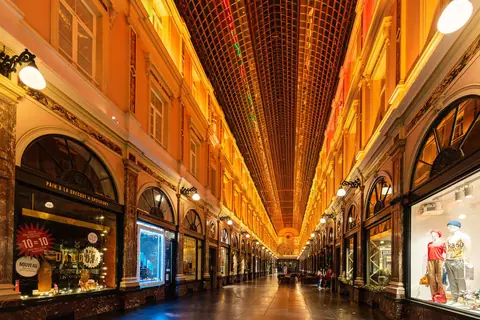
What to Wear in Brussels: Cobblestone Footwear, North Sea Rain Layers & Museum Cloakroom Rules
Brussels, Belgium
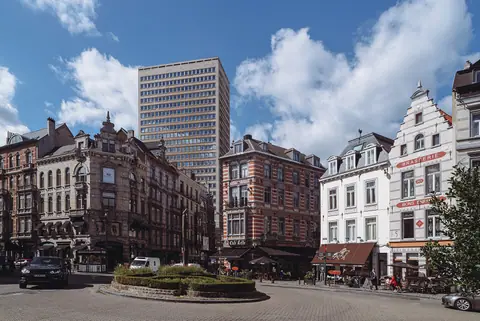
Where to Stay in Brussels: Grand-Place, Sainte-Catherine, Sablon, Ixelles & European Quarter Compared
Brussels, Belgium
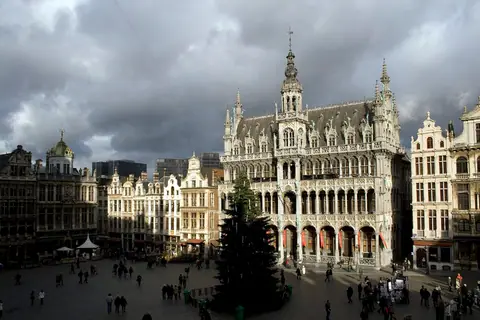
Brussels 3-Day Itinerary: Lower Town Guilds, Royal Museums, Art Nouveau, Atomium & EU Quarter
Brussels, Belgium
