





















Best Time to Visit Brussels: RMI Climate Normals, Laeken Greenhouses & Biennial Flower Carpet
Plan your visit around official RMI Uccle Observatory climate data, the three-week spring opening of the Royal Greenhouses of Laeken, and the biennial August Flower Carpet.
Brussels lies 100 kilometres inland from the North Sea across the flat plains of Flanders. Mild Atlantic breezes give the capital a temperate maritime climate (Köppen Cfb). Official 1991 to 2020 climate normals come from the Royal Meteorological Institute of Belgium (RMI / KMI) in Uccle at 100 metres altitude. Extreme summer heat and deep winter freezes are both rare here. Average afternoon highs climb from 6°C in January and 7°C in February to 19°C in May. Summer highs reach 22°C in June and 24°C in July and August. Rain falls evenly across the year at 9 to 14 rain days per month, totalling 837 millimetres across 132 wet days. The smartest approach is matching mild spring or summer daylight with Brussels' seasonal architectural and botanical openings.
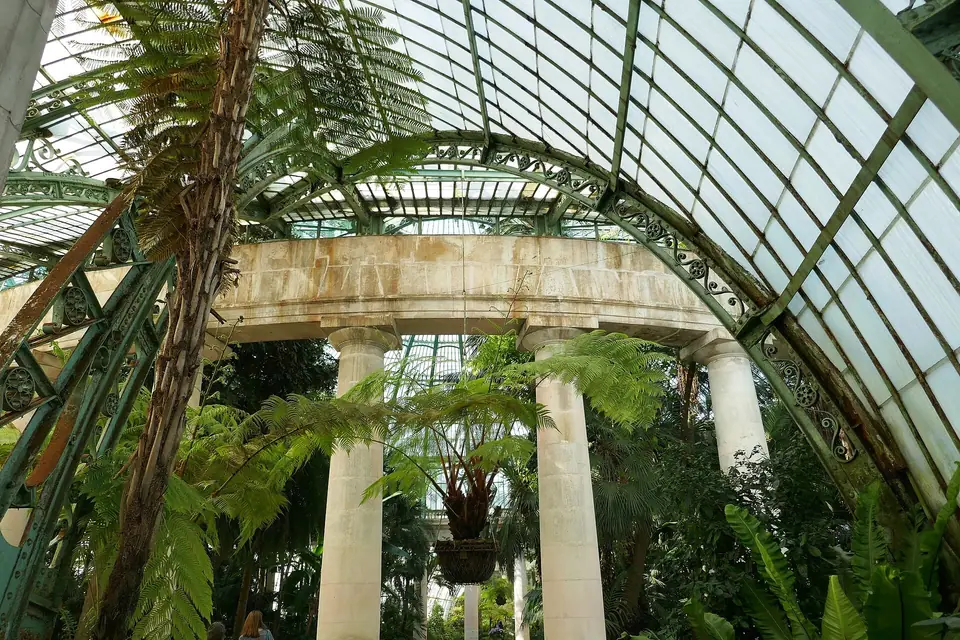
March to May: The driest weeks, Royal Greenhouses of Laeken & BANAD
Statistically, April is the driest month of the year in Brussels. It averages 9 rain days, 15°C daytime highs, and 6°C overnight lows. May follows closely with 19°C highs, 10°C lows, and 10 rain days. Spring is our favourite season for a cultural trip because four major architectural and botanical events take place:
- BANAD Festival (March). Across three weekends every March, daytime highs reach 11°C in the capital. During the Brussels Art Nouveau and Art Deco Festival, dozens of private townhouses open across Saint-Gilles, Ixelles, Etterbeek, and Schaerbeek. Guided visits enter Victor Horta's 1893 Hôtel Tassel and Paul Hankar's residences, which stay closed during the rest of the year.
- Royal Greenhouses of Laeken (mid-April to early May). For eleven months each year, Alphonse Balat's 1874 to 1895 glass-and-iron domes inside the 186-hectare Royal Domain remain private. For three weeks each spring, camellias, azaleas, fuchsias, tree ferns, and 200-year-old orange trees reach peak bloom. The monarchy then opens the 2.5-hectare Royal Greenhouses of Laeken for daytime and illuminated evening walks. Timed tickets must be booked online in advance on the official royal portal.
- Hallerbos Bluebell Forest (mid-April to early May). Twenty kilometres south of Brussels near Halle lies the 552-hectare beech forest of Hallerbos. You can reach it by train from Brussels-South followed by a local shuttle bus or cycle ride. Each spring, millions of blooming wild bluebells (Hyacinthoides non-scripta) carpet the forest floor in bright purple beneath the fresh green canopy.
- Iris Festival and Brussels Jazz Weekend (May). Early May celebrates the Brussels-Capital Region with concerts and street events during the Iris Festival. Throughout the month, the international performing-arts Kunstenfestivaldesarts stages contemporary theatre and dance across the city. Late May brings free outdoor concerts for the Brussels Jazz Weekend on the Grand-Place, the Sablon, and Place Sainte-Catherine.
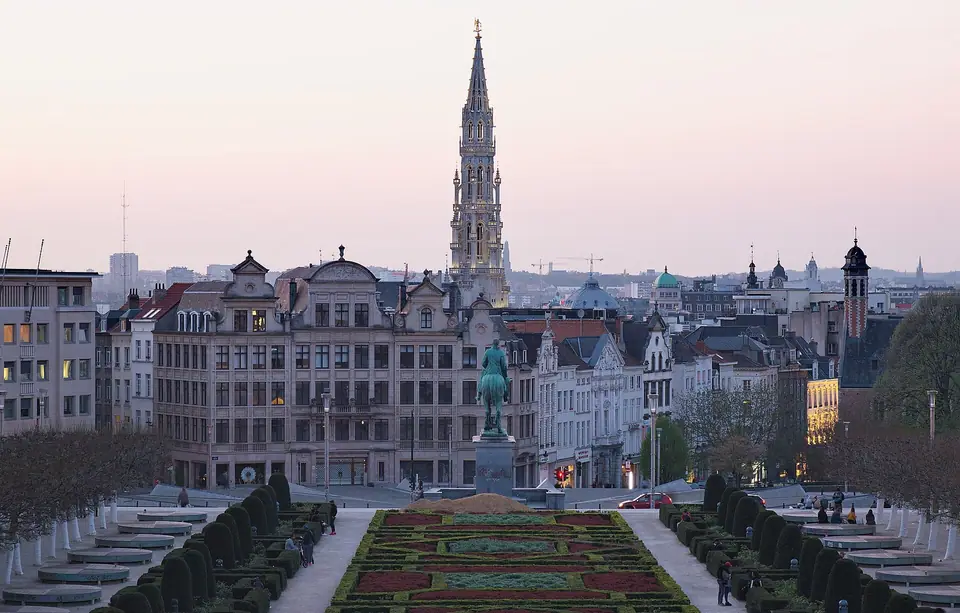
June to August: 16-hour days, the Ommegang, Royal Palace & the Flower Carpet
Summer in Brussels brings comfortable daytime highs of 22°C in June and 24°C in July and August. Overnight lows sit between 13°C and 15°C, with an average of 10 rain days per month. Long northern evenings stretch daylight past 16 hours, with sunset occurring after 21:55 CEST in late June. Outdoor café terraces fill Place Flagey, Parvis de Saint-Gilles, and Place du Châtelain, while three heritage traditions animate the centre:
- UNESCO Ommegang Pageant (late June and early July). Over two evenings, more than 1,400 costumed participants process from the Sablon to the Grand-Place. Horse riders, giant effigies, stilt-walkers, and flag-throwers re-enact the 1549 joyous entry of Emperor Charles V and his son Philip II.
- Royal Palace of Brussels (late July to late August). Following Belgian National Day on 21 July, the constitutional Royal Palace of Brussels on Place des Palais welcomes visitors inside. Guests walk the grand marble staircase, Empire Room, and Throne Room free of charge. In the Mirror Room shines Jan Fabre's 2002 jewel-beetle ceiling installation, Heaven of Delight. Check the official monarchy website for annual summer dates and restoration schedules.
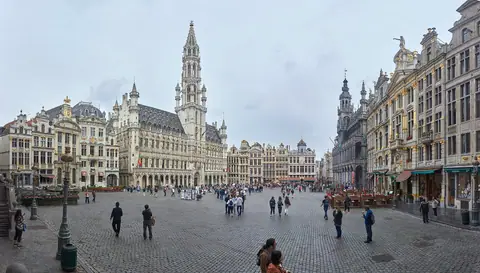
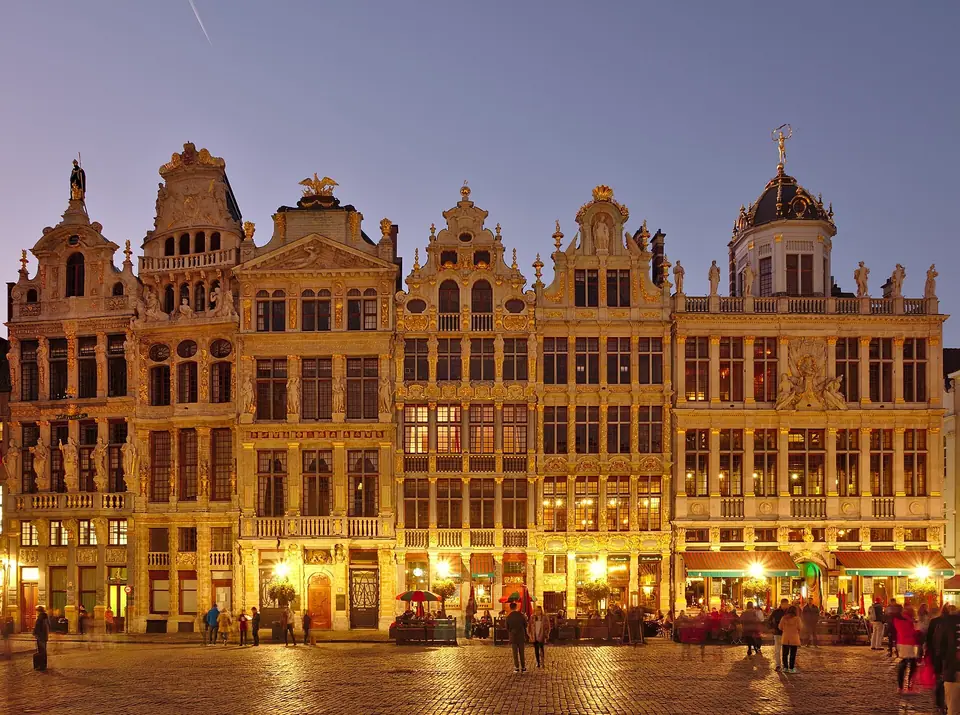
- Biennial Flower Carpet (mid-August of even years). Established in 1971, this floral event runs for four days around 15 August in even-numbered years such as 2026 and 2028. Over 100 volunteers lay more than 500,000 freshly cut Belgian begonias and dahlias onto the Grand-Place cobblestones in under four hours. The 75-by-24-metre floral composition covers 1,800 square metres and can be viewed from the Town Hall balcony.
September to October: Belgian Beer Weekend & Thursday Museum Nocturnes
September retains warm 20°C afternoons and averages 10 rain days across the month. On the opening weekend of September, the Belgian Beer Weekend fills the Grand-Place with historic brewery stalls. The Knighthood of the Mashers processes to the Cathedral of St. Michael and St. Gudula to bless the brew. Dozens of Trappist, abbey, and lambic breweries pour tastings on the square while the BD Comic Strip Festival celebrates comic art. From mid-September through December, Brussels Museums Nocturnes keeps rotating museums open late every Thursday evening. October brings 15°C highs, 8°C lows, 11 rain days, and golden autumn foliage to Leopold Park, the Ixelles Ponds, and the Sonian Forest.
November to February: Winter Wonders & Bright Brussels
November averages 10°C highs, 5°C lows, and 13 rain days across the capital. December brings 7°C highs, 2°C lows, and 14 rain days, while January averages 6°C highs, 1°C lows, and 13 rain days. Short winter days mean quieter mornings inside the Magritte and Old Masters galleries on Place Royale. Cold afternoons pair naturally with steaming bowls of carbonnade flamande in wood-panelled estaminets. From late November through early January, Winter Wonders (Plaisirs d'Hiver / Winterpret) illuminates the Lower Town. A 20-metre Christmas tree and 360-degree sound-and-light projections fill the Grand-Place every evening. Over 200 wooden chalets and a Ferris wheel line the Vismet quays at Sainte-Catherine beside an ice rink at Place De Brouckère. In mid-February, the four-night Bright Brussels festival lights up the Royal and European quarters with outdoor light installations.
Traveller tips
Real advice from people who have been to Brussels. Every tip is read by our team before it goes live.
No tips yet. Been here? Yours could be the first.
Thank you! Your tip will appear here after a quick review.
More in Brussels
Continue exploring Brussels with related neighbourhood, food, and planning guides
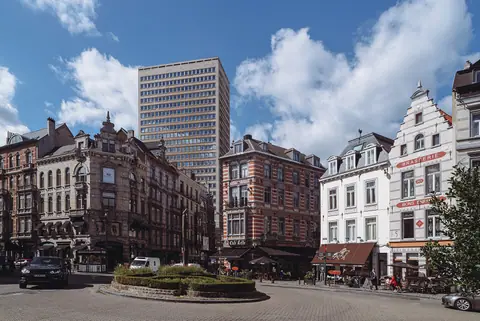
Where to Stay in Brussels: Grand-Place, Sainte-Catherine, Sablon, Ixelles & European Quarter Compared
Brussels, Belgium
Brussels 3-Day Itinerary: Lower Town Guilds, Royal Museums, Art Nouveau, Atomium & EU Quarter
Brussels, Belgium
Grand-Place Walking Guide: Gothic Town Hall, 1695 Baroque Guildhalls, King's House & Manneken Pis
Brussels, Belgium
Galeries Royales Saint-Hubert, Comic Strip Route, Bourse & Sainte-Catherine Walk
Brussels, Belgium
