


























Photo: Wikimedia Commons · CC BY-SA 4.0
Manarola Guide: Punta Bonfiglio Viewpoint, Vineyards & San Lorenzo
Tracing Manarola from its ancient watermill wheel and deep cliff-framed swimming basin up to the Gothic Church of San Lorenzo and the Volastra vineyard terraces.
Manarola perches on a spur of dark sandstone between the Via dell'Amore and Corniglia. Local tradition links the settlement to ancient roots among the Cinque Terre villages. Its name derives from the Latin Magna Roea (pushed into local dialect as Manaea), meaning "large wheel". That title refers directly to the medieval stone watermill driven by the Groppo torrent that still stands halfway up the village spine. Mountain families descended from the hilltop sanctuary hamlet of Volastra, the Roman Vicus Oleaster ("village of olive trees"). They settled this defensive coastal spur during the twelfth century. Today, Manarola pairs a deep rocky swimming inlet with a natural amphitheatre of dry-stone vineyards wrapping around the town on three sides.
Via Discovolo, the ancient watermill wheel, and the rock harbour basin
Exiting the railway platform at Manarola, you walk through a level, brightly lit pedestrian tunnel cut through the rock spur. A step-free elevator near the station end helps travellers carrying luggage. The tunnel emerges onto the main village street of Via Renato Birolli and its lower continuation, Via Antonio Discovolo. Just as in Riomaggiore, early twentieth-century engineers covered the lower stone bed of the Groppo stream to form this sloping pedestrian ramp. Colourful wooden fishing boats (gozzi) sit parked along the street edges whenever winter swells roll in. You walk right past their painted hulls outside focaccia bakeries and wine shops.
Before walking down to the sea, turn uphill for two minutes along the older lane of Via di Mezzo. Here stands the restored Mulino di Manarola (Ancient Watermill and Olive Oil Press). The Parco Nazionale delle Cinque Terre acquired and restored the historic stone mill house. Inside stands the huge wooden waterwheel (la grande ruota) that gave Manarola its name. Beside the wheel sit the heavy granite millstones once used by villagers to crush olives and grind sweet chestnuts into flour. Heading back down the main ramp to the waterfront brings you to the Marina di Manarola. Natural black rock walls and a concrete breakwater enclose this deep, sheltered inlet. In calm weather, it serves as one of the finest deep-water swimming spots in the Cinque Terre. Swimmers enter the crystal-clear water via a vertical stainless-steel ladder and dry off on flat sun-warmed rocks.
| Manarola Landmark | Location / Sector | Historical Date | Highlights & Visiting Notes |
|---|---|---|---|
| Marina Harbour Swimming Basin | Foot of Via Discovolo | Natural rock inlet | Deep clear water, steel swim ladder, passenger ferry jetty |
| Mulino (Ancient Watermill) | Upper Via di Mezzo | Medieval (restored) | Historic waterwheel (Magna Roea) & granite olive press |
| Punta Bonfiglio Cliff Walk | Northern rocky promontory | Coastal path & park | Classic sunset postcard angle, Nessun Dorma terrace |
| Church of San Lorenzo | Upper eastern piazza | Ligurian Gothic period | Carrara marble rose window & detached watchtower |
| Lower Vineyard Loop & Tre Croci | Terraces above town | Medieval terraces | Walk among Sciacchetrà vines; December Nativity lights |
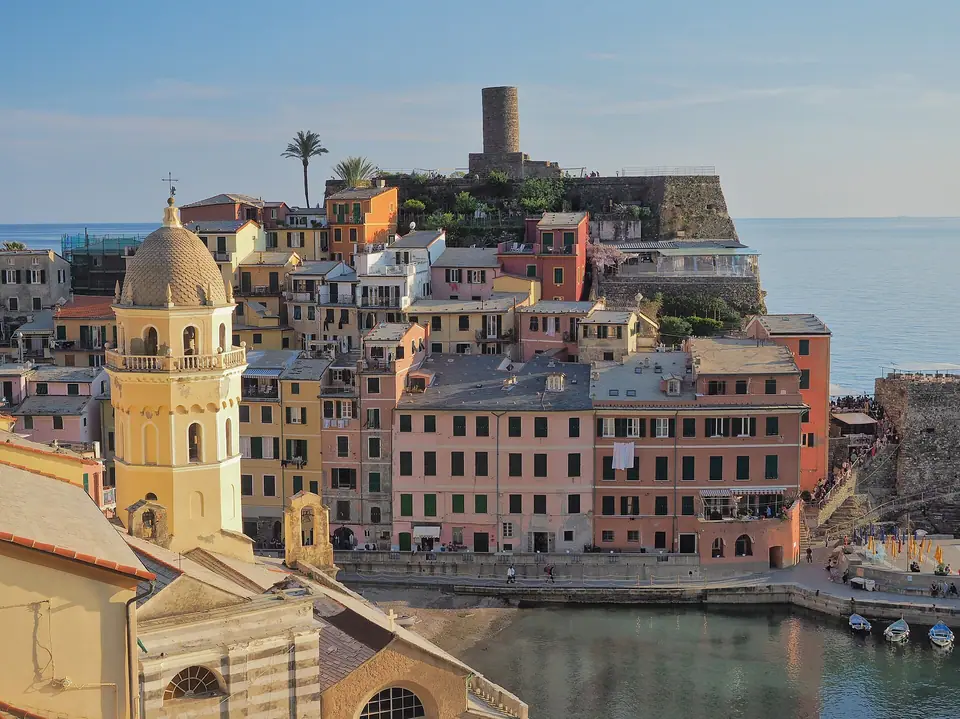
Walking the Punta Bonfiglio promontory for the classic sunset view
Take the paved seaside walkway curving north from the harbour boat ramp out onto Punta Bonfiglio. From the rail, you capture the classic view of Manarola's pastel tower-houses above the turquoise sea. Carved directly above the crashing surf, this level path is accessible in ordinary walking shoes. Along the eastern side of the spur, a narrow rock cleft shelters the concrete ferry landing stage. Coastal passenger boats dock here from Portovenere and Monterosso.
A short flight of stone steps climbs onto the upper ridge of Punta Bonfiglio. There, a children's playground shaded by maritime pines and cypresses sits beside the cliff-edge tables of the Nessun Dorma wine and bruschetta bar. Manarola's colourful houses face directly west-northwest toward the Punta Bonfiglio headland. Late afternoon sun illuminates the entire vertical stack of facades in warm gold and rose tones. At the far tip of Punta Bonfiglio stands the walled village cemetery overlooking the waves. Notice that the lower coastal section of the Sentiero Verde-Azzurro toward Corniglia remains closed due to long-term cliff erosion. Walkers loop back into the village through the upper vineyard path instead, enjoying close-up views of dry-stone walls and caper bushes clinging to the rock.
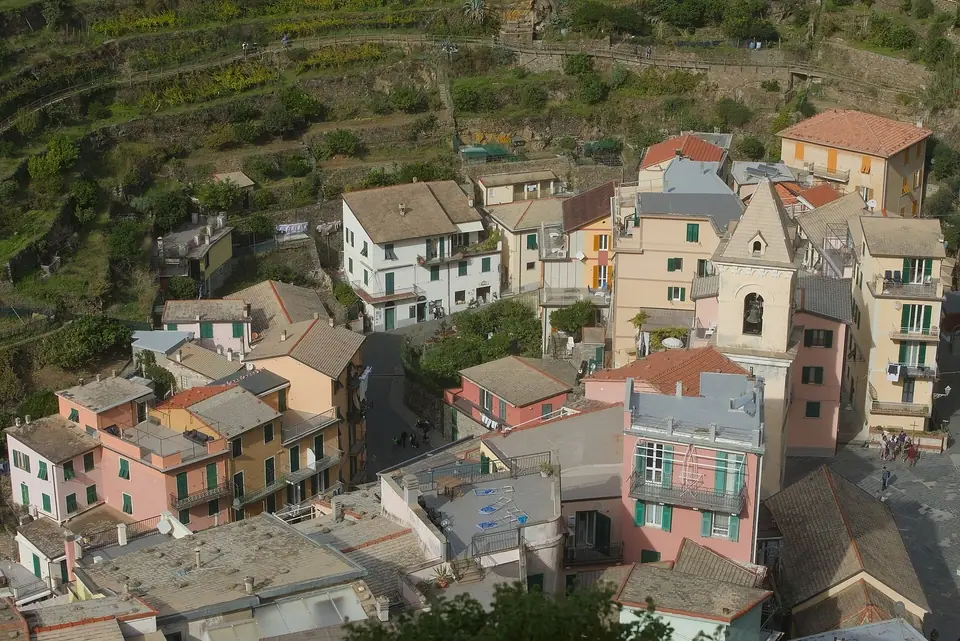
The Gothic Church of San Lorenzo and detached bell tower
From Punta Bonfiglio, follow the upper stone path along the lower edge of the terraced vineyards. The walkway leads onto Piazza Papa Innocenzo IV, the religious heart of upper Manarola. You can also walk straight up the village ramp from the harbour. Here stands the Church of San Lorenzo (Chiesa di San Lorenzo), raised during the fourteenth century. Master builders known as the Maestri Antelami raised the church in Ligurian Gothic style using local sandstone.
Examine the church's striking western facade closely. Above the pointed Gothic doorway shines an ornate white Carrara marble rose window. The stone lintel below displays a fourteenth-century bas-relief of the Martyrdom of Saint Lawrence on the Gridiron. Master stonecutters Matteo and Pietro da Campilio sculpted this wheel window, also carving the rose window of San Pietro in Corniglia. Inside the barrel-vaulted three-nave interior hang fifteenth-century panel triptychs painted by the Master of the Cinque Terre. Directly across the square stands the detached quadrangular Campanile (Bell Tower). Erected in the fourteenth century as an armed coastal watchtower, it was later converted to hold the parish bells. Beside the tower stands the white baroque facade of the Oratorio dei Disciplinati della Santissima Annunziata and the former medieval hospital of San Rocco.
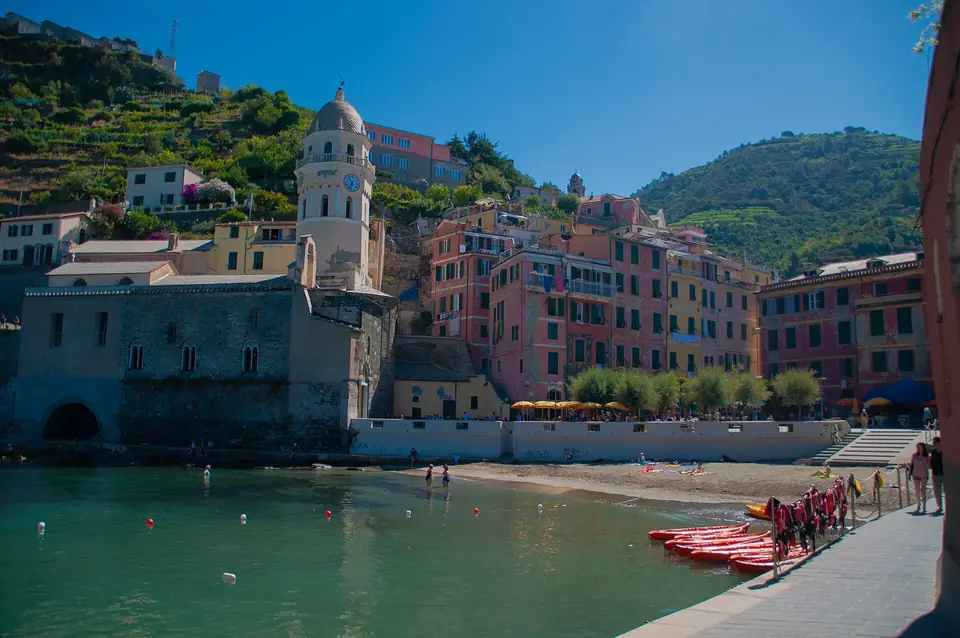
Vineyard amphitheatre, Tre Croci hill, and path to Volastra
Step behind the Church of San Lorenzo to see Manarola's greatest living monument. A sweeping semicircular amphitheatre of hand-stacked dry-stone vineyard walls (muretti a secco) rises up the valley. Even if you skip a multi-hour trek, take the stone-stepped Vineyard Walk (Passeggiata tra i Vigneti). The path contours around the Collina delle Tre Croci and descends to Punta Bonfiglio. Along the way, you pass low pergola-trained Bosco and Albarola vines and stone tool huts (casotti). The path passes right beside the metal figures of Mario Andreoli's illuminated December Nativity scene. The Cantina Sociale Cooperativa of the Cinque Terre is also headquartered in the Groppo valley just above Manarola, where local growers press their harvest each autumn.
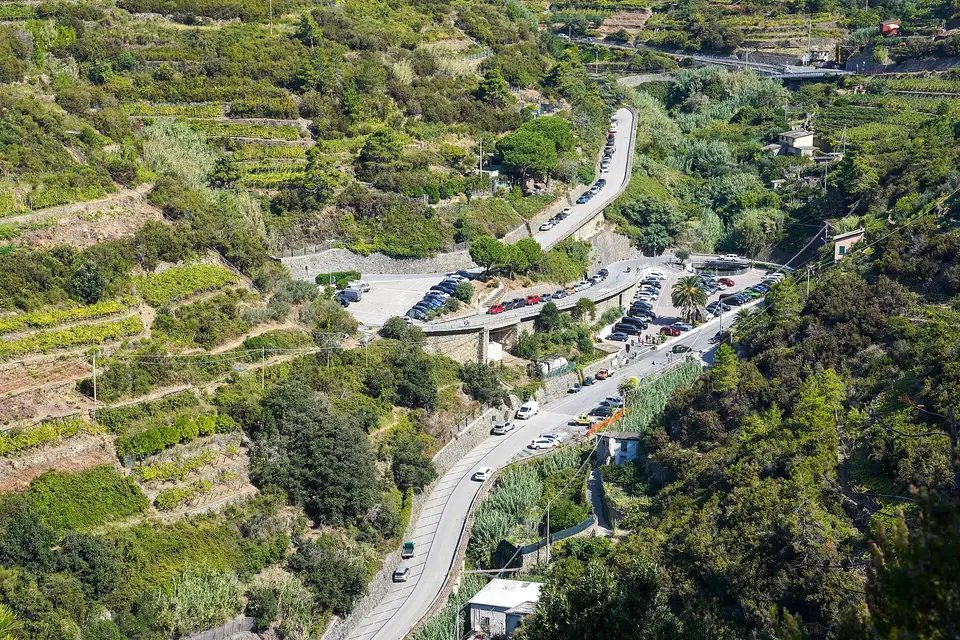
Hikers wearing the gripped soles from our Cinque Terre packing guide can tackle the hillside trail to Volastra. This ancient staircase of stone steps climbs from Manarola up toward the hamlet. Alternatively, you can ride the ATC electric minibus up from the upper Manarola car park using your Cinque Terre Card. At the top stands the twelfth-century Romanesque Sanctuary of Nostra Signora della Salute. From the church square, a scenic trail contours across the high vineyard terraces to Corniglia. Walking through these quiet olive groves and dry-stone walls in the morning reveals how mountain farming shaped every contour of the valley. Back down in the village, late afternoon is a peaceful hour to watch wooden fishing boats rest along Via Discovolo while swifts circle the bell tower. Lingering on the seafront promenade after the daytime excursion boats depart lets you hear waves echoing inside the dark sandstone coves. Early risers who walk down to the harbour ramp at dawn also see fishermen preparing wooden nets beside the calm water. Stopping at a bakery on Via Discovolo for warm rosemary focaccia completes an unhurried morning in the village.
Where it is
- 1Manarola
- Pisa International Airport (PSA) · about 71 km from here in a straight line
- Directions in Google Maps
Stations and taxi ranks: OpenStreetMap. Airports: OurAirports. Distances are in a straight line.
Traveller tips
Real advice from people who have been to Cinque Terre. Every tip is read by our team before it goes live.
No tips yet. Been here? Yours could be the first.
Thank you! Your tip will appear here after a quick review.
More in Cinque Terre
Continue exploring Cinque Terre with related neighbourhood, food, and planning guides
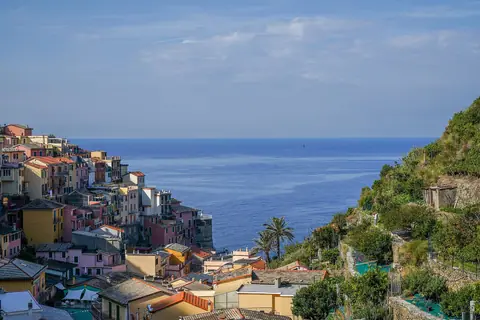
Vernazza Guide: Doria Castle, Santa Margherita Church & Harbour
Cinque Terre, Italy
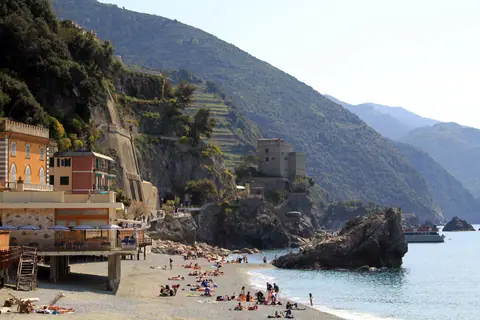
Monterosso al Mare Guide: Fegina Beach, Aurora Tower & Old Town
Cinque Terre, Italy
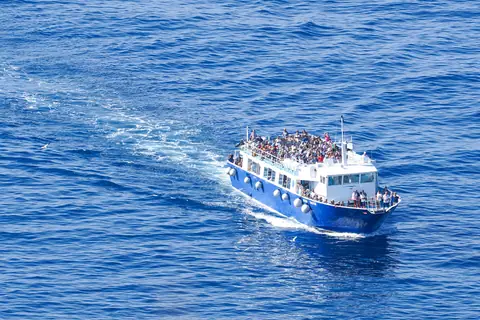
Cinque Terre Hiking Trails: Blue Trail, Sanctuary Paths & Rules
Cinque Terre, Italy
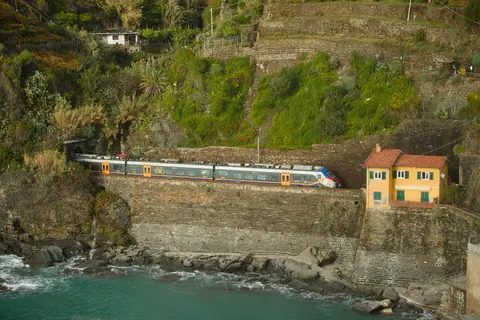
Cinque Terre Card Guide: Express Trains, Trail Passes & Ferries
Cinque Terre, Italy
